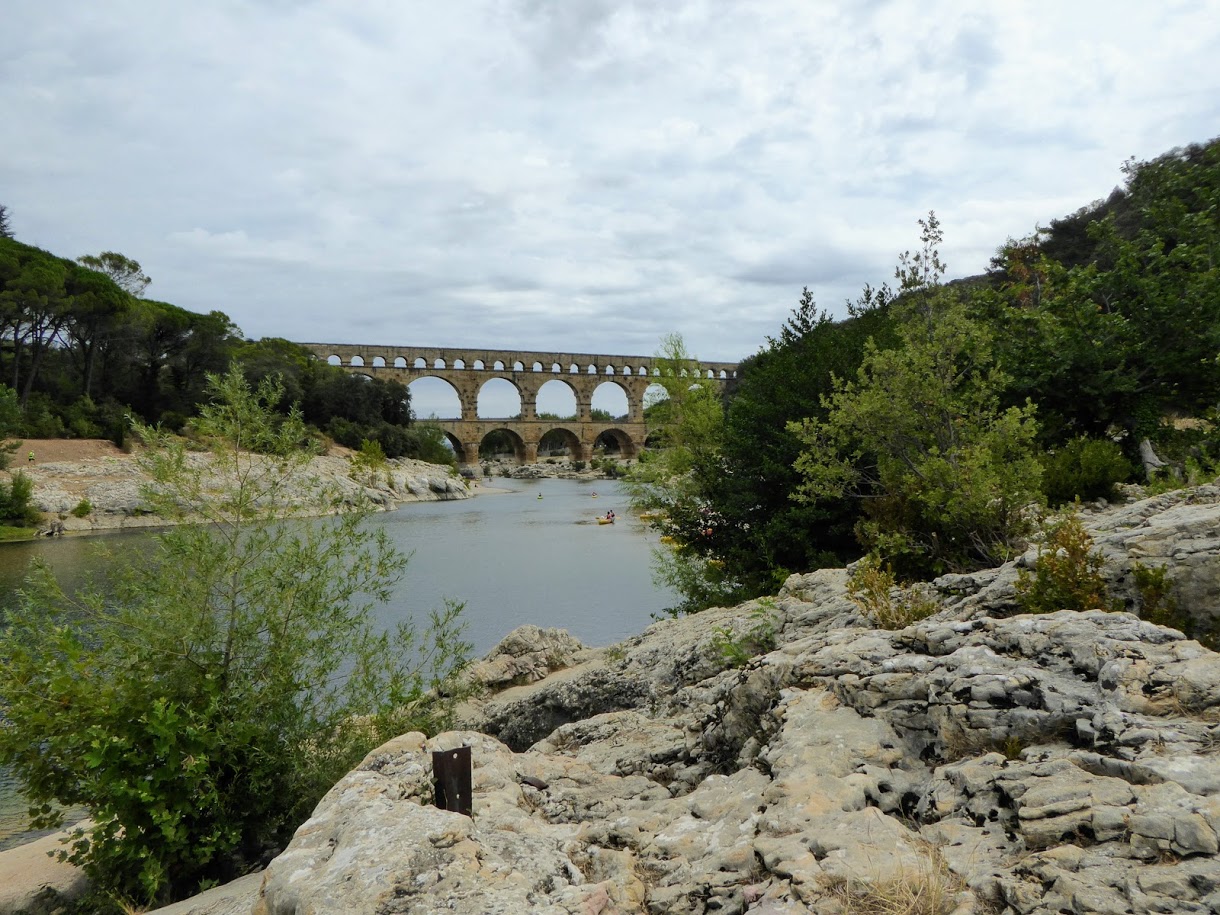
Vers Vers Pont du Gard
Please excuse my terrible French pun as I regale you with the story of our journey towards Vers Pont du Gard. In short, this was a stop at Tain-l’Hermitage. Why? For the wine cave, of course.
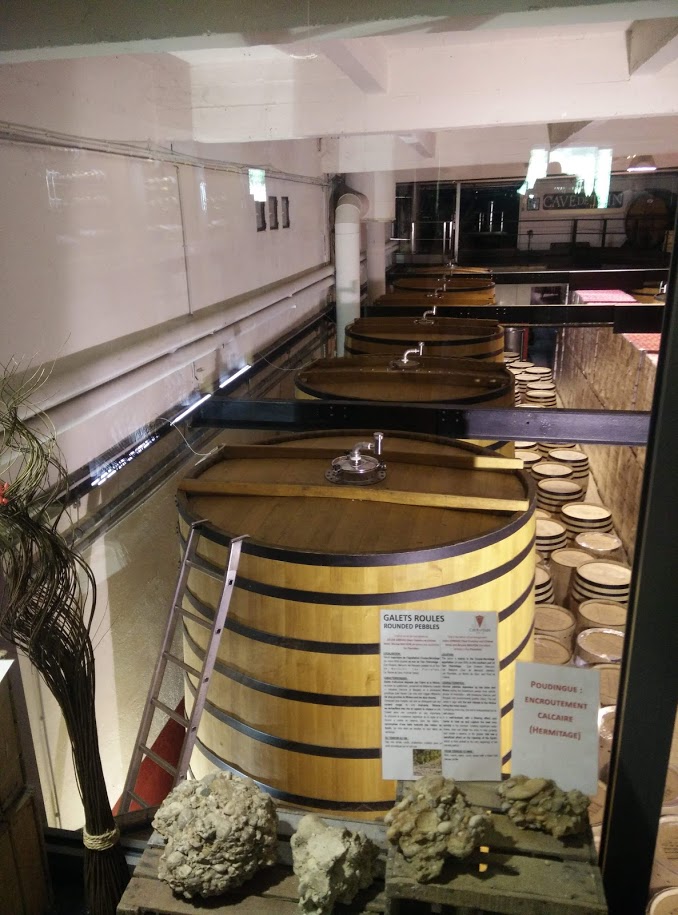
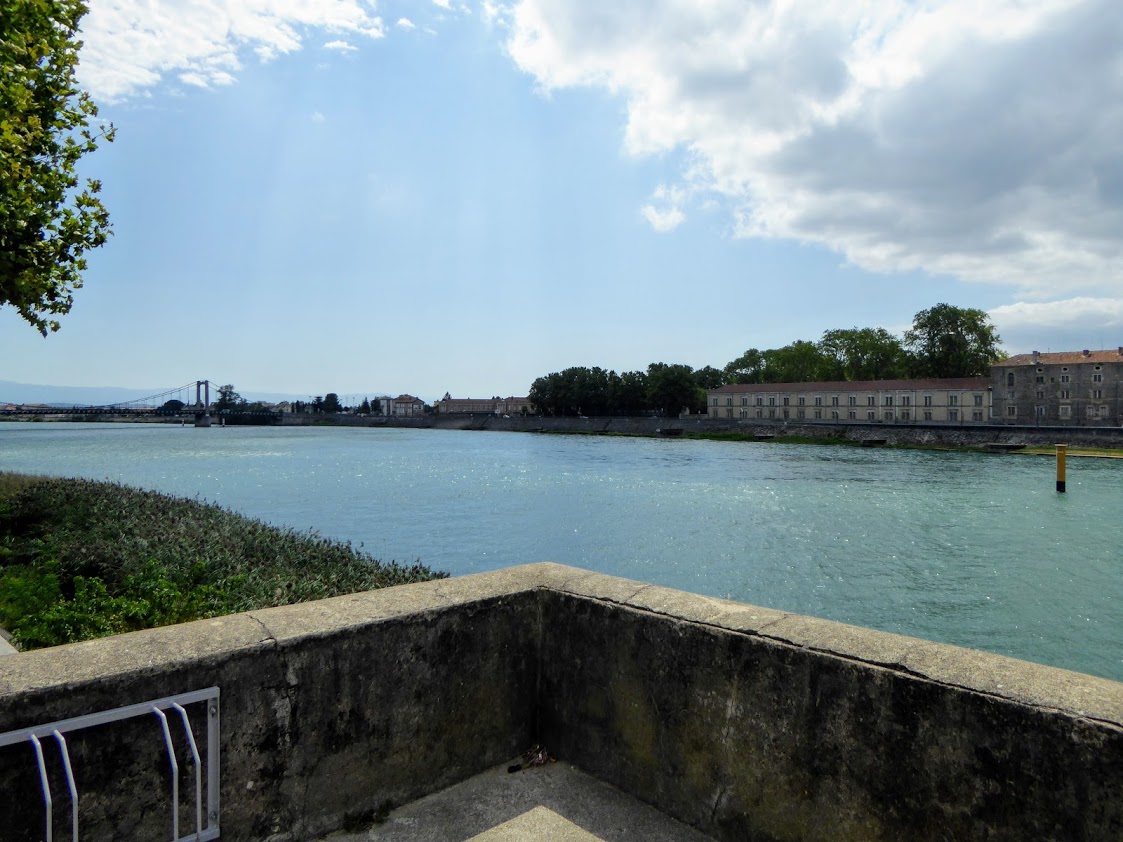
We had an early start that morning, leaving Meursault in time to ensure that we would reach the cave before it closed for the holy French lunchtime at half past twelve. I wasn’t a particularly big fan of the four wines tasted, but my parents seemed to like it enough to buy themselves some to take back to England. Driving into town, a precious parking spot was secured and, mercifully, a seat in a restaurant for lunch despite not having a reservation! Reservation culture is big in France – if one is wanting to eat out at a remotely normal time of day, il faut réserver! This particular place had a lovely view over the river, where we watched various barges go upriver, and many cyclists crossing the bridge. It was also our first taste of hearing the provençal accent, provided by our lunch waiter.
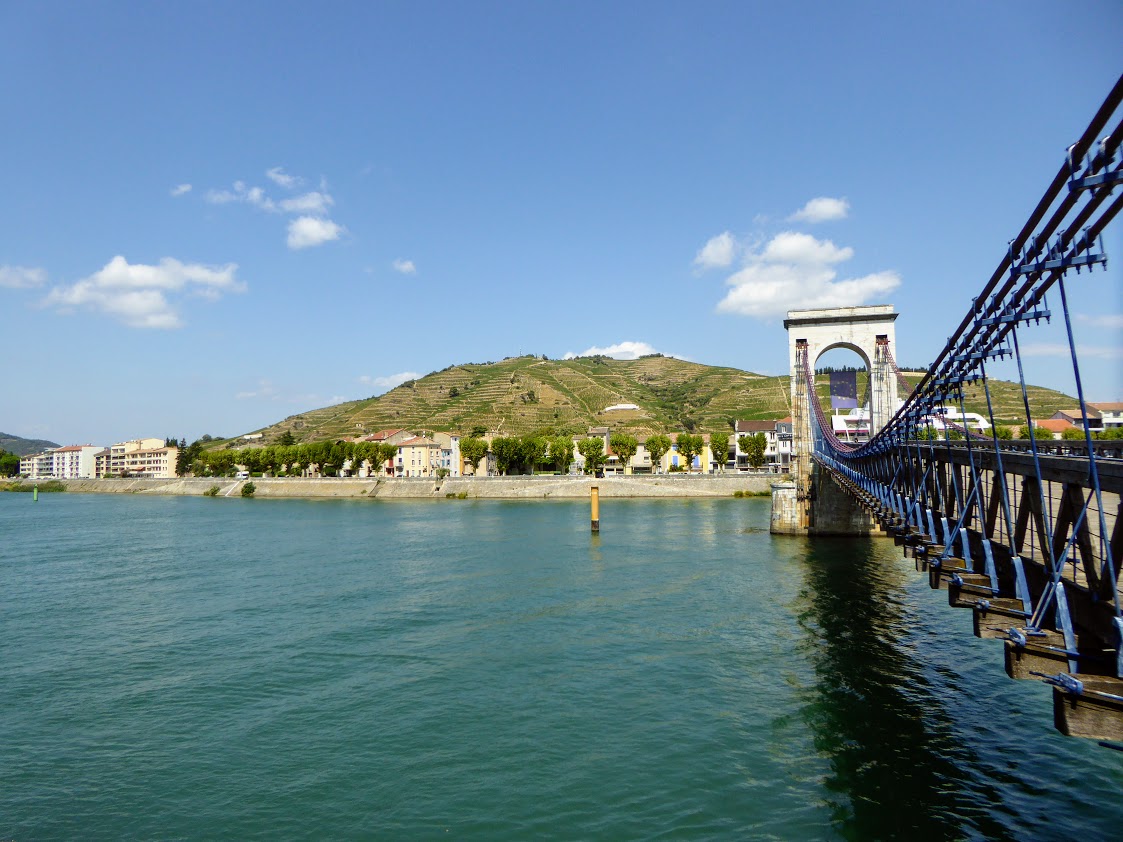
Once refreshed post-lunch and feeling exploratory, we crossed the bridge under the magnificently sized EU flag to the other side of town. Yet in true British fashion, decided it was in fact too hot to feel too exploratory with a full belly, and headed back to continue driving south.
Vers Pont du Gard
Arriving late afternoon, we set up in our Airbnb as soon as we got inside. I then sat down to relax for the rest of the afternoon after the extremely arduous nap I took for most of the journey between Tain and Vers Pont du Gard. The trait from my dad’s side of the family (postprandial napping) has clearly been passed down to me. While I relish in its comforting, sleepy embrace, my contact lenses don’t fare so well with it!
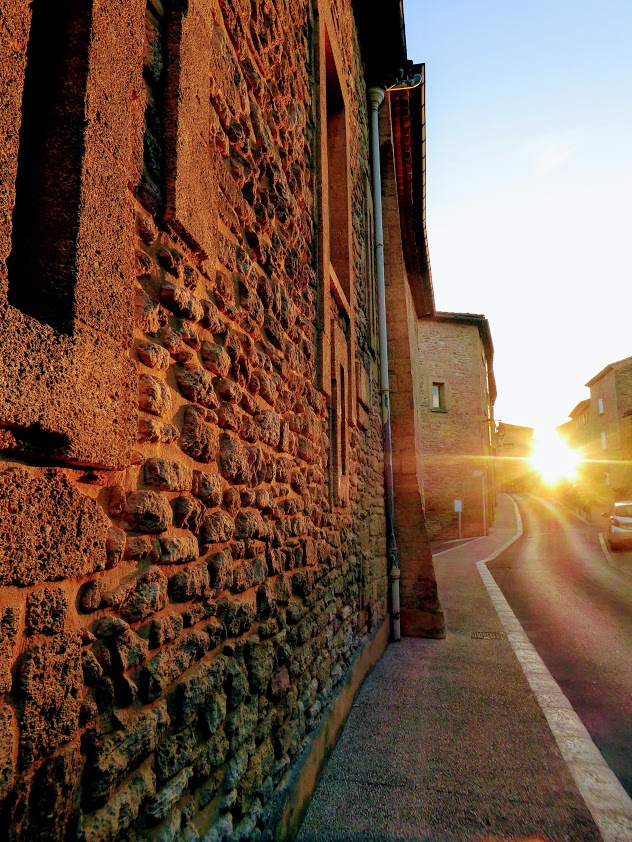
Vers Pont du Gard itself is a tiny little village with a post office, a bakery, a sports bar, a wine bar, a pharmacy, a tabac, and a mairie: all the essentials. The streets are beautifully kept and clean, and everyone tops up the paint on their designated blue shutters. I had great fun wandering around the minuscule village centre inbetween waiting for food at dinner.
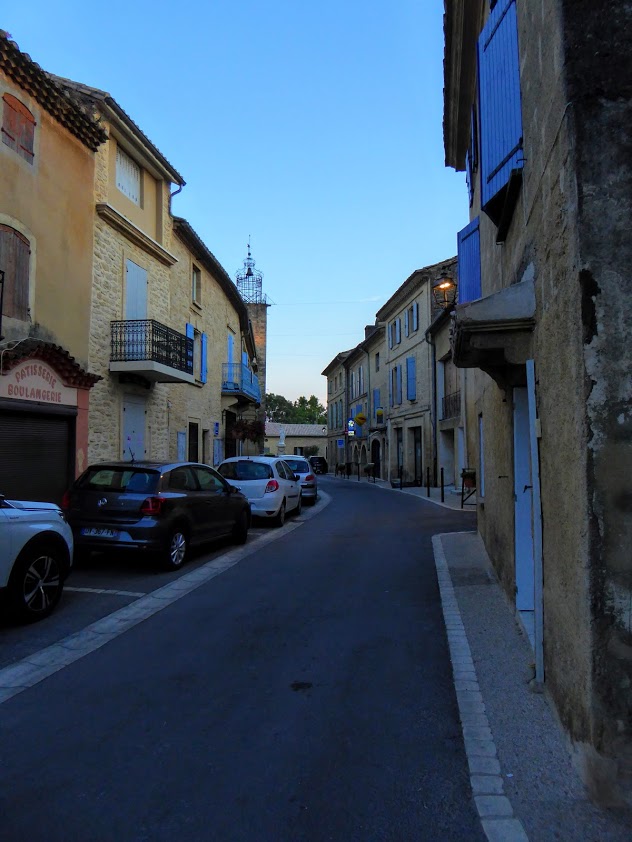
As it was a Sunday, most places in the village were closed, so we contented ourselves with a few nibbles at the wine bar – the only place open at 7pm! Coming from London, where the Sunday = day off rule is largely ignored by all good capitalist businesses, this was a slight shock. But not something to fear! There was a fig and black olive tapenade which was declared a gastronomic delight by all family members (including those who usually sniff at figs with indifference).
Roman sights in Nîmes
Nîmes is home to the best-preserved Roman arena in the world. Although smaller than the Colosseum, rulers in the area of Nîmes have been careful to protect the original architecture of the arena. There was a small queue to buy tickets as we didn’t prebook ours, and we chose the Pass Romain, which allows entry to the sites both at Nîmes and Orange (a location later on our route in Provence). An audio guide came free with the ticket, and was an interesting source of information as we walked around the arena. Most of the general information about Roman arena culture and gladiators, however, I already knew from an excellent children’s book called The Gladiators from Capua by Caroline Lawrence. This is the eighth in the Roman Mysteries series which I re-read many times as a child, and provides a fascinating insight into the games, gladiator fights, and gambling culture present in the Roman arena.
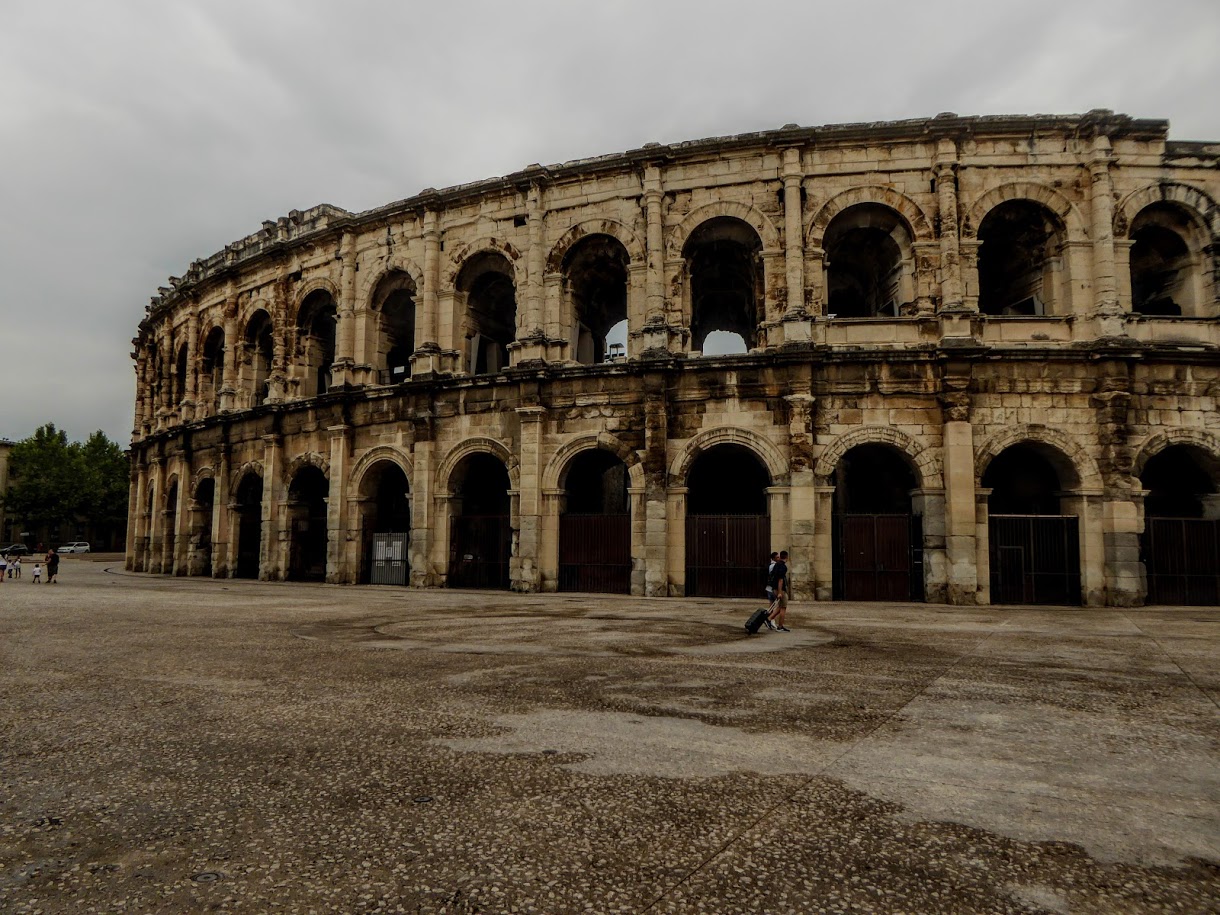
It was fascinating to discover that the arena was almost always in use from the Roman era to the 17th century. As the Roman empire diminished, the arena became an important part of the city’s defences. During the medieval era, it was used as a fortress where a garrison was kept. By extreme contrast, people lived in houses in the sand of the arena during the Renaissance. Then from the 18th century, the ruler of Nîmes began restoration work on the arena, which contributed a great deal towards its current state of preservation. Now there are still bull fights and theatre shows which take place in the arena, and every May there are gladiator re-enactments.
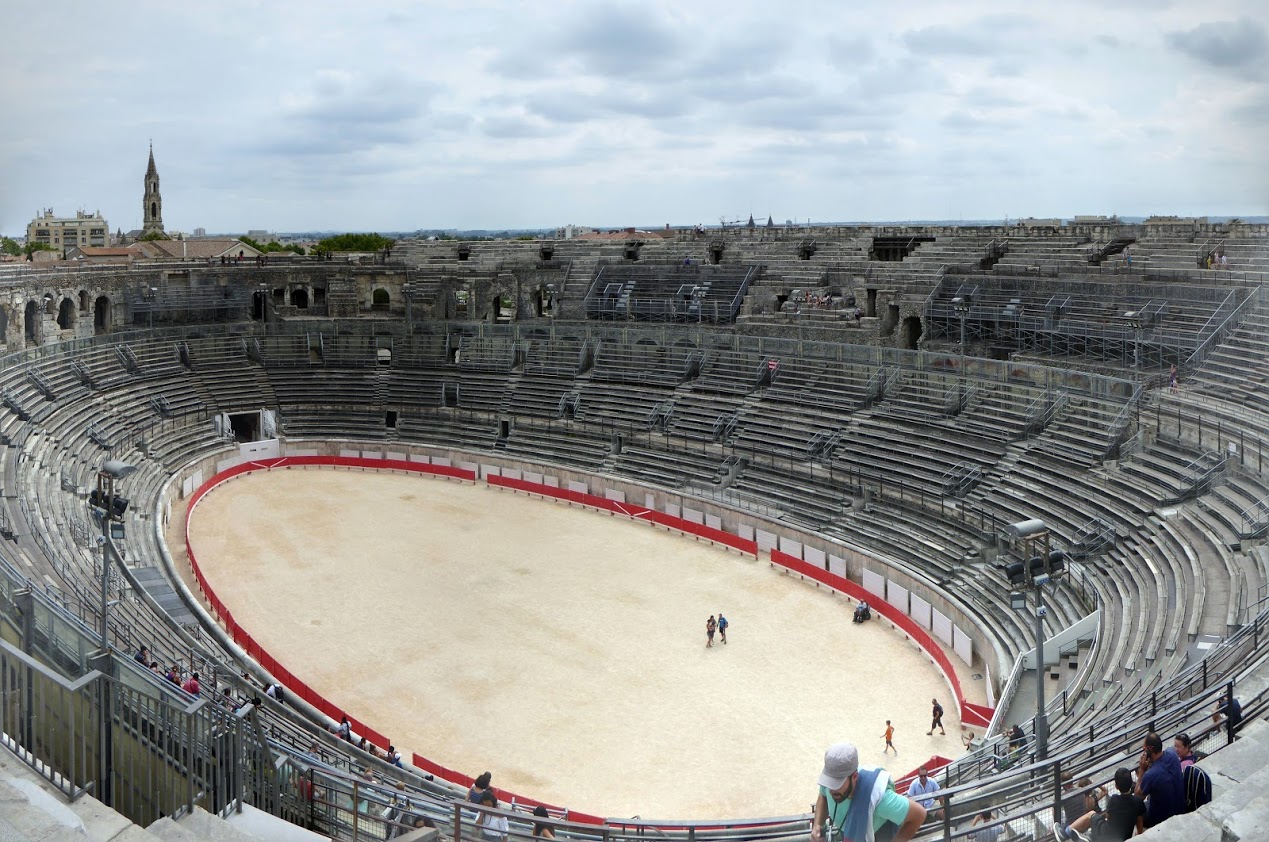
Leaving the arena, the queue length had quadrupled since we arrived in the morning, and we were glad of the early start. The heat and humidity while walking around the ancient Roman site had made us dehydrated, so we took a lunch break in a restaurant with fans blowing directly at us.
Rather amusingly, the new Roman museum just next to the arena has all its font and branding written in the Greek alphabet! This didn’t deter us from visiting, however. In the basement floor was a temporary exhibition on Pompeii – this was largely replicas of original relics from the Pompeii site which we had visited six years ago; we didn’t linger too long here. The signs in that room made the narrative of the eruption easy to follow, but for a fuller version, I recommend The Secrets of Vesuvius (the second in the Roman Mysteries series). Filled with real life characters such as Pliny the Elder, and Tacitus and Regina, it provides a fantastic fictional eyewitness account of the Vesuvius eruption in AD 79. The rest of the museum was also enjoyable, with the well-preserved mosaics being the highlight of the visit. Unfortunately, due to our time limit on parking, we were unable to visit the Maison Carrée and the Jardins de la Fontaine.
Kayaking through Pont du Gard
The next day we had booked with Kayak Vert at half past nine in the morning to kayak down the River Gardon underneath the Pont du Gard. The Pont du Gard is a Roman aqueduct bridge which provided the water supply for Nîmes, and as the highest of its kind, is a UNESCO World Heritage site.
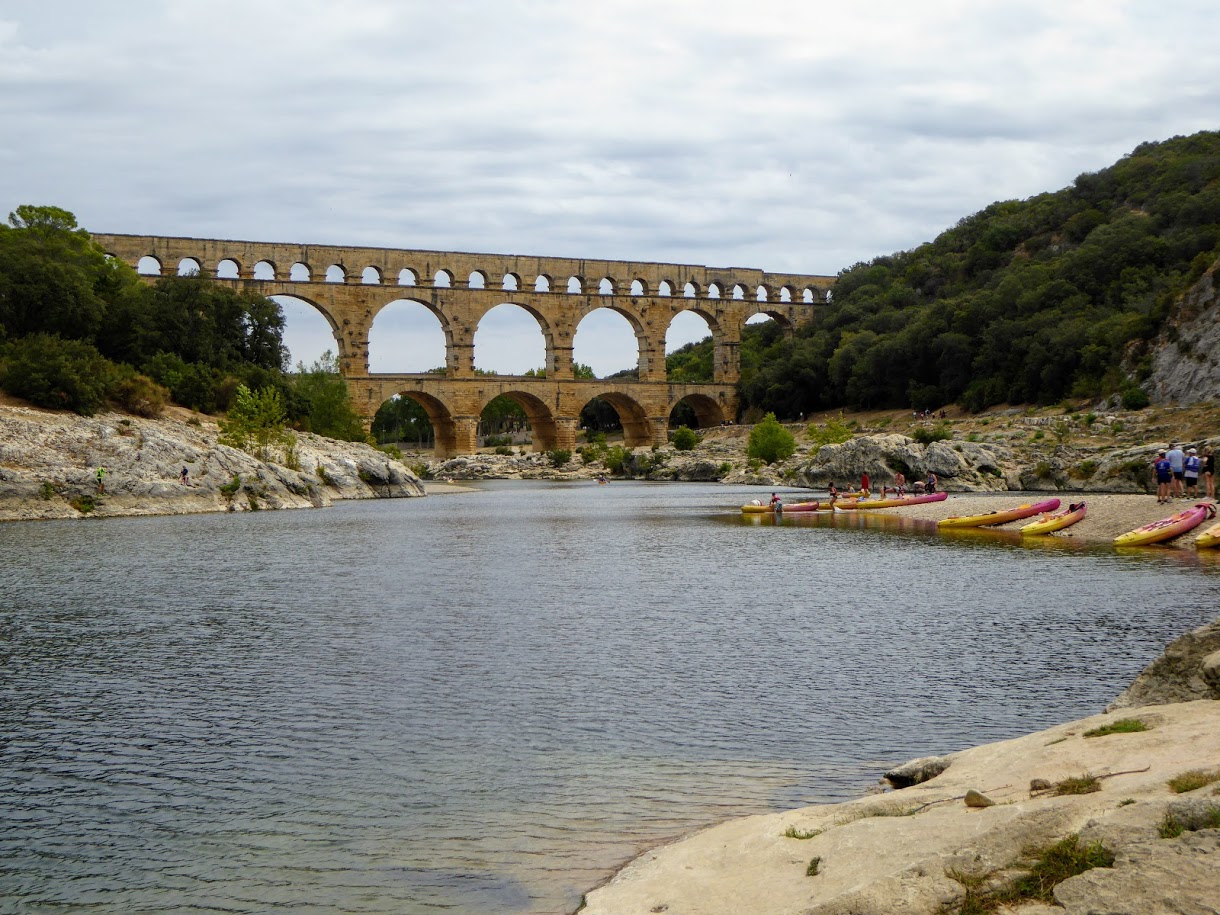
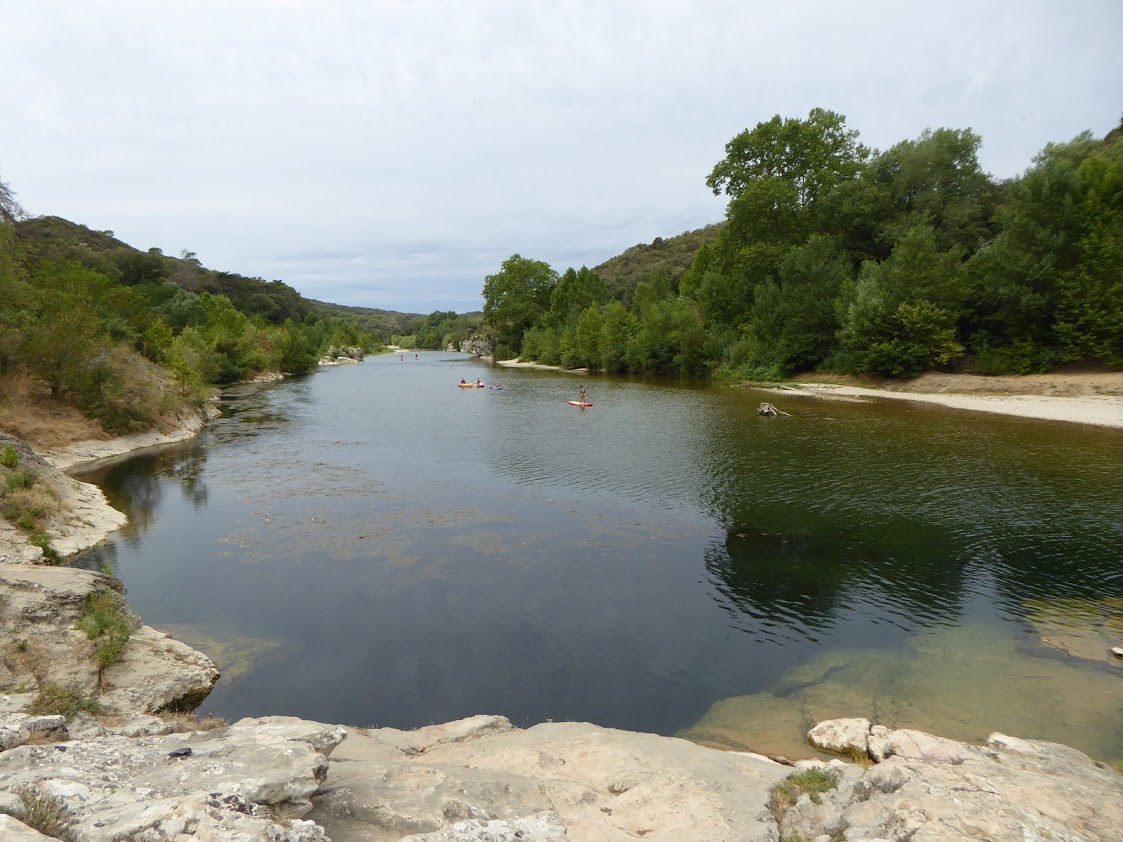
We had been warned that the river has less water in it during the summer, and consequently we might need to get out of our kayaks and push them along the stones at times. Thankfully this only occurred a couple of times as there was no point where the water had dried up completely. Most of the time I was able to get past the shallow, stony areas by shuffling my kayak along for a minute. It took us just over two hours to reach the Pont du Gard, where we stopped for a picnic lunch we had brought. I pulled the kayaks up on the rocks to stop them drifting off, and went up to the road to take some photos. The temperature was much cooler than we had thought. When we checked the time at 12:17pm and had to get back in the river to kayak to the one o’clock shuttle bus, we were happy to warm up with the exercise again.
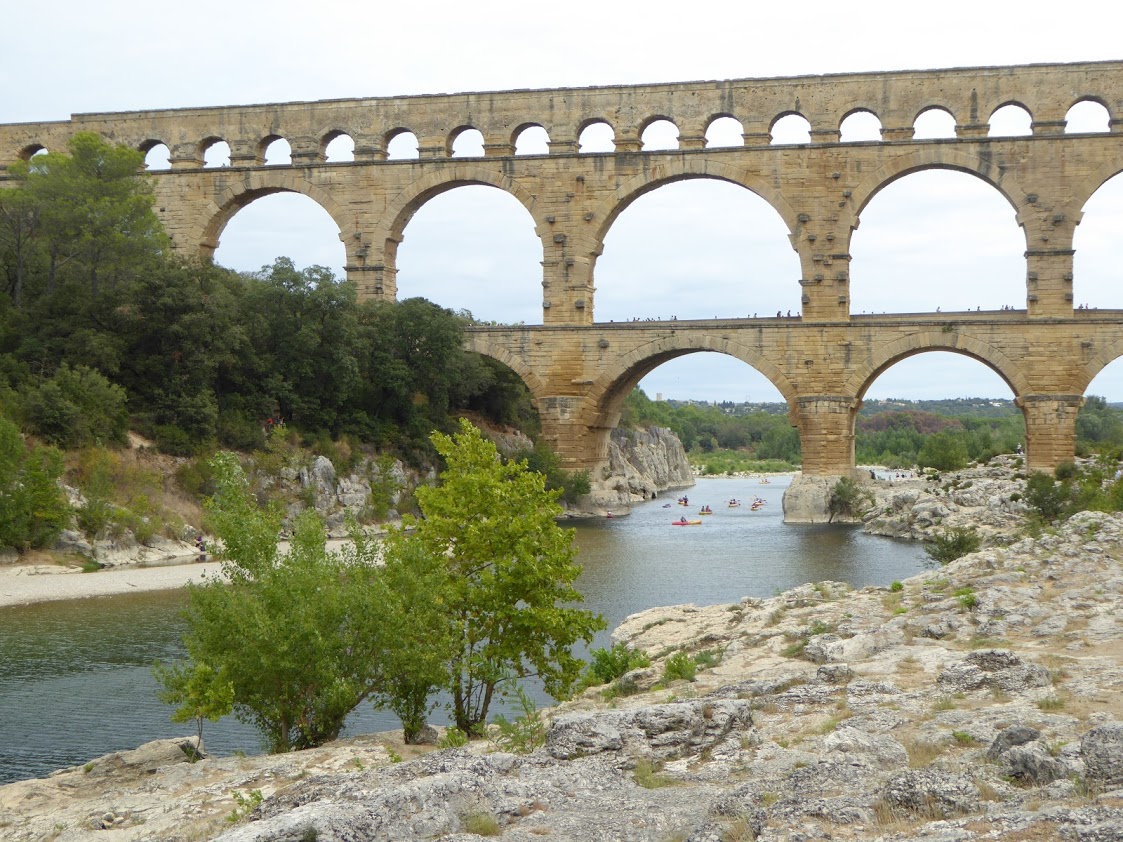
Having been advised to stick to one side of the river going under the bridge, I was glad to have done so as the wind travelling in the opposite direction to me was very strong. The rapid-like sections of the river were great fun going down (suddenly not having to work my arms), and weren’t fast enough to turn anyone’s kayak over. We managed to paddle to the end point precisely in time to make our booked shuttle bus at 12:59pm, having completed the 8km kayak trip. Wet, aching, and happy, I settled down with a book for the rest of the afternoon.
A plus,
Zoe x
 An Aixpat-en-Provence