During the February week off, some Erasmus friends and I went on a day trip to Martigues. We took the 39 bus from the main bus station in Aix to the end of the line where it finished in Martigues – using the same resident card as the bus to Marseille for a 4 euro return. I often go to just outside Martigues – La Mede – for dance lessons with three times French 10-dance champion Eric Laurencont, but hadn’t yet been to Martigues itself.
Martigues is a beautiful town situated between a lake and the sea, which means it has lots of bridges and boats floating around. Such an abundance of canals has given it the nickname ‘Venice of Provence’ – something it certainly deserves! As we knew it was a lake connected to the sea, we were wondering what kind of water it was – one of our group bravely tasted a drop of the water and confirmed it was mildly salty!
Lake Etang and Martigues
When we arrived on the Sunday, the market (where the above photo was taken) was just finishing at noon. Dazzled by the colourful houses and peaceful water surrounding us, we wandered harmoniously through Martigues, enjoying the beauty of the little town.
Bridge connecting the two islands.
After having done our initial wander, we realised we felt rather hungry, but soon discovered we had forgotten the holy Sunday rule: by 1.30pm none of the restaurants were serving food anymore (with the exception of one, but which was full). We ended up eating at a chicken shop which had a dubious amount of flies circulating the air nearby. However, none of us had food poisoning and it was considerably cheaper than all the other options even if they had been open.
Le Miroir aux Oiseaux
Having eaten, we made our way towards Musee Ziem which we had spotted on our earlier stroll. They had their permanent collection of Felix Ziem’s paintings in the upstairs rooms of the gallery, and the temporary exhibition was the landscapes of Martigues-Provence. The works were very beautiful, filled with colour and the light of Provence – well worth a visit, especially as entry was free.
One of the museum workers recommended that we go to La Pointe from which you can get an almost 360 view of Martigues and the lake. We went there and sat for a while, enjoying feeling the sun on our faces. There were a great many paintings of the Miroir aux Oiseaux which we had walked around earlier. These inspired me to return there and just gaze on the water – this we did as the last part of our visit in Martigues, via a boulangerie.
Miroir aux Oiseaux
Restaurant Le Miroir
Golden hour at the Miroir aux Oiseaux
The sunset was just in its early stages when we had to leave this beautiful canal to walk to the bus stop. The walk was along another canal for the first half, before then going between buildings and losing our view. However, sitting at the back of the bus provided a gorgeous lookout on the sunset as it drove us back to Aix.
Miroir aux Oiseaux sunset
Martigues at sunset.Sunset at Martigues, taken from the bus.
This day trip was the perfect remedy to a month of non-stop deadlines. My face hurt from smiling the entire day and I felt the happiest and most content I had in a long time.
Being now halfway through my year abroad with just four months left to go, it’s an appropriate time to make an update of the best and worst of going on an Erasmus exchange. I’m at Aix-Marseille University in the beautiful town of Aix-en-Provence right in the heart of the south of France. I must confess myself at first quite disenchanted with French university life when first arriving, but the long hours and almost schoolish approach which the system has means I have one thing in abundance: free time! Rather than spending hours slaving over assignments and researching in the library, most of the work is done in the actual classes; hours outside of class suddenly become filled with new possibilities. Of course, the most obvious of these is travelling around the area, and there have been a variety of ways to do this.
Cours Mirabeau, Aix-en-Provence
The local buses in Aix run to nearby seaside villages, as well as to Marseille for a mere €2; Flixbus can take you to most of the nearby big cities for a budget-friendly price; trains go both to small towns nearby and to more touristy destinations. At first, I was all for ticking off the big bucket-list style cities in France, but the prices of the trains and flights makes this less feasible for a student. Instead I’ve been pushed to make the most of the beautiful region of Provence and to get what I can out of the area around me – this is something I’ll definitely be doing more of when I return to the UK! One place can be filled with so many undiscovered treasures, so it fills me with shame to say I have rarely ventured into the centre of Birmingham other than for a night out.
Fontaine des Quatre Dauphins, Aix-en-Provence
The biggest difference from UoB is the extreme disorganisation embedded deep in the underfunded French higher education system. It takes a lot of mental energy to deal with the administration, let alone then spending potentially seven hours a day in classes taught in another language. While tough, the main thing I do to stay sane is put something in each day I will enjoy. Whether this means giving in to my newfound croissant addiction, going to dance practice, chatting with my friend after cooking dinner, or simply walking into town to admire sunlight on the golden architecture, this year abroad has kick-started practising mindful enjoyment of the small things. It’s not easy, but it’s worth it for both the geographical and personal adventure it’s undoubtedly taking me on.
The assessment system at Aix-Marseille can sometimes be a mystery, other times not – depending on how organised the class is and how much the teacher communicates with you. This here is an overview of how I was assessed for the modules I took for the first semester.
Français langue étrangère C1
Unlike the B1 and B2 classes, the C1 class for FLE didn’t have any oral assessment whatsoever, which is bizarre considering it’s supposed to test your level of French. We were assessed 100% on an end-of-term exam during the first week of the exam period. This consisted of writing either a resumé or synthese de documents in a two hour exam, to which you can bring a bilingual dictionary. There was a mock exam after the October holiday, and lots of optional homework opportunities to practice these two forms of writing.
Thème Erasmus
There were two exams for this – one in class about 2/3 of the way through the term, which counted for 25% of the module mark. This was considerably harder than the other exam, as the text to translate was literary rather than journalistic. The second was the last lesson of term before the revision week, counting for 75% of the mark – this was a journalistic text.
Littérature pour étudiants internationaux
There are three sets of marks which make up the overall grade for this module, and I guess I’ll only find out what each one is worth when the grades are released later in February. One is an oral mark, made from a presentation you give on one of the short stories studied in the course. The second is the average mark of the two best in-class written pieces you do. At the end of each lesson was a controle continu, in which you use the essay plan made in class to write a section of an essay – whether introduction, conclusion, or one paragraph of content. Finally, the last mark was taken from an essay on a book studied for three weeks. This was done under exam conditions in the last class of term. There was also a short reading comprehension on the studied book – essentially to check whether we’d read it – and I’m still not sure if this made part of that module grade or not.
Questions de genre
This module had two exams and one oral mark. The exams were fairly straightforward: one mid-semester after the October holiday, and one in the main exam period before Christmas. For each of these we were given a quote which we had to then respond to as an essay, using the texts we’d studied in the seminar. The second exam also had a similar, 5 mark question, but on topics taught in the main lecture. However, the oral mark was an interesting thing to battle with. Each week we would be set a composed commentary on a section of one of the texts and have to prepare it – either during time set aside in the seminar, or at home. Each week our tutor would randomly select two or three people to present/read aloud their commentary. I used the excuse of being an Erasmus student to get out of presenting when we had to write it in an hour during class, and eventually proposed my own commentary which I gave in week 6. There are some French students who, I believe, never did present theirs and have probably failed the module.
Etude comparée des sociétés éuropéennes contemporaines
The most simple grading system of all the modules: one final oral exam during the revision week, and an optional presentation to boost the final grade if the mark is better than the oral exam. However, the exam was anything but simple. We were told a week in advance three questions for each of the five themes, for which we had to prepare a problematique: a complex, controversial question and then a 15 minute response, following the 3×3 French method and comparing the two countries in question, of course. While this was how my friend’s exam went – he was given a slip of paper with the question – my examiner (for a different theme) just told me the theme in two words: politiques migratoires. Yet in spite of it not being the structure we were told, I found it gave me more freedom to define what I was going to talk about myself.
Allemand intermédiaire
This was probably the most organised module on campus I took. Why? Because it wasn’t the French who were organising it. We were marked by continuous assessment and a final exam in the January exam period. The average of the three continuous assessments (which occurred every 3 weeks) was worth one third of the overall mark; the exam was worth two thirds. Both only covered topics, vocab, and grammar that we’d seen in class, so there wasn’t any expectation or presupposition of what you may have studied before. This was just as well, as I hadn’t done German since GCSE many years ago.
Between all of this, I had at least two assessments per week from the second week of term, which put me at a high stress level in an already stressful situation. Until I decided that making the most of France doesn’t necessarily mean getting the highest mark possible at university here. The whole year is worth 6.25%, and it’s not worth damaging my mental health to change my mark from 14/20 to 16/20. So with this attitude freshly in place for the term ahead, I’ve given myself a timetable where I have Mondays off. Tuesdays and Thursdays are long, 7hr days with no break, but it’s worth it to allow myself to have space away from the academic world.
I walked into a lecture and realised after 5 minutes that it was on every other week, beginning next week rather than this one. Rather than getting up with great embarrassment and leaving, I used the two hours to write another – if rather belated – blog post.
Before Christmas, my dance partner Denis and I signed up to participate in the dancesport competition in Monaco in early January. Although I’ve visited the south of France many times in my life, I had never been to Monaco, so I was very excited to visit the famous principality.
It took us just over two hours to drive to Monaco from Aix. The traffic flow system is more complex than in your average city, with tunnels here, there and everywhere, resulting in a small amount of driving in the wrong direction before eventually finding our car park. As Monaco is famed for being a tax haven, thanks to the income which the Monte Carlo Casino brings in, nearly a third of its population are millionaires. This was evident in the car park as the first four floors were reserved for particular residents. I have never before seen so many Porsche cars in one day. While waiting for the doors to the competition to open, we had a coffee sitting on the terrace two floors below in the bright sunshine.
The wonderful thing about the competition being in Monaco is that the organisers were very generous. We were presented with a bag that had two bottles of water, two apples and two cereal bars for each couple, as well as free safety pins! Normally we’d have to bring our own – I’d completely forgotten – or steal someone else’s. Inside the competition venue were tables laid out and chairs for sitting on. This is rather more civilised than the usual layout I’m used to! We had lots of fun dancing our events for which the organisers had merged the adult and youth categories and made a straight final.
After the competition, wanting to make the most of having come all the way to Monaco, we walked around the city for a couple of hours: up to the Prince’s Palace, down past the Port Hercule, and around up to the famous Casino. We were allowed to go into the entry hall for free, but not into the actual casino room as we weren’t dressed appropriately.
View of the Port Hercule from the Rocher de Monaco
The Palais des Princes – the guards actually talked to us!Monte Carlo Casino
Entry hall of the Monte Carlo Casino with a hot air balloon.
As we were feeling quite tired from the early start, we walked back to the car park and left Monaco for Aix at about 9.30pm. It was a fantastic day out, and it was great to be able to see a bit of the city while we were there. Monaco is definitely a great place to take a day trip, but not to stay much longer than that there as its tourism is mostly to do with admiring the beauty of the city rather than from there being many things to do – unless you have money enough to spend in the Casino, shopping, or racing.
The journey from Aix to Montpellier is approximately three hours long and includes a comfort break in Nimes. When getting Flixbus to Montpellier, the coach stop is quite far out of town at Parking de Sabines, but we were able to get a tram directly to the centre on ligne 2 with a return ticket at €2.30. The tram stopped just before the main train station, where it terminated that day due to the gilets jaunes presence.
Having grabbed a snack from the Casino in the train station (Belin Monaco crackers are cheaper than a sandwich), we had a walk down the main wide streets in Montpellier. This included the Place de la Comedie – the main square – and Montpellier’s very own triumphal arch: the Porte du Peyrou.
Porte du Peyrou
As we walked, we encountered a brass band busking outside the cathedral with a Muppet Miss Piggy moneybox. It was a lovely reminder of home and watching my housemates busk at the Christmas market in Birmingham last year with their own brass band. Rather bizarrely there were bicycles embedded in the concrete of the walls nearby.
Sadly the gardens of the Promenade de Peyrou were shut for the day because of the gilets jaunes protests – which had defaced the Arc de Triomphe in Paris earlier in the year – meaning we couldn’t enjoy the views over the city from them. Several brave French tourists (or locals?) dared to climb onto the barbed wall and shuffle along to climb over at the point where if you fell, you’d probably break something.
Because we weren’t able to do a loop of the city through the parks, we ended up in a slightly more dodgy area where we received more harassment than was welcome. However, always dreaming of a future home, we dived into a homeware shop that Jess and I had previously seen in Marseille on our first visit there. On our exit, I was shocked to see the security guard inspect each one of our bags to check we’d not stolen anything – clearly a policy in that quartier, and a testament to its dodginess. We headed back towards the centre of town and continued wandering the streets, eventually ending up in the Vieux Quartier which featured its fair share of cute cafes and boujee or alternative shops. Upon entering one of these, I realised I’d been inside before when I visited Montpellier for my first time with my French friend Celine in 2015! It was a strange sense of deja vu!
A flower shop in Vieux Montpellier
Our day ended with a tasty dinner in the Place de la Comedie – the only place serving dinner before 7pm! This was interrupted just as we awaited our desserts by the gilets jaunes protests becoming aggressive, which I wrote a separate article on for the UoB newspaper.
I’m looking forward to going back to Montpellier for a longer day, and when it’s not a gilets jaunes demonstration, as it’s a beautiful city. Now I’ve explored the streets a little, I have a hankering to be more of a tourist!
During the October holiday I travelled to Fréjus by Flixbus to visit my friend Anne-Marie. Flixbus is a coach company that offers very good prices for travelling around Europe, which I knew about from when my friends and I travelled around Central-Eastern Europe in 2018.
Anne-Marie is incredibly knowledgeable and passionate about the history of Fréjus, so on our drive back to her home we stopped by the Roman gate to the ancient port. This is considerably further inland than the modern port of Fréjus by about 2km. Underneath this gate are the archaeological remains of the Roman baths. Fréjus as a city has a huge problem with archaeological remains as whenever anyone decides to construct a new building, the diggers inevitably find archaeological remains and have to stop. However, the council doesn’t have enough money to put into preserving everything. This recently happened near the post office, underneath which is now a tourist site for Roman remains.
Anne-Marie and I (2015)
That evening we went to the cinema to watch the film Papicha. Directed by Mounia Meddour, it tells the story of a teenaged girl in Algeria with an interest in fashion as the Algerian Civil War begins around her. Although it was banned from being shown in Algeria, it was screened under the section Un Certain Regard at the Cannes Film Festival, and has been selected as the Algerian entry for the Best International Film Award for next year’s Oscars. The story was incredibly moving. At the end of the film, there was an audience discussion which I listened to as best as I could and found quite interesting.
A harbour in Saint-Raphael
The next morning after breakfast we went for a walk on the coast of Saint-Raphael – the Sentier des Rochers. The path begins as concrete, before disappearing among the rocks which characterise the coastline, meaning eyes have to be firmly on the path in order to not fall over. We began at a little harbour when the morning was quite grey, and made it round to the other side of the coast from which I could see the Ile d’Or. This small island is a visible landmark of Agay, the little French village I often went to with family when I was younger, so it was a lovely familiar location from a different angle. On our return, the sun came out! Its light illuminated the red rocks and gave the southern French coast I know and love so much its colour back.
A beach on the Sentier des Rochers
Later in the afternoon while she visited her mother, Anne-Marie deposited me on a sheltered rocky beach where I had a lovely view of the Ile d’Or and the mountains surrounding Agay again. Enjoying the last rays of the Indian summer with a couple of books, I settled down very happily for two hours, dipping my toes in the water every now and then.
Anne-Marie is a fantastic cook and was only too happy to showcase the best of French – or Swiss – cuisine on my stay. That evening we had raclette, a Swiss meal where you melt cheese on small tealight-heated platters and then eat it with potatoes and charcuterie. As my trip to Fréjus coincided with a sharp drop in temperatures at night, this kicked off feeling the autumnal coziness of the new season. Raclette also reminded me of birthday parties one particular friend threw where we ate raclette a few times. While it’s a lovely thing to do, I now realise it was mostly out of convenience – it means parents don’t have to cook a meal for six extra children!
My last morning was kicked off by reading on the main beach in Fréjus, this time with a fantastic little deckchair to sit on. Despite the cool air, the sun was still incredibly warm – enough so for me to put on suncream!
Following lunch, I had the afternoon free to explore Saint-Raphael myself while Anne-Marie was with her mother. I relished the opportunity to be set loose in the sunshine, taking the opportunity to dip into various shops as I went. As I wandered, I passed by the Basilique Notre-Dame-de-la-Victoire, one of the icons of Saint-Raphael, and made my way around the Vieux Port. Everywhere there are ice cream stalls, restaurants, boutiques, and tourist shops, all to enjoy in the warming sunshine.
Back of Basilique Notre-Dame-de-la-Victoire
Vieux Port of Saint-Raphael
We finished off my stay with a charity classical music concert in the Basilique, which was free entry. Naturally most of the seats with good views were taken, so we sat in one of the side pews at the front to get a sneaky good spot. However, these had been pushed back to make space for the choir and orchestra to stand. We spent the whole concert with our feet on the pews, sitting on the upright edge of it! The first piece of music was an arrangement of a toccata by Bach for the marimba, which was the most enjoyable piece of the whole concert. Rather unfortunately, most of the sopranos (whom we were sat next to) sang flat, as they were ladies of a certain age who wished to retain their youthful status by not admitting that their vocal range had diminished. It was a fun evening nonetheless, and Anne-Marie and I giggled our way through it all.
The magnificent Basilique Notre-Dame-de-la-Victoire
My stay overall was very enjoyable – Anne-Marie is a lovely host, and she went out of her way to enable me to do little things each day to make a holiday for me, for which I’m very grateful. I look forward to the next time I see her!
On Saturday 16th November, the French protest movement gilets jaunes celebrated one year of protests. Ever since the first demonstration in November 2018, protestors have been demonstrating outside symbolic governmental sites in both major and minor cities, notably in Paris. It began in response to French President Emmanuel Macron’s proposed reforms which would cut taxes for the rich by 70% and increase fuel prices. However, the protests still continued when Macron scrapped the tax rise for fuel: this movement is now primarily driven by a more general desire to give power to the people than in protest of any specific reform.
Royalty free image of gilets jaunes protests in Paris
When I arrived on a day trip to Montpellier on this day, one of the first things I heard about while with my friends was the gilets jaunes protests and we slowly saw the responses to it over the city. Our tram into the centre of town stopped in advance of the central station because of the demonstrations, and several public gardens with monuments were shut and locked. While looking for a restaurant to eat before getting our coach back to Aix-en-Provence, we saw a group of people in Place de la Comédie chanting and becoming rowdy at 6.30pm. They set off a couple of fireworks into the sky, which provoked a round of applause from onlookers, and soon dispersed. Although I was feeling slightly uneasy, we chose to eat at a restaurant in this square as no other was yet open and we had a deadline to make.
Closed Promenade de Peyrou
Our meal over with time still to spare, we ordered dessert. Within five minutes, everything changed. The gilets jaunes, who had the jackets tucked into their pockets due to the cold, returned, still rowdy. More fireworks were set off, this time across the square rather than into the sky; a tear gas canister went off outside Monoprix – a prominent French shop. Just as the Maître D ordered the other waiters to get everyone in the restaurant to pay and leave, a lit firework scattered across the front of the outside eating area, and a tear gas canister was slipped under the tented sides. We were all told to run, and went panicking into the restaurant interior, where the waiters shut the doors and guarded the entrance. Even though we all made it in within a couple of minutes, the tear gas was already very strong and made it hard to breathe. We watched as the riot police marched outside. Having seen in the news the scale of the gilets jaunes riots in Paris earlier in the year – fires, defacing monuments, clashes with the police – I called my family to let them know where I was, what was going on, and to tell them I love them in case the protestors became more violent and something happened. It was a nightmarish experience.
Place de la Comédie before the protests began
Thankfully the only people who came past the inside restaurant door were other frightened members of the public, whom the waiters let into our safe space. One of them at the bar gave out water to us to help ease the effects of the tear gas. Once the gas cleared and the waiters couldn’t see any people nearby, they let everyone go and pointed us in the direction away from the main square – but not before they made us pay for our dinner!
In all seriousness, it was a terrifying experience to undergo in a country I consider on the whole safe and civilised. Not least because the gilets jaunes protests are supposed to be directed at the government and institutions, rather than at the general public. Although physically unscathed from the situation, it took me over an hour to stop shaking, and I was very glad to get on the coach back to Aix that evening where I could sleep in my own bed!
A historical thriller set in early 19th century Nagasaki, this novel not only looks at the relationship between the Dutch East India Company and Japan, but tackles the problem of retaining integrity in a world where corruption at the core of any institution. It gave me an insight into an area of history about which I knew nothing, while also providing an exciting story shrouded with mystery.
This is a collection of the best of British poetry published in 2018, in which all poems have been nominated for the prestigious Forward Poetry Prize. I first discovered the Forward Poetry Prize when studying an anthology at A-level, and love reading these annual collections. They’re a great way to keep up to date with modern poetry and address a variety of different themes.
Eteocles and Polyices, two twin brothers born incestuously of Oedipus, are at war. The city of Thebes prepares for the assault. As a huge fan of theatre generally, and Greek tragedy especially, I enjoyed reading The Seven Against Thebes (both the French and English translations) as it sets up a series of debates between an autocratic ruler and a chorus of women representing the people. This play explores the devastating consequences which a family rupture can have on a whole city, being the final tragedy of Aeschylus’ adaptation of the Oedipus family myth.
Beginning with the murder of Leonie, Wahhch goes on the hunt for her murderer, tracking him through Mohawk reserves in Canada and across the US. Although unflinchingly violent at times, Anima, told from the perspective of the animals surrounding us in our lives, deals with the brutal reality of a traumatised human psyche and challenges the reader in how they behave towards the animals in their everyday life. Mouawad’s unusual thriller has won several literary prizes and has a good English translation available.
Antigone has the right to bury her brother’s body, but Creon has passed a death sentence to anyone who does so. The finale of Sophocles’ classic Oedipus myth trilogy, Antigone is a play which transcends history. Any reader who has encountered political injustice and has a cause to fight for should read or watch this play: it is a profound challenge to institutional authority.
Everybody in this world experiences far more stress than they realise, yet reading about it is somehow calming. Using his medical knowledge and scientific research, Chatterjee offers small adjustments to make in your everyday life which can kickstart a path to winding down from the hectic world around us.
Books rarely move me to tears as this one did. Bauchau writes a beautifully poetic and moving version of the Antigone myth, blending Aeschylus, Sophocles, and Anouilh’s works in this novel under his own distinctive style. In Bauchau’s version of The Seven Against Thebes and Antigone, Antigone is not just a myth, but a reality that women and political activists live in this world.
Vivien translates classic Norwegian poems and short stories into French, which have all the typical characteristics of legend and folk tales. It is well done, and the repeating motifs which often come up in such a genre are retained in Vivien’s translation. Most of her works are out of print, but can be found on kindle.
Emma is a wealthy, single woman who looks after her father and delights in match-making her acquaintances. In her classic novel Austen satirises the hypocrisy found in certain members of society, presenting us with a clear picture of the Regency women’s world in all its trials and triumphs. I also read this on kindle as there is a free edition available.
The best piece of information you’ll ever discover as a resident of Aix under 25 years old is that with the free special card, the bus to Marseille is only €2. One Friday I took my first ever trip into Marseille, as my lessons are over by midday on Fridays – the perfect start to a weekend. It only took about 45 minutes for it to go from the bus station in Aix to the bus station in Marseille!
Jess, Josh and I walked along the market in the Vieux Port, which had (of course) lots of stalls selling overpriced Savon de Marseille, as well as the classic lavender pouches, cheap jewellery, and mini succulents. It was so lovely just to breathe in the sea air and look at water for a while.
We ate lunch in a popular little cafe called Maison Geney, which is a couple of roads up from the port. Unlike eating out in Aix, it was refreshing to be able to pay only €9 for a meal! They did a lunch deal where you could get a foccacia or hot meal with a drink and a dessert – I’m looking forward to coming back again.
We spent most of the afternoon wandering around Le Panier district in Marseille. This is an area full of small shops and boutiques with street art everywhere, though sadly more upmarket than we could afford. The area is so big that we took two and a half hours exploring it all and taking in the scenery. My favourite find was a Petanque Museum – only in France!
Street art in Le Panier
As we made our way back to the Vieux Port via la Rue de la République, we stopped into many different homeware shops to dream about how to decorate a hypothetical home that’s more than just one room. Josh also made a stop at a macaron speciality shop and reliably informed us they were very tasty.
An art easel street in Le Panier
After a disappointing visit to Seconde Vie – a pricy vintage designer boutique instead of a thrifty second-hand shop – we met Jennifer and Grace at Amorino in the Vieux Port for an ice cream. By this point it was getting late in the day; we headed back towards the bus station. Both at the bus station and in town is a Hema, a Dutch shop which has recently opened at major train stations and airports in the UK, which I was delighted to find! I shan’t be going without my chocolate letter this St Nicolas’ Day.
A Second Visit
The day Will and I came to Marseille for my second time was deceptively warm; by the time we arrived we were already in sore need of a drink and a sit down, which I happily found at A Cup of Tea. This is a drinks-only cafe on the same road as Maison Geney (I had eyed it up on my last trip into Marseille for future reference) with a selection of world literature translated into French inside available to buy. In line with the cafe’s name, they had a suitably good list of teas – though I must admit I chose an Orangina on account of the temperature instead! I will definitely return here with a course book that needs reading another day!
Passageway between the Vieux Port and upper streets
Walking along the Vieux Port, I noticed that the market was much more animated and with a greater number of stalls on the Saturday. We ended up at the Fort Saint-Jean, which the public can access for free, and gives lovely views over the Mediterranean. There is a footbridge over which you can walk to the Mucem (Museum of Mediterranean Civilisation), regularly displaying various exhibitions. As an AMU student, I get into the museum for free, and the particular exhibition we went to was free for under 25s anyway, so neither of us had to pay! It was a really interesting exhibition which linked up French, Italian, Spanish, Portuguese, Japanese, Turkish, and Algerian history through the common ground of sea trade. The Mucem also has a fantastic bookshop on the ground floor, lacking only a decent sized section for theatre.
A square near the Gare de St Charles
Once out, the sun had set and the lights on the top floor terrace were lit up, providing a wonderful romantic atmosphere to look at the lighthouse across the sea (and causing me to neglect taking any photos).
I’m already looking forward to my next trip back to Marseille, and to find out how many more exhibitions I can attend for free!
Having spent now over two months in France (one in Aix) doesn’t mean that my croissant eating frequency has decreased by any means! It is a welcome treat after a long week of assignments, but the drastic increase of workload has meant that, having covered all the nearby boulangeries, I need to go further afield to find new croissant boulangeries to review.
Paul
I felt like this one was cheating a little, since I see Paul bakery every time I get the train from Euston to Birmingham, but it is nonetheless authentically French for having successfully taken advantage of globalisation! Probably owing to this now corporate success, they are able to decrease their prices in comparison to the other artisan boulangeries I’ve been to in Aix: the croissant is a mere €0.95.
As a sceptic of all things corporate, I was very pleased to discover that they didn’t substitute quality for capitalism! The colour was evenly golden across the croissant and had a wonderful texture. Crisp pastry flaked off upon biting into it before revealing the dough inside which complemented it perfectly and wasn’t dry. The flavour was above average, but without being noticeably outstanding. However, I was sad to note the absence of my favourite signature part of any croissant: the large central pastry fold – the equivalent unicorn horn – was missing. This has significantly impacted my rating for appearance.
Overall, I give it:
2/5 appearance
4/5 texture
3/5 taste
4/5 value for money
Patisserie Weibel
The lavender cafe exterior won my heart over in an instant, but alas, little did I know that I would be subject to crushing disappointment when it came to their croissants. I keep telling myself that it was because it was 5pm that the croissant didn’t taste so good, and that I should go again in the morning another day.
Unlike the Paul croissant, you can see it has that delightful central pastry fold on the top. This, combined with the lavender paper bag which happily matched my raincoat the day I bought it, boosted its points when it came to appearance, and therefore expectations. I have also read many a travel blog post about visiting this particular Patisserie on their trip to Aix, which didn’t help, either. The croissant had such a dry texture on the inside, yet in spite of this, the outside pastry was not crisp and flaky in any way. The flavour wasn’t below average, however, I do believe is the worst croissant I’ve eaten since being in France because of its awful texture. I almost wish I hadn’t paid the €1.10 and saved it to spend on another croissant, or on the same place perhaps earlier in the morning.
Overall, I give it:
3/5 appearance
1/5 texture
3/5 taste
2/5 value for money
Update: I went back in the morning on a weekend and it was exactly the same, but €1.30 because we sat in.
Lavarenne
This is The Croissant. Will and I went in on Sunday morning as part of our croissant crawl and for €1 each a croissant was purchased. They were warm enough that the butter was still melted in them, and had the most delicious aroma about them.
A golden outside had me anticipating an excellent croissant, but I wasn’t prepared for quite how good it would be. The balance of texture was fantastic: crispy, flaky pastry which was then delectably moist on the inside without the laminating having collapsed from too much butter. However, the texture was left far behind by the flavour. Although I could detect slightly higher sugar content in the dough than most other croissants, it was barely perceptible. It was so delicious that we came back the next day for another one!
Overall I give it:
4/5 appearance
4/5 texture
5/5 taste
5/5 value for money
This has undoubtedly been the discovery of my go-to croissant which, only two minutes off Cours Mirabeau, isn’t too far away into the town centre either! I can’t wait for my next croissant fix from here!
Although anyone on an Erasmus year will go to all lengths – whether it be an immaculate Instagram or a chirrupy year abroad blog – to posit the year as a highlight, I can guarantee you that they don’t share even half of the struggles, and often tears, which go into it.
My most recent Instagram post – to prove a point
Erasmus isn’t all play
The bureaucracy of sorting out inscription and learning agreements may have now been resolved, but I have at least two pieces of assessed work each week until Christmas, which started in only my second week of lectures at university here.
Despite having been told by other exchange students that French universities don’t really do coursework and tend to prefer exams as a way of assessing students, I’ve found that to be almost the opposite. Coursework exists alright, just not as I know it from the UK. Whereas at UoB a piece of coursework for my programme would consist of an essay written and researched in your spare time at home or in the library, coursework here takes the shape of presentations and continuous assessment.
My comparative literature class makes us write a piece of assessed work in the last 40 mins of the class each lesson, which can be very unnerving. However, the teacher goes to great lengths to try to make us feel comfortable writing it and that we know what we’re doing, as it’s a class of all international students. We go through a plan for the essay title in class together all contributing ideas, then write an excerpt of it as our piece of work. This has ranged from one of the main plan points, an introduction, a conclusion, or – if we brainstormed as a class rather than writing a formal plan – writing this plan up properly in the classic French three-times-three part structure.
Emperor Hadrian demonstrating the correct way to give a speech (Olympia, 2017)
Speak now, or forever hold your peace
There is a very strong emphasis on presentations in order to make up the ‘oral participation’ grade, and for almost every module I have to give a presentation to the class. My first one was for the comparative literature class which I did with Jessica and Jennifer: giving an introduction to the text we were studying that week and an overview of the analysis of the question of the week. We’d been told that because it was a group of three, our presentation absolutely had to be 15 mins long to give each of us a proper chance to speak. However, other groups seemed to have been better received for having shorter, less in-depth presentations accompanied therefore by less use of a script.
The second presentation was a composed commentary on an extract from whichever Ancient Greek tragedy we were studying that week. Each week the whole class had to prepare one of these at home, and then by random selection two or three people would be chosen to present in class. We also spent an hour in every other class writing one on the spot, where the same thing would happen again. I thus asked the tutor specifically for another at-home assignment I could prepare, due to being Erasmus and not comfortable enough with French to write one on the spot.
Acropolis, Athens (2017)
Having created this assignment specifically at my request for the class, he selected three other people to present it the next week, which I found terribly annoying and stressful. I spoke to him again at the end, where he did the same thing (for a different section of the text), but this time didn’t tell the rest of the class to prepare it as well. The next week I was finally allowed to present and, unlike the French students whose arguments he’d been attacking, the only thing he picked up on was my pronunciation and disgusting Anglo-Saxon vowel sounds. Apparently listening to opera and the elongated vowels in it is the solution.
The third presentation I did was for my European Society class, where we were pretty much free to pick any topic as long as it was related to the theme of the week – gender and minorities. Sarah and I presented on Laura Bates’ Everyday Sexism Project , sexual harassment in the UK, and the London tube campaign #reportittostopit.
We managed to open up the discussion afterwards and get people talking about their experiences of street harassment, as well as what steps we as individuals and as a society can take against it.
Mini tests
The last form of assessment I’ve experienced so far is the mini 20 minute test for my German class. These happen every three weeks, and our teacher is kind enough to tell us which vocabulary blocks, grammar points, and themes to revise for it. Instead of writing this post, I should really be preparing for this.
One of my favourite things to do whenever I go somewhere new is to spend some time people-watching during the day. On holiday this is easily done- it’s a welcome break from intense tourism and allows you to absorb life going on while relaxing. When “normal” life returns again, it’s hard to put aside time to relax, let alone for public relaxing which requires making the effort to go into town. Nonetheless, I have seen and heard a few things which capture the essence of life in Aix here. Cue a series of short sketches.
I am your father
One of the most endearing scenes I’ve ever been involved in. When I first walked into the AUC dance class, I introduced myself to the teacher there called Eric. A lady who’d been dancing with her partner came up a short while later and asked who I was. “C’est ma fille,” jumped in Eric with a twinkle in his eye. (“She’s my daughter.”) Much to my embarrassment and in spite of my protestations, the lady got on her knees and began to kiss my hand. “Pardon que je ne t’avais pas reconnu ! Ça fait une décennie depuis que je t’avais vu !” (“I’m sorry for having not recognised you! It’s been a decade since I last saw you!”) All while I was telling her I was English and an Erasmus student here. Eventually Eric broke it to her that he was not my father, and that she had just embraced and kissed the hand of a complete stranger.
Identity crisis
The year abroad is the more justified equivalent of a ‘gap yah’ which people go on and talk about how they found themselves while travelling for the rest of their pretentious twenties. But I’ve gone abroad and lost myself. Why?
Every French person seems to think I’m German.
Apparently I speak French with a German accent, despite the fact I haven’t studied it in five years, and that French was the language I learned first and am more comfortable in.
In my Genre seminar our teacher asked if there were any students studying German present. When the overwhelming response was silence, he suddenly pointed to me and went, “no, wait! We have a German student here!” I drily reminded him of my English status and what that could mean about Brexit by the end of this month.
However, this does spell good news for my German class (even if it’s only worth 3 credits).
Absence makes the heart grow fonder
Although thankfully I have one in my own bathroom, the French public toilet is characterised by the absence of a seat. An absence of toilet roll is not uncommon, even in England: it is inevitable that a roll will run out at some point, and one should always be prepared enough with tissues in bag.
Perching on a toilet, however, where the porcelain edges dig into one’s derriere, is not a comfortable experience. This absence of seat is presumably calculated to put people off using the toilets at university, pushing them instead towards the comfort and privacy of their own personal bathrooms.
Fast food
France is renowned worldwide for its famous gastronomy and passion for food. Given this, it has made me incredibly confused (not to mention delighted) that I have only twice had to wait for a hob to be free in the kitchen – and this was because I was waiting for Erasmus students to finish, not French. French students just don’t seem to cook, and if they do on a rare occasion, it will be pasta (although this is perhaps a more student phenomenon than a French one).
They do completely take advantage of the cheap canteen food around them, though. CROUS restaurants serve incredibly cheap food both at the Cite Universitaire de Gazelles and at the university itself. The paninis are always all gone by 12:30pm. This relationship with fast(ish) food very much surprised me, but it means I can reap the benefits of spending hours in the kitchen without interruption or pressure to hurry up and create dishes like a laksa.
Vive l’anglais!
Unlike in Calais, being English or speaking it is incredibly cool here. So much so that the street art, of which we witnessed the slow progression over one week on the way to uni, tried to incorporate a profound quote in English into part of the mural. Unfortunately, it was a linguistic failure, as it was translated literally from French.
They must have realised their gaffe and covered it up because three days later there was no sign of it remaining whatsoever.
These are just a few amusing anecdotes from living in France!
This restaurant is situated in one of the main restaurant squares near the clock tower in Aix, where I had a lovely sunset view and watched the starlings fly around once again. After a month of eating purely European food, I desperately was craving something Asian so Grace and I went to this Cambodian restaurant.
Aix doesn’t do cheap eating out, whenever you go out you’re prepared to pay €15-20 for a meal. Here for €18 we had a deal which included each a summer roll, two spring rolls, two samosas, appropriate dipping sauces, and a Thai red curry with rice. Although the spring rolls and the samosas didn’t have the most authentic spicing, the summer roll was lovely and fresh, served with iceberg lettuce and mint. The curry didn’t disappoint either. With less chilli than I’m used to, it still had all the aromatic spicing of east Asian food with lemongrass and coconut milk aplenty. I would very happily recommend and return here.
Pizza Time
The worst experience ever. A brochure for this takeaway pizza company came through the letterboxes of every student in our accommodation, so one evening Grace, Jessica and I decided to get a takeaway. We ordered 3 pizzas and 2 sides, after 20 mins the website said our order was ready. In fact there was actually a 90 minute wait for it to arrive, and when it did, the delivery man was extremely drunk. Their website had made an error and not charged us for the two sides so they asked for 16 euros 50 cents extra, which I went to get cash for – but they got tired of waiting and just gave Grace and Jessica the food. They gave us a side different from what we had ordered and tried to charge extra for this. They then tried to pretend we had ordered large pizzas and to charge extra for it. They had put our medium pizzas in large boxes to do this. For the next week, the company then kept ringing Jessica’s phone trying to get her to arrange a time to drop off the rest of the money we supposedly owed them. Sadly, the pizza didn’t taste very good in the end!
Le Coquet
The go-to place for moules frites! For €13.50 you’re served a massive dish of moules marinieres with lovely crispy yet fluffy French fries. The portion is very generous and certainly is enough to fill you up. It’s a lovely dish to eat which I wouldn’t be able to in most places in the UK, and there’s something simple, comforting, but tasty about it.
However, the recommendation comes with a warning: the service is VERY slow. It takes about two and a half hours to eat here from the moment you sit down to the moment you get up having paid the bill. The first time we went, we waited 45 minutes to pay and leave the restaurant. The second time was only 25 minutes – and that was because I caught the eye of the manager in the restaurant interior who was passively watching his two waitresses do all the work.
Restaurant CROUS Gazelles
CROUS offers subsidised eateries at all universities in France. This particular restaurant is on the location of the Cite Universitaire de Gazelles, open weekday lunchtimes only. Although canteen quality, it means that for €3.30 you can get a hot meal (meat or vegetarian), a side salad, and dessert. The portion sizes for the hot meals are huge, though for budget reasons there is understandably far more carb than veg/protein in the portion. Nonetheless, it’s a cheap way of making sure you get a meal in during the day.
CROUS Restaurant-U
CROUS has another restaurant at the university, though with a much smaller eating section. This one offers sandwiches, paninis, salads, snacks, chips, and pasta. However, if you even want to try to get food from here, you have to go at 11am because after 11.30am it is always packed and half of the food has run out. Once again, it is cheap enough that most French students will buy their lunch almost everyday at university. Instead of paying the UoB cafe prices of nearly £5 for your sandwich/panini, it is instead a more reasonable €2.50-80, depending on whether you favour mozzarella over emmental. Rather bizarrely, as emmental is a French cheese and mozzarella is Italian, the vegetarian sandwiches and paninis cost more than the ones with meat in them!
Trattoria Pizzeria Da Vito
Da Vito has two sites in Aix – one is near Cours Mirabeau and more of a classy bar, the other is further into the old town with a more casual vibe. As we’ve often experienced slow service in Aix as part of Provence culture, we turned up early to the restaurant (7pm) while there were no guests and were glad we did! The inside was completely booked out, so we sat on one of the tables outside which didn’t bother us. The pizza was absolutely incredible: sourdough, made with fresh ingredients, and the massive oven inside allowed it to achieve the dream leopard spotting all over. We had cannoli for dessert which we found a little disappointing, but would definitely return here again to eat more pizza!
One bright Saturday morning after injuring my head on a cupboard the previous evening, Jessica and I walked to the bus stop by Pasino to meet the Erasmus coordinators who had organised an ESN trip to hike up Montagne Sainte Victoire. Confusingly, there are approximately nine bus stops around Pasino (a casino, not to be confused with Casino, a supermarket), but quai 21 is the one you want. Presented with our bus tickets, the bus left at 9am and we got off at the Barrage de Bimont where we waited for the second group to arrive.
Barrage de Bimont with Sainte Victoire in the background
From the beginning of the hike until the first stop we were at the front of the group with the ESN leaders setting the pace. I was slightly thrown by the fact we began the walk descending, but was told “enjoy it while it lasts”. They were all too right. The first twenty minutes as you start going uphill are incredibly steep. My heart was pounding loudly and my mouth ached for water; the brief rest was very welcome. After that I didn’t bother trying to keep up with the front of the group, especially as we were taking the ‘classic route’ walked so many times by the locals that the rocks were shiny from footfall.
Part of the rocky path
With a mix of loose rocks that would give out under your feet and solid rocks that you would slide off when putting a foot on, the path was anything but easy, and is marked a 3.5/5 difficulty rating. Rather unfortunately I didn’t have my walking shoes as they have too many holes in them to be fit for purpose anymore and have yet to purchase another pair, which added an extra dimension. Shoes with good grip and ankle support are absolutely necessary for the rough terrain.
We reached the top after about two and a half to three hours of walking, making sure to always follow the blue paint whenever we couldn’t see the rest of the Erasmus group. Here we had lunch by the chapel, then ventured to the real top by the cross for the view, battling against the strong wind as we went.
Steps to the chapel courtyard protected from the wind
Highest point of the mountain
Jess and I at the top
View from Sainte Victoire
“Going back down is so much easier, it will only take an hour,” the ESN guides kept saying. Owing to an invested interest in keeping our knees and ankles in one piece, we took a modest hour and forty-five minutes to come down from the mountain almost non-stop. The wind mostly had mostly died down at this point, and the air was pleasantly warm without being overly hot.
A group of us managed to find the bus stop going in the direction of Aix and, miraculously, all were able to just fit on it. The buses back go every hour at about half past, but our one was early, arriving at 5:25pm instead of 5:35pm. Legs being very stiff and aching after the hike, I collapsed in bed straight after returning home.
Although we paid ESN five euros for the trip, the bus only costs 2.20, and if you follow the blue markers everywhere on the path, you won’t get lost. You could very easily do this on your own for half the price, as long as you check the bus timetables to make sure to be in time before the last bus back to Aix. The route starts on the other side of the Barrage on a tiny path straight off to the left where the concrete wall ends.
View from the barrage wall (not demonstrative of walking route)
The gorgeous views of the countryside made this a walk well worth doing. It was lovely to be able to get out of the city and spend the whole day outside, tiring though it was.
At the end of the bonus dance class run by AMU at the Centre Sportif Universitaire, I tried asking the teacher whether she ran any other classes for non-beginners – to which her answer was no. However, I realised that the couple who demonstrate the routines to the class would be training somewhere, so I went to ask them, since they obviously compete at a high standard. The woman in the couple sent me a few Internet links to two schools in Marseille and one just outside Aix. I then sent out emails to all of them detailing my current level and asking which class at their school would be most suitable.
One school in Marseille replied – their most suitable class was 5-6pm on Wednesdays which I wouldn’t be able to get to in time after my lectures on that day. The Virevolte dance school in Aix les Milles also responded to me and advised I come to their class on Wednesday evening for a taster. As I didn’t want to have to trek all the way to Marseille in a hurry right after classes each week, I opted to try out the Virevolte classes.
Wednesday class
Although I had thought Marseille would be a long journey, I didn’t quite anticipate how much effort it takes to get to anywhere outside of Aix. I went to the bus station where I managed to find out which buses went in the direction, and hopped on the one I could find. After getting off I had a twenty minute walk on a road with no pavement or pedestrian zone in complete darkness, which put me off a little. (Another girl and I got a lift back to Aix from one of the women in the class afterwards.)
Once arrived, though, the other people there were very friendly and pulled me up from my seat (I arrived early of course) to dance the bachata at the end of beginners. This class was called Danses Sportives Intermediaires, and began with a fun jive routine with open choreography steps that I enjoyed learning. Unsurprisingly as well as unfortunately, there were almost twice as many followers (all female) as leaders (all male). Same-sex dancing and female leading has not become a trend in Europe, it seems, in spite of the fact that there are almost inevitably more women than men wanting to dance and looking for a partner. Everyone swapped partners fairly regularly, but it did mean you spent nearly half of it not dancing as it’s difficult to get enough momentum to spin without a partner giving resistance.
Novice Latin final at Sheffield social competition
The teacher then moved onto teaching a basic rumba routine, which felt like most people had never encountered before. I used this as an opportunity to practice my technique, especially for alemina spins. The last part of the lesson was spent on basic natural turns in waltz which I back-led (of course).
Overall it felt like the level of the class was still too easy and not quite right for me.
Thursday class
The teacher then invited me to try the class the next day which was Danses Latines Sportives for all levels. I had a nightmare getting to this class. Originally with the girl whom I’d shared a lift the previous night, she said she knew a more efficient bus to get to the dance school. I accordingly followed her instructions and met her at the bus stop, hopping on the one she said we should get. However, the bus driver wouldn’t let me on because I had to buy my ticket from the machine at the bus stop (just outside the bus), meaning she stayed on and I got off. I was confused because the previous night I had bought a ticket on the bus itself, but different ones must have different rules. While I was anxiously trying to make the ticket machine work, the number 4 bus (which we actually should have taken) came by the bus stop, but I didn’t quite manage to get my ticket from the machine in time to get it. Cue half hour wait in floods of tears.
The ligne 4 bus eventually passed again, late, which I got on and asked the bus driver to stop at the name of the stop I’d been told as I’d never been that route before. He kindly consented, and I made it to the lesson only 13 minutes late. In this class we learned a team dance routine for cha cha and jive, which wasn’t quite what I had been expecting.
Getting back took even longer than getting there as the last ligne 4 bus left before the end of the class that evening, so we walked half an hour to another bus stop where we managed to catch the last bus from there back to Aix.
Saturday
Out of the blue I had a message from the president of AUC asking if I was coming to training later today, as she’d found a leader wanting a tryout. I opted to go, and really enjoyed the tryout. By the end of the session we’d decided to train together as partners in ballroom, despite being in very different age groups, and do a competition some time next calendar year. The coach of AUC, Eric, offered us a discount on private lessons owing to my student status, which means that they’re the same price as getting a private lesson with Kevin or Melissa back home!
So after a week of frantic messages, travelling, and dancing, I’m back with the original dance group – this time with a partner!
Croissants are undoubtedly one of my favourite parts of French culture. One of the viennoiserie typically eaten for breakfast, they are made by layering butter and dough and laminating it (as anyone who has seen Bakeoff Creme de la Creme will know). As such, I thought it only right that I begin my search for le best croissant.
Au Pavé du Roy
Despite the lovely interior of the boulangerie-patisserie, this croissant did not look very promising. It cost €1.10 while being smaller than your average croissant. The raised middle of the croissant was slightly burnt, and was generally quite roughly shaped. In contrast to the slightly singed top, the dough directly underneath it was much paler, suggesting that the dough mix included too much butter which caught a little in the oven. The top flakes of pastry were quite dry, yet the inside texture of the croissant was more moist. In places there was a good amount of holeyness, in others the dough had squashed to the side and left a tunnel (due to the weight of so much butter). I was, however, pleasantly surprised by the taste. The croissant was indeed very buttery and melted away in my mouth.
Overall I give it
2/5 appearance
3/5 texture
4/5 taste
3/5 value for money
It was nice enough, but there are definitely better croissants out there that will give both me and my bank account greater satisfaction.
Casino
A supermarket mass-produced croissant is made and priced precisely to meet their customers’ needs. You want a croissant? Bien sûr, bonne journée. You need part with no more than €0.85 for this one. A golden colour with slightly darker tips on the ends and paler dough visible, it looks like your average expected croissant.
Let the image not deceive you, it is decidedly bigger than my previous one. The top flakes were crisp without being too dry, and the dough inside was moist enough – clearly this recipe called for less butter. The flavour was that of your average croissant.
Overall I give it
3/5 appearance
3/5 texture
3/5 taste
4/5 value for money
This is the perfect average croissant – exactly what I expect from the bakery counter at Casino. Nothing fancy, but does the job just right.
Pâtisserie Béchard
I dived into this bakery on Cours Mirabeau and was prepared to potentially have to pay extortionate prices for the croissant in here – it is clearly a boulangerie-patisserie for tourists, with only the subtlest shade of bright shiny gold over every surface to scream premium quality at you. In the end, I only had to pay €1.20 for my croissant, which I sat and ate by Fontaine la Rotonde. Contrasting the previous two croissants, this one hadn’t opted for the curvy look; instead for the more straight, uniform approach. I suppose this allows for maximum storage and presentation combined on display and thus to maximise tourist sales.
Yet, for all my cynical commentary on the tourist bakery, the texture of this croissant was immaculate. Layers of pastry flaked perfectly with a crispness, rather than a dryness. When I took my first bite, there was a crunch and a softening which followed. The golden aesthetic followed through on its texture. The flavour, though, did not match, and remained on the Casino level.
Overall I give it
4/5 appearance
5/5 texture
3/5 taste
4/5 value for money
I would pay for this croissant again happily, as its texture is far superior to most croissants I have tried. It appears that some bakeries are not mere tourist traps!
There remain a number of other bakeries bookmarked on Google Maps which I’m looking forward to exploring when I have a free morning. And of course, from which I intend to sample their croissants!
Since arriving at Aix-Marseille, my Learning Agreement has taken many drastic turn in various directions. I was at one point signed up to study Catalan and Hindi until my Year Abroad tutor in Birmingham told me I wasn’t allowed to.
So what am I even studying this semester?
My degree programme at Birmingham is English (literature) and French which means that unlike most other people on a year abroad from the languages department, I can’t simply pick language and culture modules in my other languages. I’m also restricted in a way that Erasmus students from other general humanities departments aren’t: every module I take has to be taught in French.
Bastille Day in Paris (2017)
Français langue étrangère
Walking into your first lesson on a year abroad and discovering it’s a test isn’t necessarily the best of welcomes, but thankfully the vast majority of the class passed it and were permitted to remain in the course. This class consists of two 90 min seminars per week in which we look at improving our oral ability to argue, construct opinions, and interpret analytically. The content is very similar to the UoB MFL CS2 classes, but with the added bonus of a tutor whose bluntness knows no bounds. When someone hadn’t turned up for the third lesson in a row, she struck them off the register. Ouch.
I even managed to find an Ashley building equivalent here!
Thème Erasmus
A French-to-English translation class based around literary and journalistic texts, the content is interesting and requires a slightly less high level of French than the English department head made out in the welcome lecture. It runs as one 90 minute seminar per week. However, no translation you offer will ever be acceptable to the tutor who runs this class – someone who takes every opportunity to roast someone’s answer by finding the funny, misleading connotation it has. While it does make you think twice before offering an answer, it also makes everyone think five times before giving one. And she is surprised when there are no volunteers.
Questions de genres
This is a module in French literature from the Lettres Modernes department, one of two classes I have with actual French students instead of international ones. It is composed of a 3 hour seminar on texts specific to the seminar you select and then a 2 hour lecture on literary theory for everyone. The seminar I really enjoy, as it is based around the idea of whether genre is democratic, looking at ancient Greek tragedies and modern (French) versions of them. The Tragedy module I took in second year was my favourite, so it’s great to be able to look more into it. The literary theory lecture has very heavy content, but the lecturer so far has explained the complex ideas very well and put them simply, which goes a long way towards me being able to keep up.
Theatre of Dionysus, Athens (2017)
Etude comparée des sociétés éuropéennes contemporaines
Rather unfortunately for Erasmus students, this class is 9am-12noon on a Friday, the morning after the official international student night out in Aix. Fortunately I have an excellent work ethic and wouldn’t dream of letting that get in the way. The themes studied are very interesting current politics delivered with fast-switching PowerPoints and a way to bring your own interests in. There is the option of doing a presentation to boost your overall grade for the module, and as long as it runs within one of the themes, you can have fairly free rein with it.
Allemand Intermédiaire
After lots of begging on my part to my tutor in Birmingham, I was allowed to take this module as it was the only 3 credit one that would fit my timetable and make up all my ECTS for the semester. I originally took German at GCSE several years ago and have been Duolingo-ing my way through to try and keep it up a little. When I visited Vienna in January with my mum, I was gratified to realise I wasn’t completely out of touch with the language. In light of a (hopefully) upcoming trip to Germany next summer with my uni housemate, I wanted to improve it anyway. There are some grammar points which are terribly old to me and others I’d never even heard of. Just goes to show that there isn’t one standard to which a language is taught.
Schonbrunn Palace in Vienna
Littérature française et étrangère
Again a module I obtained by begging and writing heartbroken emails – but this time to the module convenor, rather than my year abroad tutor. This is a comparative literature module on short stories to do with animals, and could not suit me more. We’ve already looked at an eighteenth-century version of Beauty and the Beast. The beauty of this class is that, as short stories, I don’t have to spend all my free time reading extensively long novels, as I did at Birmingham last year!
Generally across the modules, there is much more of a focus on being orally examined – through presentations either composed at home or in class, or through your participation level. While this will take some getting used to, it is a relief to know that this means there will be fewer written exams (something I have a horror of), and that any oral exams which aren’t in-class presentations are more likely to be on this side of Christmas than to take place in January. It would be lovely to have Christmas off for once!
One of my friends in BALADS helped me to research which French universities in the south had ballroom and Latin dance classes. Aix-Marseille was the only one with an official-looking club, so I selected this university for my year abroad.
March 2019
I sent a long message to the AUC Danse Sportive email, explaining my ability level and the circuit I’m used to dancing in. A reply was received two weeks later: we start again in September.
August 2019
AUC posts on their Facebook page about the details of their taster class; naturally I sent them a similarly long message explaining it all over again. I was told I need to bring a partner to the taster class. Stress ensues. I joined every partner search Facebook group in the dance world and advertised with no success. It would be a pain to have brought my dance shoes and dresses down to France to no avail.
9th September
I posted an advertisement in the Aix-Marseille student page and receive a private message response in five minutes! But no, the person who I hoped would solve all my worries is clearly not a dancer and was only trying to chat me up.
Later that evening I’m reminded by the lovely Irish girl on my corridor that the sport signups opened that morning. Feeling fairly certain that AUC isn’t affiliated with SUAPS (the university sports league), I double checked anyway, discover that ‘danse à deux’ is listed and there is only one space left! Feeling frustrated by my login details not working properly, I tried again on my laptop, this time with success, and sign up to a class.
14th September
Feeling nervous and trying not to expect too much, I turned up to the AUC taster class on Saturday afternoon. The class members arrived, and it became clear that they were all mostly retired couples dancing together who compete in one of the Senior categories. I told them that my partner is regrettably living in England at the moment, but I wanted to come and try the class anyway. The teacher, a French Senior I ten dance champion, set the music for each ballroom dance for ten minutes or so. He worked around the couples, giving each of them pointers every so often, while I practised my novice routines from last year, trying to force them back into my head. Eric went through a bit of technique with me, notably for waltz, Viennese, and tango. It was very strange altering my style to dancing solo. Although I really enjoyed the class and thought that Eric was a fantastic teacher from whom I could learn a lot, I don’t know how much I’d get out of it from coming without a partner.
Sheffield Social competition
16th September
With the help of the student university Facebook page, I managed to locate where the dance class was held and turned up promptly on time. The dance room is very large – approximately the same length as the Underground at Birmingham where some classes are held, but much wider than it. As an added bonus, every wall is a mirror. Our teacher spent most of the lesson teaching the basics of a cha cha routine which she worked everyone into putting together in a pair. Although I was frustrated that it didn’t seem to cater to non-beginners, I placed myself directly in front of a mirror and worked on my technique for the basic steps. I found it a little off-putting that our teacher had incorrect timing and told everyone to cha cha on the 2+3 of a song instead of 4+1 at times. She knows what the rhythm should be, but just can’t seem to find where the bar begins in the song. Towards the end she began teaching some basic samba steps, so I’m not sure whether they do ballroom as well as Latin or not.
Dance studio for the university sport class
The upside of this class is that I’m signed up to it as a bonus. I didn’t realise this when I did so, but it means that if I take part in shows and demonstrations, attend regularly and work hard, it can boost my university marks this semester. There is going to be an extra class after the main one for those who want to do the shows to learn choreography and practice. Even if it means I can’t compete this year after all, it’s still a fun way to keep dance going!
In a burst of wanderlust-induced spontaneity, three Erasmus friends and I booked a train trip to Avignon for the next day. We rose at dawn to walk into the centre of Aix to catch a taxi to the Gare TGV, which is 13km outside of the city. From there we got on the TGV to Avignon, which was only a 25 minute journey, but once again, the TGV station is outside the city, 6km away.
As it was quite a mild morning, we walked in to the ancient city centre, taking us just over an hour. While most of this was along main roads, we had a lovely view of the river for the last leg of the walk before we went through the medieval walls.
Tired after the early morning and walk, we grabbed breakfast in a cafe and watched a farce unfold around us three times of tourists trying to eat their takeaways in the cafe without having paid the eating in price.
I wanted us to be able to wander around the food markets in Les Halles before they closed, so we headed straight there to begin with. As expected of a French food market, there was an array of local vegetables (including eye-wateringly large amounts of wild mushrooms), fresh meat and fish stalls, herbs, spices, wine-tastings, olives, bakeries, patisseries. At that point I sincerely regretted having already eaten.
I want to go back and buy this
Some men in traditional dress were singing inside for a short while, as this year marks the 120th anniversary of Les Halles. We were delighted to find (while nibbling on a sample of bread and tapenade) that there was at least one Frenchman who was happy that some English tourists were speaking French to him! From here we walked on to the Palais des Papes, a medieval Gothic fortress where the popes lived in the fourteenth century. Upon entry we were slightly confused – not to mention glad – that the staff were giving out free entry tickets.
Erasmus friends outside the Palais des Papes
The architecture of the Palais was very imposing. Judging from the contrasting states of clean and not clean in various exterior parts, it has been undergoing some restoration work to enhance the light colour of the sandstone. Unfortunately, the Palais was looted during the French Revolution and there are few remains of any frescos or tiling, let alone original furnishings. One of the rooms towards the end has been repurposed as a gallery of quite harrowing photography and art. We did get a fantastic view of the city from the roof, though.
On our journey to find the Pont d’Avignon we passed by several souvenir shops where I bought a couple of postcards with which to further decorate my desk. After we’d been to see the Pont from the river (rather than paying to go on it in the rain), we enjoyed having a wander around the streets. It was a special weekend where all shops had their wares on the street and were offering hefty discounts on their designer products. We came across a environmental protest about the use of pesticides, rather ironically the afternoon after World Climate Strike day. Feeling quite tired from all our walking, street-browsing and the now increasing rain, we popped in a little cafe off one of the main streets for a sit down and refreshment.
Rather than walk all the way back to the TGV station in the rain, we made our way to the much closer SNCF Gare Avignon Centre. The train from here to Avignon TGV was only 1.20, and took five minutes.
It was a great day trip out with some lovely new friends, and we’re already thinking about planning our next one!
As one of the modules I’m taking is a study comparing contemporary European societies, I thought it relevant to do a comparison of the most infamous week of the English university calendar with the French equivalent.
Registration
At the University of Birmingham everything administration-related is done online with high-speed servers on one single website. Here in France, the opposite is true. A group of Erasmus students went to the Erasmus office first thing on the Monday morning to queue to register. As it happened, most of the paperwork was what we had had to send in advance, the rest was merely ticking a few boxes. We were told the name and email address of our personal tutors who would help us with our learning agreement, and shooed off. It was suspiciously easy.
There was then a couple of days where we had nothing in particular to do, which was a little frustrating as each of us anticipated having admin problems later down the line which we could have spent those few days sorting. After the international students meeting, we were enlightened of the fact that there is not one, not two, but four different ways you have to register at the university. The administrative one we had completed. The sport one was only if you were interested in doing free sports. Then there is Gigue (to sign up to classes), and another platform to register for exams.
Good stationery to combat administrative ineptitude
Gigue is the bane of every person’s existence at a French university. It is a website inequipped to deal with heavy traffic, and classes are signed up to on a first come, first served basis. Each class has a certain capacity, but some of them might be in a room that is bigger than the stated capacity. For almost every class, more people come than have signed up to it, and it is a desperate grab for places. So instead of spending your weekend socialising, partying, and getting to know the people around you, it is spent trying with five tabs open trying to load one website page, and sending tutors stressed emails (something I’m still doing two weeks later).
Socialising
The social aspect at Aix-Marseille is much more toned down than the large posters assaulting the Birmingham student Facebook groups which market Freshers Week as a series of crazy nights out. People tend to meet in Parc Jourdain and hang out in groups there. Nights out happen in bars with designated dance spaces which, thankfully, means there is no entry fee to pay. Our nearest one is Expresso, a seven minute walk away which regularly hosts international student nights and weekly salsa classes! I’m hoping to take advantage of this latter with one of the lovely people I’ve met here.
As our kitchen has six seats in it, I anticipated there being a very busy space with people fighting to cook and sit eating there at any given time. Instead it’s been a more low-key hub of socialising, though I have had some fun times bonding in there with other residents. On my first night in my accommodation, for instance, I spent four hours talking with two fantastic Irish people I met there. Dinner is often a time to say hi to a couple of people, but, interestingly, the French students on our corridor haven’t been so bothered about connecting with their neighbours as the English-speakers I’ve encountered. This is very different to my first year flat where we spent most of first year socialising together.
My room view
Animal neighbours
Fortunately my accommodation is surrounded by several friendly cats attracted by the warmth of the housing blocks and a large car-free space to prowl. Most notably at the foot of my building lives a lady with a black cat. This cat once somehow managed to get through two security-pass doors and up the many flights of stairs to outside our kitchen door! On the Vale our only animal visitors were the ducks who made the pilgrimage across the road to sit outside our windows and quack early in the morning.
So beautiful
Although the admin side of the uni continues to be a nightmare, I’m settling into living in Aix very well, thanks to my lovely aixoises. Plus having cats around goes a long way to making it feel like a home.
Although in the Côtes du Rhône region, Violès itself is a tiny village fairly unremarkable for anything except its wine. We based ourselves here for a week, using the house just outside the village in the countryside as a useful midpoint for moving around the area.
On our day of arrival, we’d just returned from the initial move into my accommodation in Aix, getting the keys and dumping the vacuum packs. The peace of the countryside with only vineyards and one another house nearby was welcome after such a hectic day. It took more than one day to recover from the clash with French administration – we spent most of the next day with a nose in a book until it became suitably late enough in the afternoon to consider wine.
View from the house in Violès
At a restaurant in Orange, I made a happy acquaintance with another wine called ‘M de Malijay’. On the way into Violès we had eyed up a sign advertising Château Malijay. Taking the excuse that France is several centuries ahead of England in time when it comes to wine-making (rather than the one hour the English claim), we drove to the Château at half past four in the afternoon. After all, is the French equivalent of afternoon tea not a small glass of wine?
Our host greeted us, inviting us to wait while she dealt with the wine agents with whom she was coming to the end of a meeting. We were well rewarded for our efforts! Not only were we able to taste a selection of the wines from Malijay, but also from the partner estates in Gigondas and Vacqueyras, only there for the delectation of the agents. This all took place in the medieval kitchen of the chateau.
Château Malijay
Although many of the wines were tasty, our mutual favourite was definitely the ‘M de Malijay’. There was an issue with electricity which prevented us leaving with any wine and delayed us going to the next place for tasting in St Martin. There our host was very talkative with a strong Provence accent; Saint Martin became Saint Marteng. Offering considerably smaller tasting samples than at Malijay, we tried a variety of red and white wines. The reds we liked less than the Malijay despite them having similar prices, and settled on a selection of the whites instead.
Vacqueyras
Ever hopeful, we once more tried to go to the market in Violès whereupon we made a discovery shocking to Londoners. Not only was it on holiday on account of it being August, but the ‘market’ was made of one stall! We were advised to try the one in Jonquieres which was much, much bigger. Arriving there, we found a fish stall, a cheese stall, and a chip stall. Granted, it was three times the size of the one in Violès, but hardly constituted a market. Such disappointment drove us to an earlier-than-planned wine tasting in Vacqueyras. The Hollywood-esque sign as we neared the village sent us into laughter.
We had a good view of this sign later on our walk
Before it reached midday we had consumed twenty five samples of wine, all for free! My palate had not had enough time or food that morning to suitably form, meaning I was not massively taken by any of the wines – although there was potential in one or two. My sister (who did not partake) and I sought refuge at the restaurant across the road towards the end of the tasting, whereupon we carbed up once joined by parents. In order to be fit to go anywhere else, it was imperative that we walk some of it off. So off we went on a jaunt around some lovely local vineyards.
Looming rainclouds
Near the end of the walk we began to notice the clouds above our heads darkening and edging menacingly towards us. Just after we’d hit the village once again, the rain began a downpour with just enough time to soak us before we could leap into the car. My sister was dropped back at the house; we made a return trip to the Caveau de Gigondas. A few purchases were made, including my favourite from the previous week. We made our way back, and I finished my book.
Séguret
The next evening Dad and I drove to Séguret to watch the sunset. Officially one of the most beautiful villages in France, I would love to come back to stay here another day. Instructed to check the evening market for cheese to go on pasta for dinner, we discovered it was twice the size of the one in Jean-Pierre. That is to say, it had six stalls instead of three! We climbed to the highest point we could find in the village next to the church and settled down in the company of passing cats.
This sunset was a slow burner – the clouds near the horizon didn’t look promising, but transformed after sundown as they were lit up in beautiful colours.
Under pressure from our bellies to eat, we headed back for dinner.
Sensory experiences in Violès
The last day we spent in Violès was half business, half pleasure. Having passed by the sign for it when driving around the area earlier in the week, we went into L’Atelier 3 Souquets to taste different olive oils. The owner of this boutique didn’t merely sell the regional olive oil; instead he was something of an amateur olive oil taster. Each year he travelled around the south of France tasting a selection of olive oils from different regions, and chose the ones he liked most to stock in his shop.
Olive oil groves, like vineyards, have their own appellations. However, as Peter Mayle writes in Encore Provence, it takes an olive oil grove about fifty years to make it worth investing in; vineyards take three to five. Our host explained that Sablet and Séguret used to be all olive tree areas until the 1950s, when a frost killed off the olive trees. Since then, it has nearly all been replaced by vineyards.
Vineyards in Séguret
We began by tasting an olive oil from Les Baux, which was sweet and almondy, the lightest of the olive oils, before progressing onto more peppery ones. These were quite a shock to the palate. Our family favourite one was made from black olives rather than green, and had a definite nose of tapenade to it.
Business then began as various olive oils were carefully selected as Christmas presents for family members and friends, while I sampled the quality of the tester olive oil hand cream. We bade him goodbye and moved onto the next location.
An original olive tree which survived the frost
Yet more Christmas presents were acquired at the Parfumiere, which boasted an array of room diffusers, perfumes, candles, soaps – all in the smells of Provence. Luckily for Dad there was a sofa for the more reluctant visitors where they could happily zone out of the tinkling piano music and product displays. I was treated to a room diffuser which has done wonders for diminishing the omnipresent plumbing odours which arise from my shower plug.
Fleur de coton room diffuser, sadly now half empty
During the days we spent in Violès, I managed to read my way through a hefty number of books:
The God of Small Things, Arundhati Roy. An ephemeral prose style exposing injustice and trauma deep in the heart of the caste system.
Welcome to Nowhere, Elizabeth Laird. A captivating story of a child and family fleeing Syria with a strong appeal to the reader.
Encore Provence, Peter Mayle. The last in his memoir trilogy of an Englishman who moved to Provence.
The Invention of Wings, Sue Monk Kidd. Intersectional feminism in the early 19th century fighting against slavery and for equal rights.
All the Light We Cannot See, Anthony Doerr. The power and compassion of radio during WW2, told through two children.
On our way towards Orange, we stopped at the market in Carpentras – finally one that we had the correct information for! French markets are hubs of colour, smell, and noise; this one was no different.
Carpentras market
There is no breakfast my family loves more than yoghurt with a spoon of honey – a spoon which has become increasingly more generous over the last few years of their honey connoisseuring. Their quest, which they enthusiastically chose to accept, was therefore to find the best honey and take as much of it back to the UK as they could. But why buy honey from one stall when you could buy from many? Carpentras has over three hundred market stalls, and at least four of them were honey stalls. At each of them tasting spoons were thrust upon us; upon each tasting we dutifully parted with money.
You can find all sorts of things at the market in Carpentras: brightly coloured dishes, clothes, jewellery, books, teatowels, tablecloths, food. The market consumes the whole town centre for the morning it is set up, so much so that you barely notice the abandoned state of the buildings around you. Once beautiful beautiful architecture is neglected and covered in pigeon droppings, but the art installations make it easy to ignore this.
We enjoyed a restful evening in Orange after the rather intense morning. On my wanders round the old town I came across the most remarkable David Attenborough-esque sight: flocks of starlings flying across the sky at sunset. There must have been hundreds of them.
Les Baux-de-Provence
My auntie recommended we go to an installation in Les Baux called Carrières des Lumières; once we’d booked a time, we arrived early to explore the town a little and have a picnic lunch. The village is situated on top of a hill which is a joy to climb in 36°C heat. There are lots of parfum shops and general mixed souvenir shops to cater for the tourists visiting, selling the Provence specialities of Savon de Marseille, olive wood household items, lavender bags etc.
Carrières des Lumières is inside a hollowed out stone cave, probably man-made, and is an installation of digitalised moving art and sound. The two exhibitions on when we went were Vincent Van Gogh and Dreaming Japan. They featured lots of famous pieces of artwork come alive in movement, accompanied by background music as way to immerse yourself in it. Projectors were hidden all over the cave so that every wall, ceiling, and floor surface was covered by art.
Part of the Van Gogh exhibition
It was a really special experience to be so fully immersed in the mix of art and music. I would recommend anyone in Provence able to drive to visit this fantastic installation.
Dreamed Japan
Avignon
In my very early years we had a cassette tape of French nursery rhymes which were always played in the car, including the famous Sur le pont d’Avignon. To get back to Orange from Les Baux we had to drive past Avignon anyway, so I asked if we might stop there for a short while. Successfully depositing the other tired family members in a cafe near the city ramparts, Mum and I enjoyed a short walk exploring the centre of town.
The Palais d’AvignonLe pont d’Avignon!
The view of the bridge from nearby the car park was lovely, and far better than the one you’d get if you actually stood and danced on the bridge (which you have to pay for). Maybe next time I’ll bring a dance partner as the syncopated rhythm of ‘on y danse’ requires knowledge of samba steps.
A Roman Orange
Whatever original oranges the Romans ate are now either rotted or long since digested, but the city of Orange used to be a very prominent Roman colony founded by retired war veterans. Its original population was more than twice what it is now, so it is no surprise that there are two key sites still remaining from that period.
France has a special way of dealing with their highway rule of priority to the right, better known as the roundabout. Each roundabout is marked with some kind of monument to distinguish it from its many neighbours, and what better monument to built a roundabout around than an original Roman triumphal arch. Paris, move over, Orange’s Arc de Triomphe is no shoddy nineteenth-century replica.
The second piece of upstanding Roman architecture is the Theatre of Orange – the only Roman theatre in the world with its stage wall still intact. A replica roof has been built over to protect the stage from the elements. There was a helpful audio guide which accompanied our visit, giving details of Roman tragedians and pantomime performances (the latter of which extensive information can be found in The Beggar of Volubilis by Caroline Lawrence).
The statue of Caesar which has survived millennia has a removable head, as was the custom, so a quick substitute could be ordered whenever there was a change in power. No doubt there was a large workshop in Rome kept duly in business with these state commissions of new heads. Dad and I took part in a virtual reality presentation of the construction of the city and theatre of Orange, which I would not pay for again. The posters advertising it offer as much of a reconstruction as you see in the video itself.
With the ticket to the theatre, you can also access the museum on the opposite side of the road. This has three rooms of unimpressive, generic Roman relics, while the upper two floors are dedicated to Baroque furniture and nineteenth-century art.
Evening in Orange
Mum and I walked up a hill to get a view of the sunset for the evening. Google Maps tried to lead us through a locked gate, but thankfully a printed map of the walk was more helpful. We alighted on a bench at a suitable viewpoint and watched amusedly as the lights of the wind turbines flickered, struggling to decide whether or not it was nighttime yet.
Wind turbines lights on at sunset
This view was accompanied by the faint sounds of music that had my feet itching. Once the sun disappeared behind the hill, I dragged Mum in search of the source of it, happily coming upon a dance club for the older generation. I enjoyed watching for a while, especially seeing how good leaders some of them were. Yet another thing to return with a dance partner.
Gigondas is a village founded by the Romans in the Côtes du Rhône Villages region, originally named Jocunditas. It seemed thus only right that we make our way there by stopping at some Roman ruins nearby.
An afternoon in Vaison la Romaine
Our original plan was to go to a market in Violès, however, due to various websites with conflicting information, we arrived on the wrong day of the week and could not find a market. Rather earlier than anticipated, we drove into Vaison and snagged a shady parking spot. Of course, what we forgot was that the earth moves. Consequently, by the time we left, the shadows had moved, and the inside of the car was a blazing furnace. The main ancient Roman site had a large amphitheatre which screens film viewings in the late evenings after dark. This could be accessed either through the pedestrian path, or via the original ancient route: through a tunnel in the hillside rocks, over the hill, and ascending steps leading up to the top row of the amphitheatre where a wall and an awning would originally have been.
Ancient passage to the amphitheatreAmphitheatre of Vaison la Romaine
From the amphitheatre, we made our way to the on-site museum which held all the usual household remains of Roman ruins: oil lamps, broken columns, coins (featuring one made of my favourite Julius Caesar), statues, and a fantastic peacock mosaic in full multicolour glory. The heat quelled our hunger and we sought food in the town square, dealing with inattentive, passive-aggressive French waiters. My efforts were rewarded with delicious aubergine ravioli and a full bowl of grated parmesan to be sprinkled over my food as liberally as I deserved.
A moodPeacock mosaic
Afterwards we walked through the streets, browsing shops and tasting chocolate spreads as we went, coming to where the town divided. Vaison is split over two sides of a bridge, with the medieval hill on the opposite side to the Roman remains. Very full (both with food and memories of recent dehydration), it was decided not to climb the hill in the midday sun to visit the medieval town – though this is something I would do if I visited again in cooler weather. The hot weather meant the water levels were low and there was barely the semblance of a river under the bridge. We visited the second, smaller, Roman site but found little to see as all artefacts were in the museum in the first site. There was still a good-sized impluvium with kitchen garden herbs. Unfortunately, I can confirm that certain French public toilets are still à la turque – that is to say that there is a door behind which is a porcelain hole and two foot-sized platforms raised from this. The smell is predictably awful.
Bridge connecting the two halves of VaisonLavender bags the shops were lined with
An evening of wonders
We dove into the air-conned room in Gigondas and recovered there until dinner, which turned out to hold two remarkable wonders for me. The first was the wine. I had never tasted a Gigondas wine before, let alone one so tannin-free and giving off such an aroma of cassis as this! I have liked some wines in my short time of wine-appreciation, but never enjoyed one like Bergerie de la Plâne. The second was the sunset – I could see a portion of it from our table, already fantastic by sunset standards. I got up before food was served to gaze at it from the terrace in the village square and was greeted by one of the most magnificent views I have ever set eyes on.
Photos don’t do justice to the intensely purple sky, nor to the light touching the vineyards rolling over the hills below. Our meal which accompanied these two wonders was lovely (with the exception of the sweetbreads my sister and I unknowingly consumed).
The development of mon goût préféré
Once awake the next morning, my parents had disappeared for a walk around les Dentelles de Montmirail – something I would have enjoyed, but alas, sleep was my priority. Instead, I breakfasted and explored the little village of Gigondas. Situated on a hill, Gigondas has exceptional views of the surrounding countryside. It was my goal to climb as high as possible in the village to access these views. As I wandered around, I found beautiful wrought iron frameworks in the place of what usually would be solid stone statues or monuments in most villages. In Provence, this is the style adapted to the wind strength of the mistral and prevents church bell towers from crashing down. On the upside, if they hadn’t adapted at, at least whoever was confessing in the church at the time would die absolved of all their sins.
As I climbed, I came upon an atelier sensoriel at the top of the village, just next to the village church. The atelier turned out to be almost a mini museum of the wine quality of Gigondas. On display were four different kinds of soils found in the vineyards, and a video in the back room explained the reasons why these soils were good for growing wine. In Nîmes there is a tectonic plate fault which caused the layers of soils to shift. Where the Dentelles are is a subterranean layer of limestone that has been pushed to the surface in tall shapes. This also affected the earth surrounding the Dentelles, and so Gigondas has good wine because of its unusual Jurassic soils, and the valley shape allowing cool air to ventilate the vines. These soils either tend to be sandier and looser than average, allowing good drainage, or have more clay. The clay retains water and minerals better.
The part I most enjoyed about the atelier sensoriel was the sniff test! In little corked bottles were twelve smells that made up the essentials of what you smell in the nose of a Gigondas wine. A guide explained what they were, but it was more fun to smell and guess first. The most prominent ones of the twelve are pepper, cassis, violet, and thyme, followed by liquorice, raspberry, cherry, blackberry, truffle, clove, dark chocolate, and leather. Later in the evening I went to taste some wines with my mum, and worked out that I’m not a fan of particularly oaky or leathery wines, I prefer them to be more red-fruity and with less heavy tannins.
Before dinner I insisted that we go to a terrace I had found on my wanders from which there was an incredible view to watch the sunset. It wasn’t as spectacular as the previous evening, yet was wonderful, nonetheless.
I could happily stay in Gigondas again and continue sampling its wines, food, and peace. It’s a haven where everyone is connected with the land in some way – very good to get some quiet and perspective before the busy term starts. The Romans named the village well – it is as charming as its Latin meaning.
This was something I was very concerned about for a long time, not least because my very organised housemate had successfully gotten hold of a houseshare/flatshare with some coursemates for his year abroad. Meanwhile I had heard precisely nothing. As a precaution, I joined the student university group for Aix-Marseille where people were advertising flats and looking for colocataires. However, I was hoping to apply for university accommodation with CROUS (the international student accommodation company), as the paperwork vis-à-vis having a French guarantor would be less complicated.
My very organised housemates
Application process
In May, when I filled out the online Erasmus application on the link which AMU sent me, there was a little box available to tick. Are you wanting to apply for university accommodation? Tick for yes. Two months later I still had heard nothing from the university – this was when the alarming email arrived in my inbox telling me they hadn’t received my application on time and thus Erasmus year is cancelled. I tactfully opened it five minutes before a job interview, and spent the whole of that interview and the two hour commute back from the office worrying about it, only to find a second one apologising for their error when I arrived home later that morning. Three hours later the Erasmus office sent me a link to the application for a room in a Cite Universitaire. Applications were open for two months (until 24th August), and once you were offered a room you had 10 days to accept it and pay the deposit, or they would reject your request and not offer another. As I was due to go on holiday the next day, I made my selection extremely quickly.
All the CROUS accommodation sounded very similar: a small room with a bed, desk, ensuite bathroom, a shared kitchen with your corridor. They have exceptionally cheap prices: 255.50 euros a month. The Cite Universitaire I selected (Cuques) looked like the newest one on the CROUS website, and thus would be less dingy and in a good state of cleanliness. It is a short fifteen minute walk from the university campus. So within one day I went from knowing nothing about my year abroad (except the name of the university) to having my place confirmed, accommodation reserved, and a date from which I could move in.
Accommodation-stress-free holiday
Paperwork
Almost two months later, I heard no further communication. Until the paperwork email came through. The French have a particular way of writing their bureaucratic emails. It goes something along these lines: ‘we want THESE documents and we will need them IMMEDIATELY’. This tone is designed to panic you into being as organised as possible, to ensure their paperwork system runs without tears and arguments. My email was less brusque than this and kindly also asked for payment for the full semester of rent as soon as I arrived. They wanted
a bank card
insurance for responsabilité civile
insurance for my CROUS room
two identity photos
a copy of my passport
when I arrived, or within 48hrs of doing so.
Moving in
When this email arrived, I was already in France with my family and a car boot filled with vacuum-packed bed linen and jumpers, an assortment of pots and pans, and enough spices to make the strongest person sneeze if they got a whiff. Driving from village to village as a holiday and trying to work out when in the next week I’d be able to move all the baggage into my accommodation. The original email said the CU would be open from the 24th, but the website said that it was shut on weekends. I knew that there were five different CU Cuques buildings, yet hadn’t any idea which one my (unknown room number) was in, nor which one of them had the welcome desk. This consequently provoked some small amount of anxiety, consoled by the fact that people successfully navigate their year abroad each year, and who am I to let a little thing like a missing address get in my way?
In the end, it was actually quite easy. We turned up in the car on the Rue de Cuques, spotted a small building with a sign over it that said ‘ACCUEIL’ and queued for ten minutes. Their photocopier gracefully accepted my passport, while a stapler mauled my identity photos leftover from renewing said passport earlier this year. Of course, we couldn’t pay in that little building, we had to walk to another CU to the caisse desk and pay there. However, that went both without incident (thanks to Nationwide’s lack of overseas fees) and with a long queue. Happily, we were able to skip the queue when returning to the original welcome desk with papers signed saying we’d paid. There was a form to fill out of the usual: passport number, home address, duration of stay in France, emergency contact numbers, and then the much-coveted keys! A lovely official Cuques Frenchwoman came up to my room with me to go through the inventory extremely thoroughly. We checked the toilet and shower were working, small stains, the minor break in one fridge shelf, and the wood scuffing on the doors – all was minutely inspected, noted down, and signed off. Woe betide anyone who dare decrease the quality of this room while they live here.
My little room
In one fell swoop, the other two overheated family members were called into action. All vacuum bags and kitchen utensils were moved from the car into my room, before promptly being abandoned for lunch. We sorted out insurance from a website called assurance-etudiants later on in the day.
But do I like my room?
Given that I have to live here for the rest of the year, it is an important question. Yes. In spite of all fears about the quality of CROUS accommodation, I can firmly say I like my room. It reminds me of my room in first year, being about the same size (a little smaller), yet with excellent storage spaces. The window lets in a good amount of light while having a decent enough view. I’m looking forward to not waiting for forty minutes to use the bathroom to brush my teeth before bed, a luxury I have gone without over the last two years. There is a fridge (none in the kitchen), a bed light, and a desk light. Although the kitchen does worry me (four hob points and no oven for a corridor of thirty people), I am safe in the knowledge that I can bulk cook, and my rice cooker will certainly help me this year.
The kitchen
As I continue the remainder of our family holiday, I actually have positive feelings about returning to this little room and making it my home for the next year.
Please excuse my terrible French pun as I regale you with the story of our journey towards Vers Pont du Gard. In short, this was a stop at Tain-l’Hermitage. Why? For the wine cave, of course.
Wine vats in the cave.
We had an early start that morning, leaving Meursault in time to ensure that we would reach the cave before it closed for the holy French lunchtime at half past twelve. I wasn’t a particularly big fan of the four wines tasted, but my parents seemed to like it enough to buy themselves some to take back to England. Driving into town, a precious parking spot was secured and, mercifully, a seat in a restaurant for lunch despite not having a reservation! Reservation culture is big in France – if one is wanting to eat out at a remotely normal time of day, il faut réserver! This particular place had a lovely view over the river, where we watched various barges go upriver, and many cyclists crossing the bridge. It was also our first taste of hearing the provençal accent, provided by our lunch waiter.
Once refreshed post-lunch and feeling exploratory, we crossed the bridge under the magnificently sized EU flag to the other side of town. Yet in true British fashion, decided it was in fact too hot to feel too exploratory with a full belly, and headed back to continue driving south.
Bridge over the Rhône.
Vers Pont du Gard
Arriving late afternoon, we set up in our Airbnb as soon as we got inside. I then sat down to relax for the rest of the afternoon after the extremely arduous nap I took for most of the journey between Tain and Vers Pont du Gard. The trait from my dad’s side of the family (postprandial napping) has clearly been passed down to me. While I relish in its comforting, sleepy embrace, my contact lenses don’t fare so well with it!
Vers Pont du Gard itself is a tiny little village with a post office, a bakery, a sports bar, a wine bar, a pharmacy, a tabac, and a mairie: all the essentials. The streets are beautifully kept and clean, and everyone tops up the paint on their designated blue shutters. I had great fun wandering around the minuscule village centre inbetween waiting for food at dinner.
Blue shutters are mandatory.
As it was a Sunday, most places in the village were closed, so we contented ourselves with a few nibbles at the wine bar – the only place open at 7pm! Coming from London, where the Sunday = day off rule is largely ignored by all good capitalist businesses, this was a slight shock. But not something to fear! There was a fig and black olive tapenade which was declared a gastronomic delight by all family members (including those who usually sniff at figs with indifference).
Golden hour in Vers Pont du Gard.
Roman sights in Nîmes
Nîmes is home to the best-preserved Roman arena in the world. Although smaller than the Colosseum, rulers in the area of Nîmes have been careful to protect the original architecture of the arena. There was a small queue to buy tickets as we didn’t prebook ours, and we chose the Pass Romain, which allows entry to the sites both at Nîmes and Orange (a location later on our route in Provence). An audio guide came free with the ticket, and was an interesting source of information as we walked around the arena. Most of the general information about Roman arena culture and gladiators, however, I already knew from an excellent children’s book called The Gladiators from Capua by Caroline Lawrence. This is the eighth in the Roman Mysteries series which I re-read many times as a child, and provides a fascinating insight into the games, gladiator fights, and gambling culture present in the Roman arena.
Arena of Nîmes.
It was fascinating to discover that the arena was almost always in use from the Roman era to the 17th century. As the Roman empire diminished, the arena became an important part of the city’s defences. During the medieval era, it was used as a fortress where a garrison was kept. By extreme contrast, people lived in houses in the sand of the arena during the Renaissance. Then from the 18th century, the ruler of Nîmes began restoration work on the arena, which contributed a great deal towards its current state of preservation. Now there are still bull fights and theatre shows which take place in the arena, and every May there are gladiator re-enactments.
Panoramic view of the arena.
Leaving the arena, the queue length had quadrupled since we arrived in the morning, and we were glad of the early start. The heat and humidity while walking around the ancient Roman site had made us dehydrated, so we took a lunch break in a restaurant with fans blowing directly at us.
Rather amusingly, the new Roman museum just next to the arena has all its font and branding written in the Greek alphabet! This didn’t deter us from visiting, however. In the basement floor was a temporary exhibition on Pompeii – this was largely replicas of original relics from the Pompeii site which we had visited six years ago; we didn’t linger too long here. The signs in that room made the narrative of the eruption easy to follow, but for a fuller version, I recommend The Secrets of Vesuvius (the second in the Roman Mysteries series). Filled with real life characters such as Pliny the Elder, and Tacitus and Regina, it provides a fantastic fictional eyewitness account of the Vesuvius eruption in AD 79. The rest of the museum was also enjoyable, with the well-preserved mosaics being the highlight of the visit. Unfortunately, due to our time limit on parking, we were unable to visit the Maison Carrée and the Jardins de la Fontaine.
Kayaking through Pont du Gard
The next day we had booked with Kayak Vert at half past nine in the morning to kayak down the River Gardon underneath the Pont du Gard. The Pont du Gard is a Roman aqueduct bridge which provided the water supply for Nîmes, and as the highest of its kind, is a UNESCO World Heritage site.
Pont du Gard
We had been warned that the river has less water in it during the summer, and consequently we might need to get out of our kayaks and push them along the stones at times. Thankfully this only occurred a couple of times as there was no point where the water had dried up completely. Most of the time I was able to get past the shallow, stony areas by shuffling my kayak along for a minute. It took us just over two hours to reach the Pont du Gard, where we stopped for a picnic lunch we had brought. I pulled the kayaks up on the rocks to stop them drifting off, and went up to the road to take some photos. The temperature was much cooler than we had thought. When we checked the time at 12:17pm and had to get back in the river to kayak to the one o’clock shuttle bus, we were happy to warm up with the exercise again.
Kayakers under the bridge.
Having been advised to stick to one side of the river going under the bridge, I was glad to have done so as the wind travelling in the opposite direction to me was very strong. The rapid-like sections of the river were great fun going down (suddenly not having to work my arms), and weren’t fast enough to turn anyone’s kayak over. We managed to paddle to the end point precisely in time to make our booked shuttle bus at 12:59pm, having completed the 8km kayak trip. Wet, aching, and happy, I settled down with a book for the rest of the afternoon.
While the name of this village in Burgundy may trigger memories of Camus’ L’étranger for some, the infamous Meursault was named after a bottle of wine. Meursault wines are famous, are usually a guarantee of good quality, and often come with a price tag to match. Camus clearly had some spare cash at the time he was writing.
First evening in Meursault
We arrived at six o’clock in the evening after a twelve hour trip from home in London and settled into our hotel for the night. Itching to stretch my legs (and get away from the family for a few precious moments), I took a short walk around the village square and promptly found the nearest cat. He was a handsome fellow who didn’t seem to appreciate my loving gaze, getting up in a huff and moving thirty centimetres further away. As soon as I headed back we went to dinner of which the highlight was a beautiful Bourguignonne sauce. This is made rich and deep by the reduction of Burgundy red wine.
Cat who refused to look at me after I disturbed him.
Trip to Beaune
Meursault is a very small, albeit beautiful village, so we took a trip to Beaune. Beaune is the nearest town, approximately a twenty minute drive away from Meursault, and a nightmare to find parking in. Fortunately the visit to the Hôtel de Dieu made up for this. The Hôtel de Dieu is an former hospice for the poor, founded by a medieval philanthropist equivalent. I wanted to begin submerging myself in the language, so I chose to have my audio guide in French. Although this naturally meant I didn’t necessarily pick up on all the information, it’s a start, and I was encouraged by realising how broad my vocabulary was in areas of religion, architecture, and healthcare.
My main reason for wanting to visit the Hôtel de Dieu was the vibrantly coloured roof tiles. Since the medieval times, the roof – and many other parts of the hospice – have been restored. Nonetheless, it makes a lovely spectacle, and original roof tiling is on display in the Salle Saint-Nicholas. The hospice functioned threefold as a hospital, chapel, and apothecary, and was active until the 1980s. Now there is a modern hospice in use – the original location is purely a heritage site.
We discovered that the local market was on in the town when we walked out of the exit straight into it. However, lovely as all its delights appeared, food and a sit-down was more on our minds as we scouted for a lunch cafe. Fed and watered with salad and enormous bruschetta, we lamented that a pre-booked wine-tasting didn’t leave us any more time to explore Beaune, and drove back to Meursault.
Wine-tasting
Rather than risk death by walking to our wine-tasting on the fast road, we took the scenic route of paths through the vineyards of Meursault. My dad remarked that the aural and visual similarity between the French ‘dégustation’ and the English ‘disgusting’ is quite unfortunate. This is especially so given that almost every vineyard and château we passed was marked with a sign of ‘dégustation’; it could be quite misleading for an ignorant English tourist! We were greeted at Caveau Molliard with a warm welcome. Our host led us upstairs to watch a short film about the production of wine and its importance in the Burgundy region. The English language aspect of this was a relief to my dad.
Meursault vineyard.
Following our film, we got down to the real business: wine-tasting! In the same way that if you go to a tea-tasting you should drink the white/green teas before any black teas, so you also taste the white wines before any red wines. This prevents the tannins from sticking to your taste-buds and clouding your perception of the flavour.
Red wine Meursault grapes.
The first wine we tasted was a young, fresh, acidic white Saint Romain, which is a village nearby to but not in Meursault itself. Wine classification in Burgundy is done by terroir. This is because of the uniqueness of the soil of different plots, villages, and regions; these are also the ways in which a wine gets its label. Done regionally, wine could be marked ‘Bourgogne Hautes Côtes de Beaune’, meaning the grapes could be from any village or plot in that region. If the grapes are from a number of different plots in one village, the bottle takes the village name, like Saint Romain or Meursault. Then if the wine is a premier cru from one specific plot, it could take the name of the plot on the label. However, from a marketing perspective, people don’t necessarily know what the names of the different Meursault plots are, so winemakers often either add the village name to the label, or just use the village name instead of the plot in order to appeal to customers.
We tasted two other whites – the last of which was a Meursault premier cru, and agreed that we preferred this to the other two villages. Then we tasted a Mercurey red, a Aloxe-Corton premier cru, and a grand cru. I enjoyed the first two of those most as the last had more tannin than I would usually enjoy. Fortunately for our pockets, a Meursault wine-tasting is far cheaper than buying a bottle. Skipping back through the vineyard fields, I enjoyed a seemingly fairytale view as we passed the Château de Cîteaux.
The final 14 hours
I managed to squeeze in a quick nap before wandering around with my mum to find a sunset view in the village. This is the best we managed.
Not quite a sunset…
Despite all my well-meaning attempts at meat avoidance (something much more difficult in France), when I sat down and saw snails on the dinner menu, I felt obliged to try them. This was on the basis that a) I’m going to be living in France for a year and ‘did you eat snails’ will of course be a question asked when I return; and b) in the ever increasingly likely event that I turn vegetarian in the next few years, it’s satisfying to know that I won’t have missed out on this delicious experience. Fried in tempura batter, in a creamy garlic and parsley sauce with croutons, I could not hope for a better first taste of snail.
Breakfast (an almond and chocolate croissant) was much more in keeping with my efforts. Thankfully the bakery was right next to our hotel – perfect for an early morning getaway to our next stop. The smell of croissants was very pleasant to have wafting into my nostrils when I woke up in the small hours from being overheated.
View from bakery chairs.
I would highly recommend visiting Meursault for its beauty, its wine, and a thoroughly enjoyable gastronomic heaven.
A joint honours student of English Literature and French, it was only a matter of time before a blog appeared. Whether it was to document a year abroad, give my unwanted opinions about books, or to replace my so-called ‘unhealthy’ TripAdvisor obsession, you’re lucky enough to read it all.
Following a lengthy and stressful period of paperwork which still isn’t quite yet over, I am packed in preparation to begin the journey down to Aix-en-Provence. I’ve been warned about kettles and their lack of existence in this coffee-driven country, and as someone able to take (almost) full advantage of a car boot, my beloved £5 Argos kettle has jumped to the top of my priority list. After all, am I really a Brit if I can’t drink a cup of tea at 4pm each day?
Why Aix?
Why not go to the city of sunshine? When looking up options of places to go in France for my year abroad, the two main things on my mind were to go somewhere southern, and somewhere I could carry on dancing. This was the university which fit both those criteria. As anyone who knows me will be able to testify, my life has been taken over by ballroom and Latin American dancing since going to university and joining BALADS, our wonderful dance society. This is a skill I’m looking forward to further developing while overseas! I first contacted AUC Dancesport in April with a very detailed email asking about their society, but received the very French reply of ‘we start again in September’. Here’s hoping I can get more information from them later this month.
The journey begins
Tomorrow morning my family and I set off at the crack of dawn to begin our drive down to the south of France. They have taken it upon themselves to escort me there, and of course to turn it into a vineyard visiting holiday. My university welcome week is from 2nd September which leaves plenty of time to visit the surrounding villages in Provence.
Our route
Meursault
Vers Pont du Gard
Gigondas
Orange
Violes
Aix-en-Provence!
On arrival
When I finally reach my destination I’ll be living in the French equivalent of halls, les CROUS. My 9m² room has to be paid upfront when I move in. Although the idea of sharing a kitchen with 40 odd people is frightening, I’m looking at it as an opportunity to socialise and make new acquaintances. If all goes disastrously, I can live on rice cooker rice+veg meals all year.
People have asked if I’ll be studying only literature there, as the equivalent of my course at Birmingham. The truth is I have very little idea. Despite having had to submit a learning agreement as part of the application to Aix-Marseille, they failed to put the semester 1 modules on their website. This meant that various ones I selected for the LA were rejected as not suitable and I will inevitably have to rechoose modules when I register in person, as well as do the timetable dance of wandering between rooms to create myself a timetable. However
The main thing is I know that these things will happen. Unknown stresses are far scarier than known ones and while I don’t doubt there will be plenty of the former, they are likely to be lower level. Besides, nothing could be as stress-inducing as receiving an email in June from the Erasmus office at Aix telling me I hadn’t submitted my application on time and would therefore be rejected from their programme. Thankfully the administrator sent an apology email with confirmation of my place two hours later. Erasmus students manage to successfully navigate their way through paperwork each year and I am determined to be one of them (she says, leaving for Europe without a student EHIC)!
A Sunday afternoon at the end of October, Grace and I had the opportunity to join Dénis and a couple of his friends visiting on a trip to Cassis. To show off the stunning scenery of Provence to us non-locals, he took us on a drive from La Ciotat to Cassis along the Route des Crêtes. Following a 9 mile coastal road with stunning cliff views of the coast of Provence, La Route des Crêtes is part of the National Park of Calanques.
Although we didn’t go into the village of La Ciotat itself, we had a lovely view of it from the road, and a bus goes there from Aix for €2.
View of La Ciotat
Our first main stopping point was at some lovely rock formations recognisable as the cliffs which shelter calanques in their inlets. Sadly, there weren’t any beaches on our side of Cassis and we had to content ourselves with merely looking at the Mediterranean rather than getting in it. Peeping through the rocks were wild thyme plants growing which, combined with the sea air, gave a lovely aroma.
We drove on a little further to the most popular vantage point. This afforded us a gorgeous view over the town of Cassis during golden hour, as well as the ever-enticing azure waters of the sea. Although a sign clearly stated ‘keep away from the edge’ as the cliff is constantly eroding, that didn’t stop anyone from going as close to the edge as possible, let alone the rock climbers. We even spotted one pair eating a packed meal while on the cliff face!
View over Cassis and the rock-climbers
From here we went onwards to Cassis. The village was extremely busy as we happened to arrive at the time the annual Marseille-Cassis race ended, it also being its 40th anniversary. In spite of that, we managed to find parking and headed straight down to the port. Admiring the boats on the water as we watched the sun fade, we strolled along the promenade past the Plage de la Grande Mer to the lighthouse.
Port de Cassis
La Plage de la Grande Mer with the Château de Cassis in the background
Even though Cassis is small, it’s a charming little seaside village with many cafes and bars to sit in and enjoy a drink. Around the area are lots of calanques (coves) to visit, usually accessible either by hiking, or by boat. This makes it a lovely, but slightly more off-track place to come for a visit. While I was lucky enough to be driven by a friend, you can also get the bus to La Ciotat and then hike to Cassis, or get the train in from Marseille.
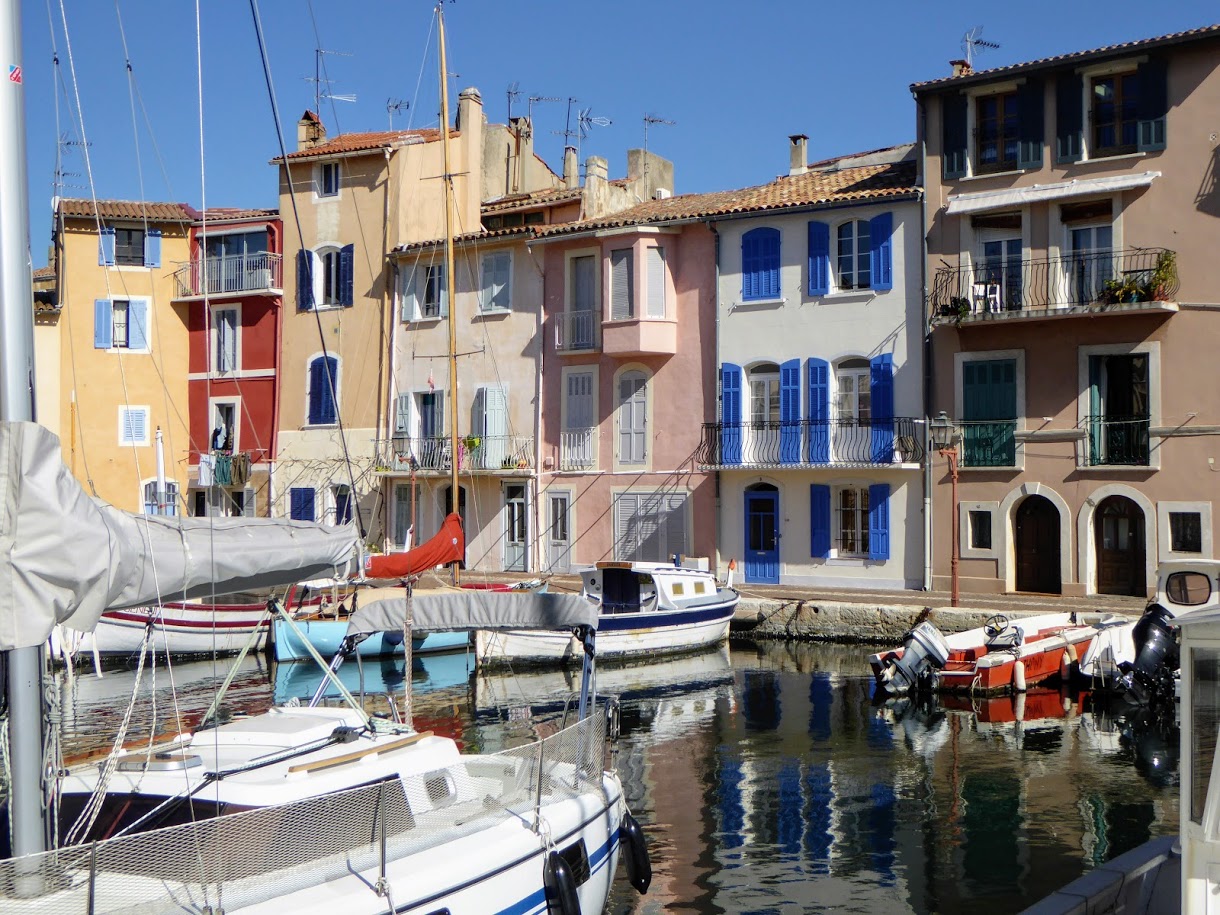
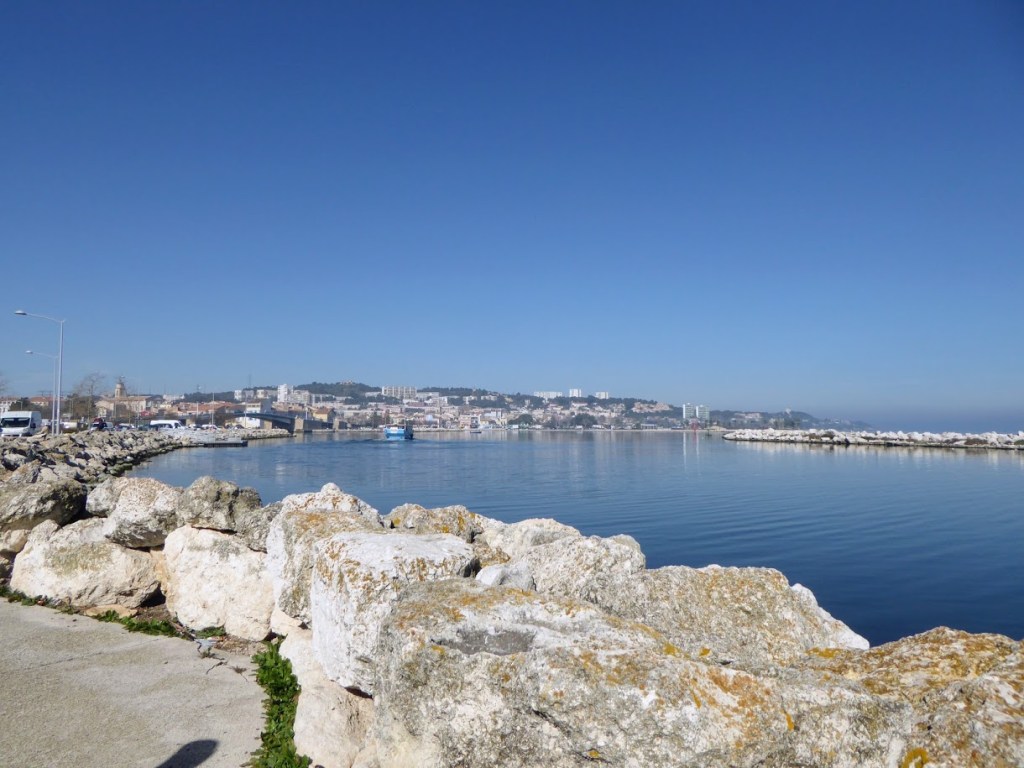
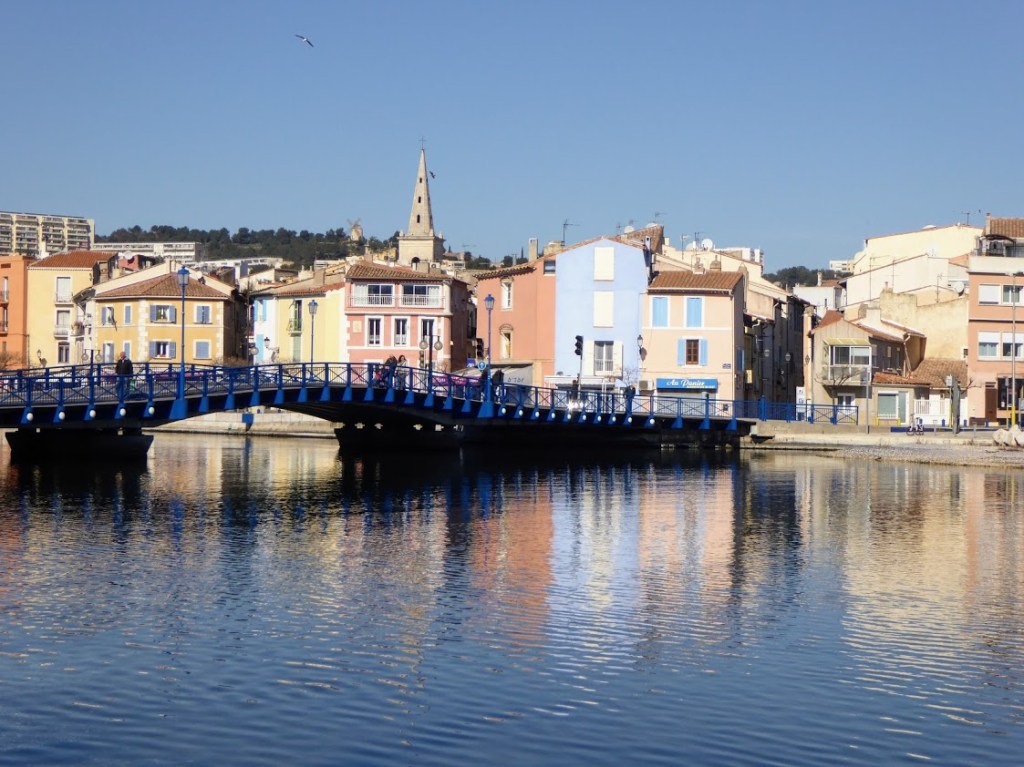
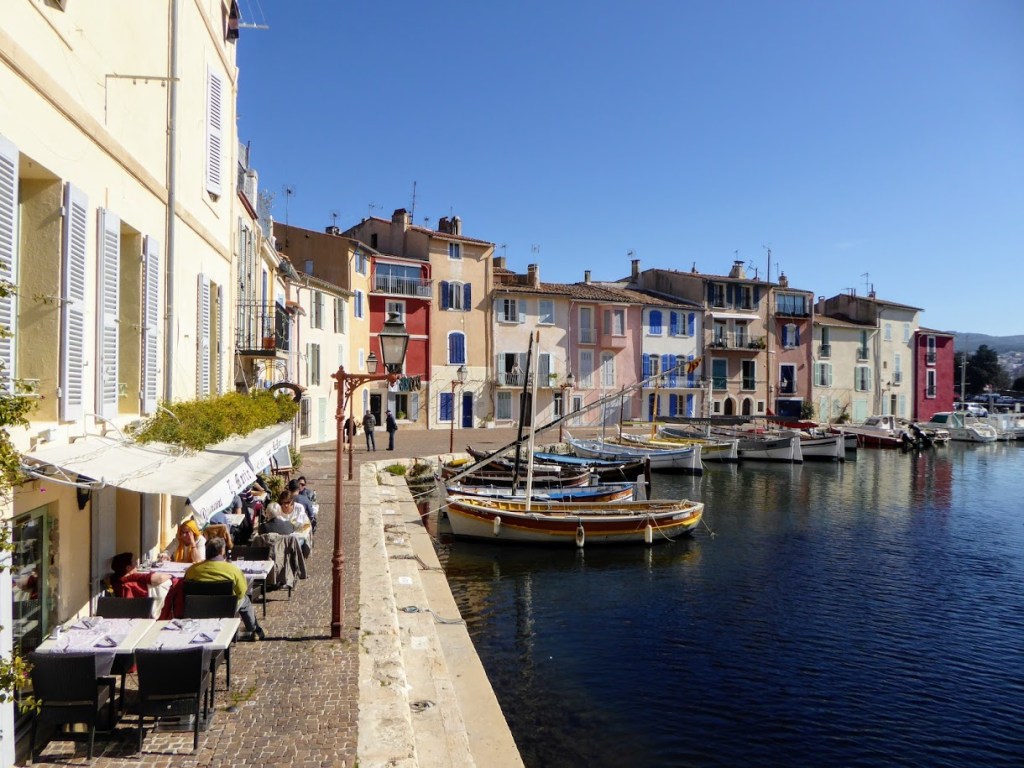
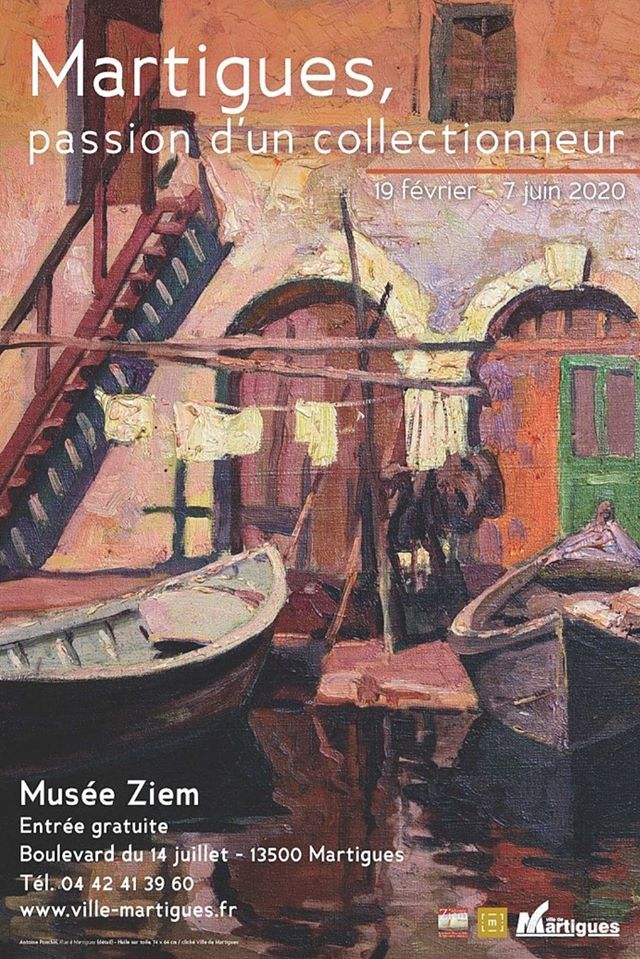
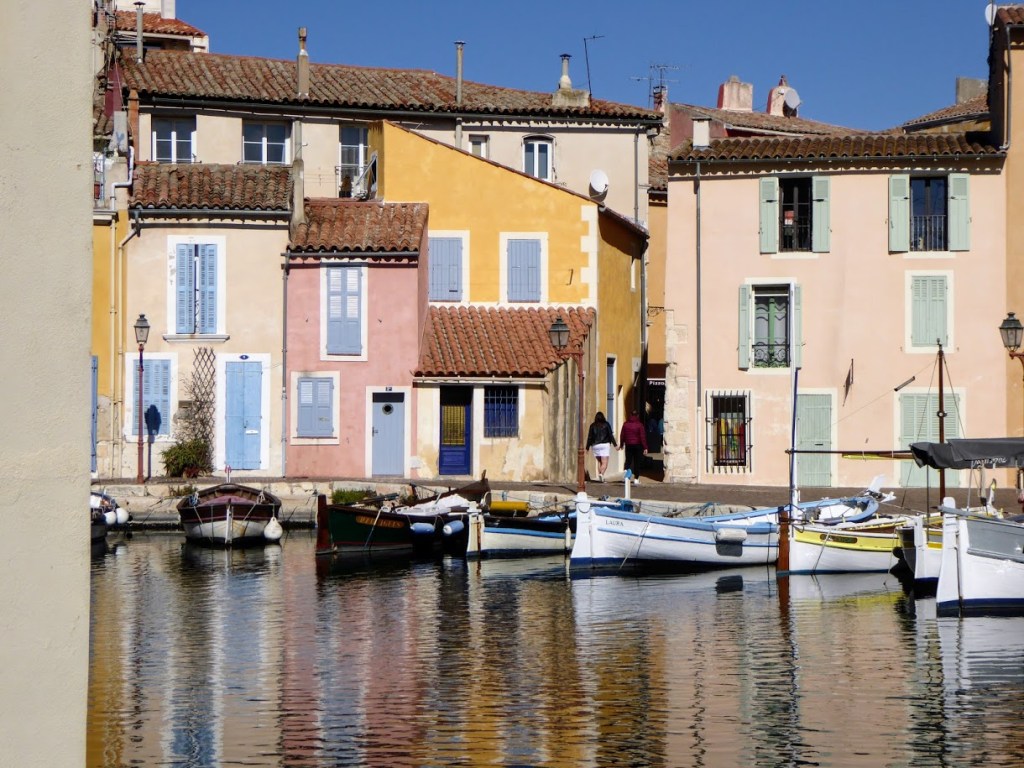
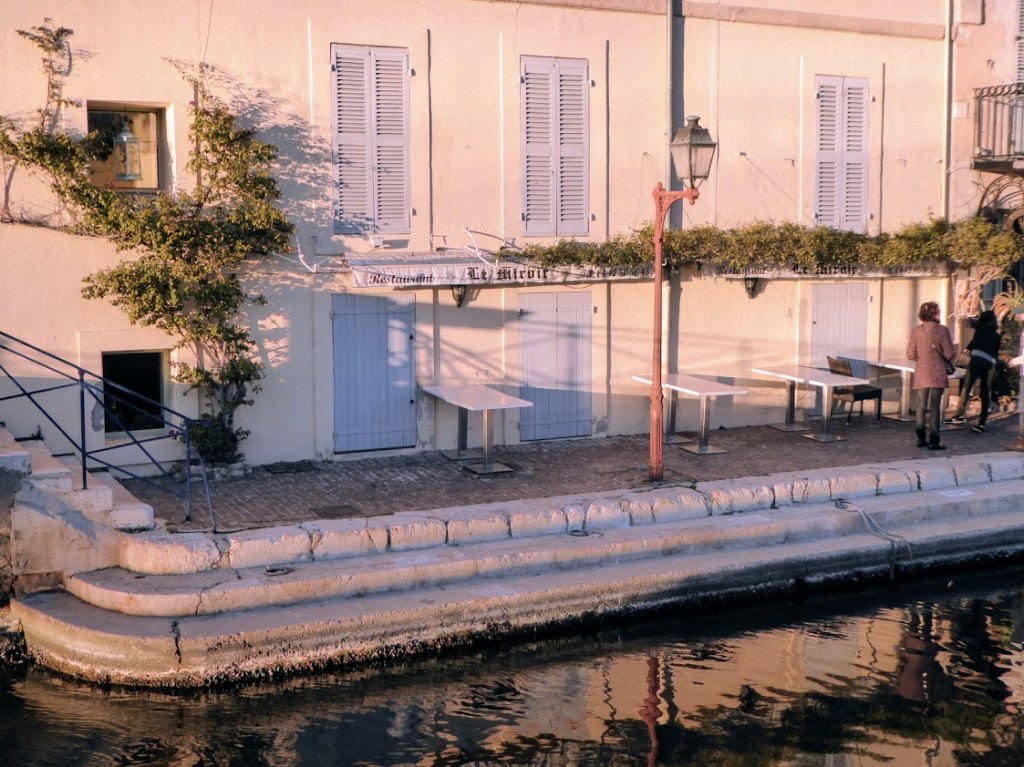
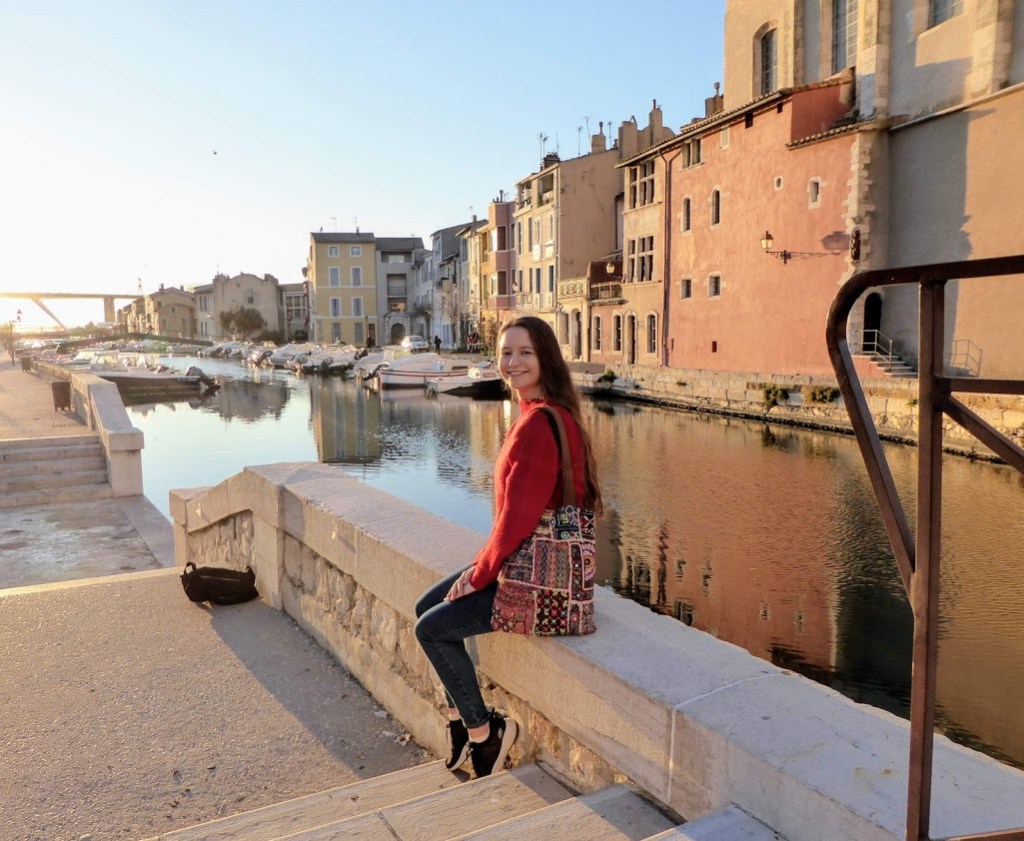
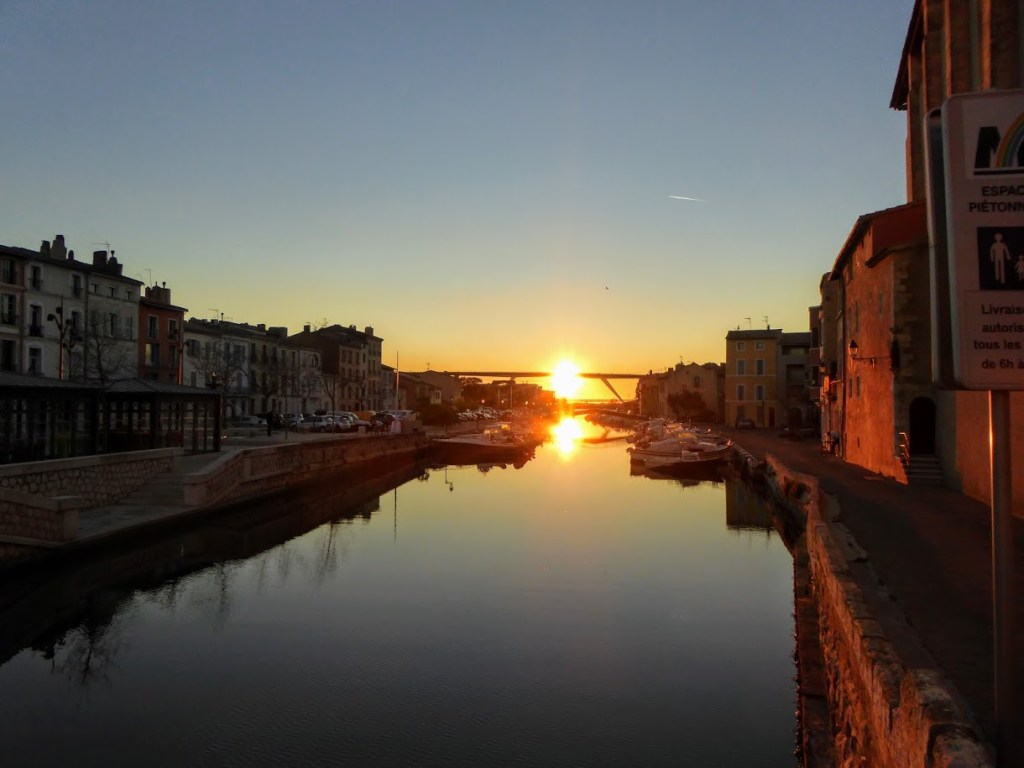
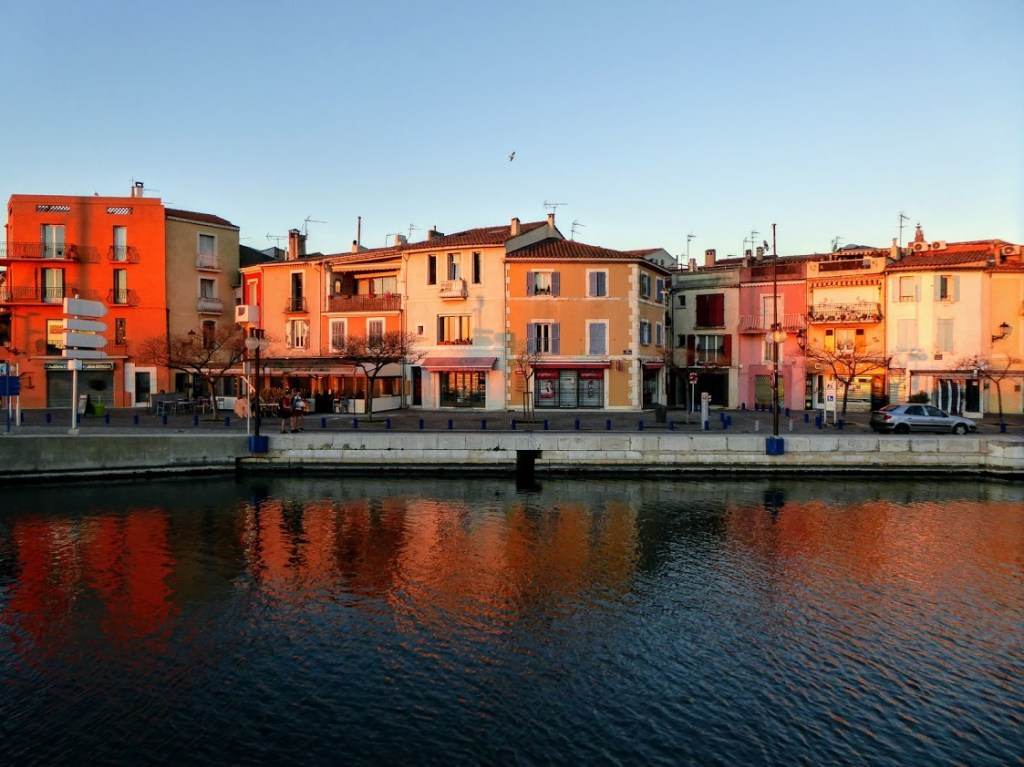
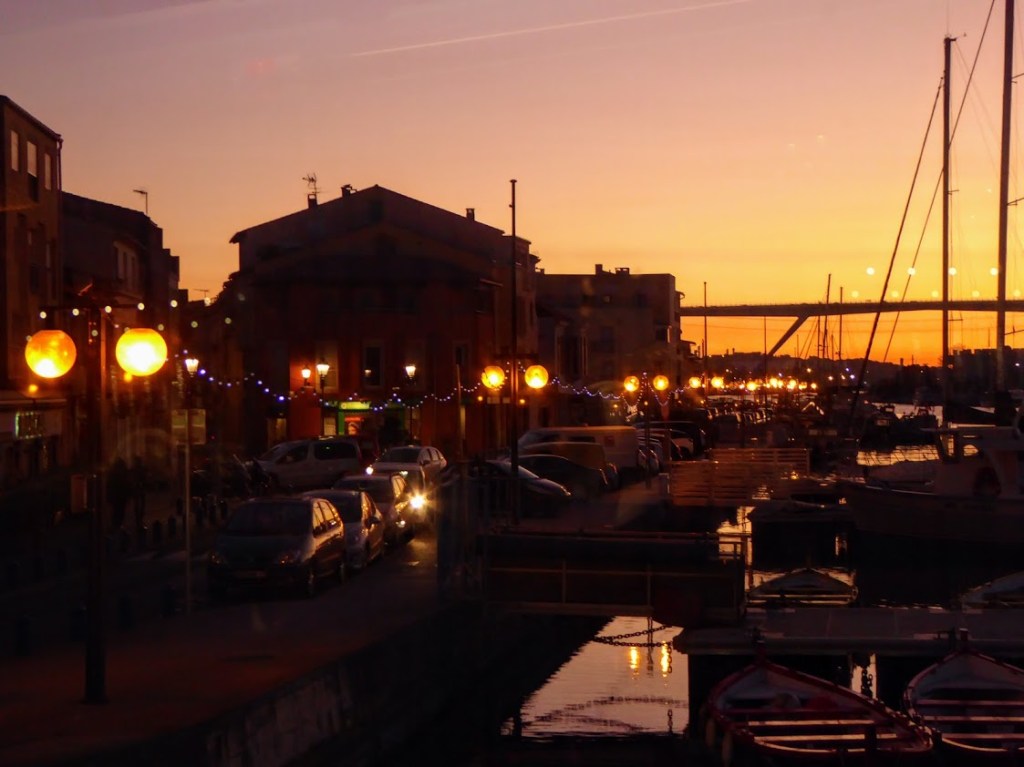
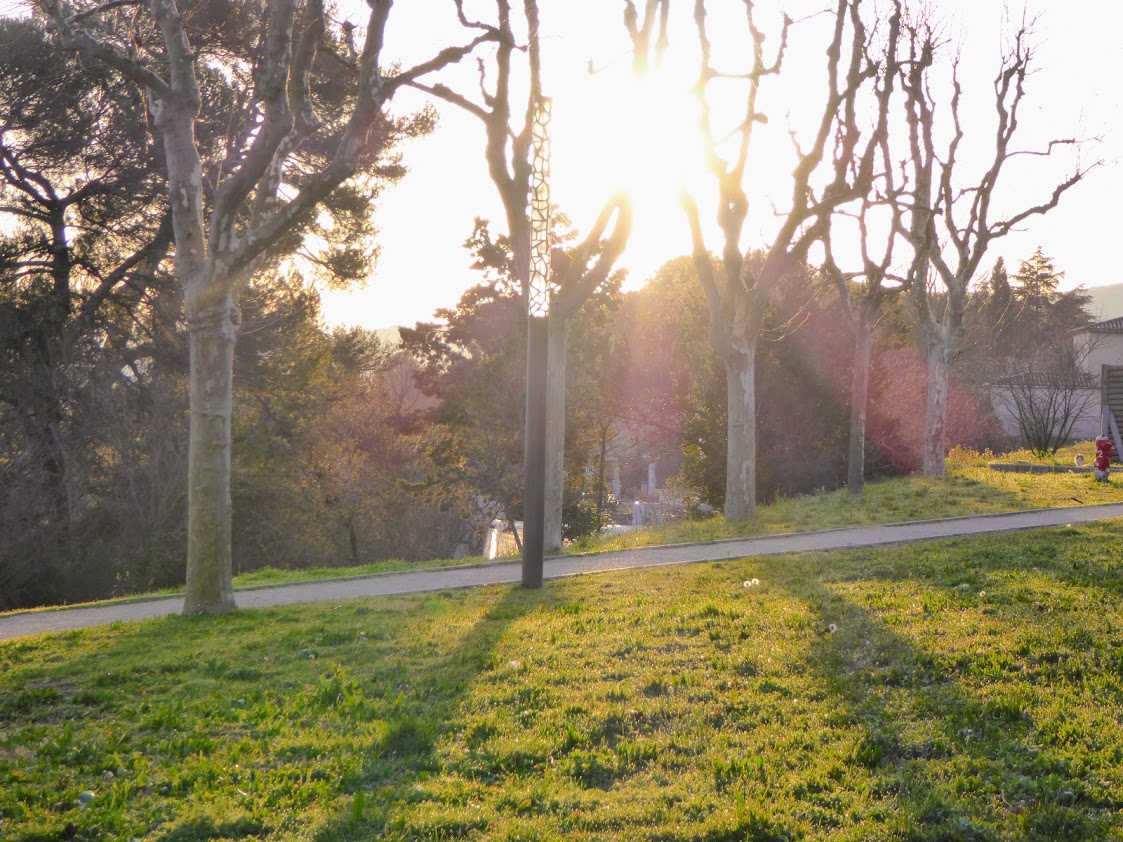
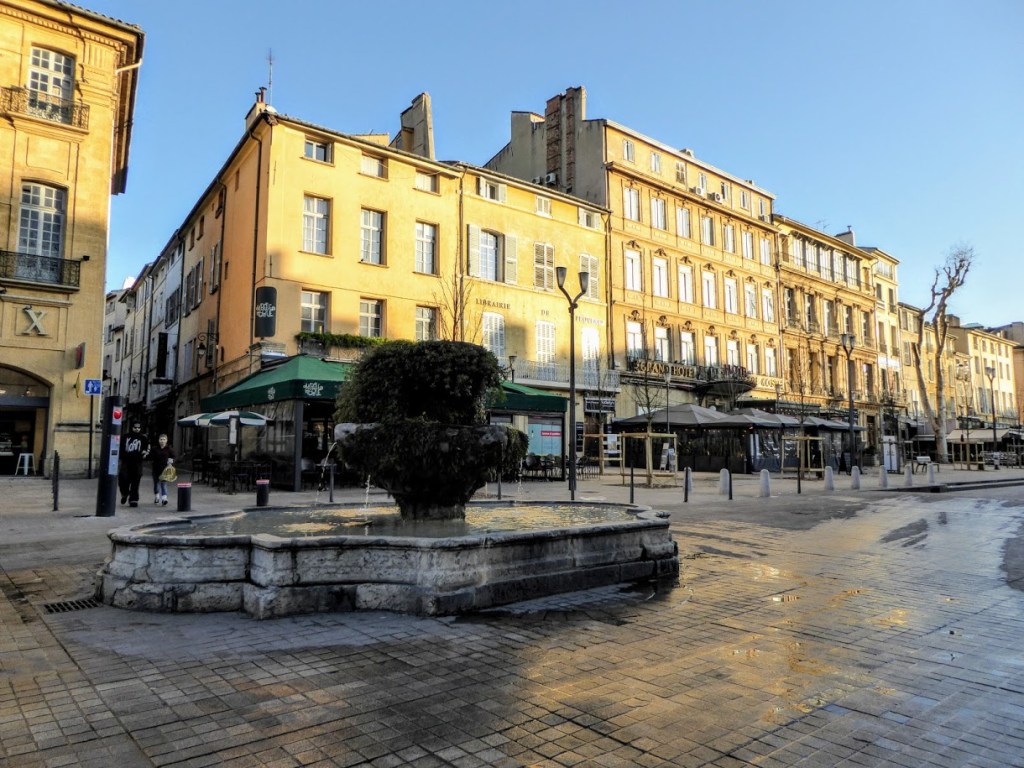
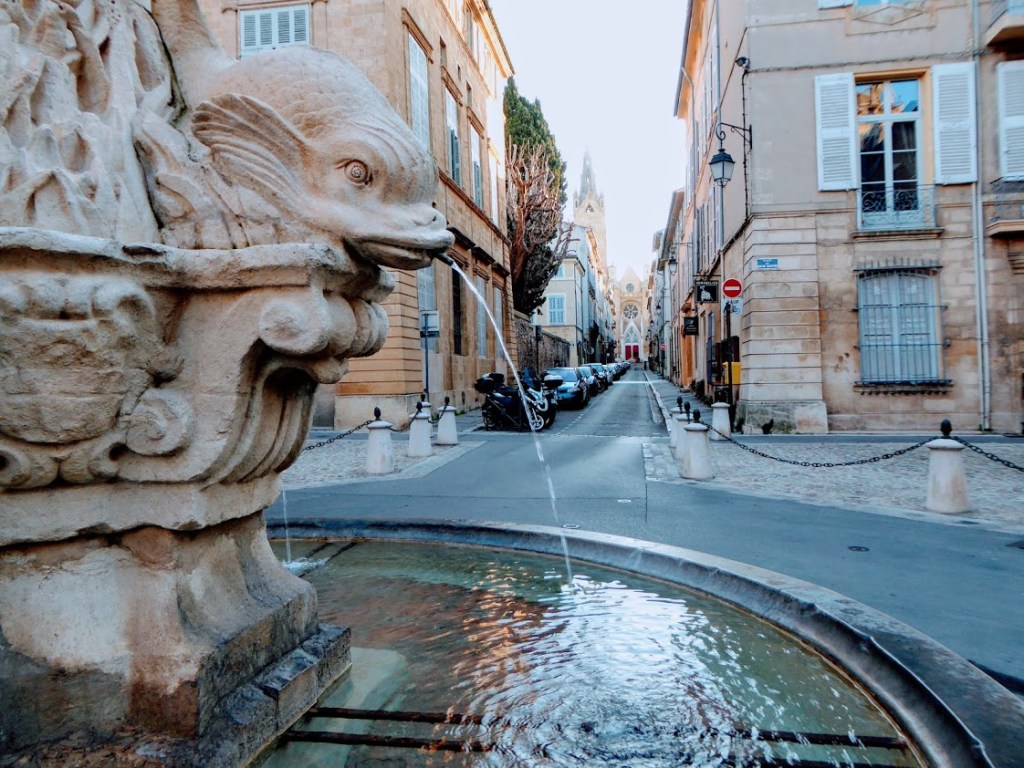
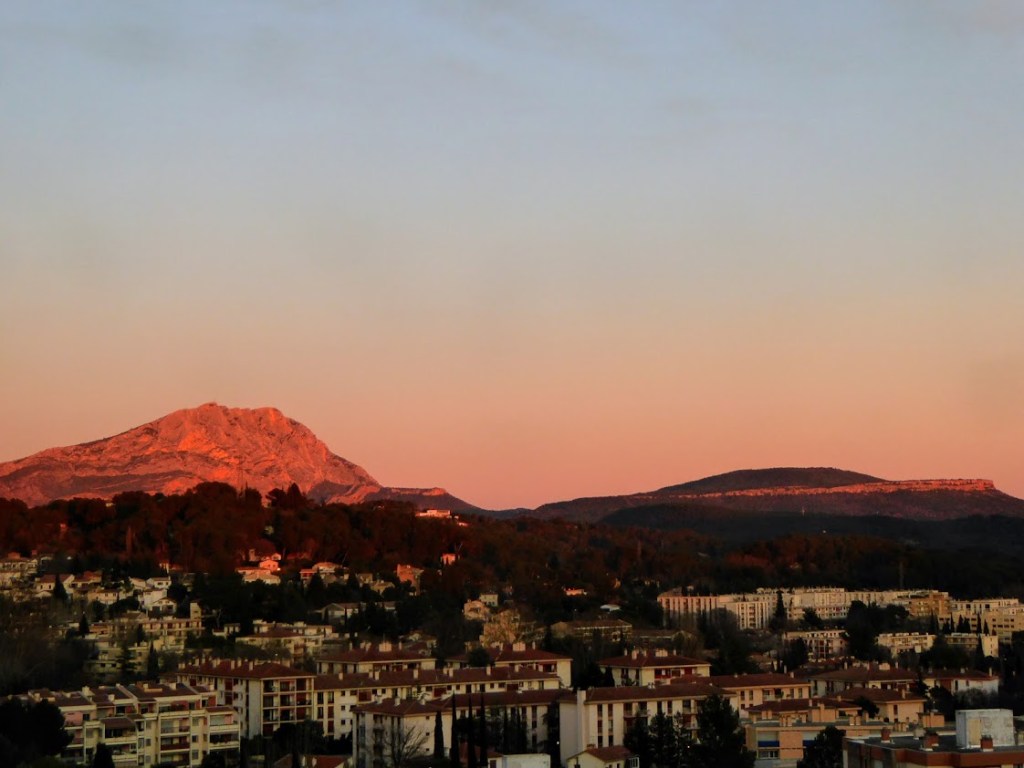
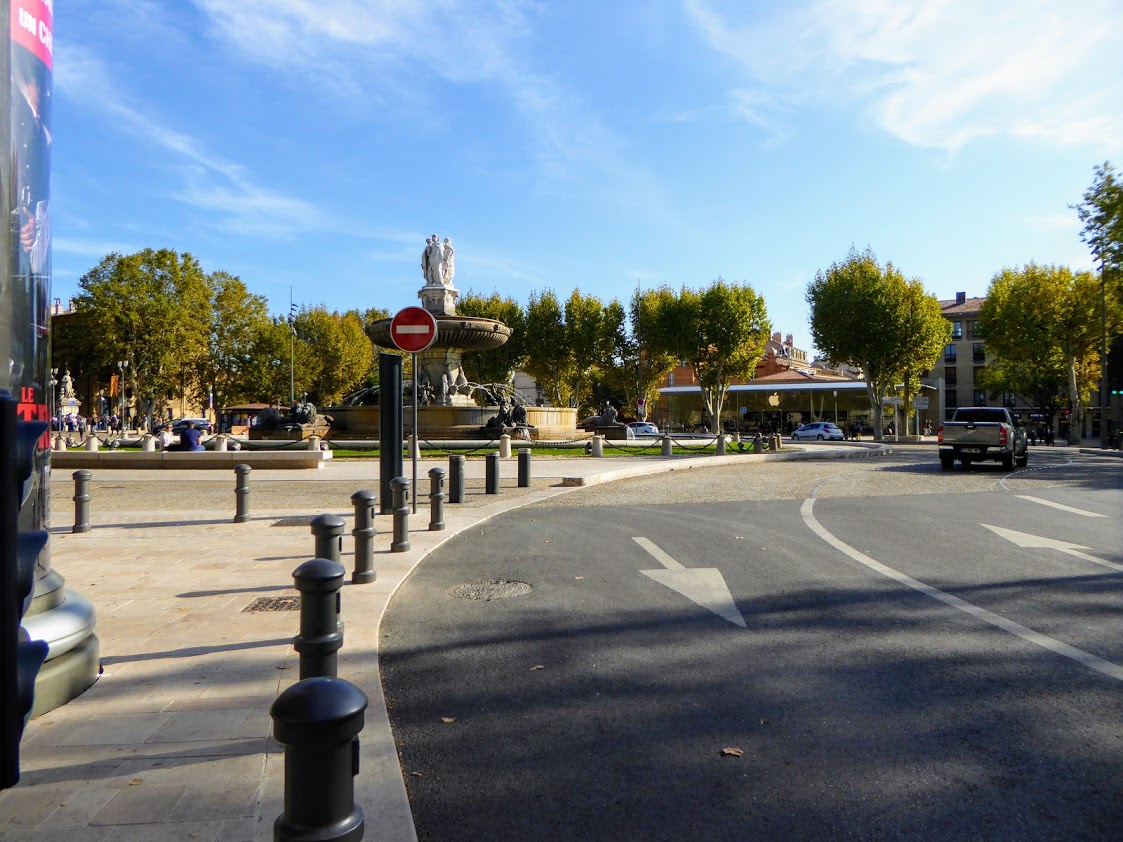
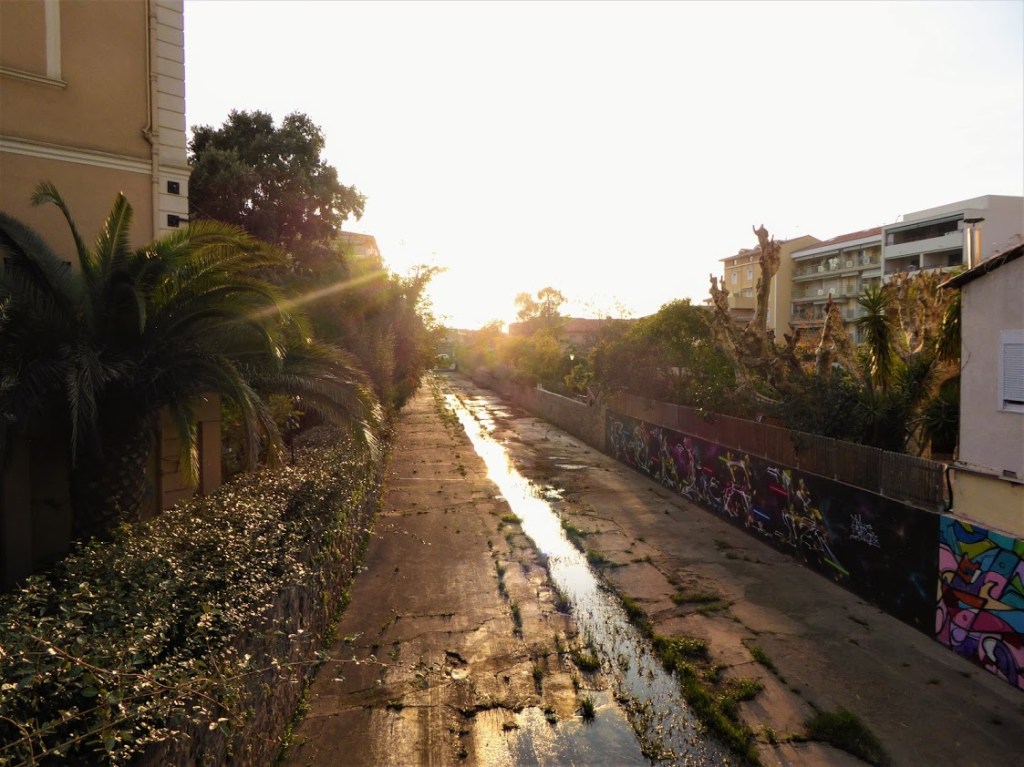
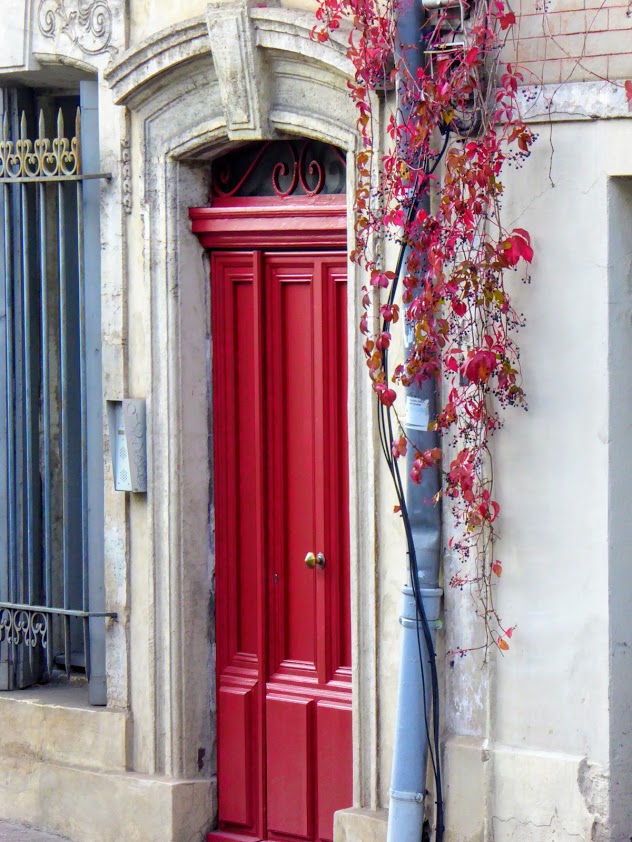
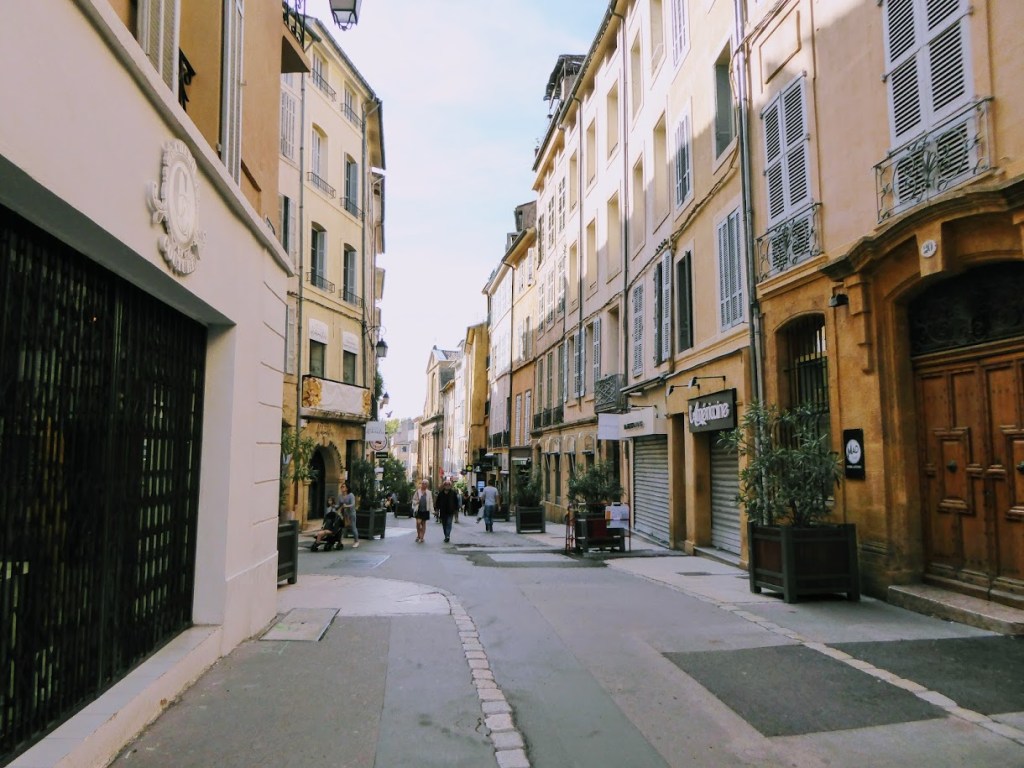
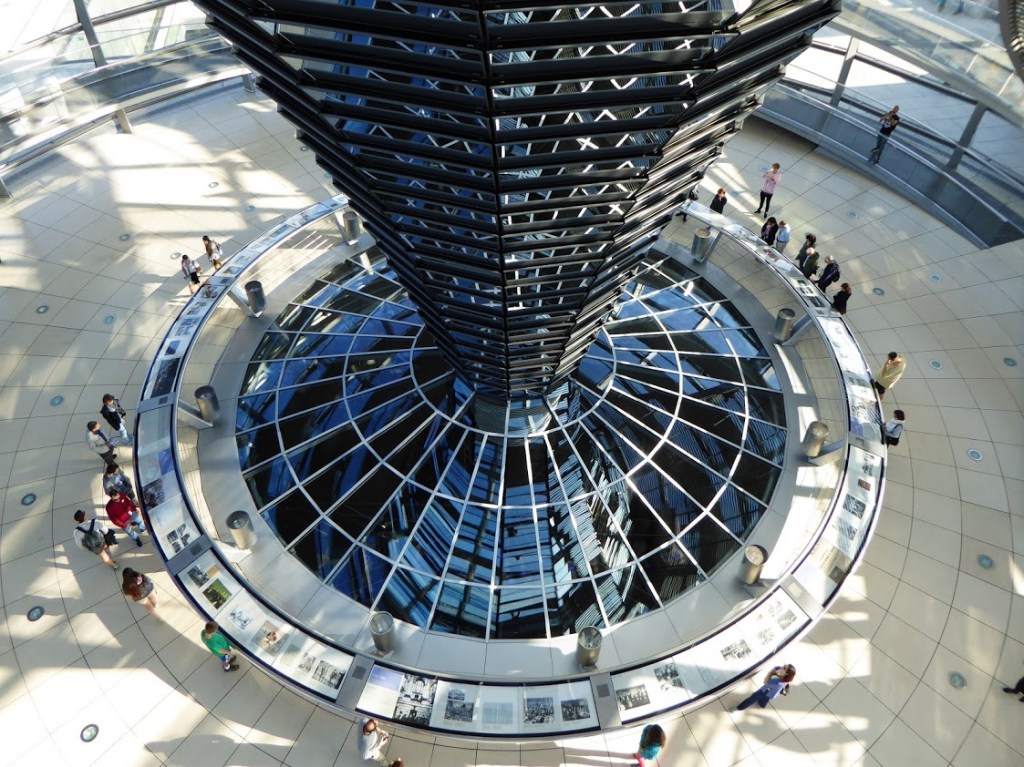
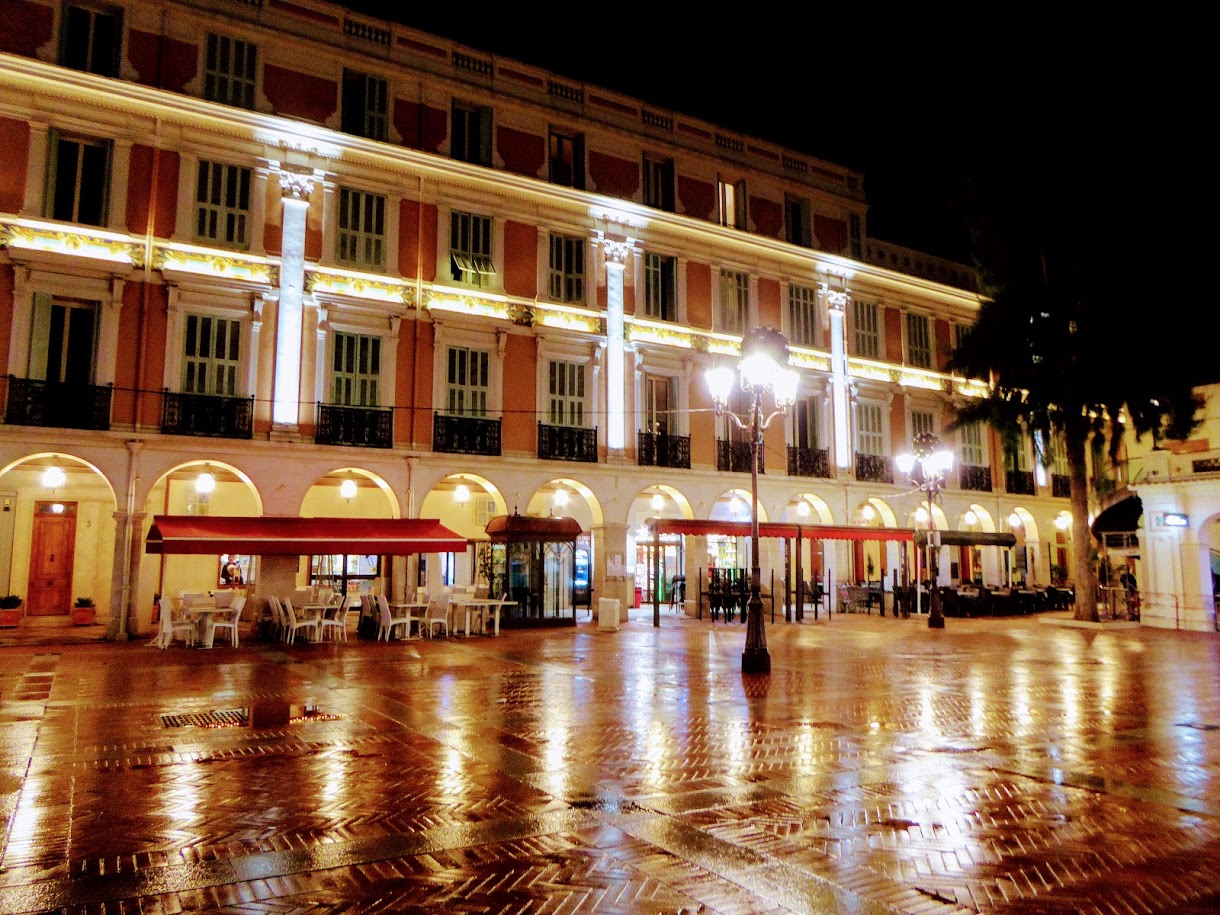
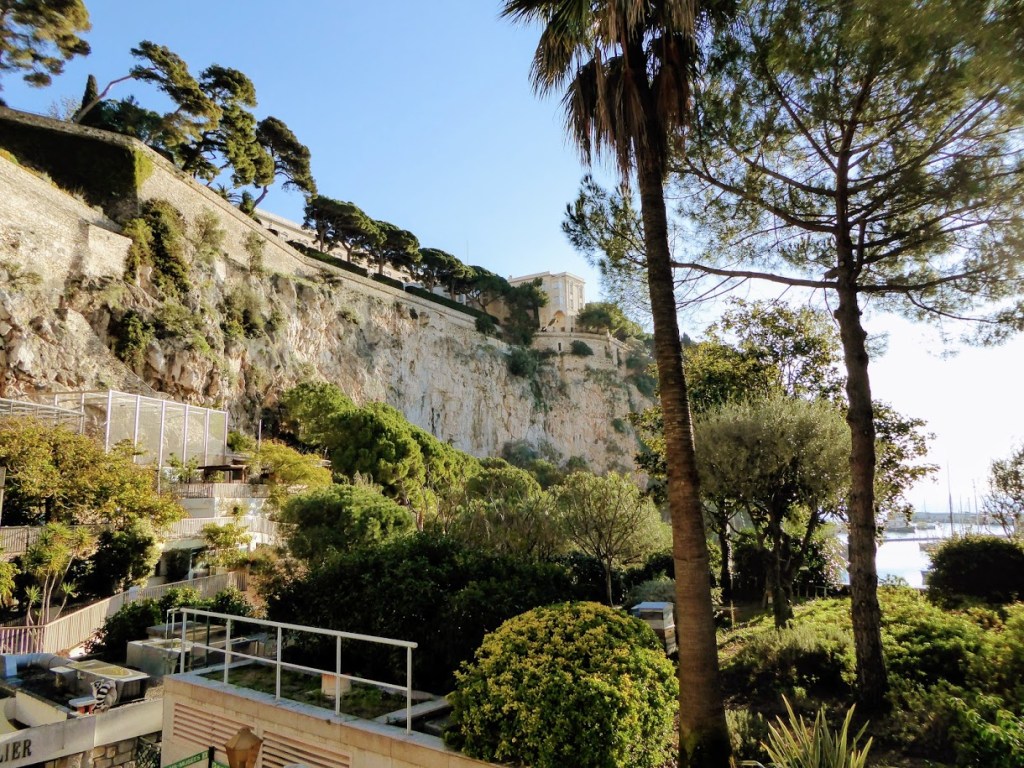
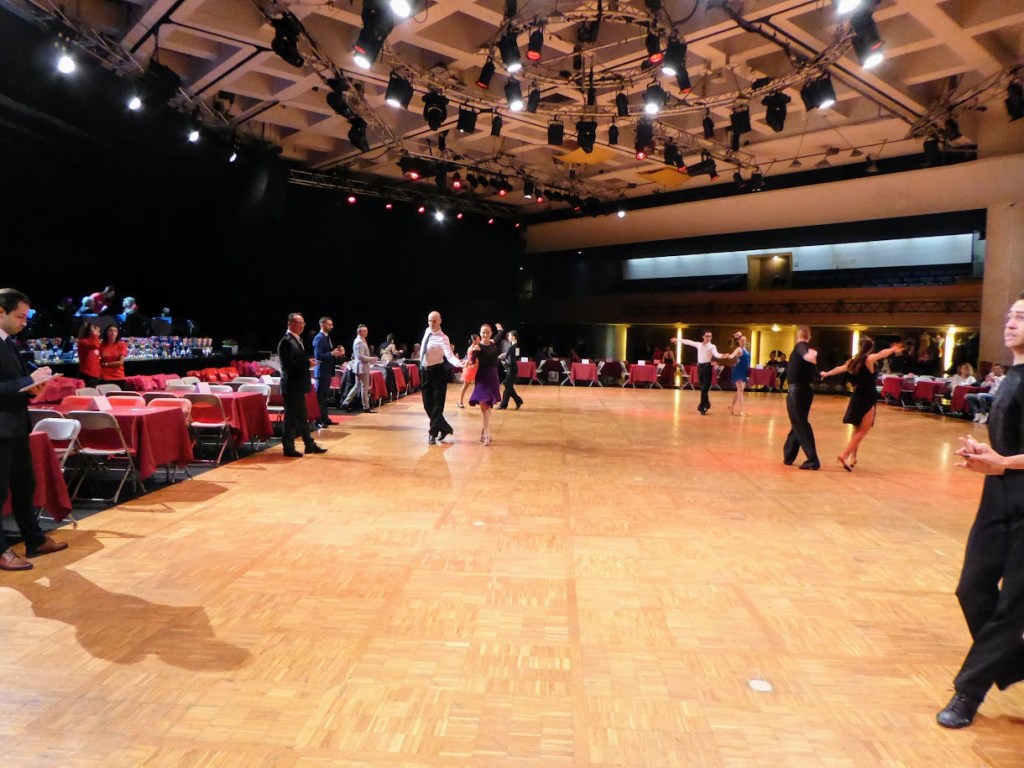
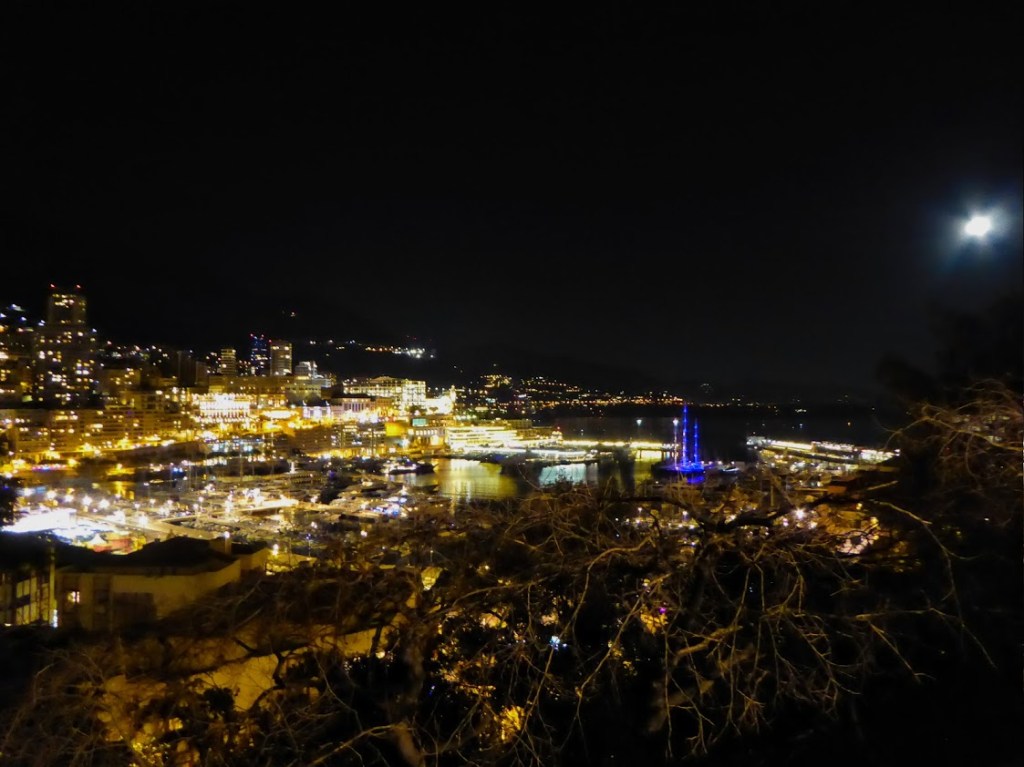
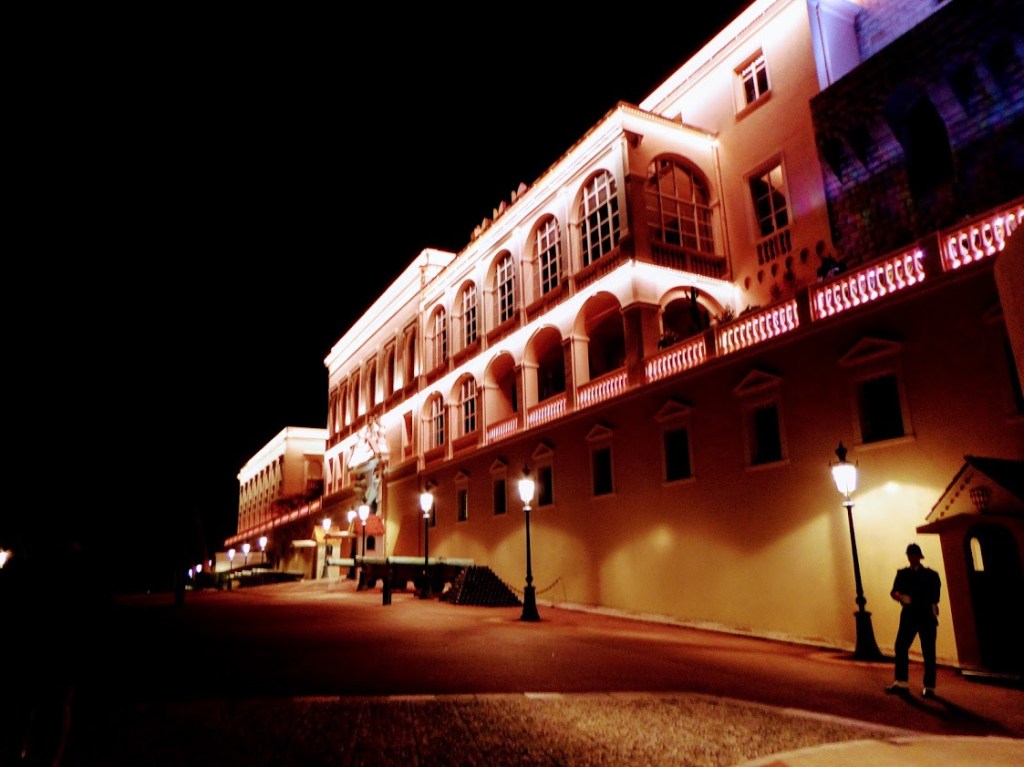
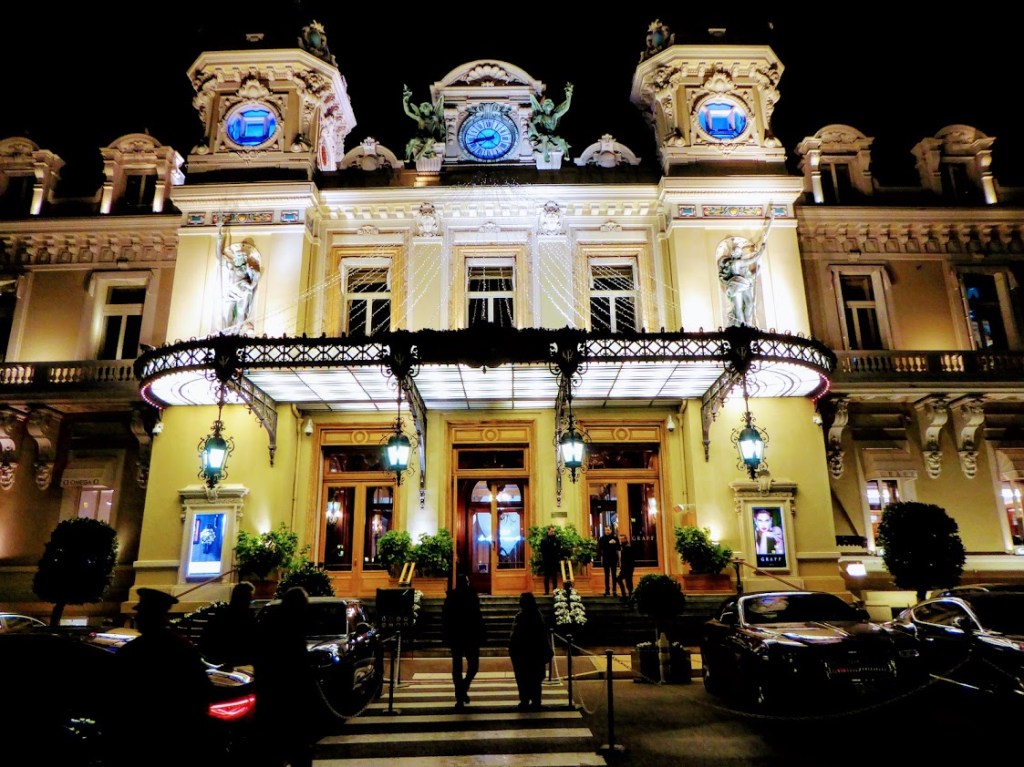
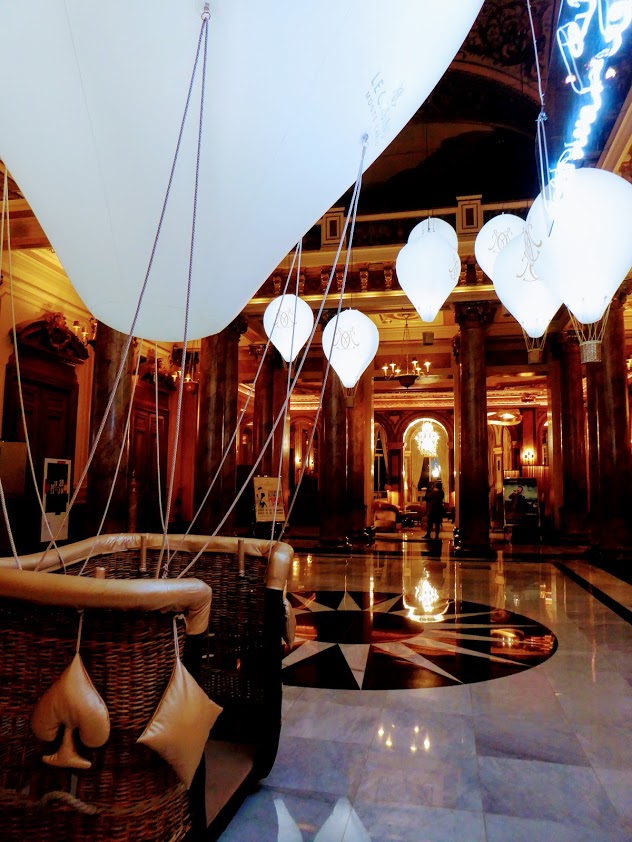
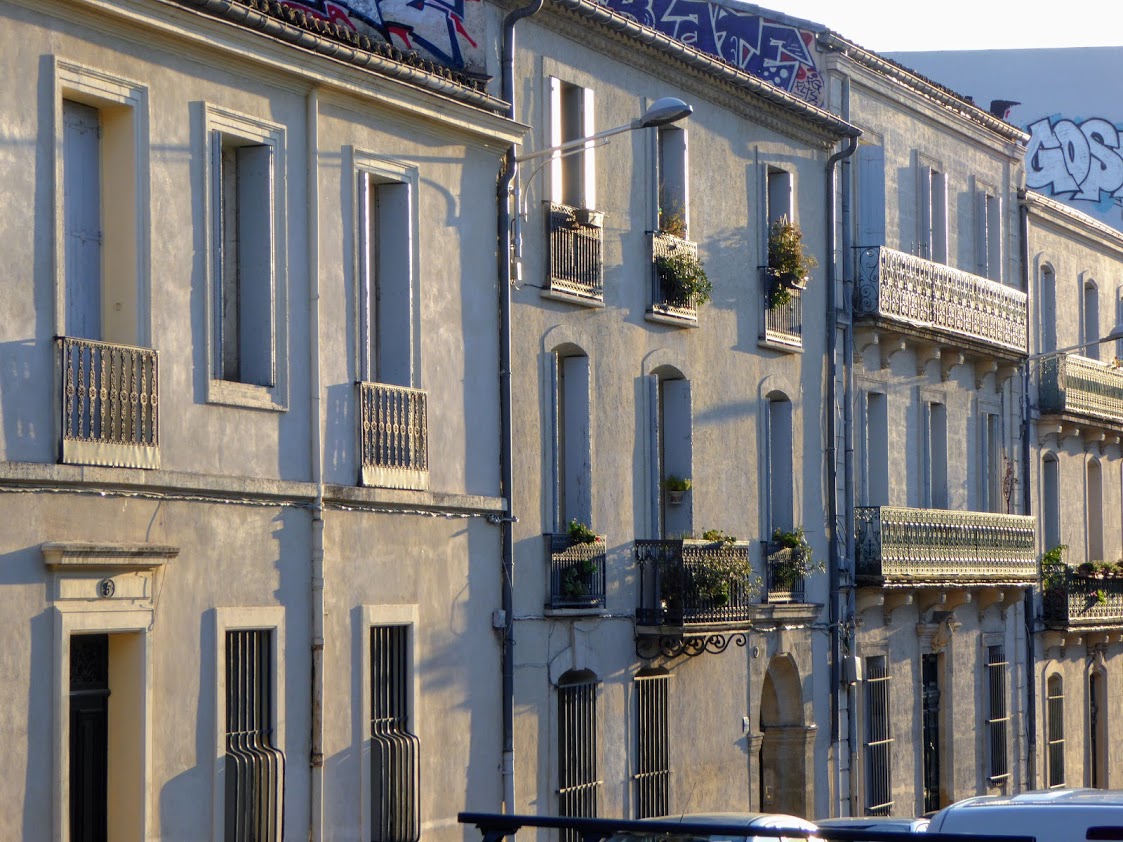
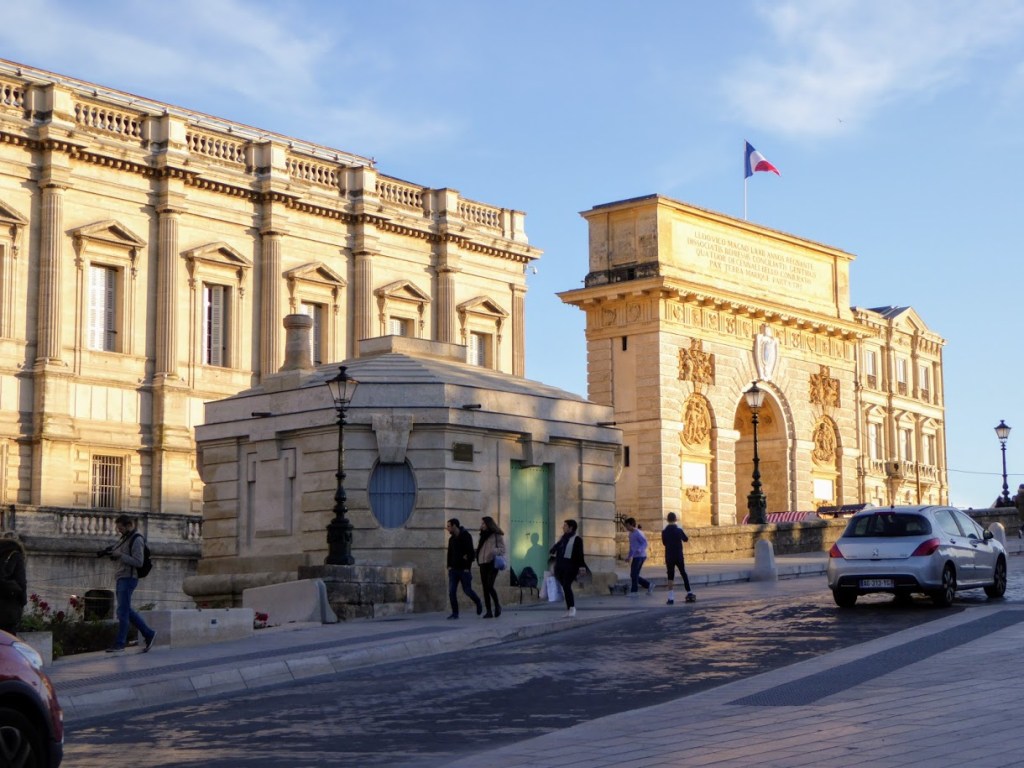
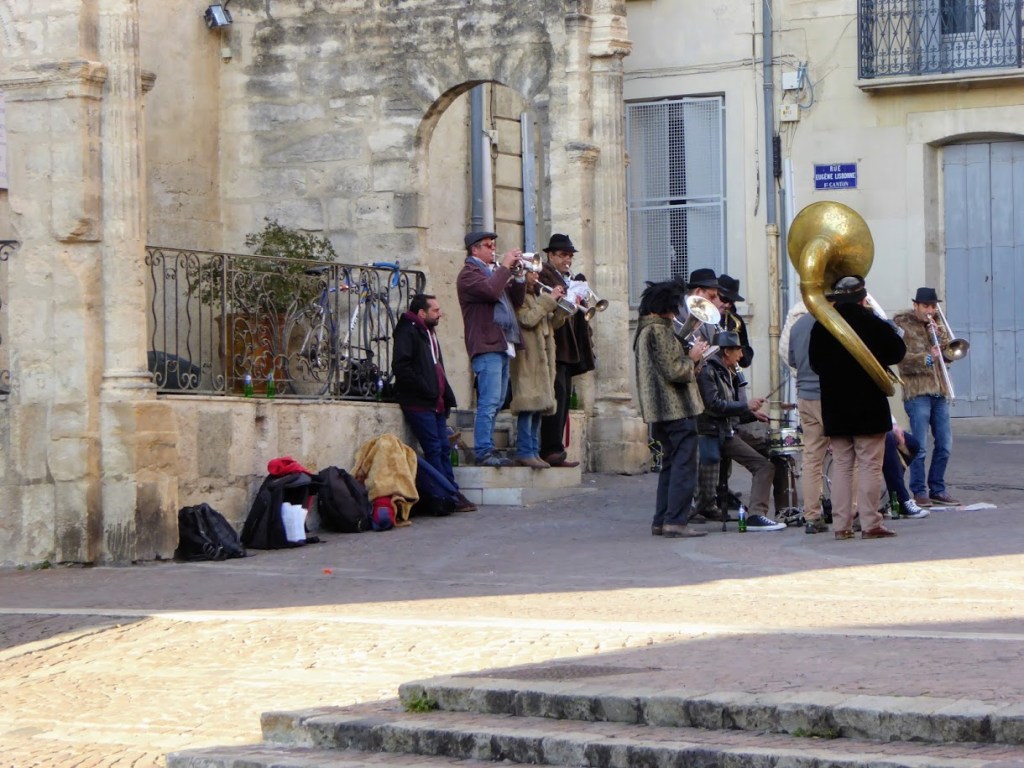
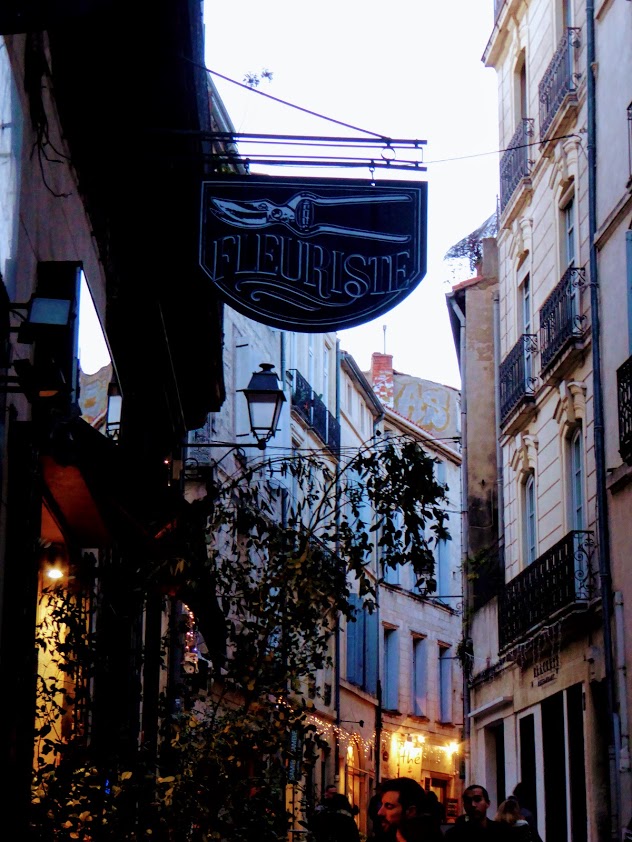
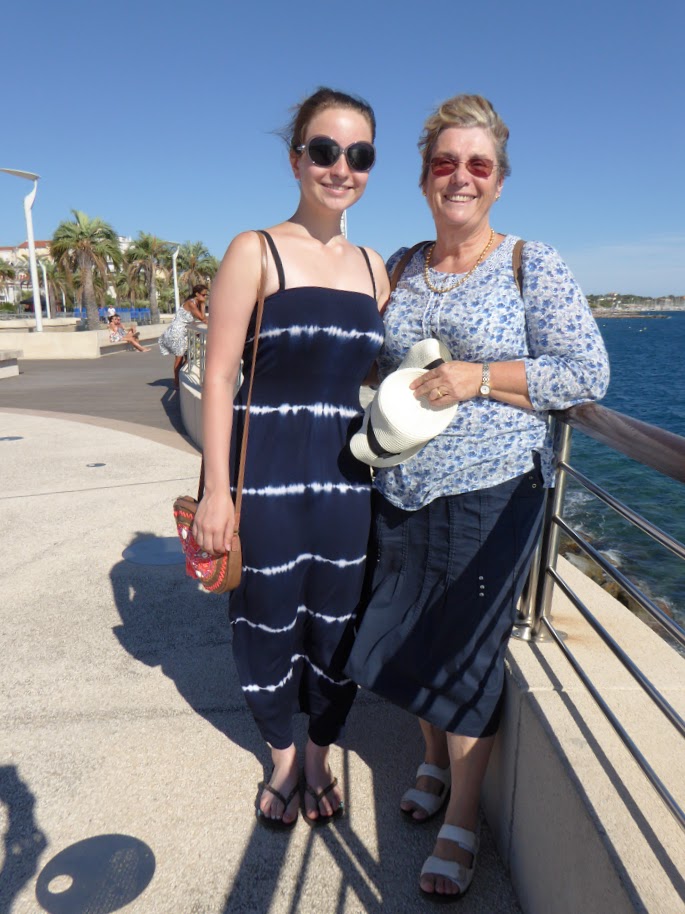
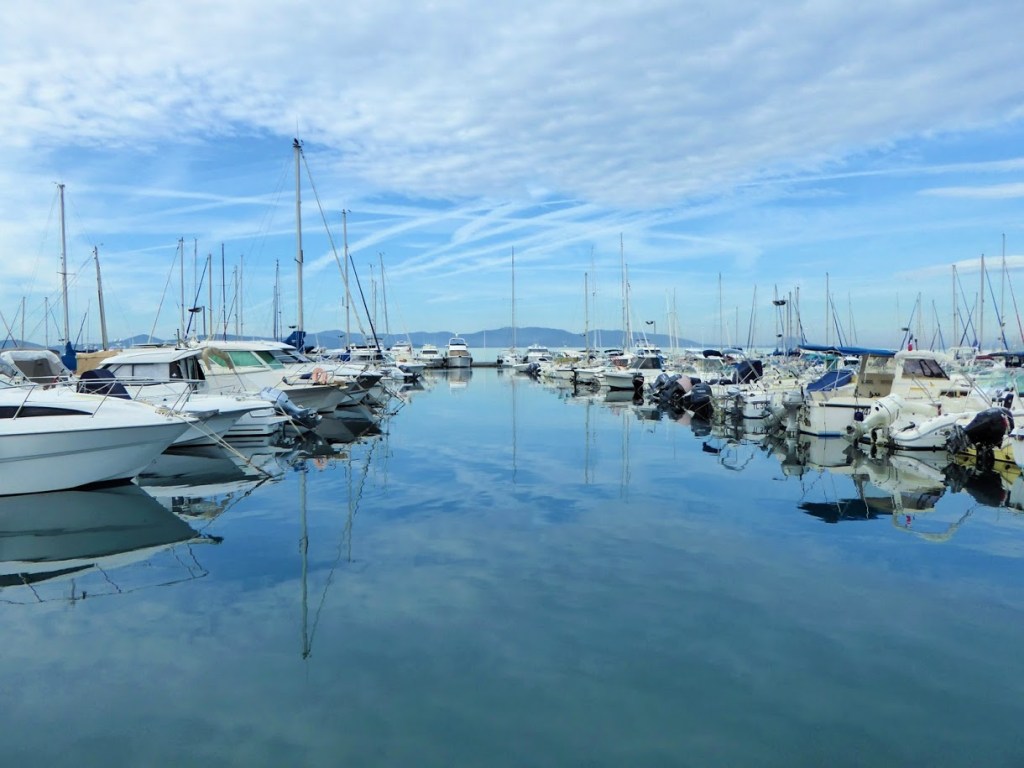
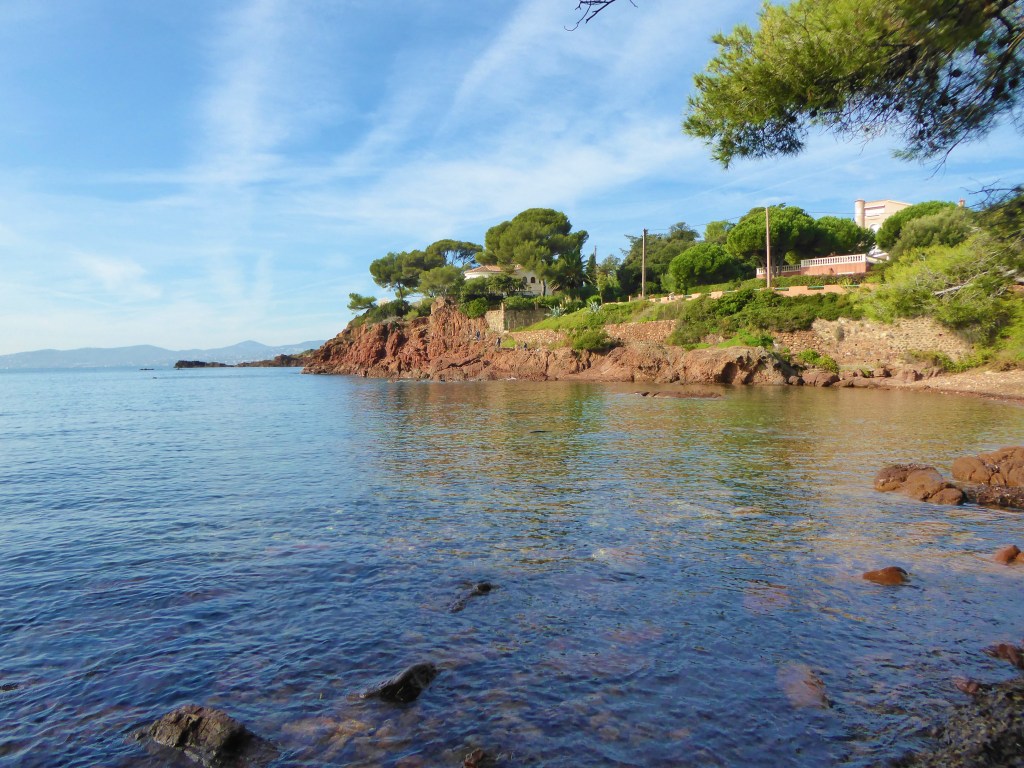
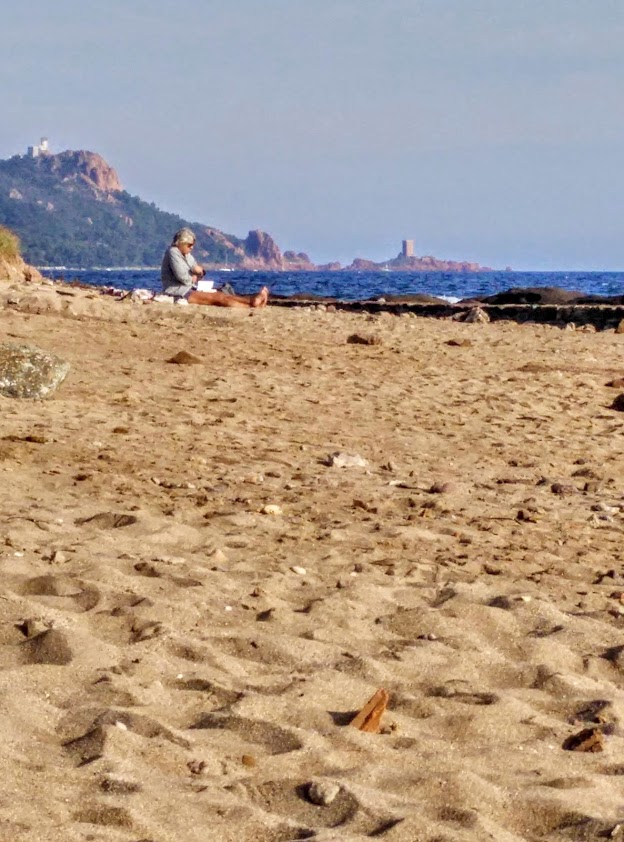
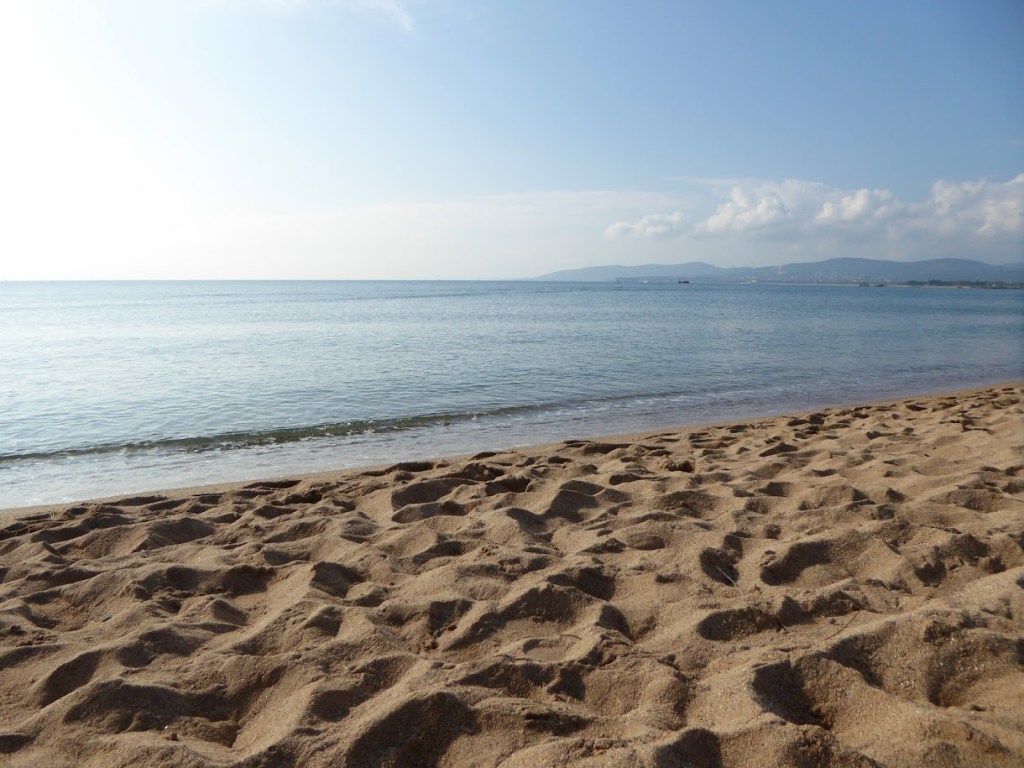
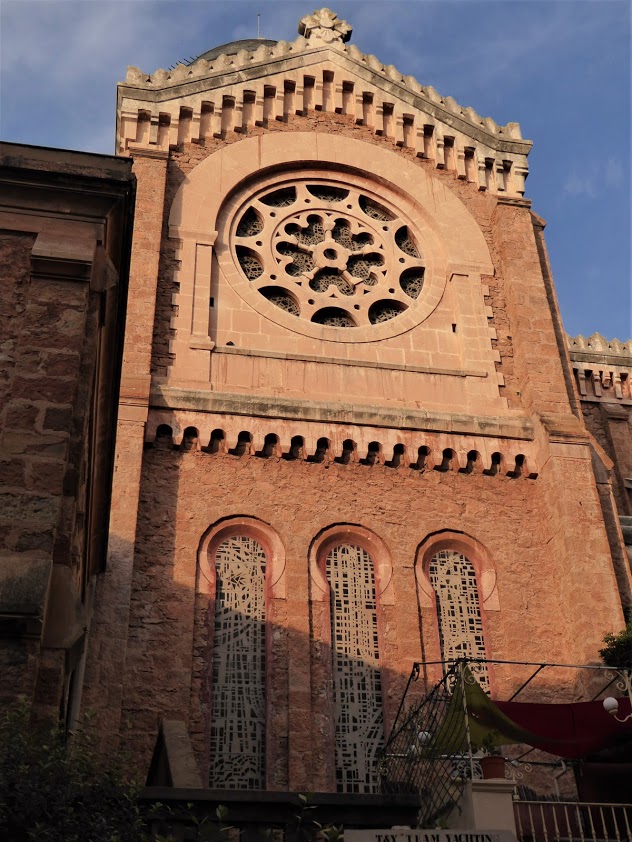
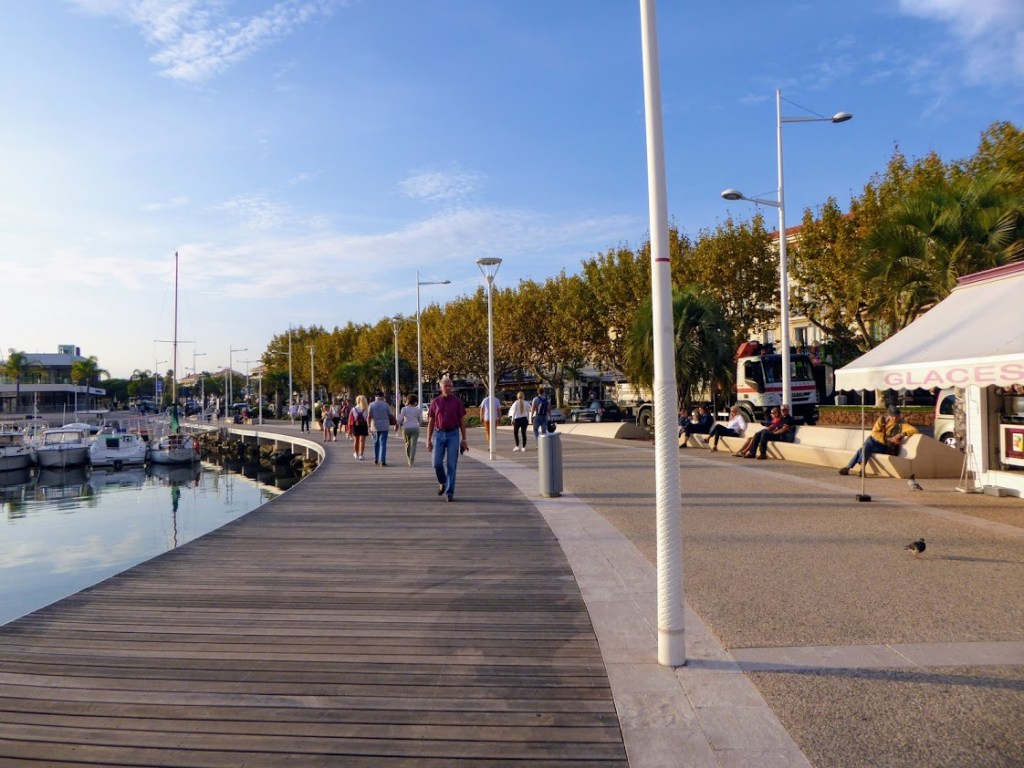
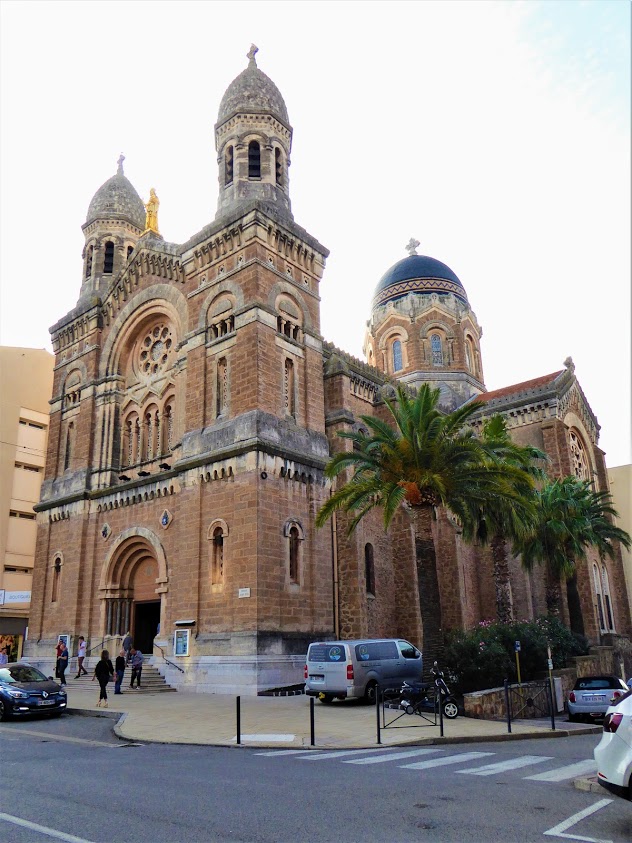
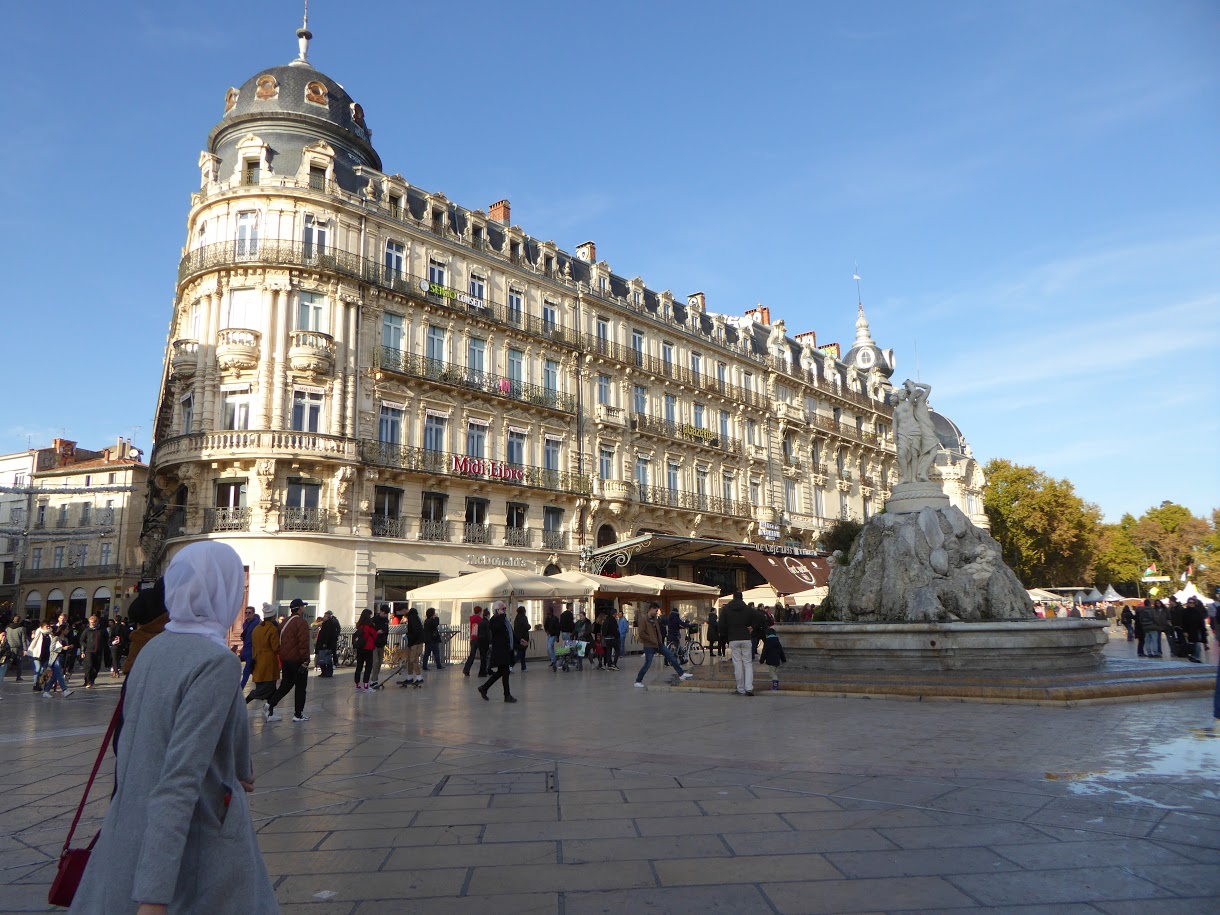
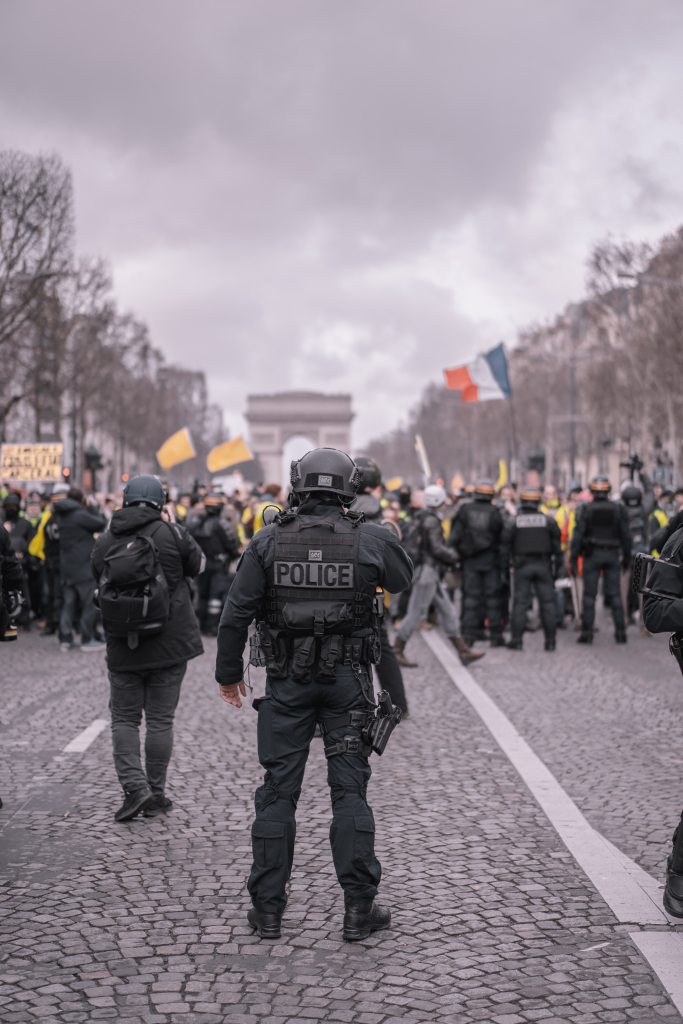
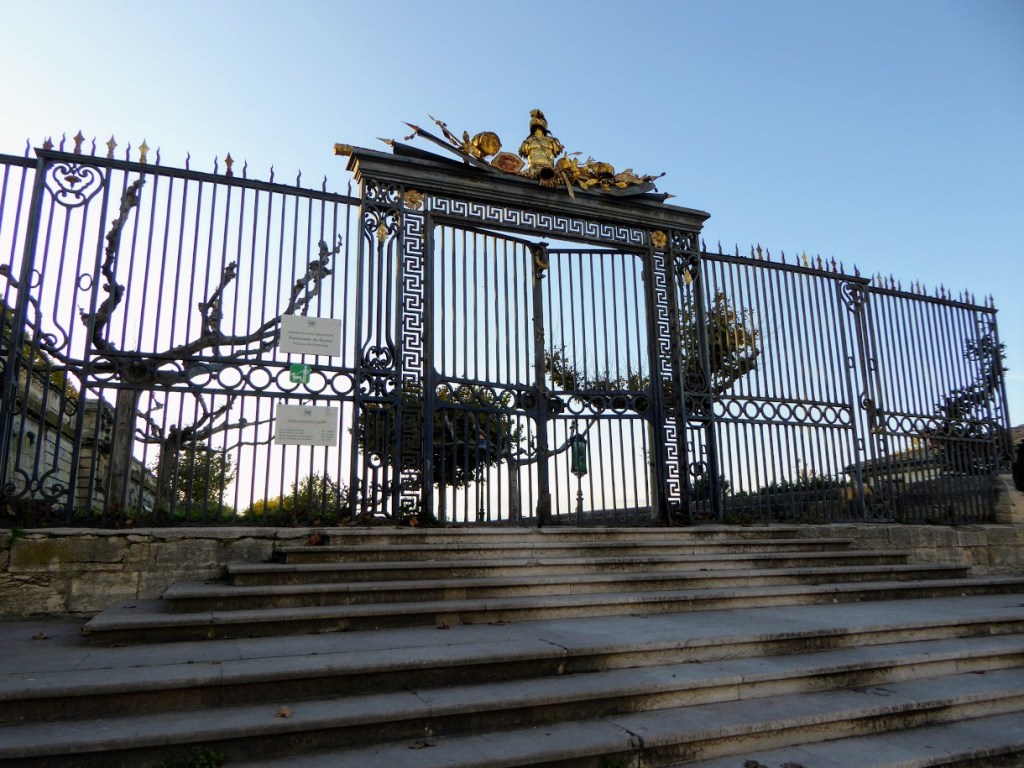
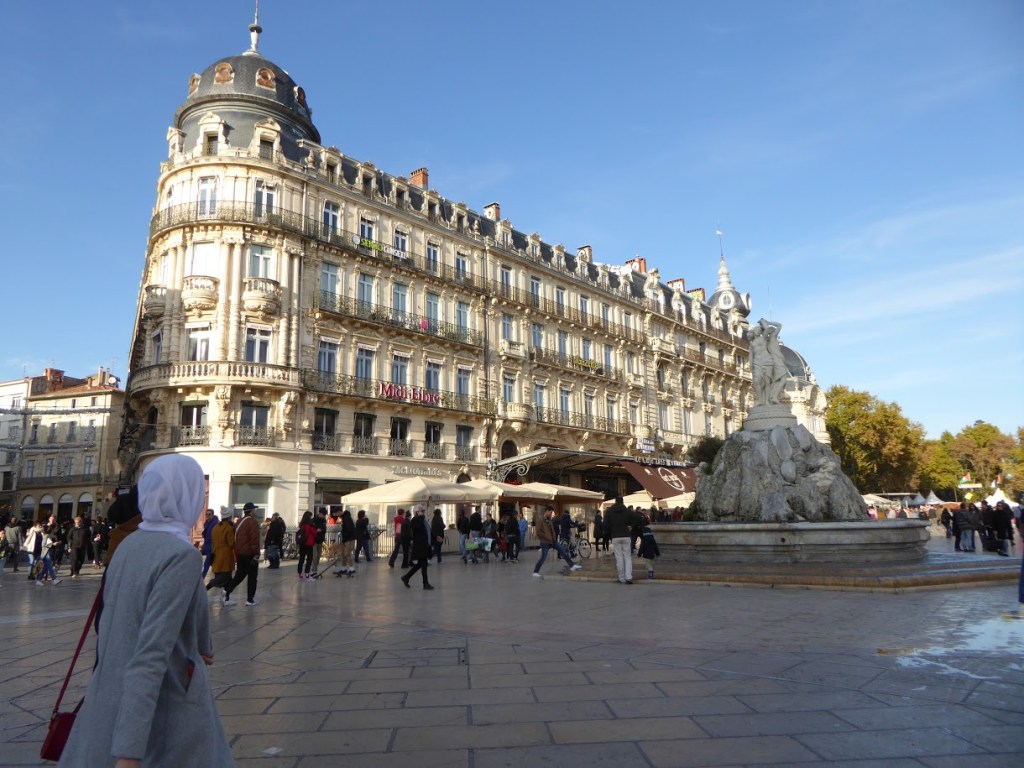
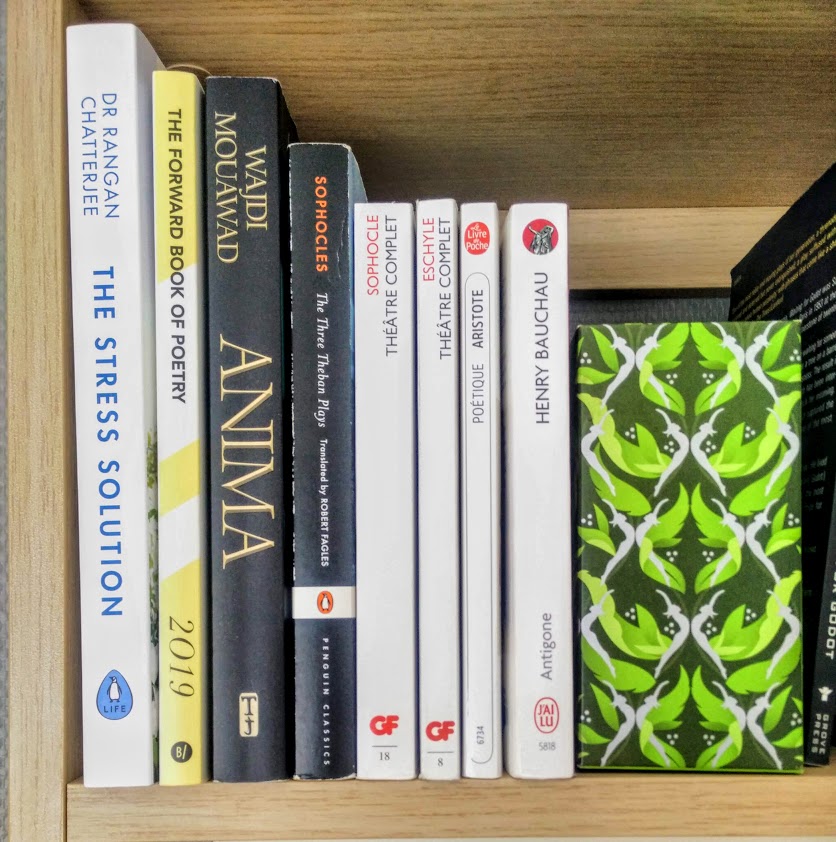
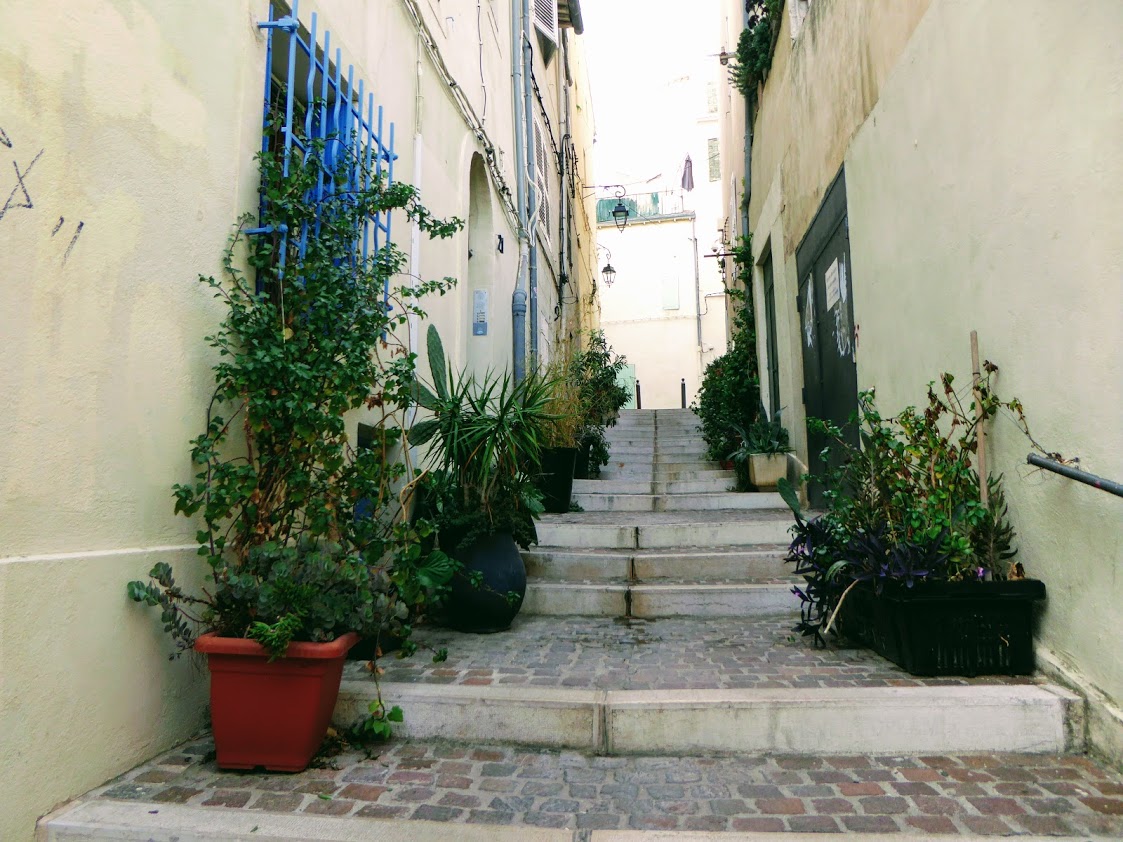
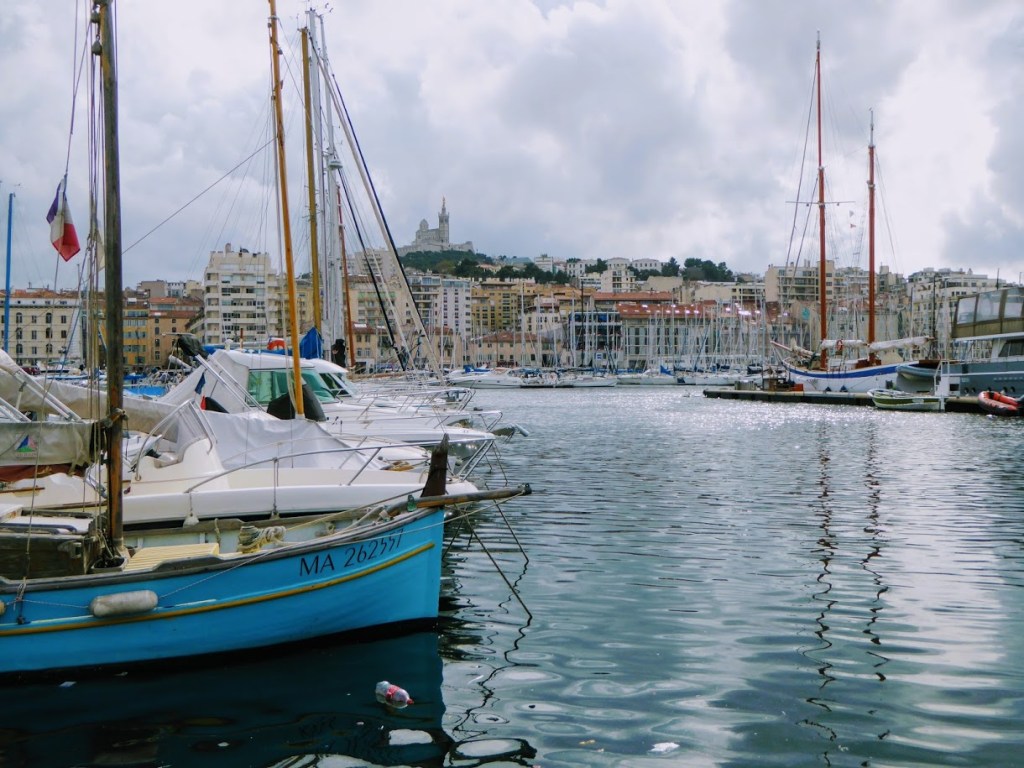
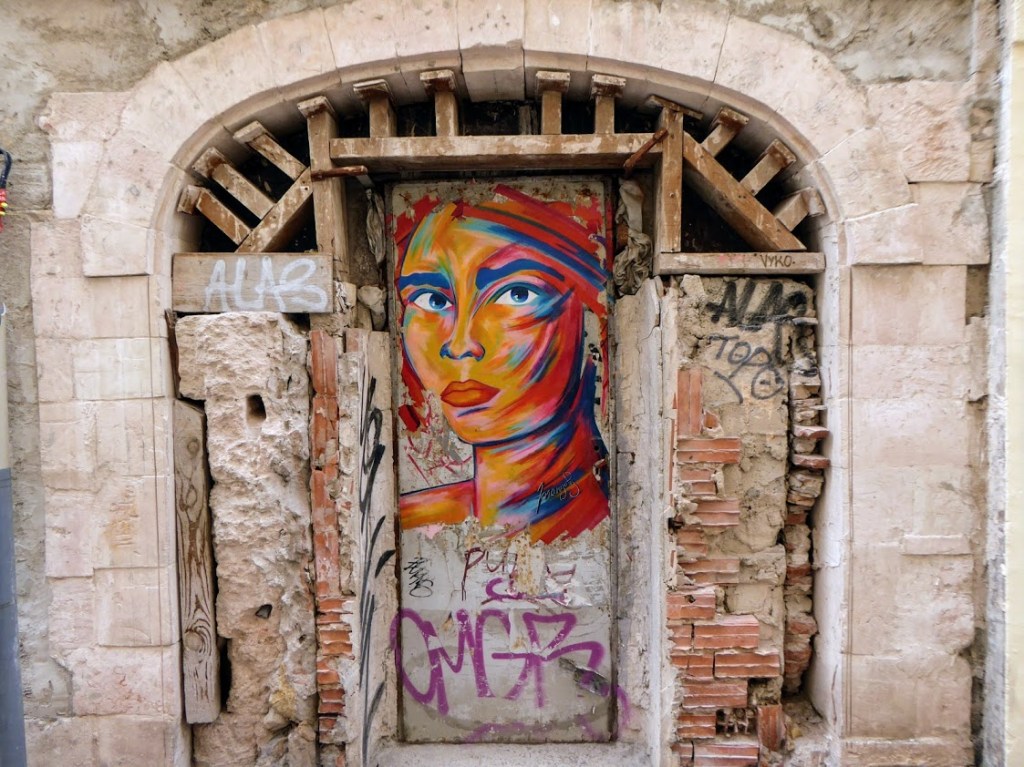
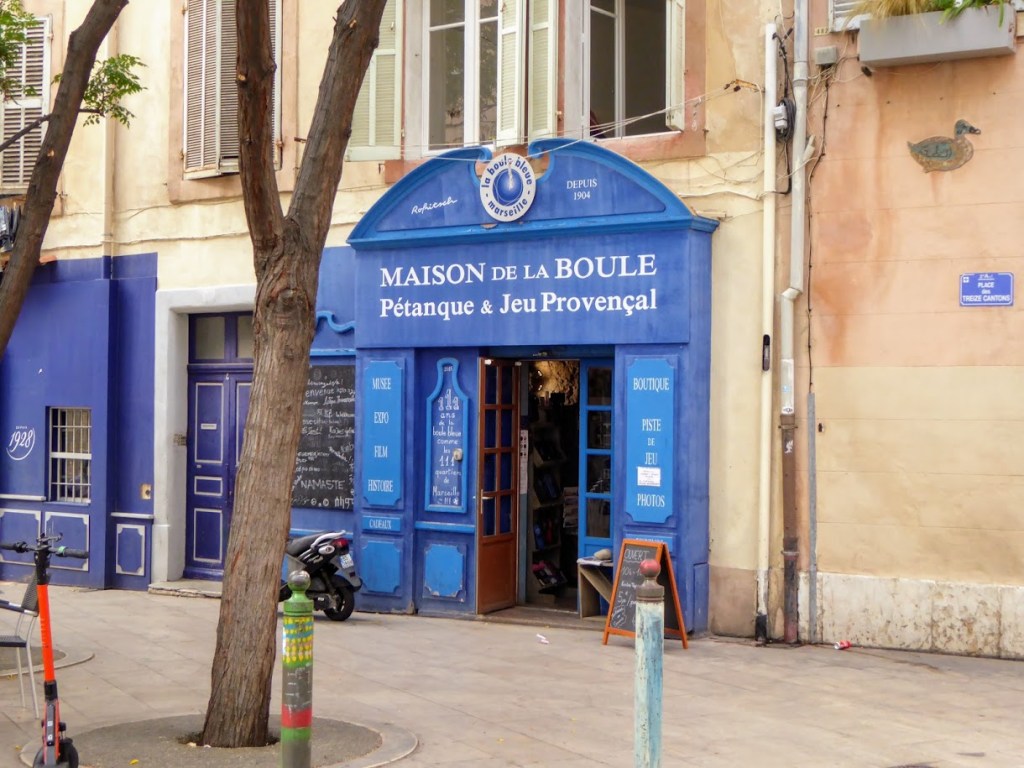
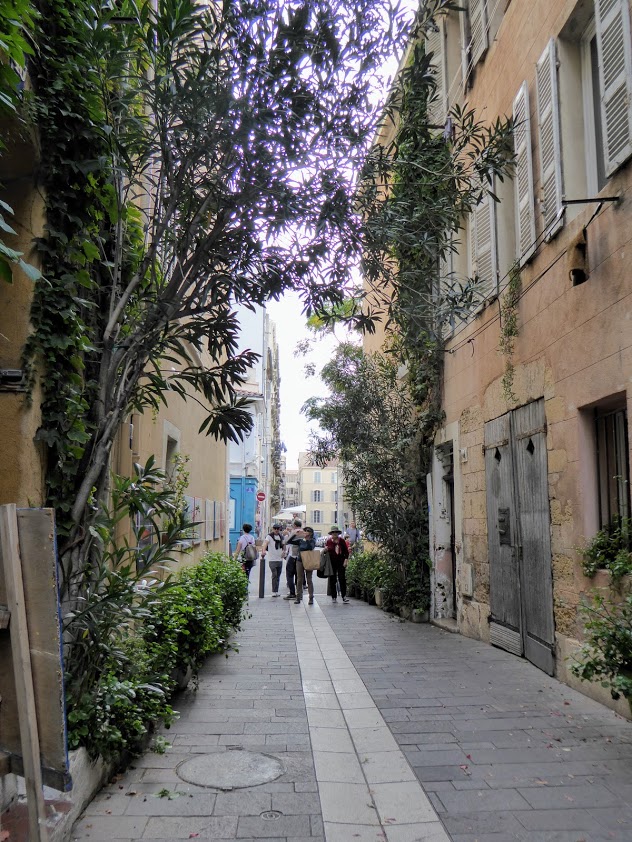
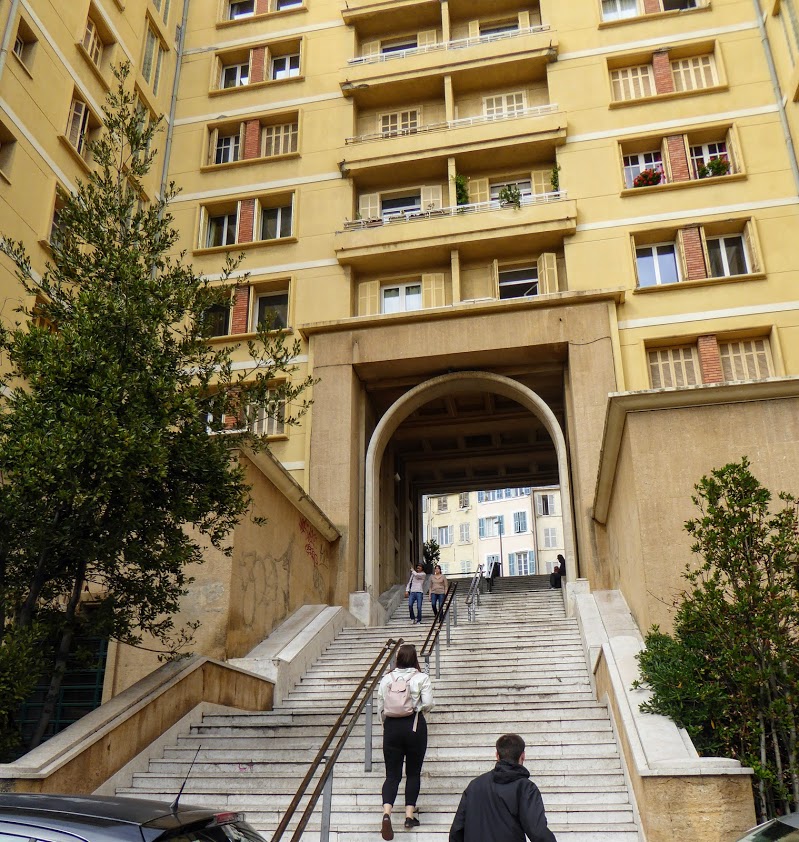
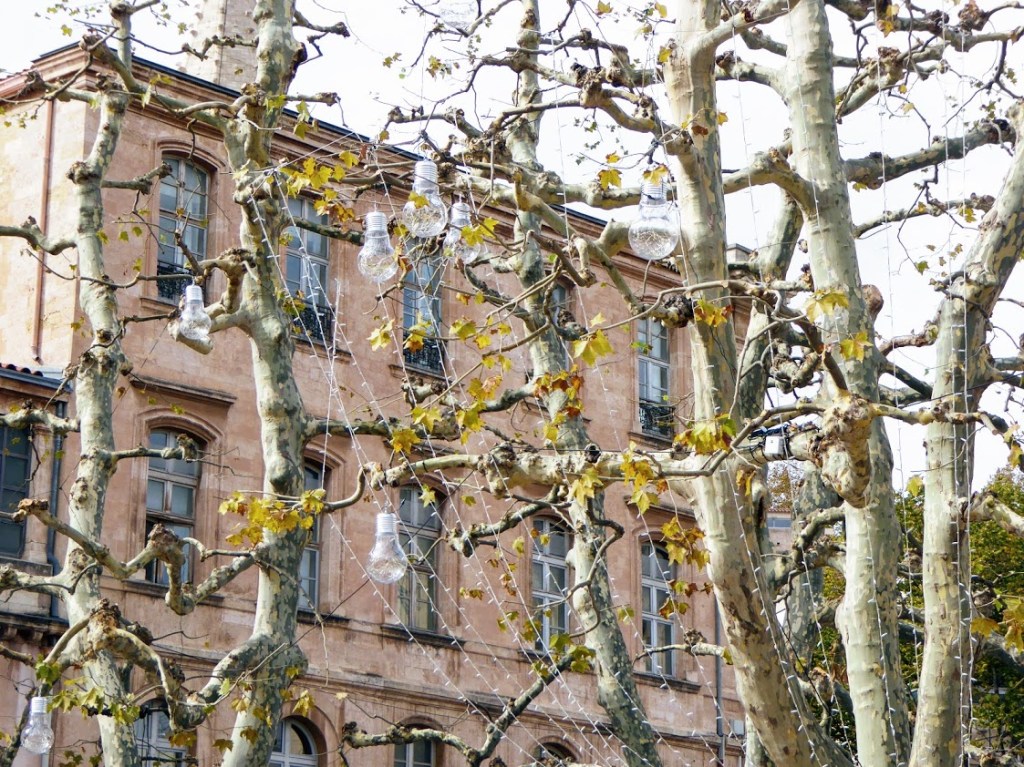
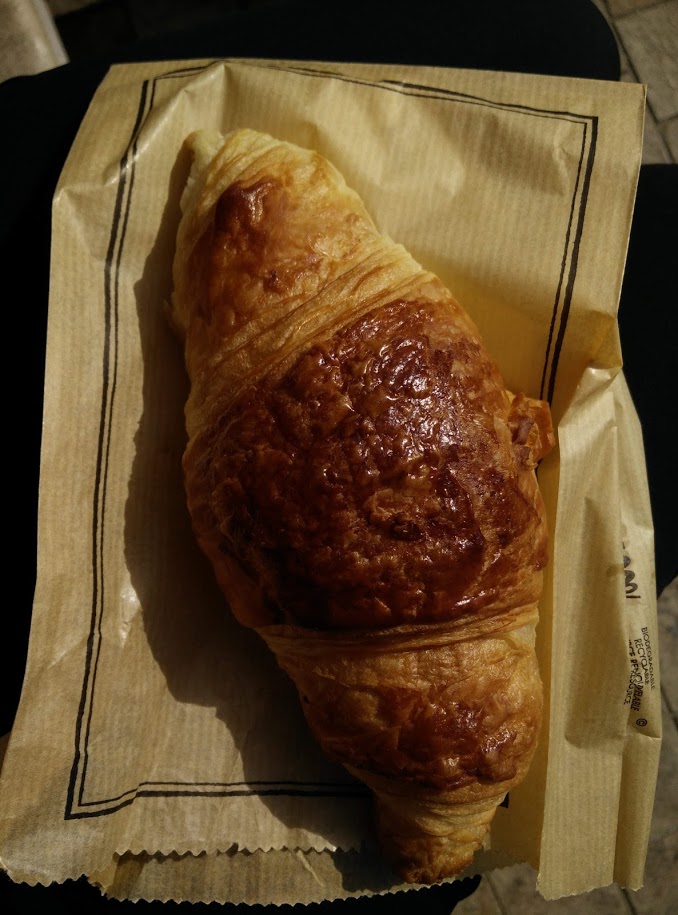
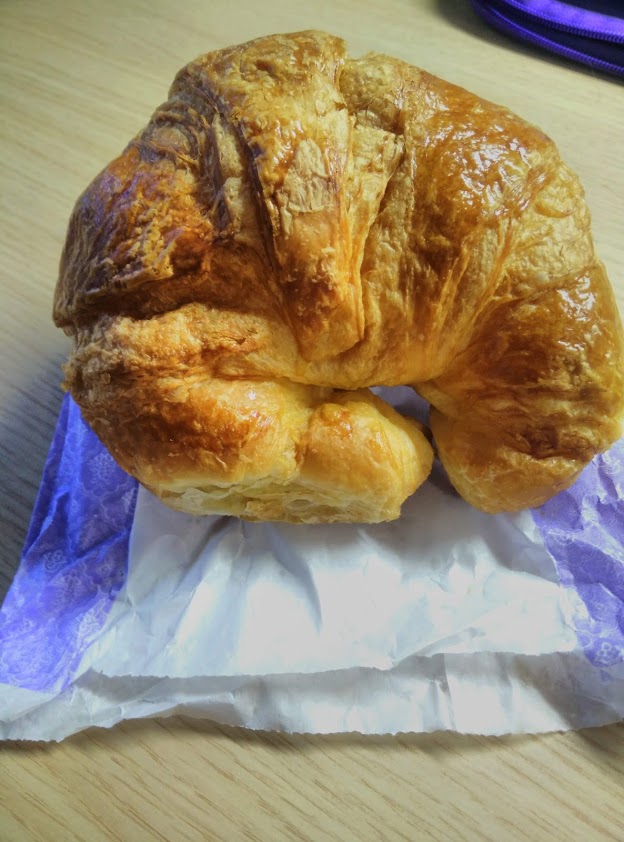
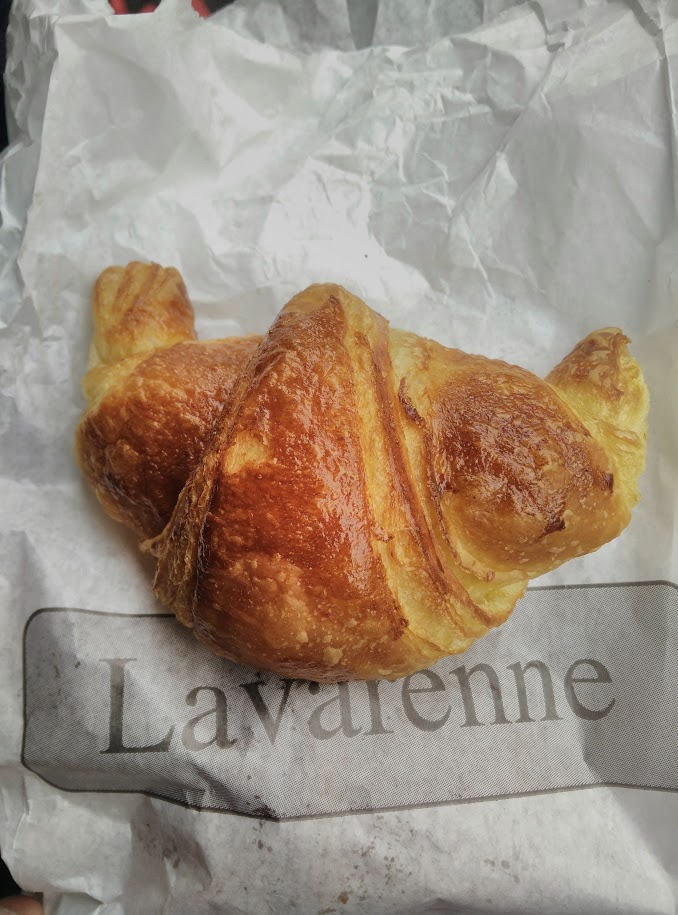
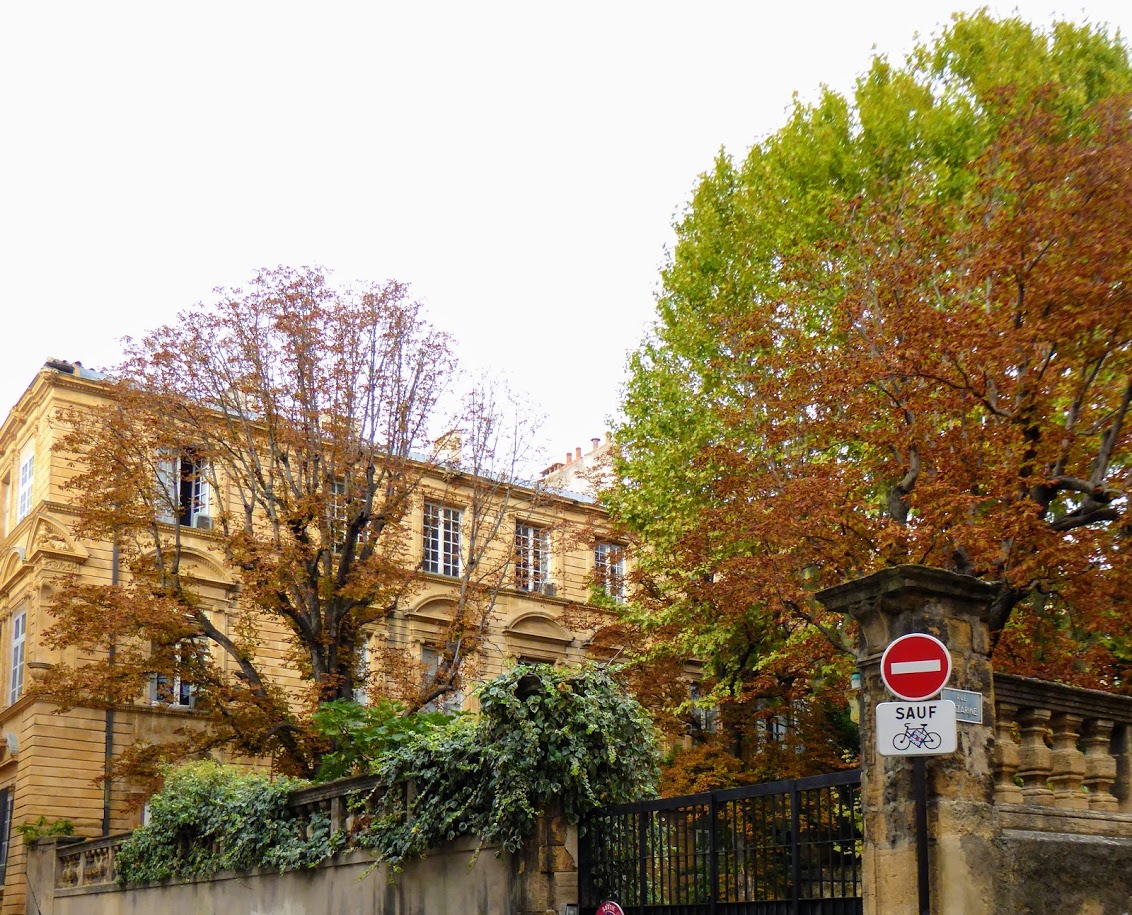
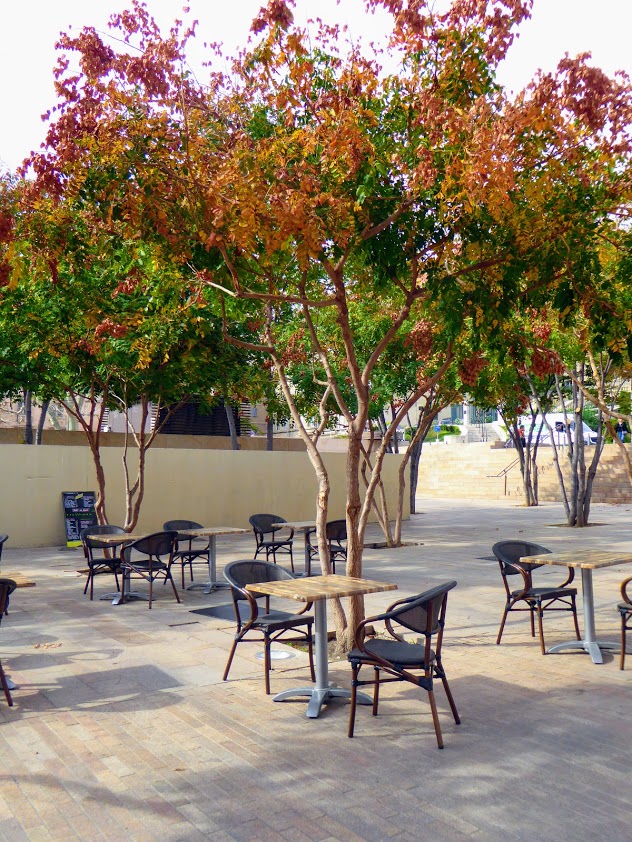
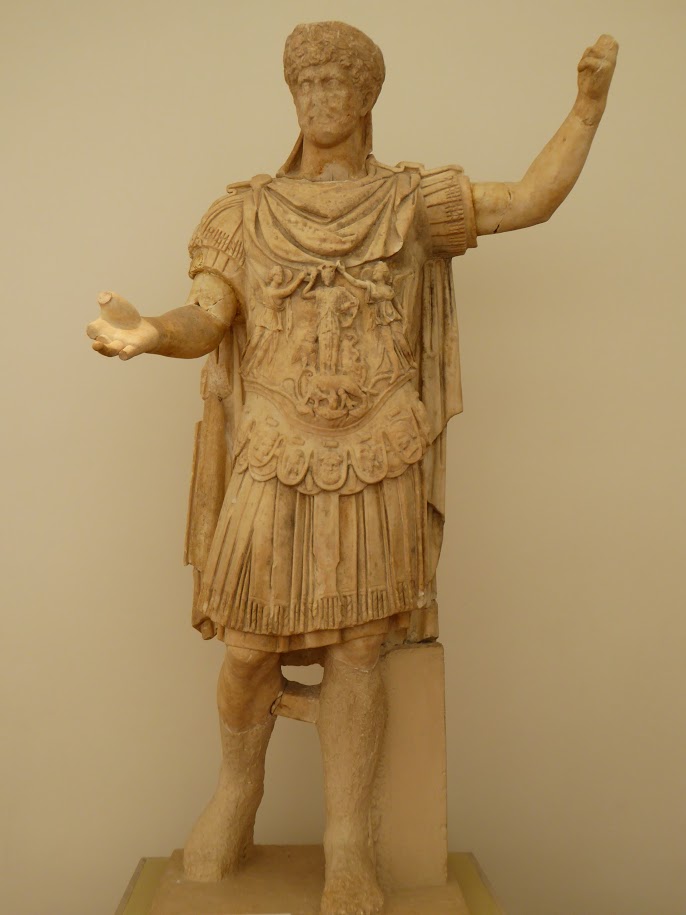
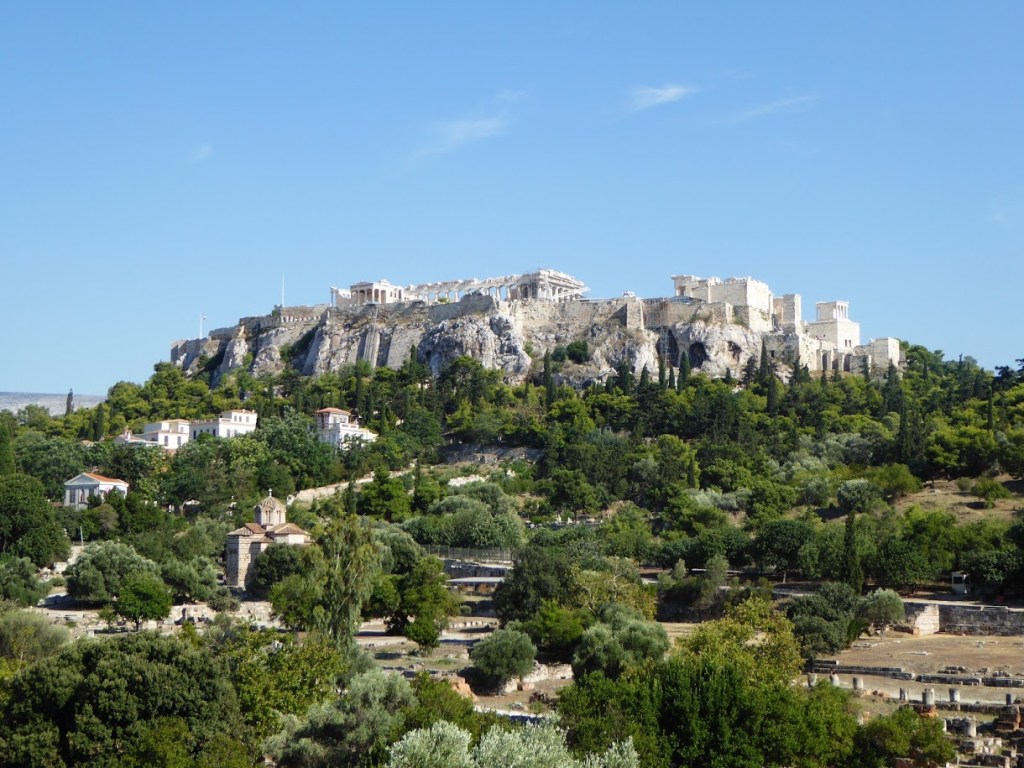
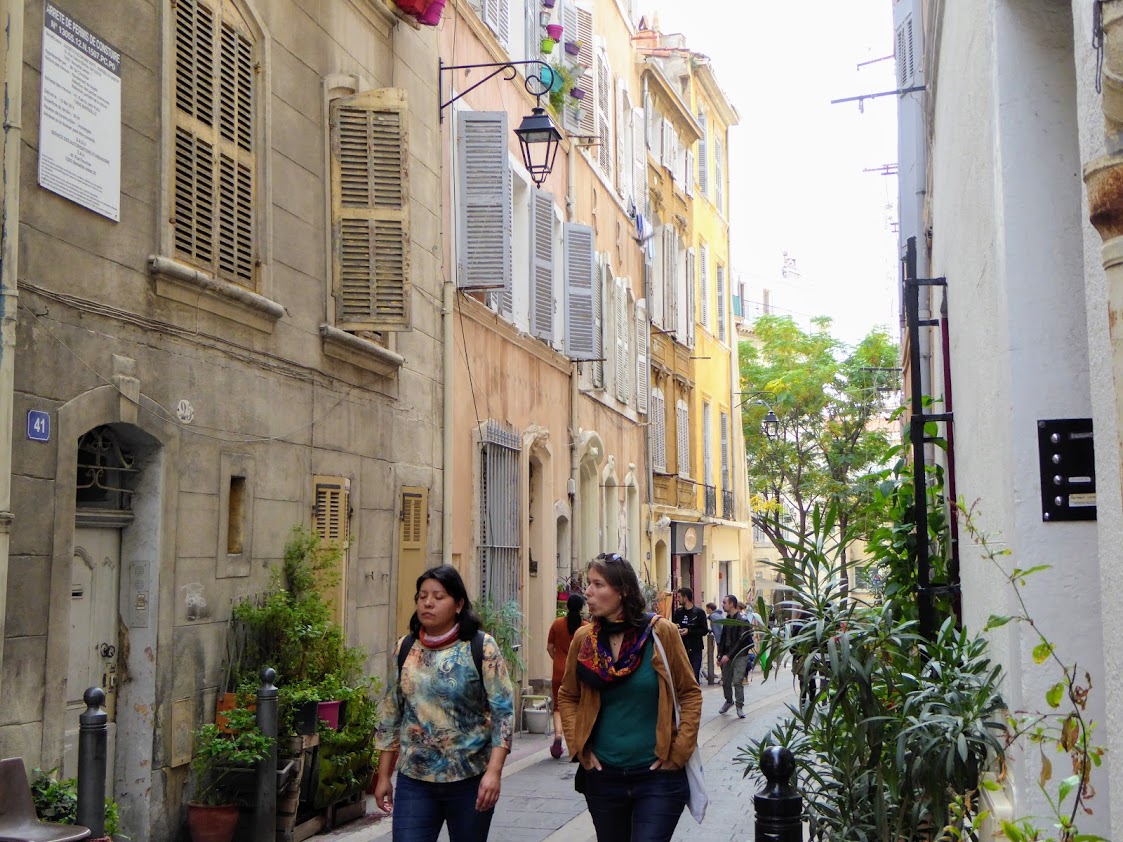

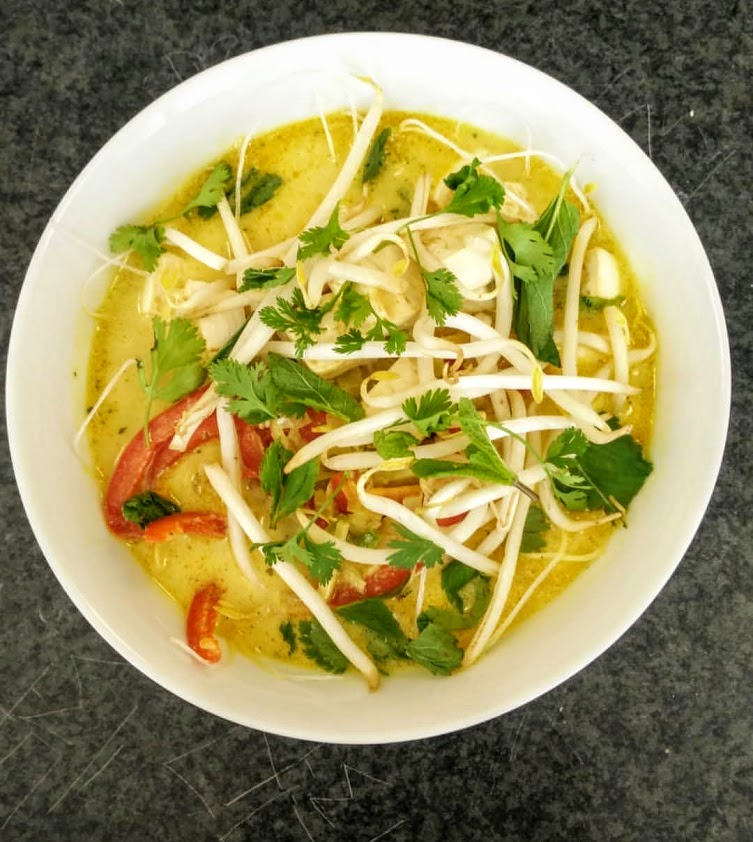
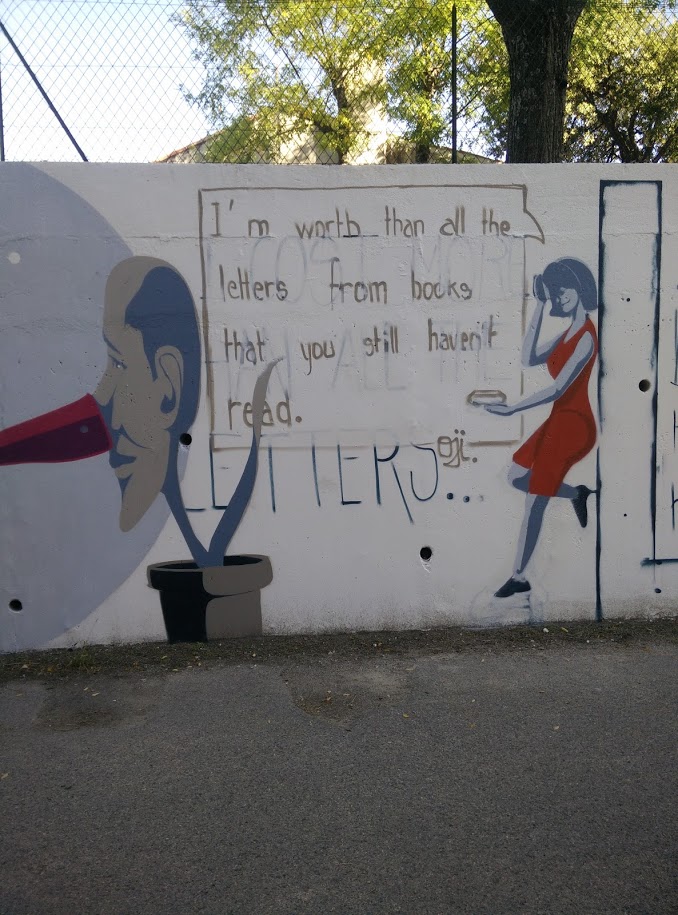
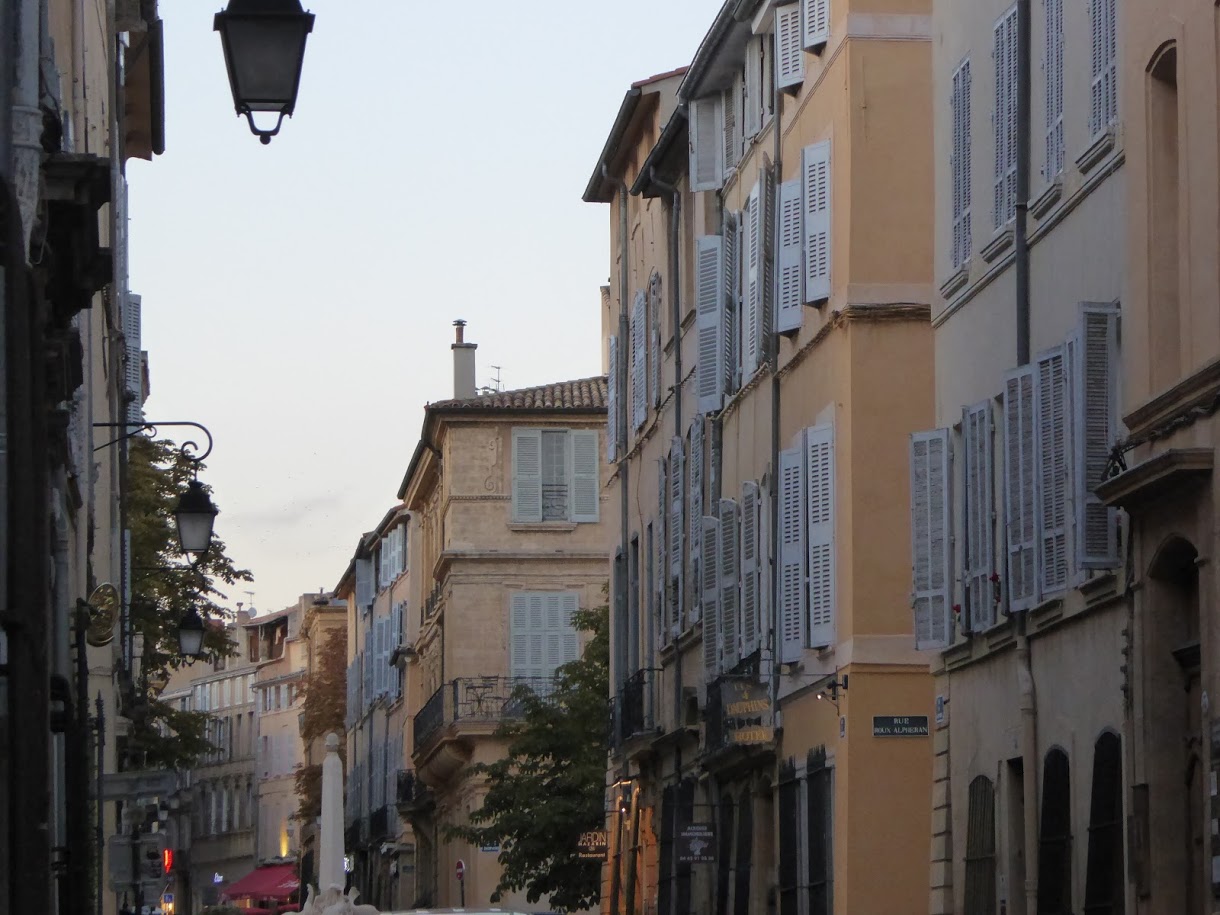
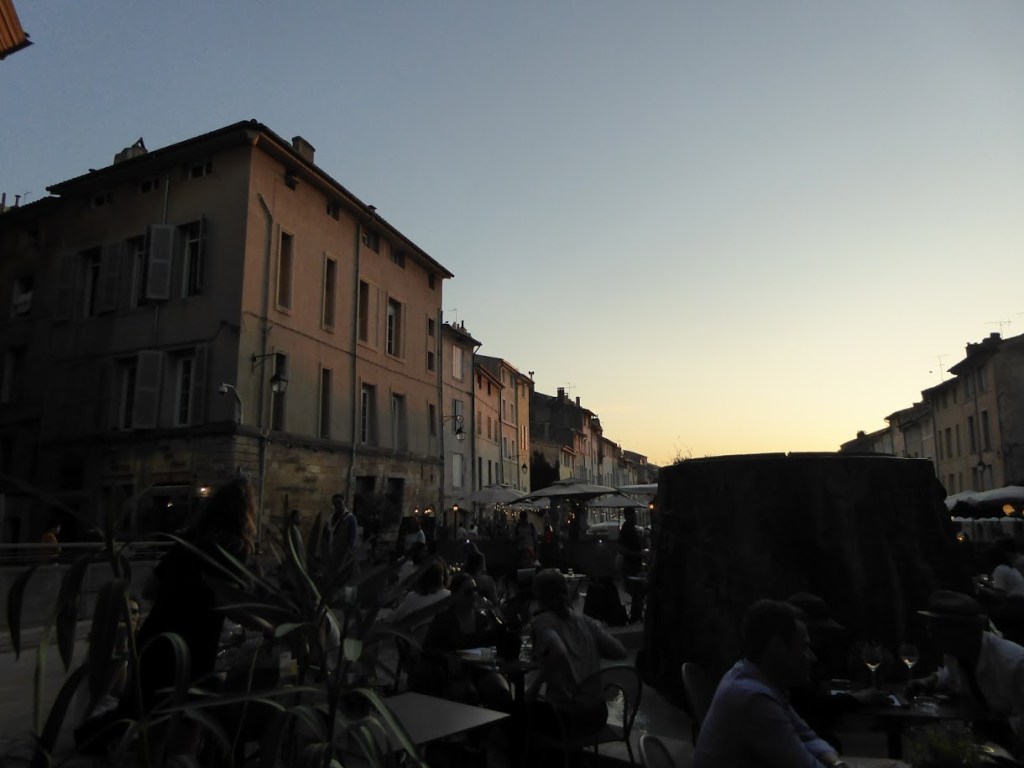
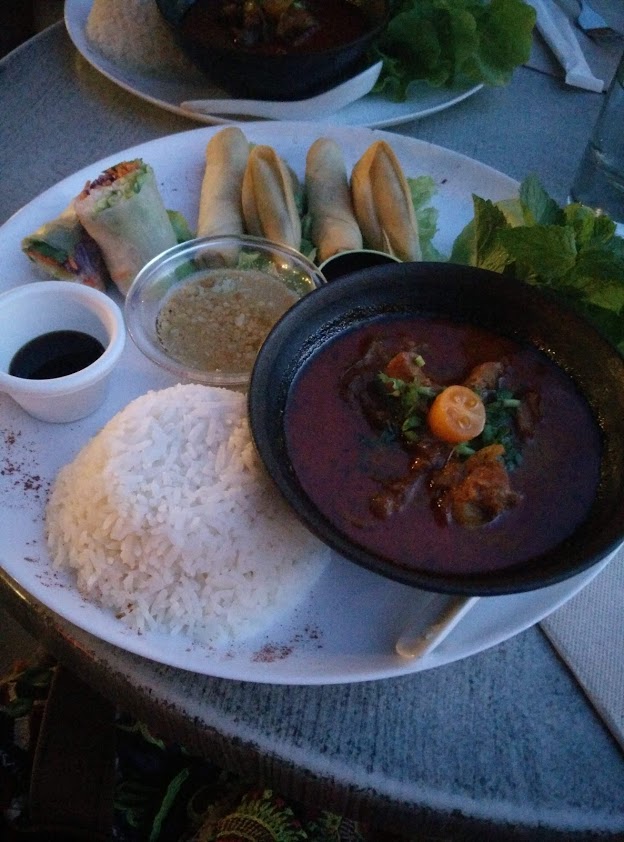
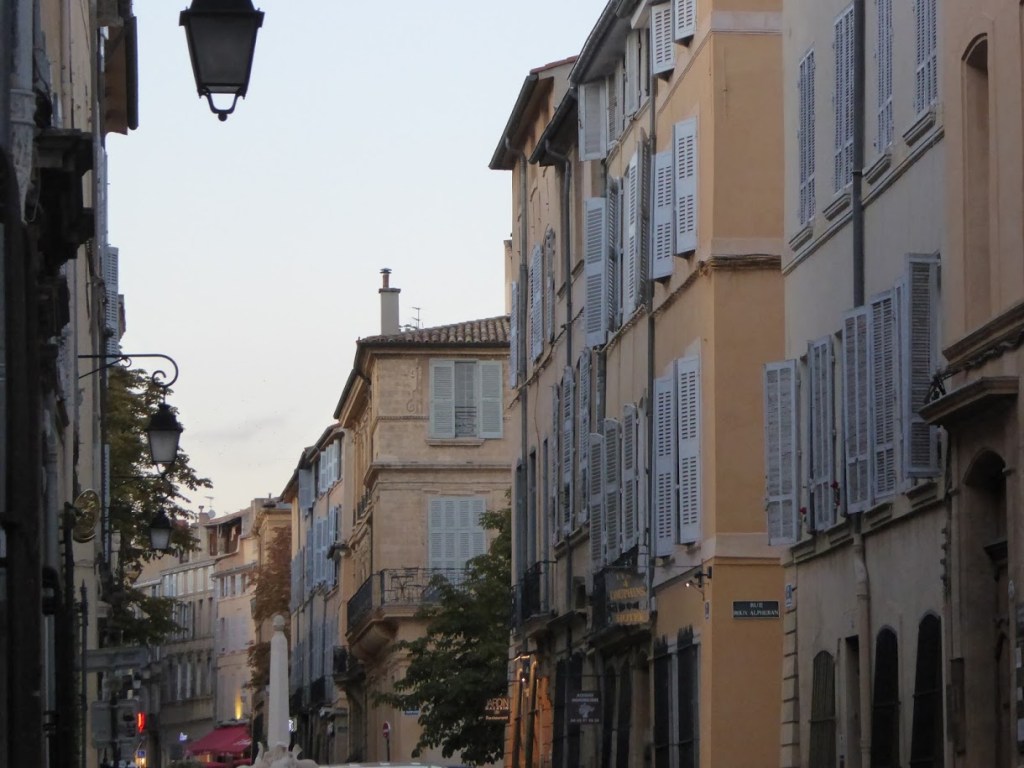
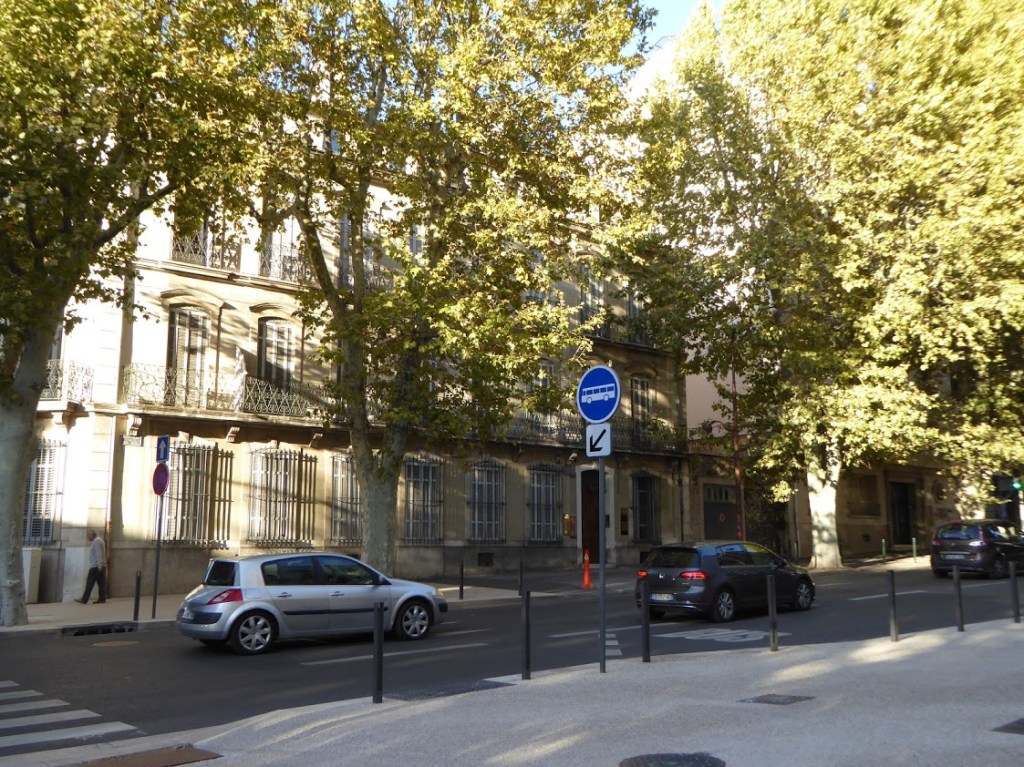
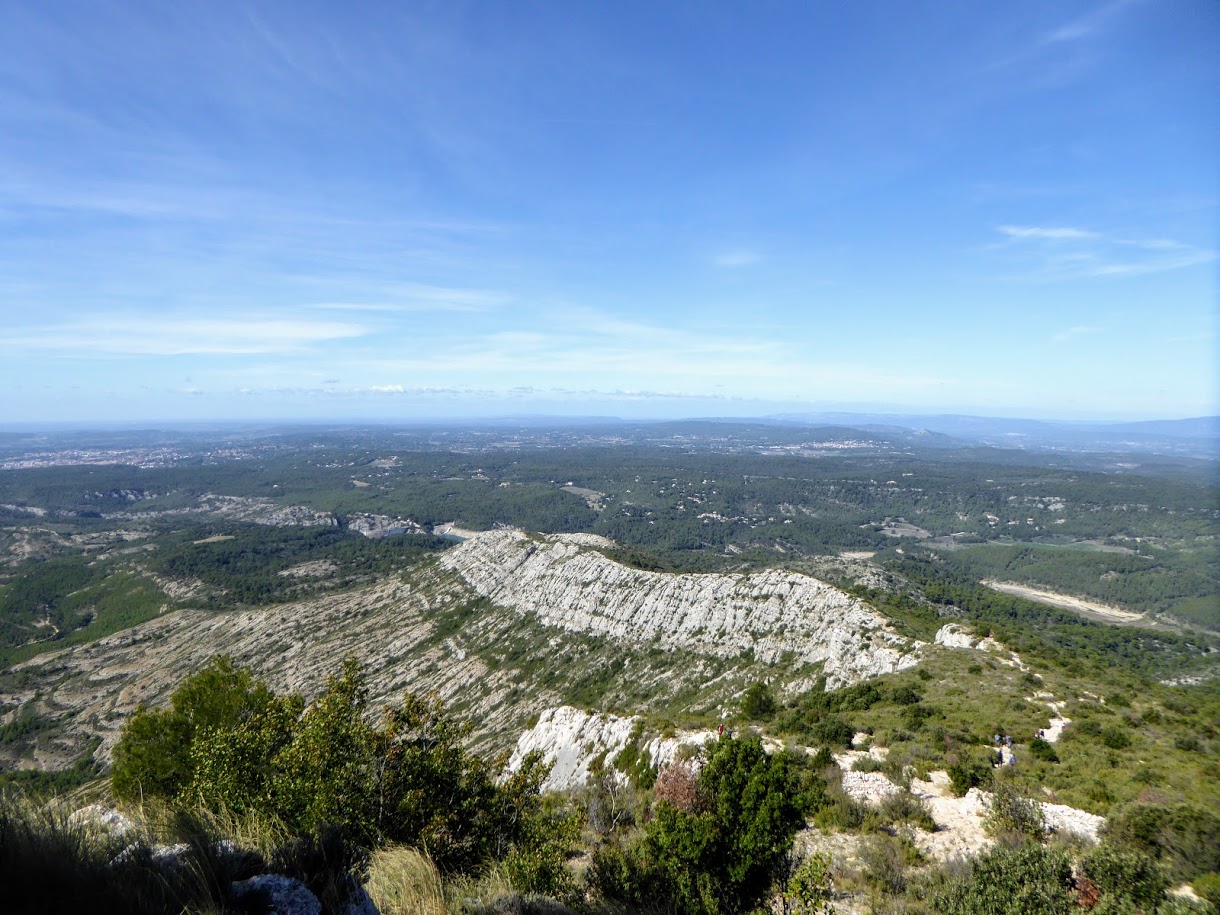
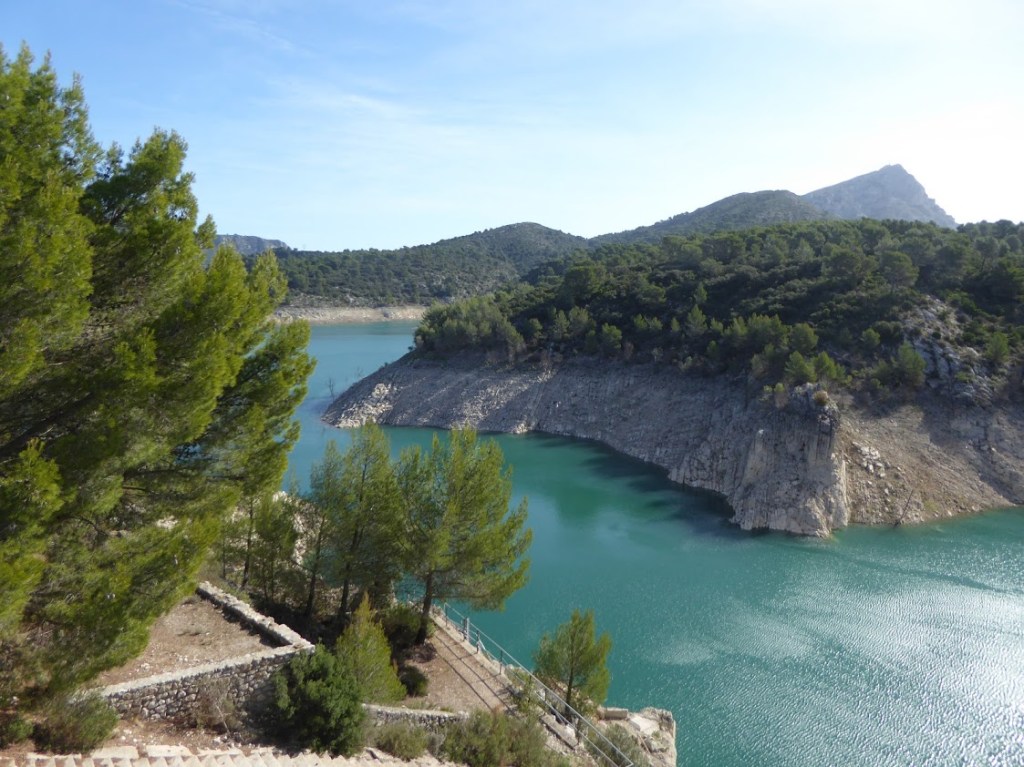
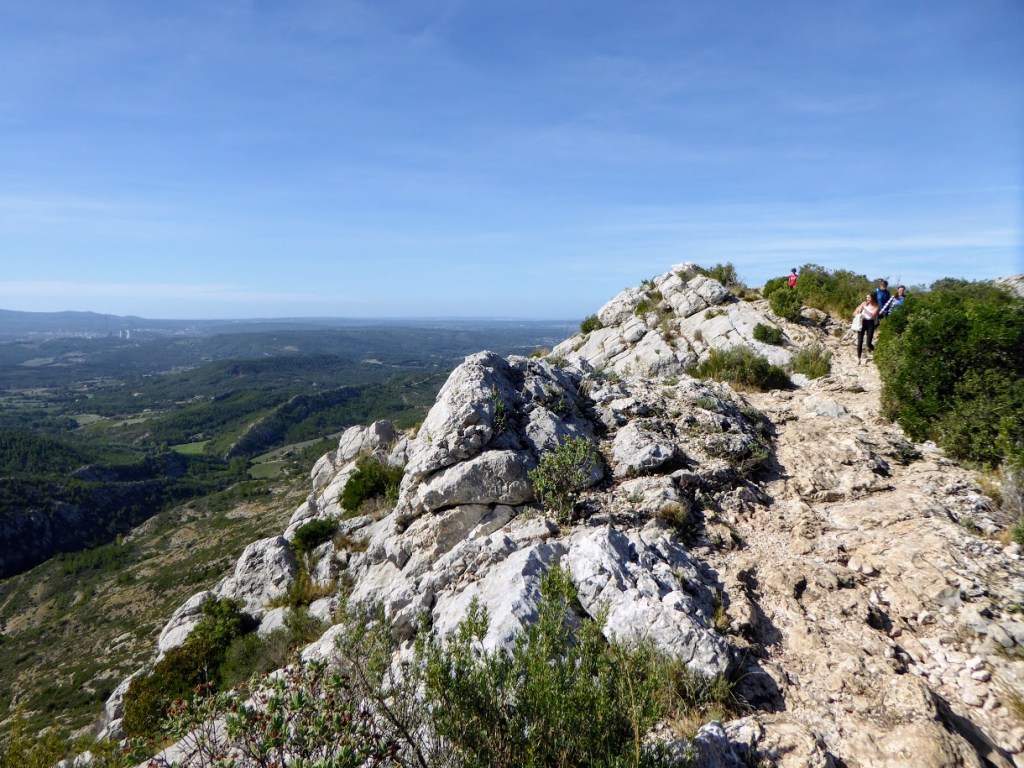
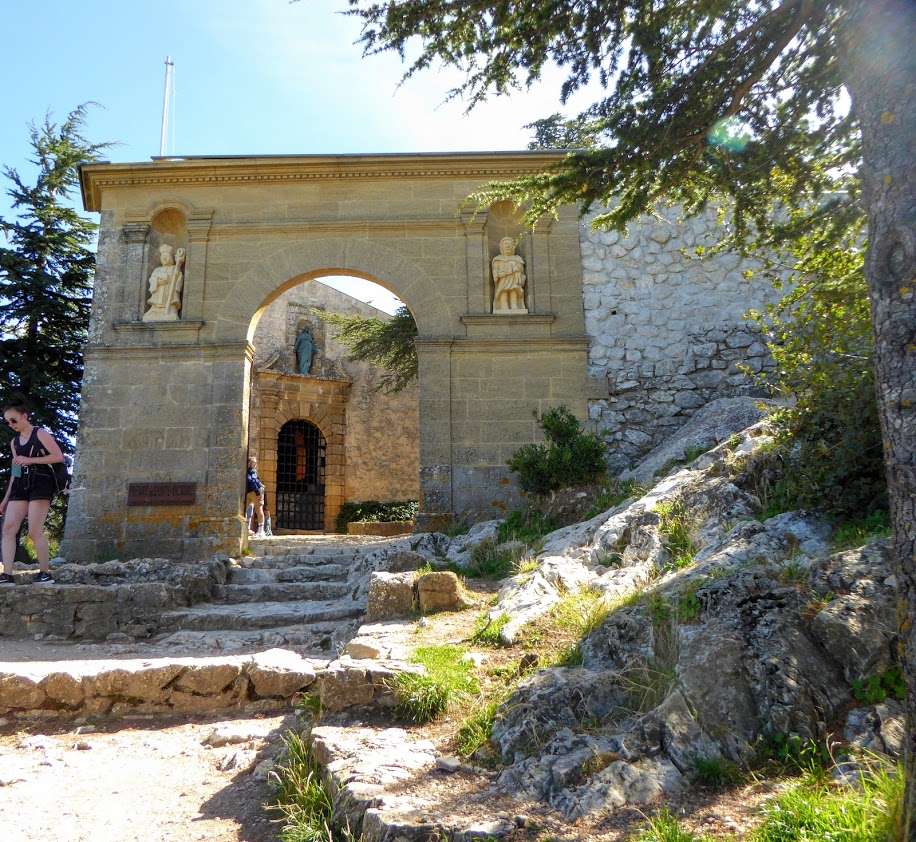
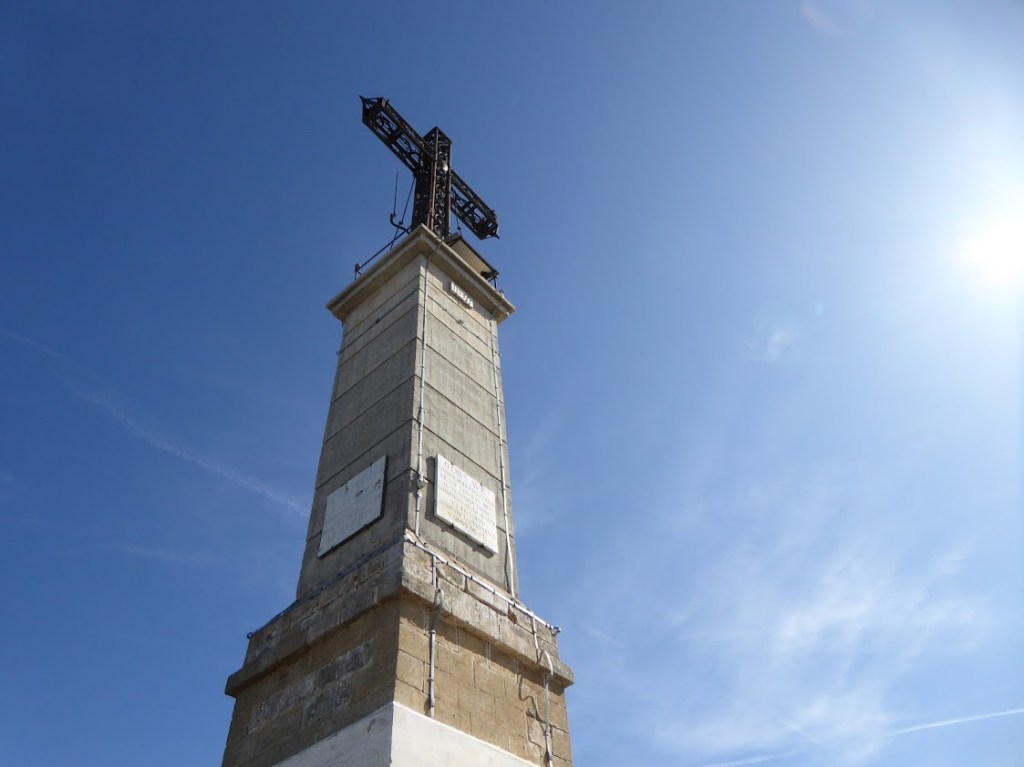
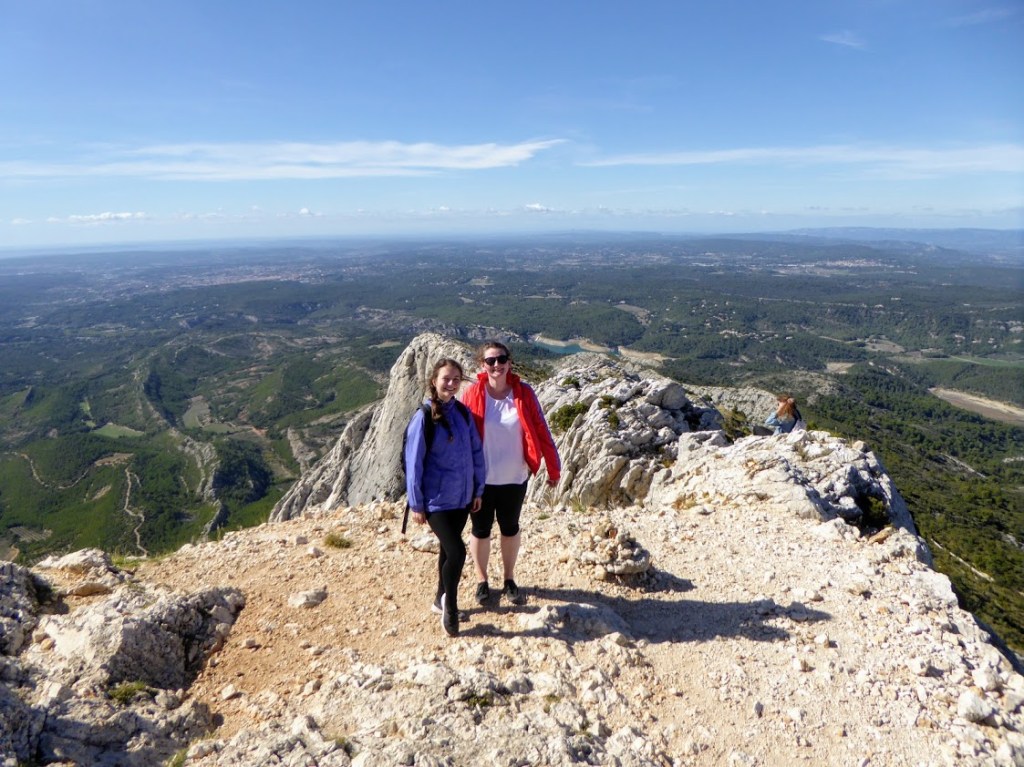
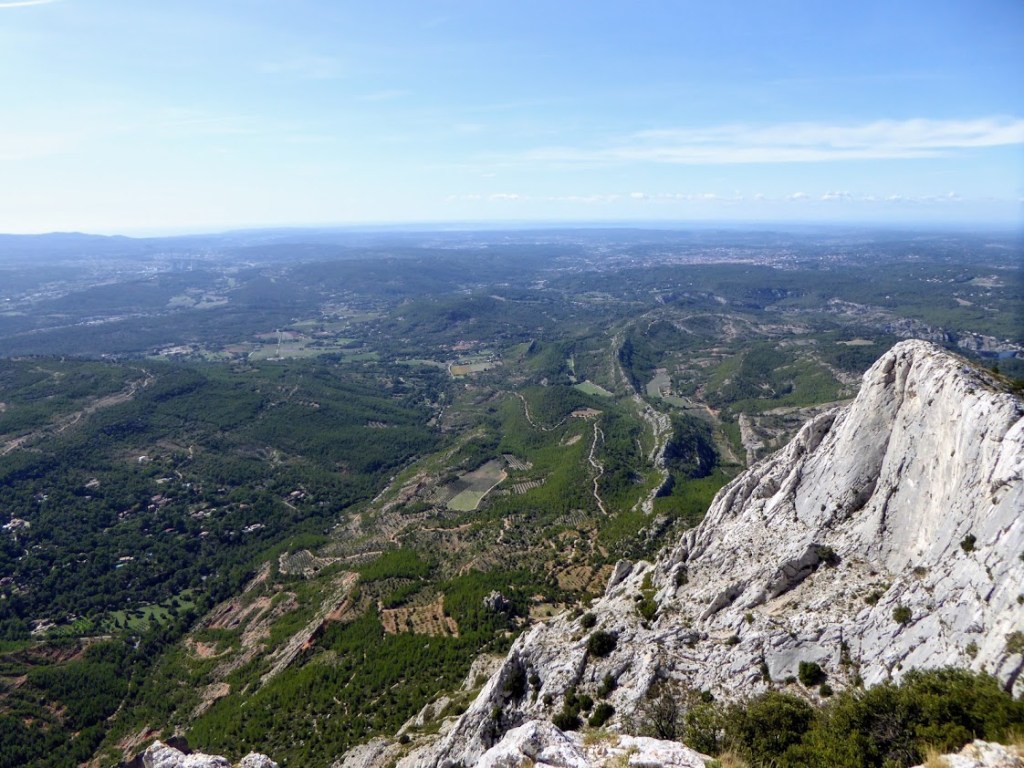
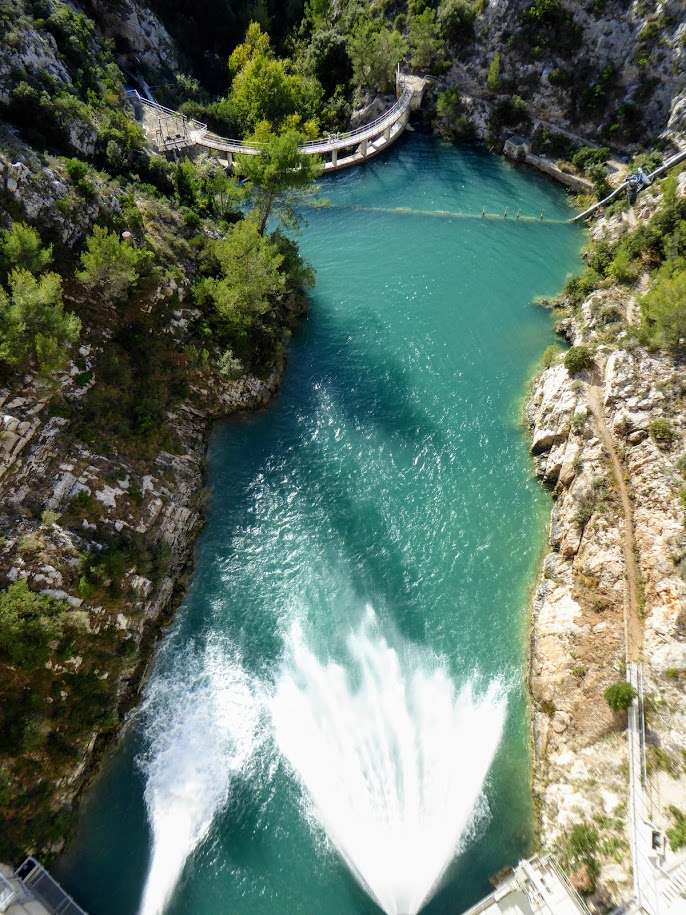
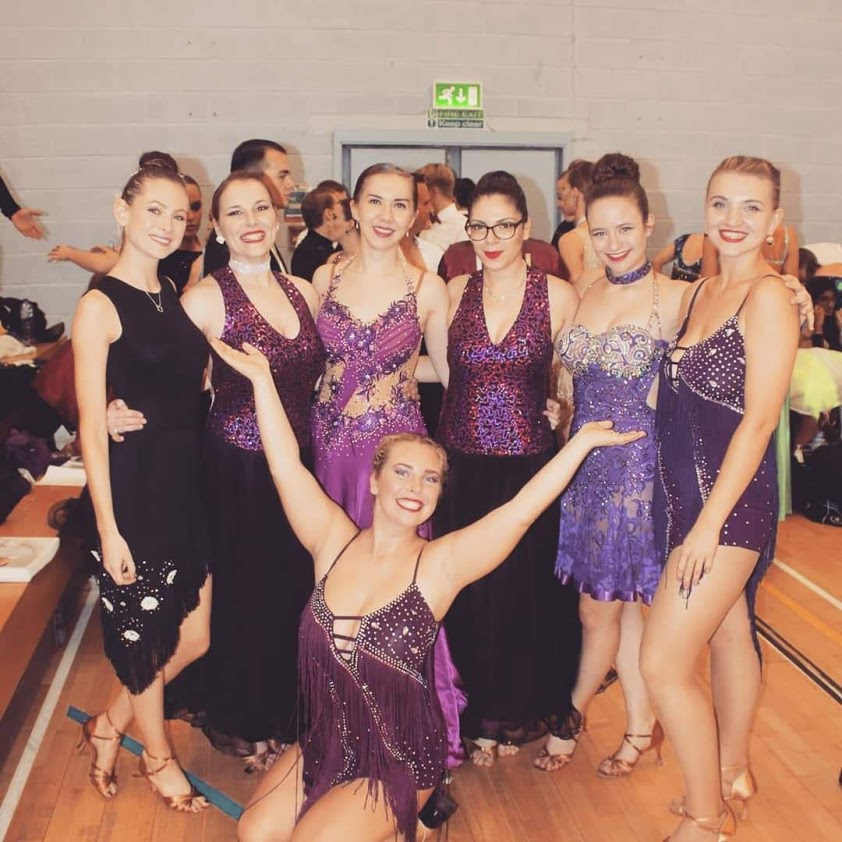

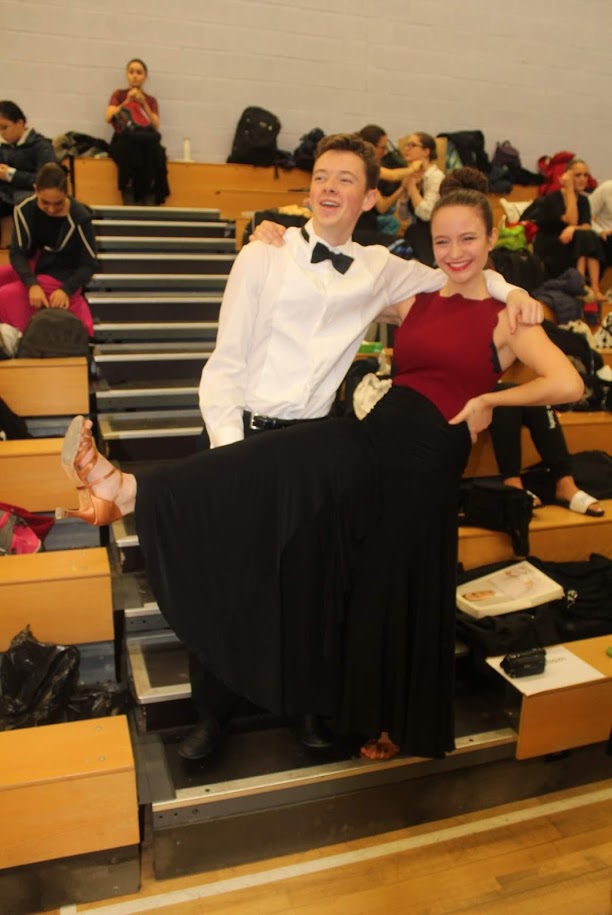
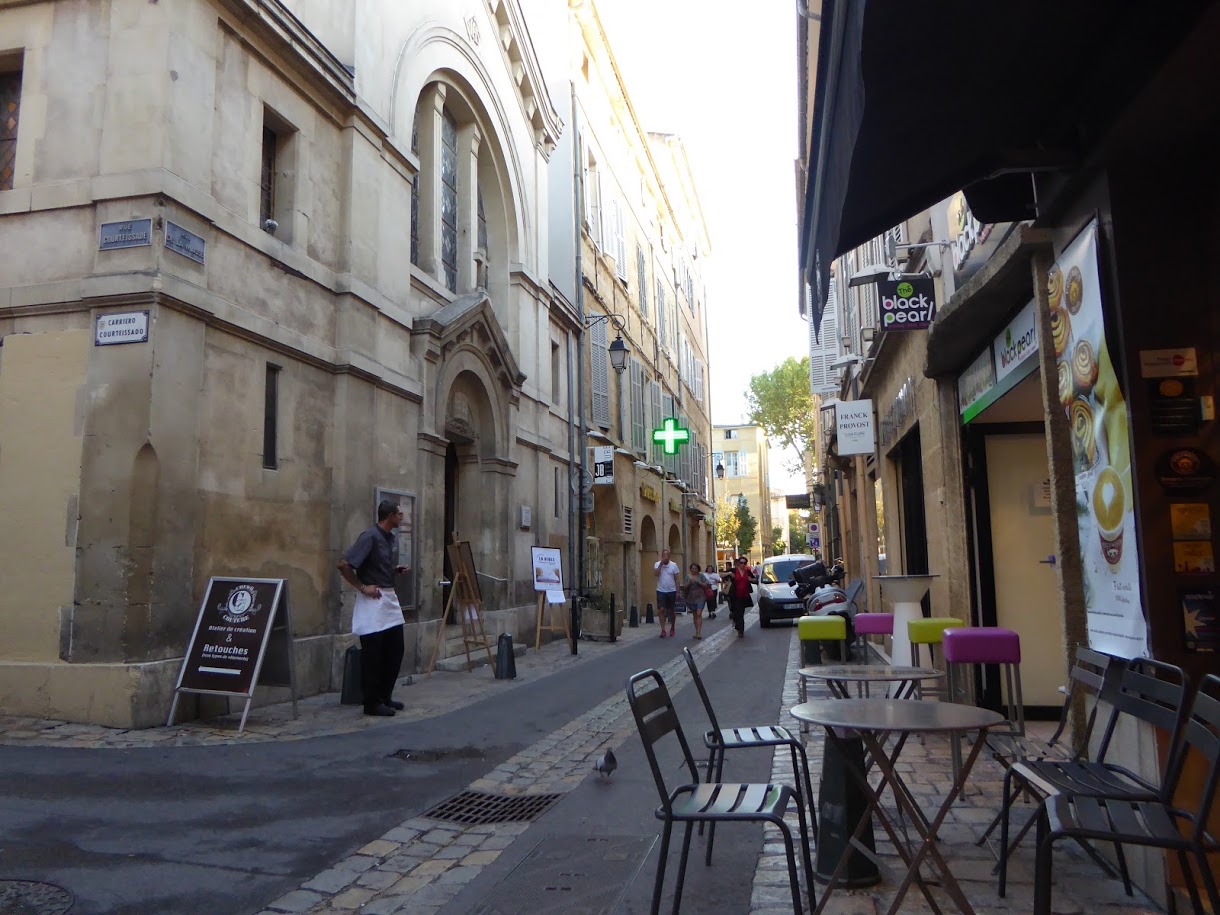
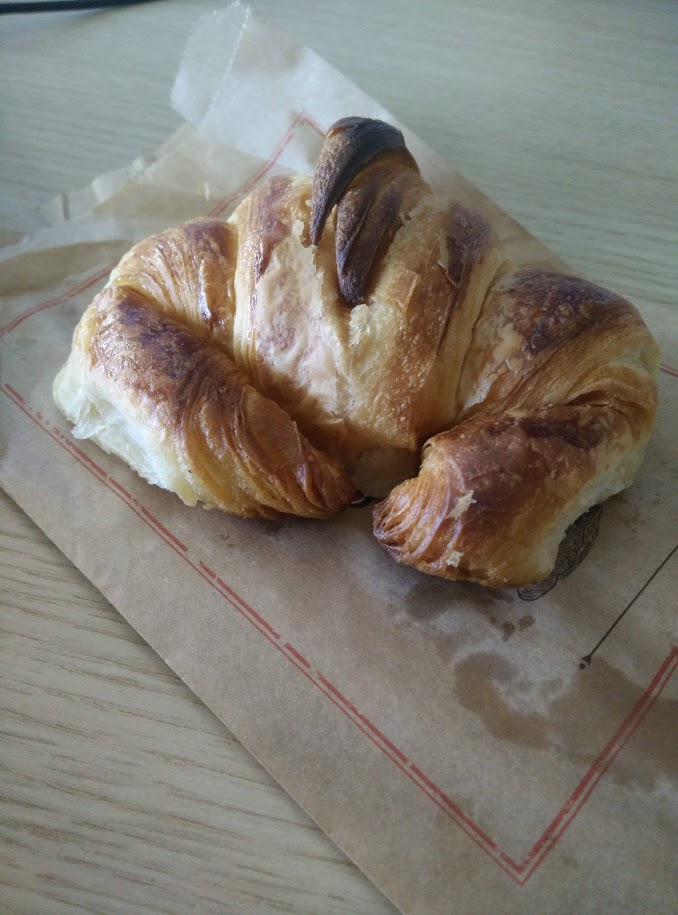
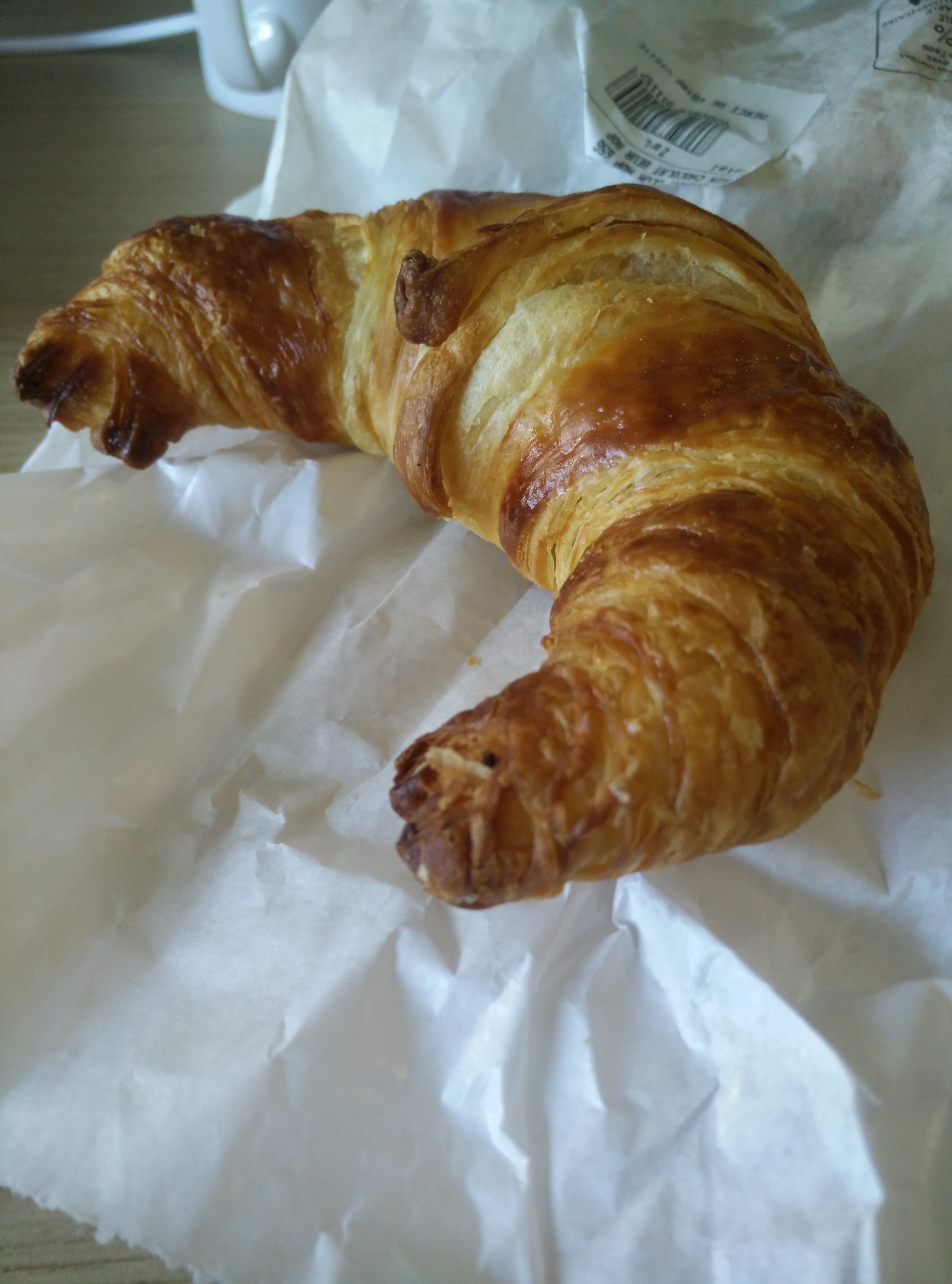
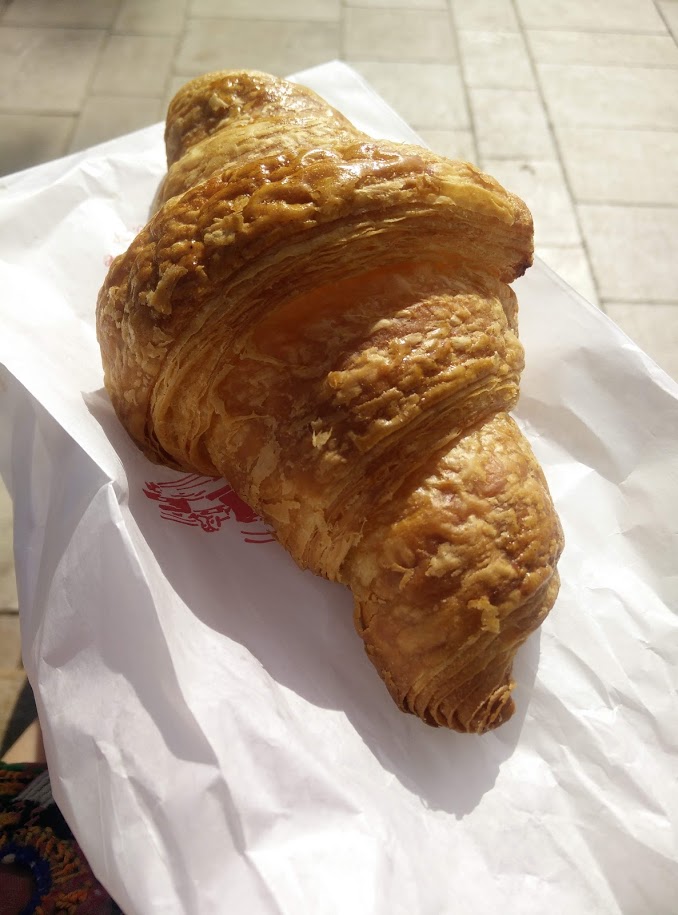
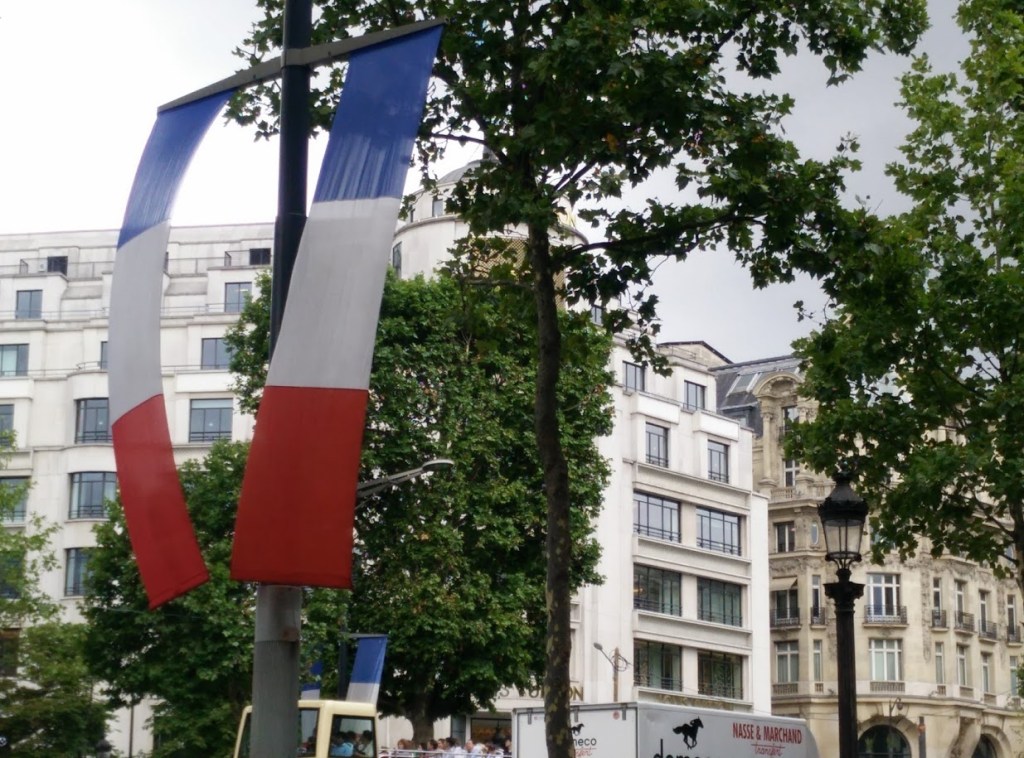
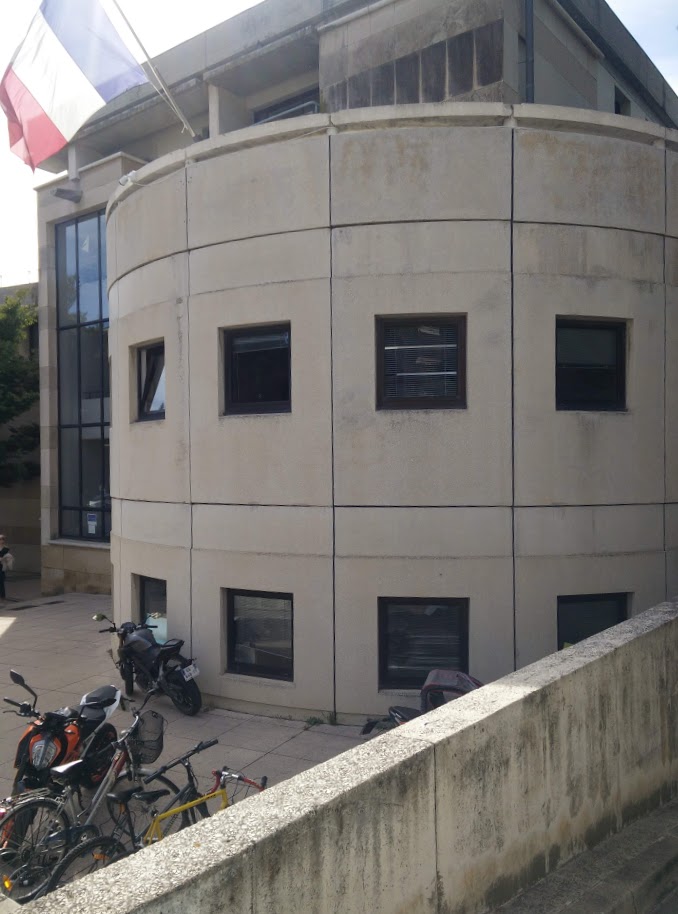
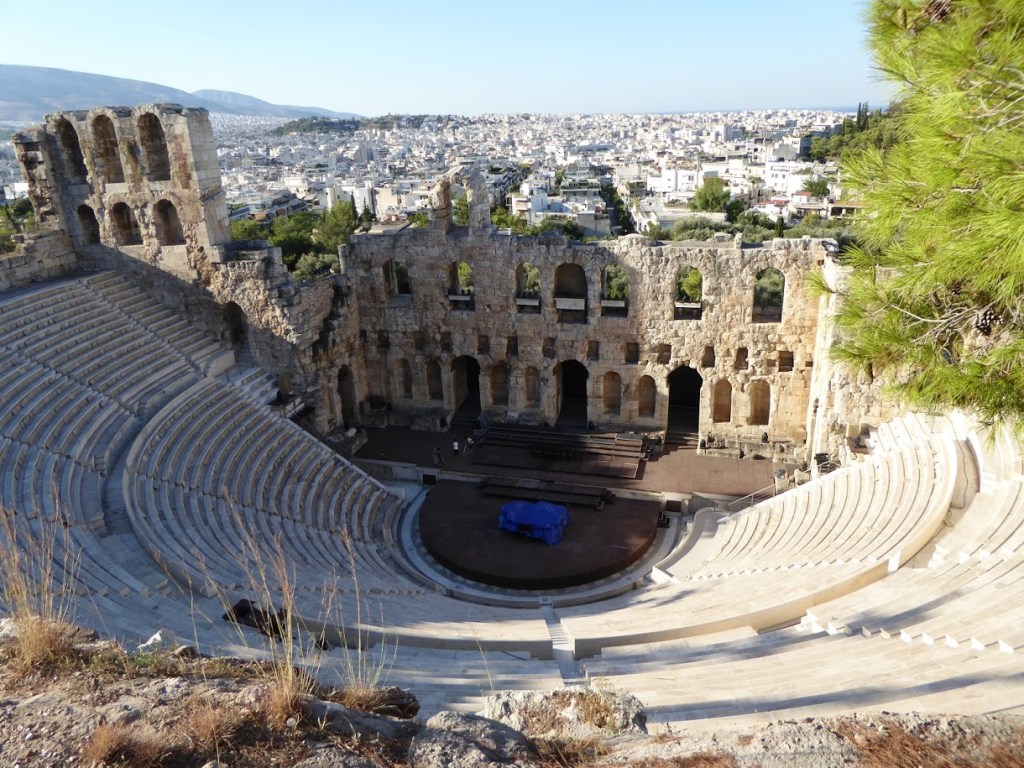
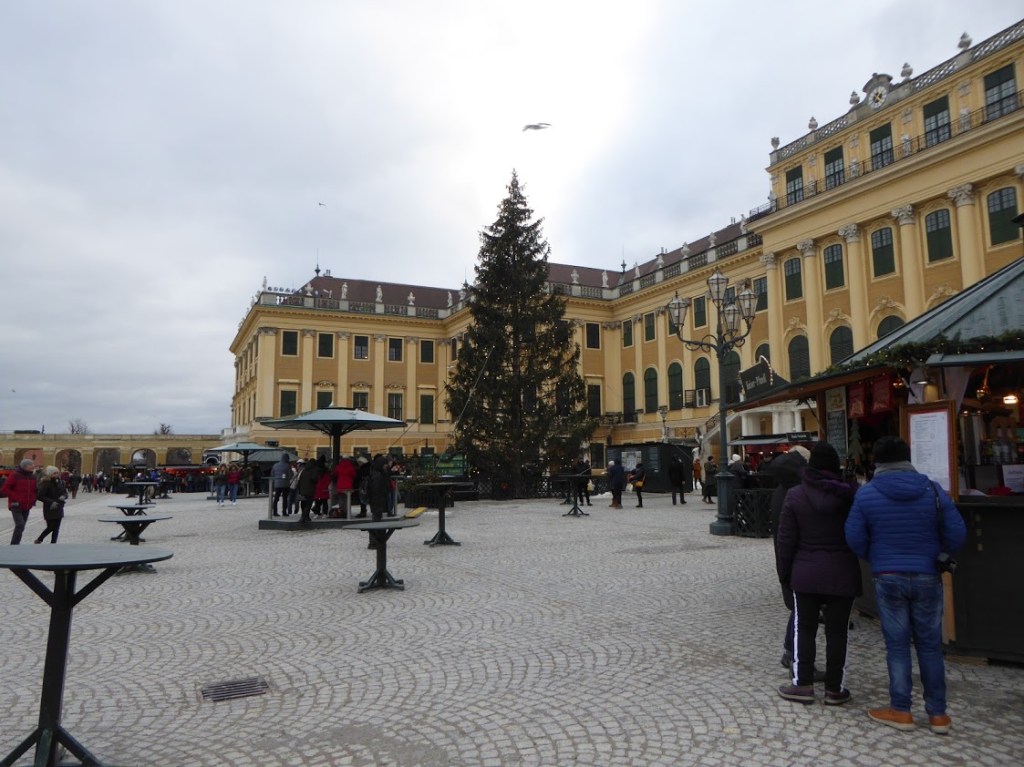
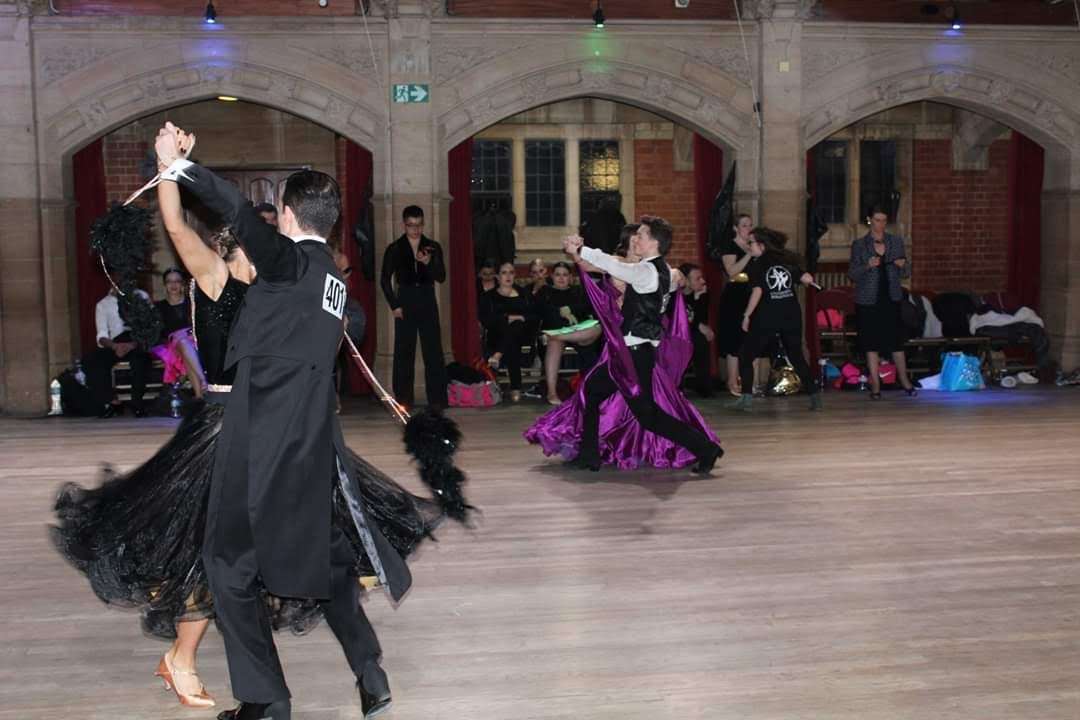
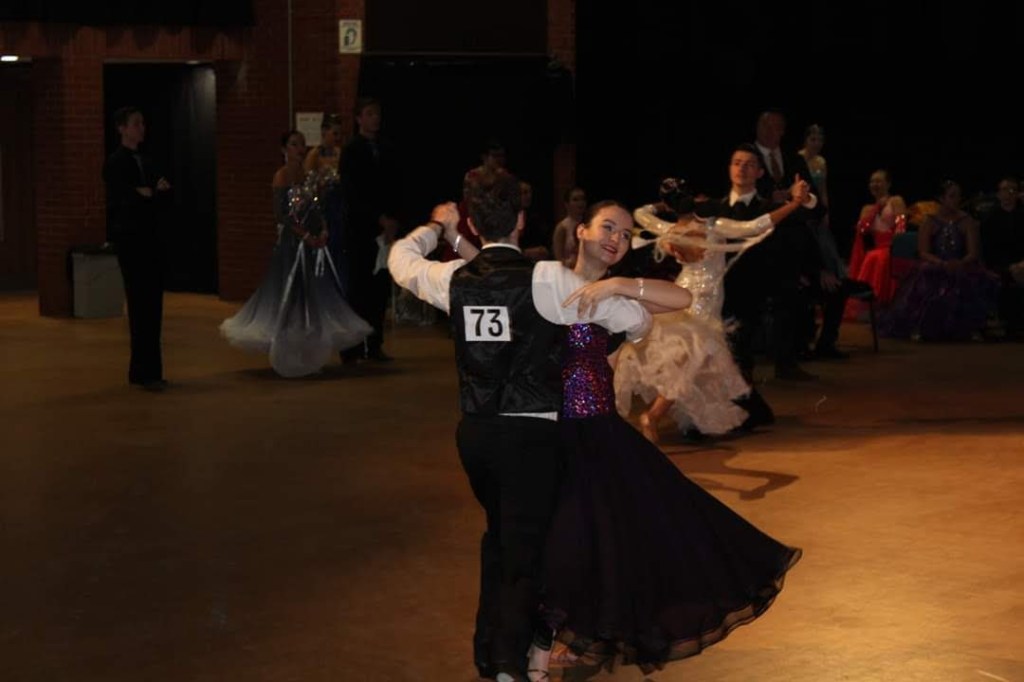
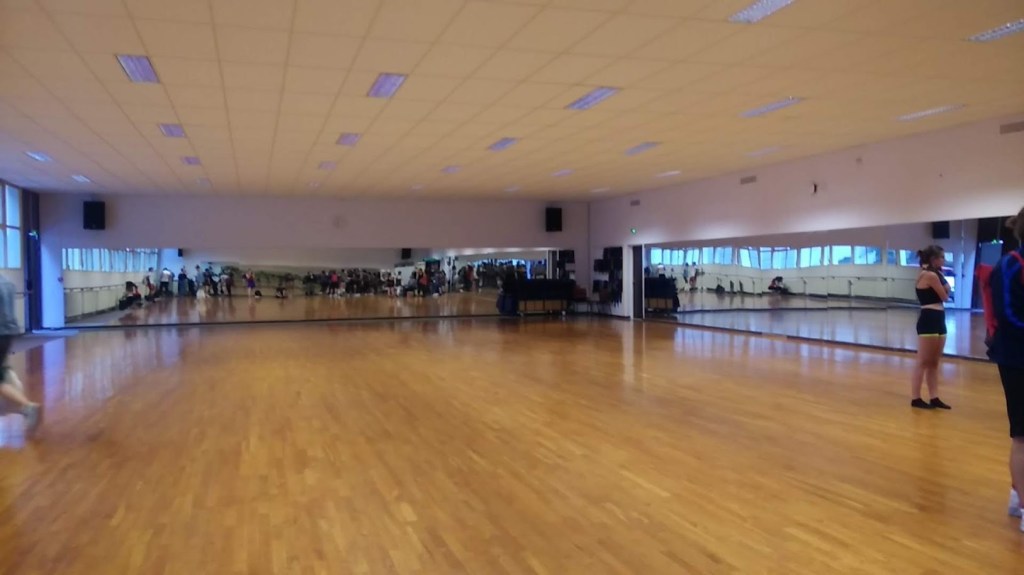
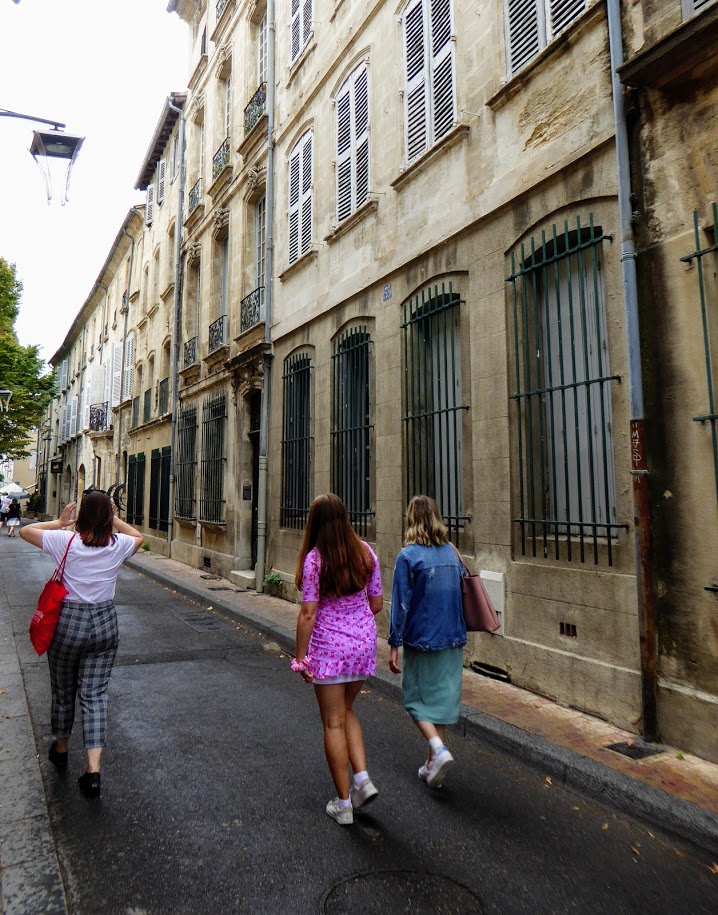
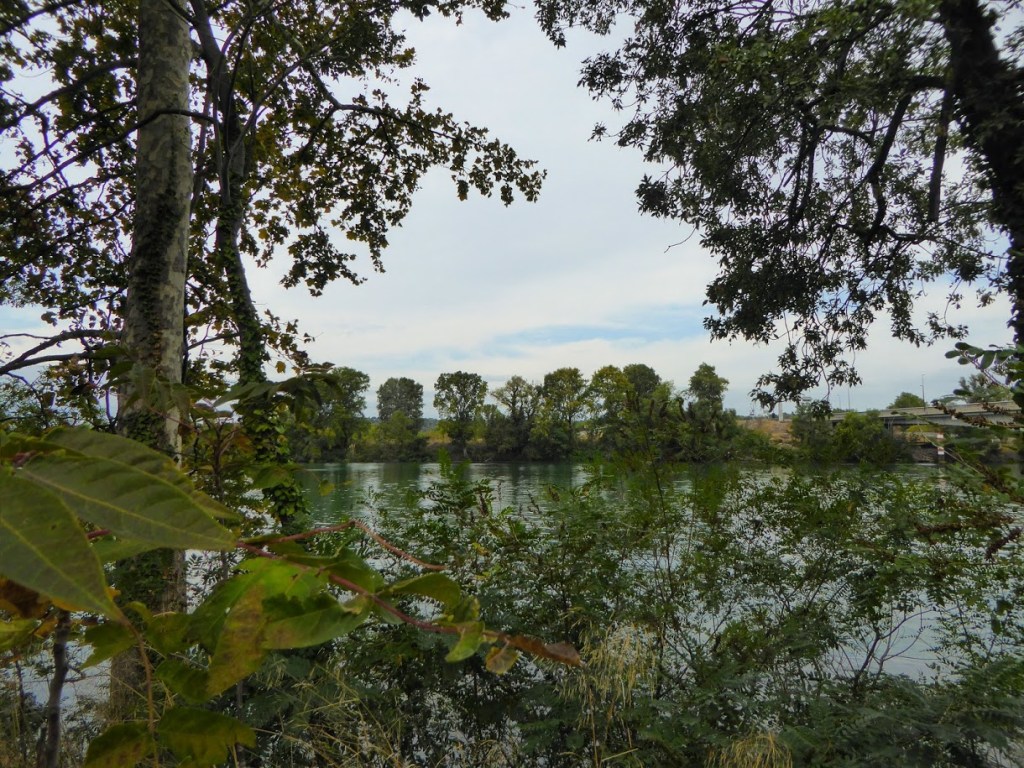
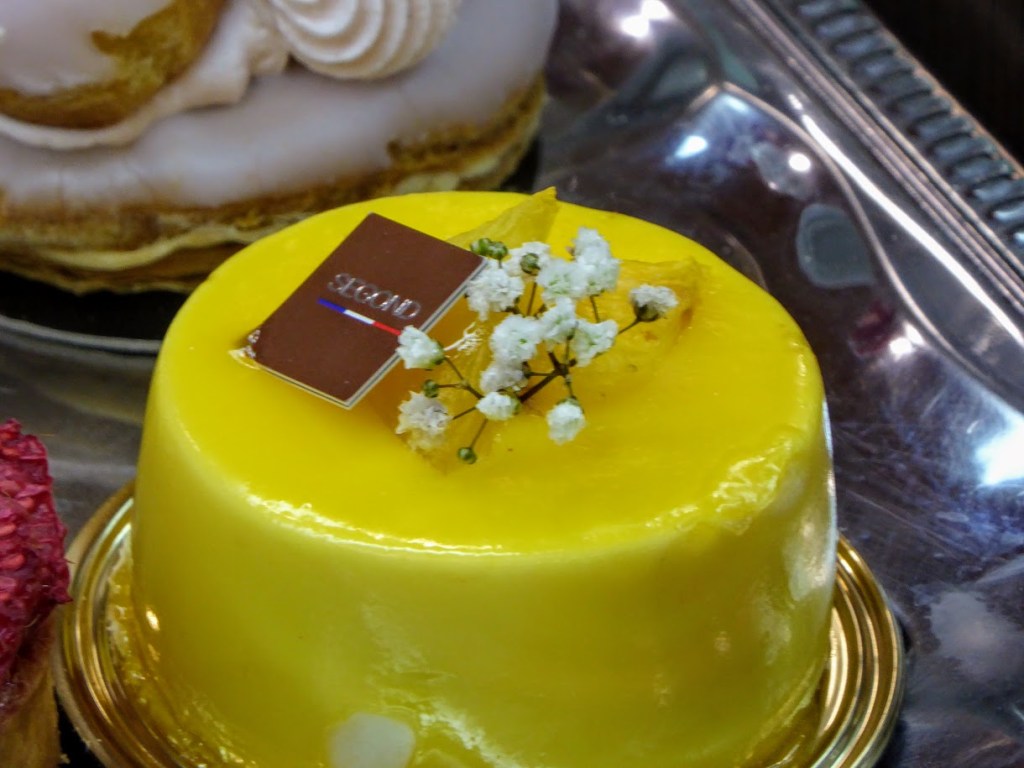
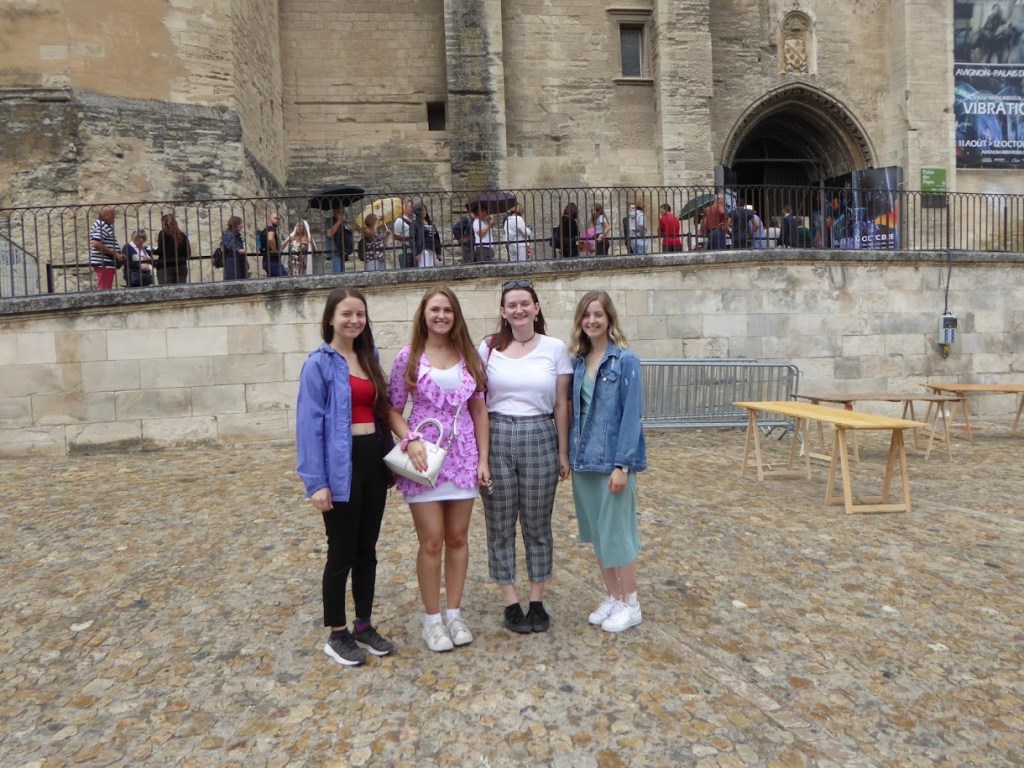
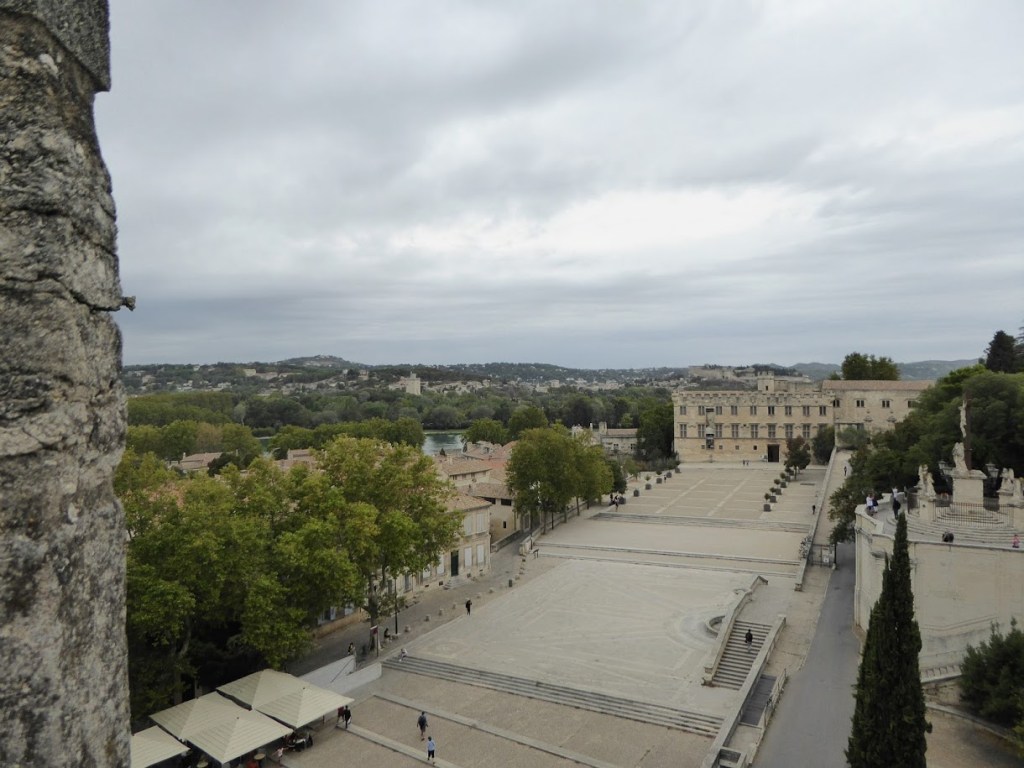
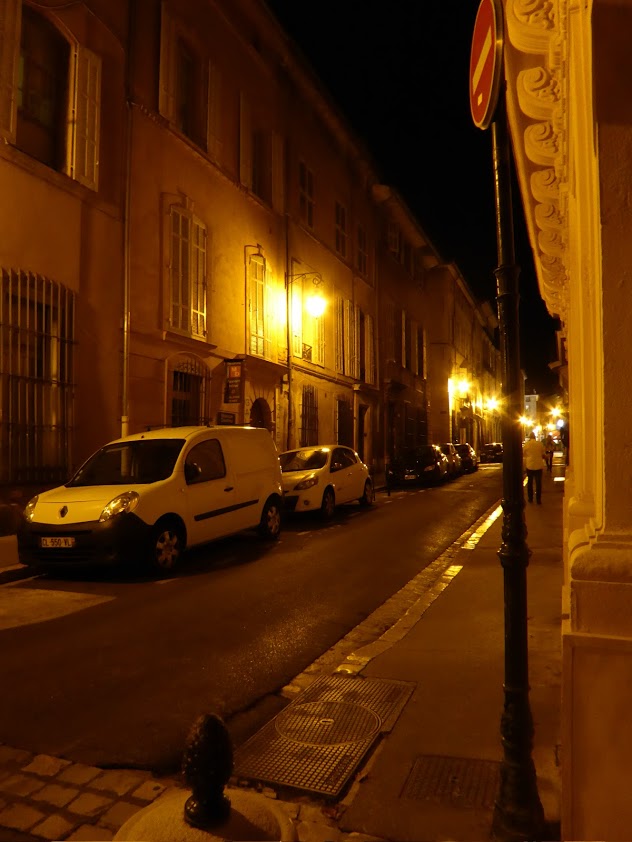
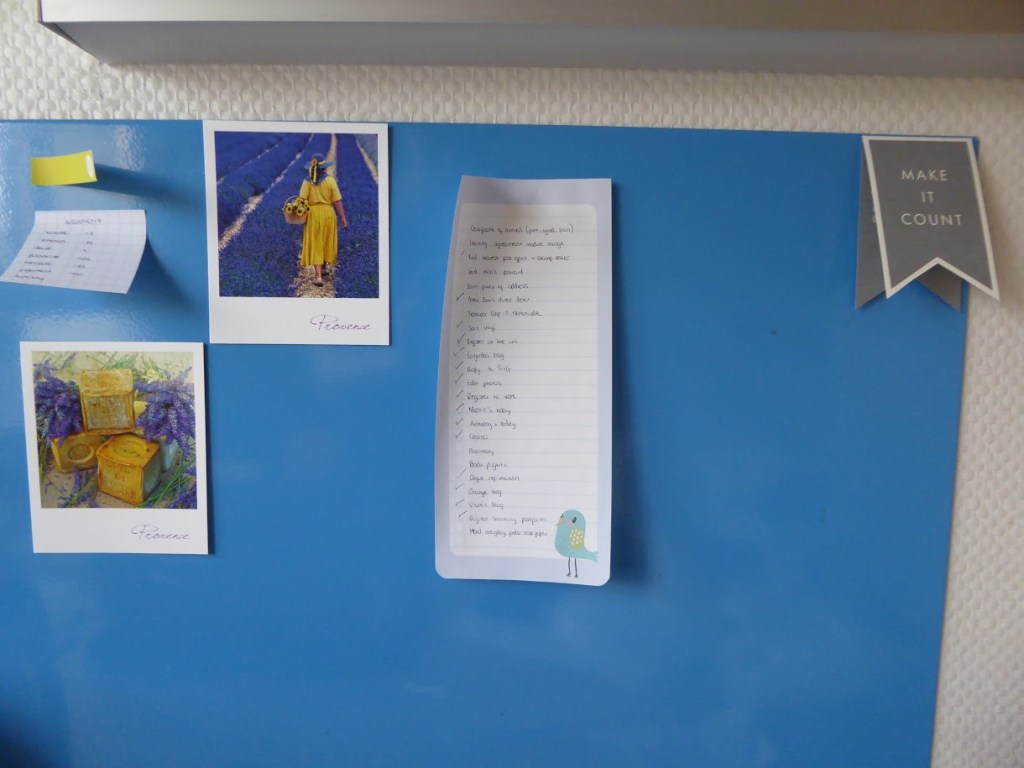
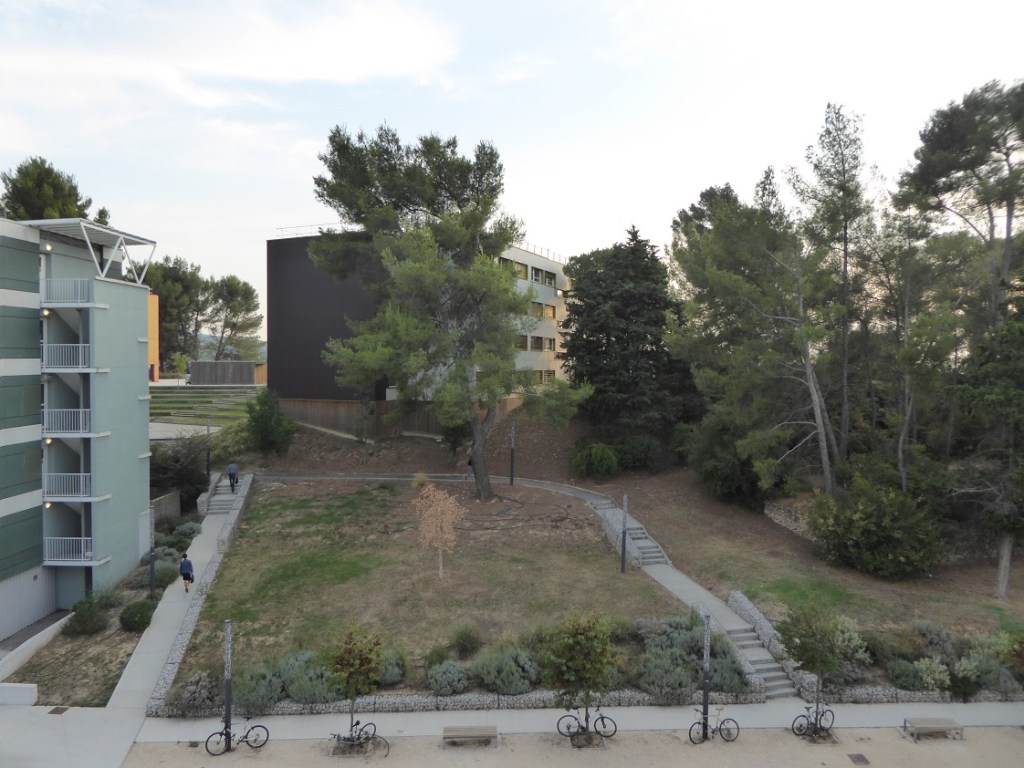
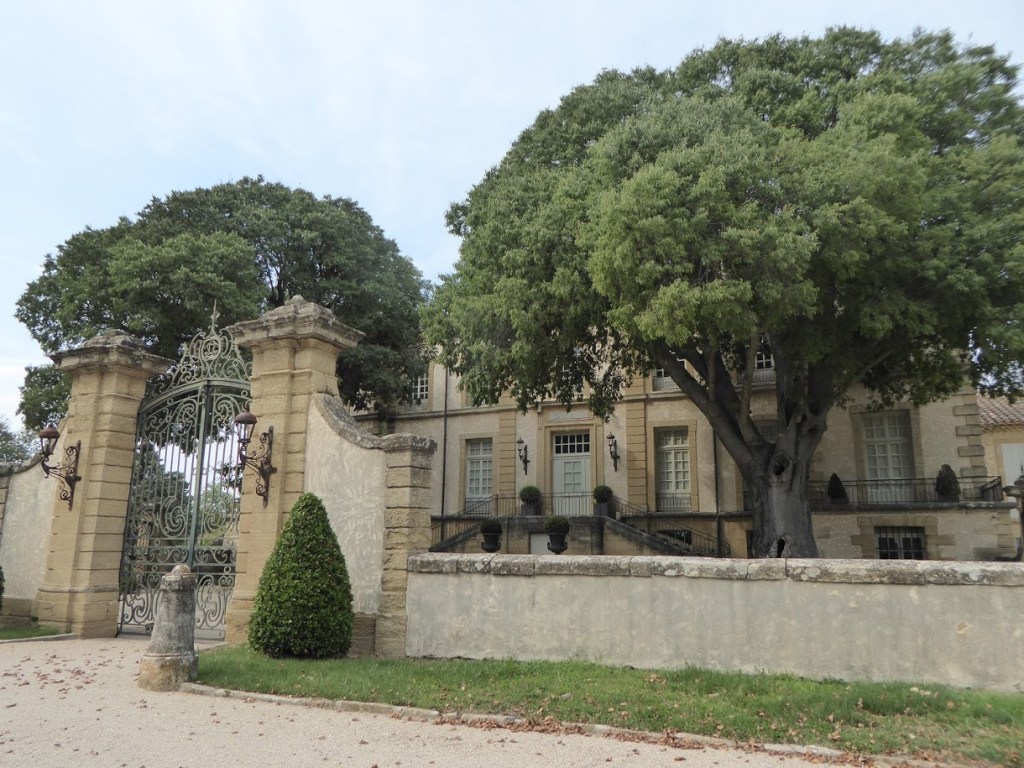
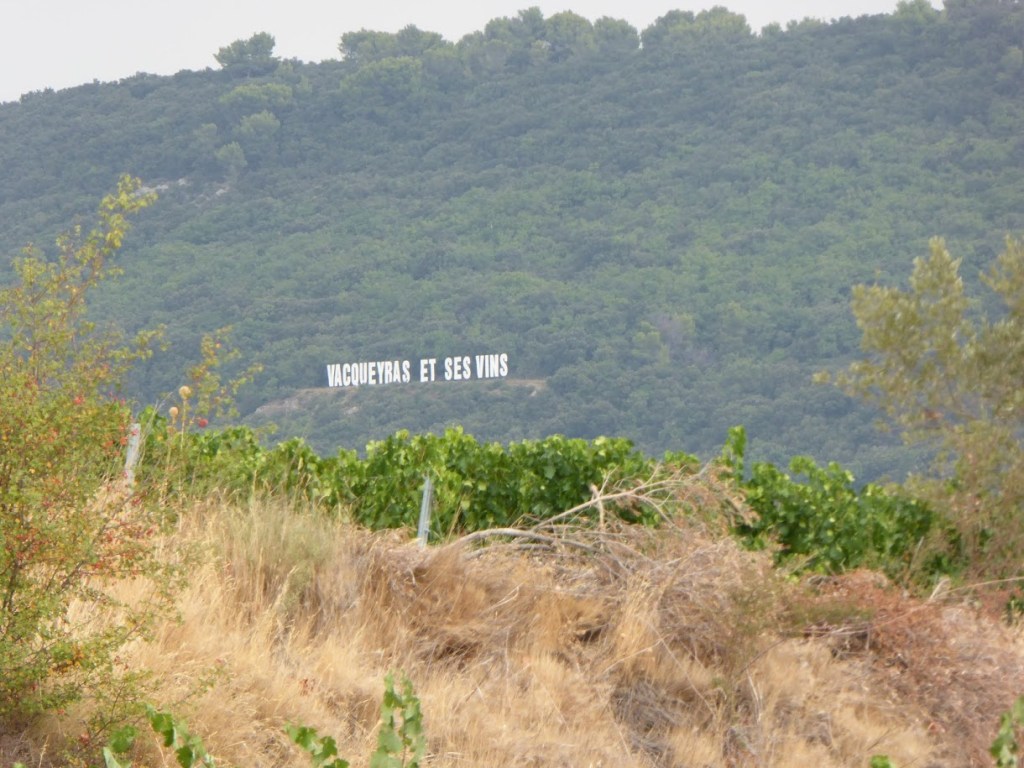
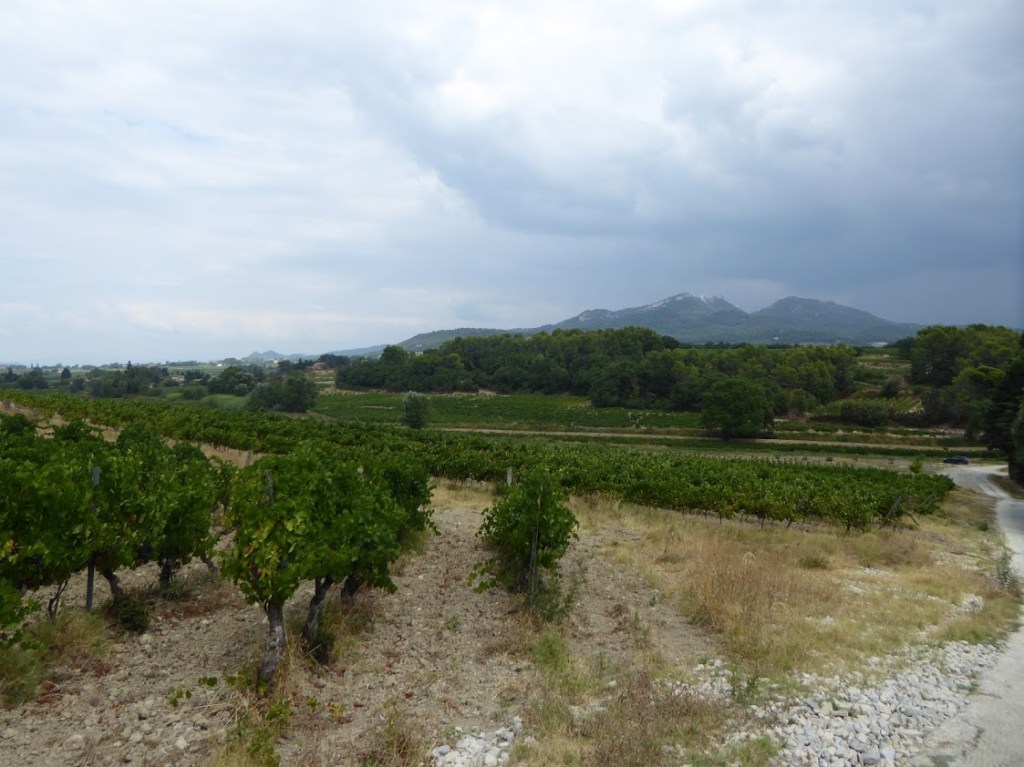
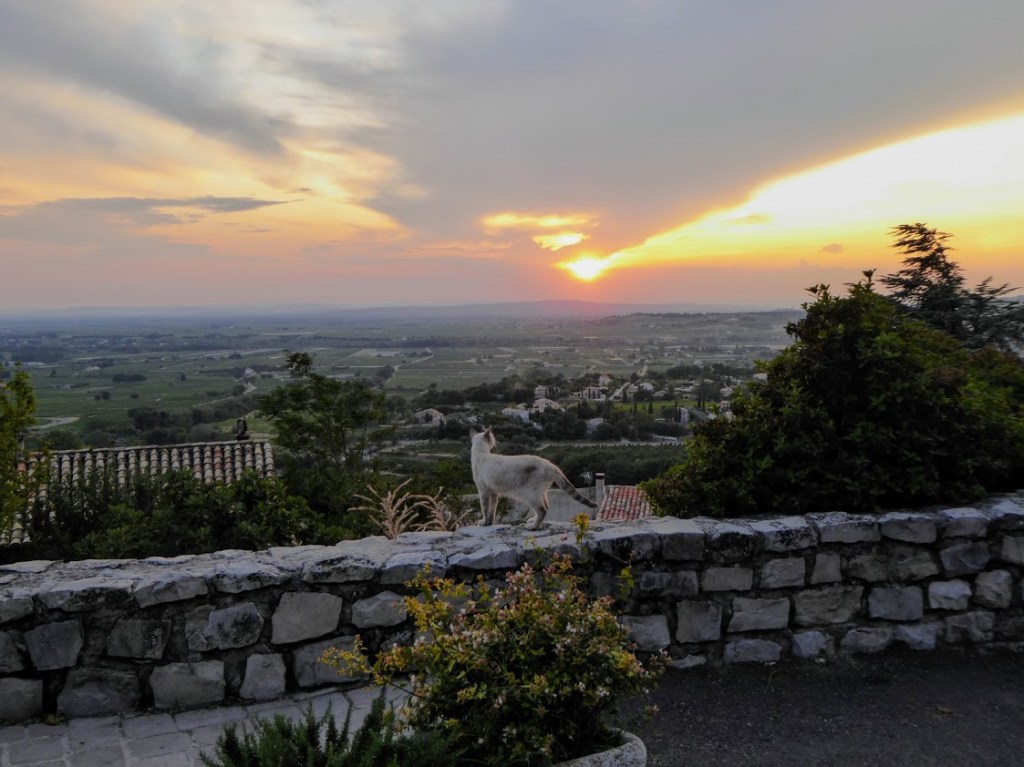
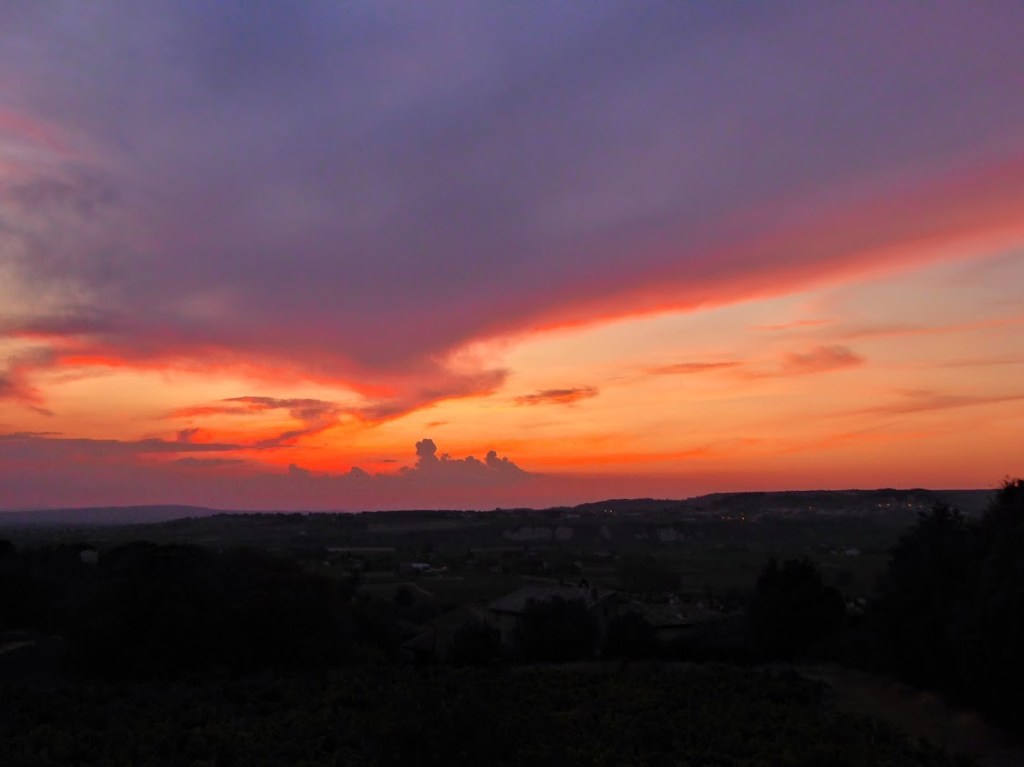
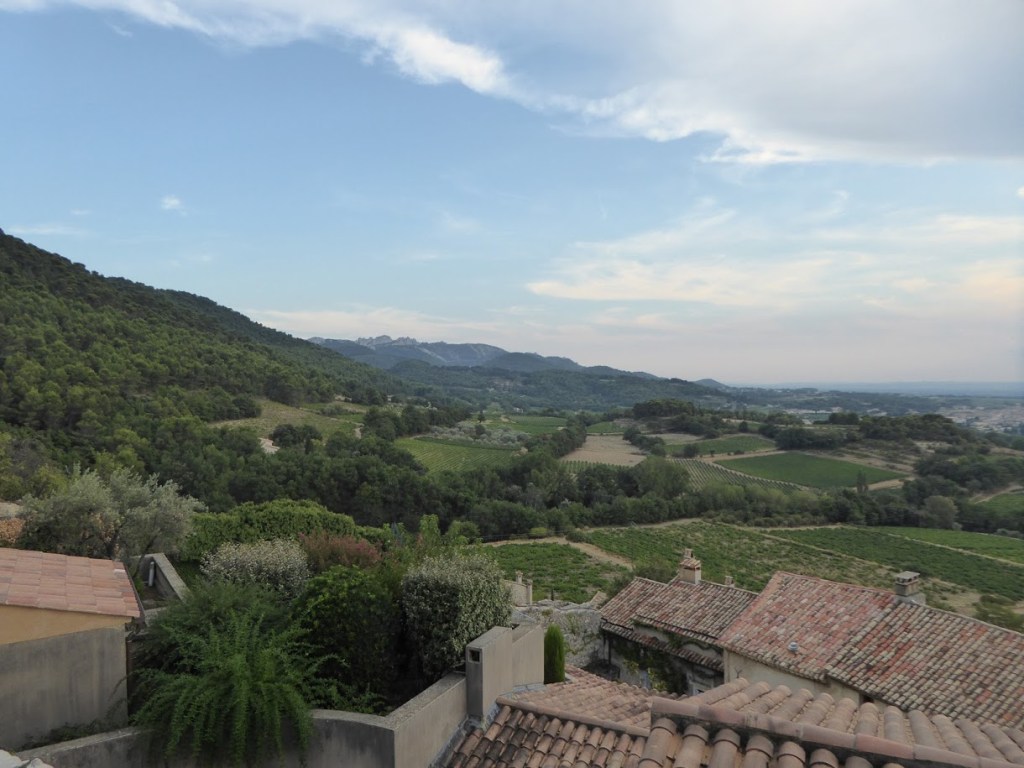
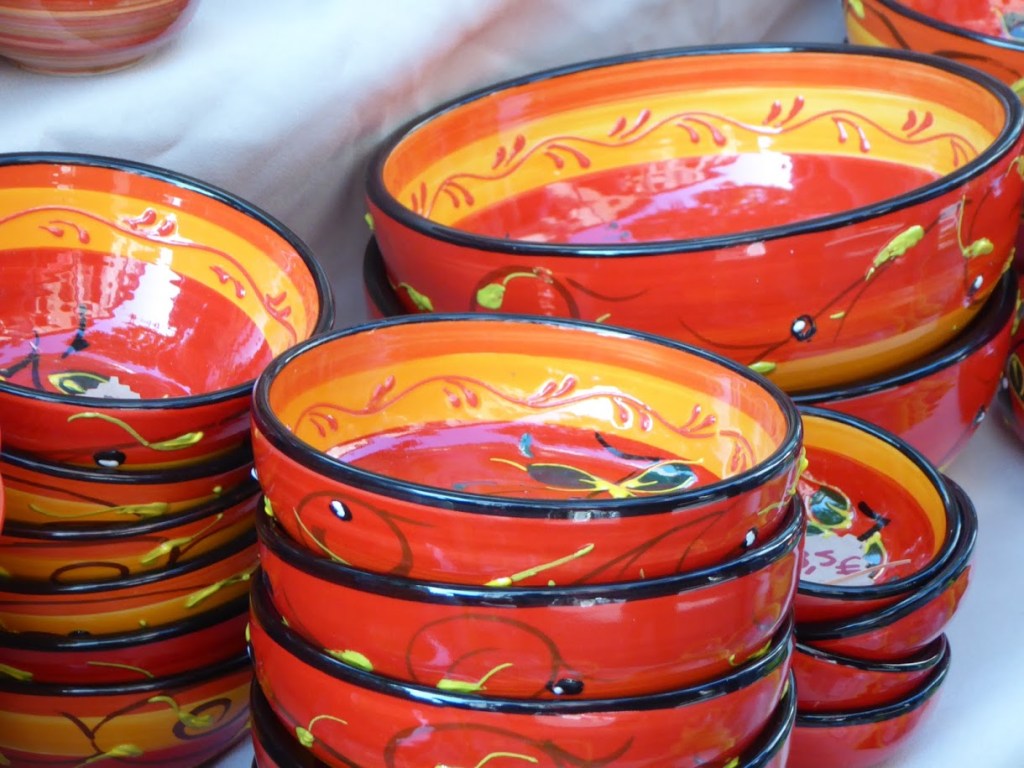
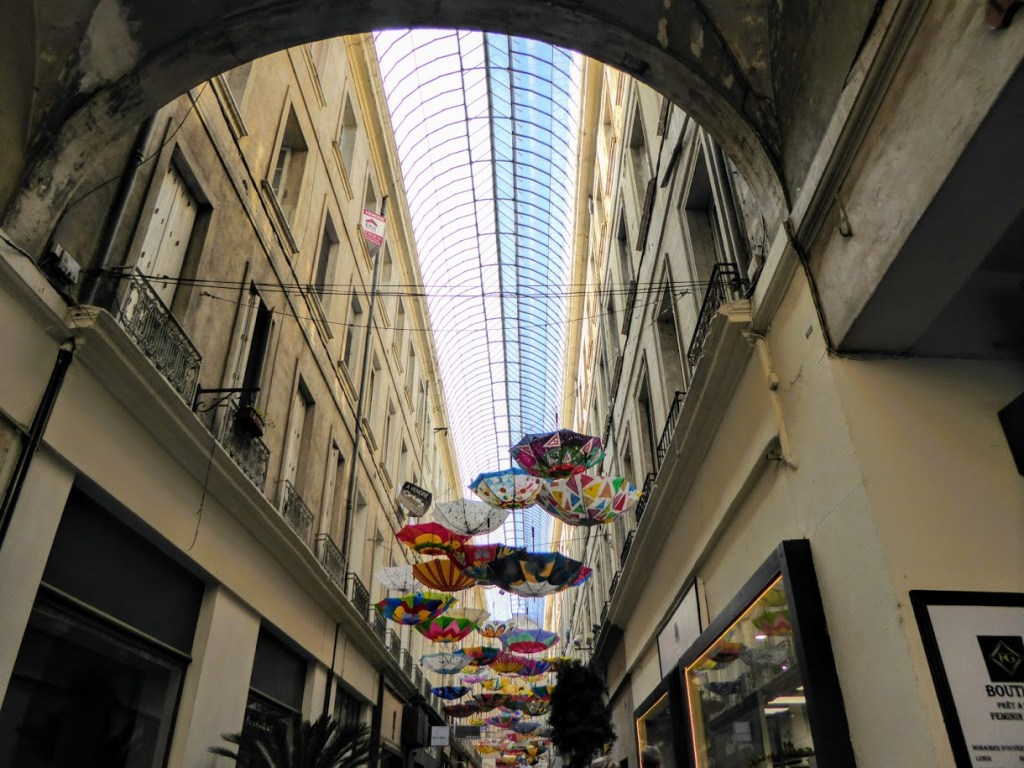
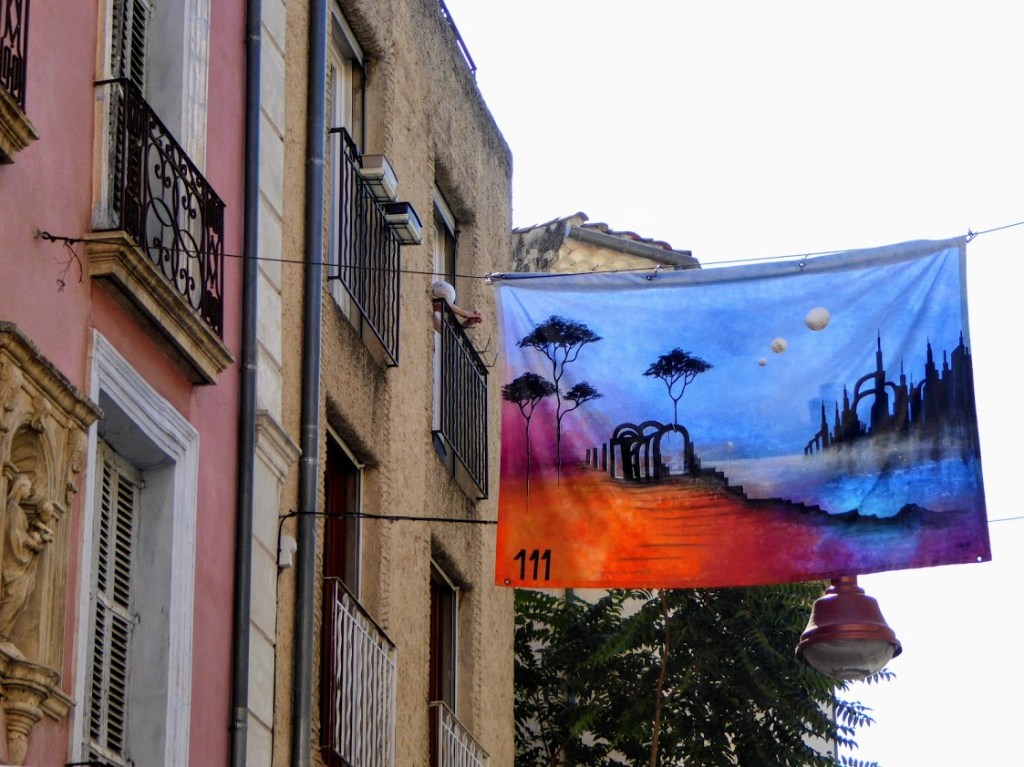
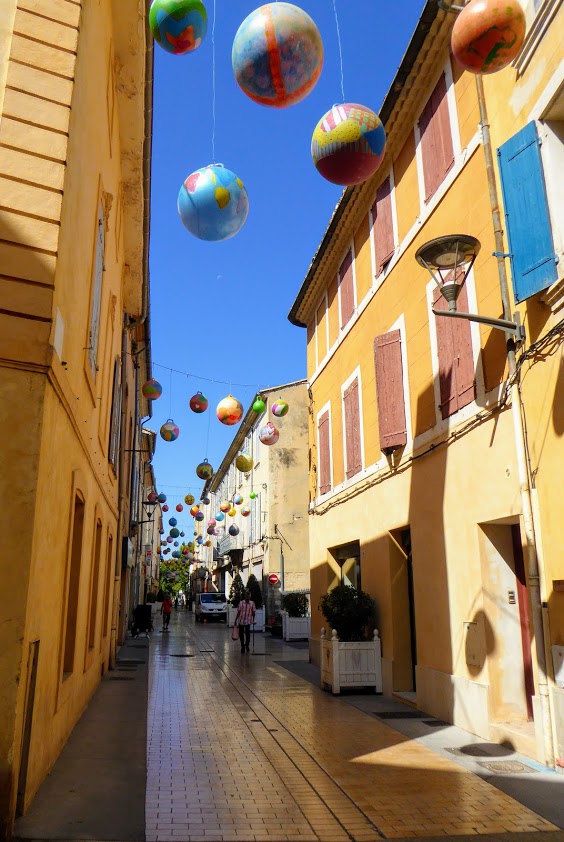
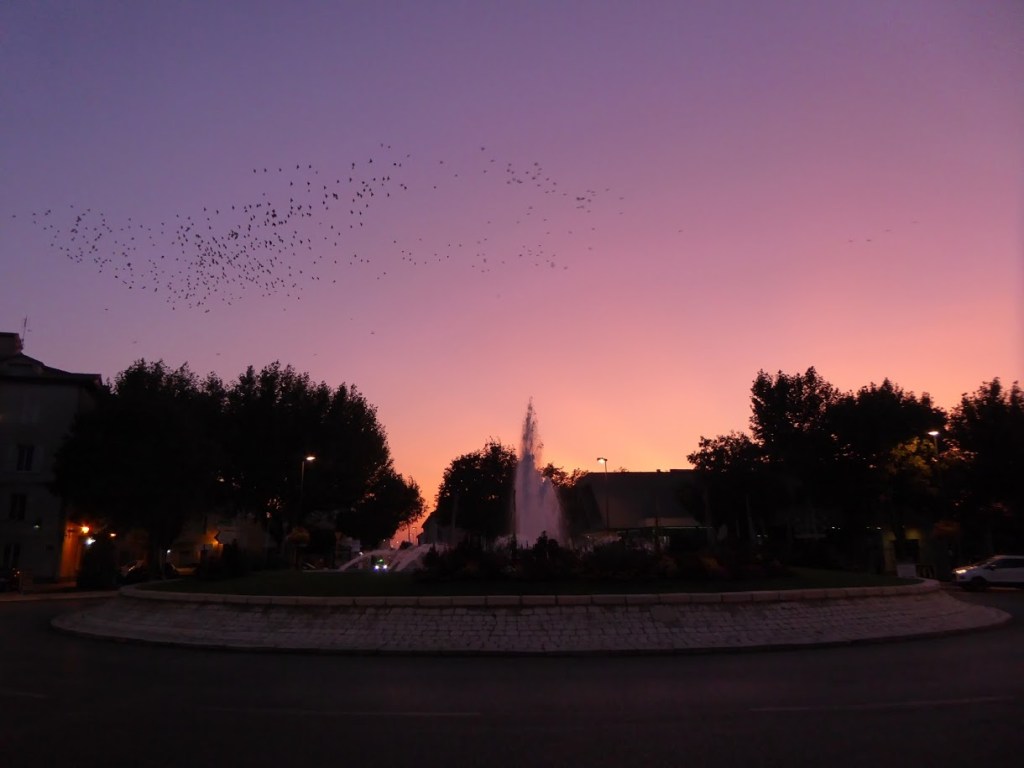

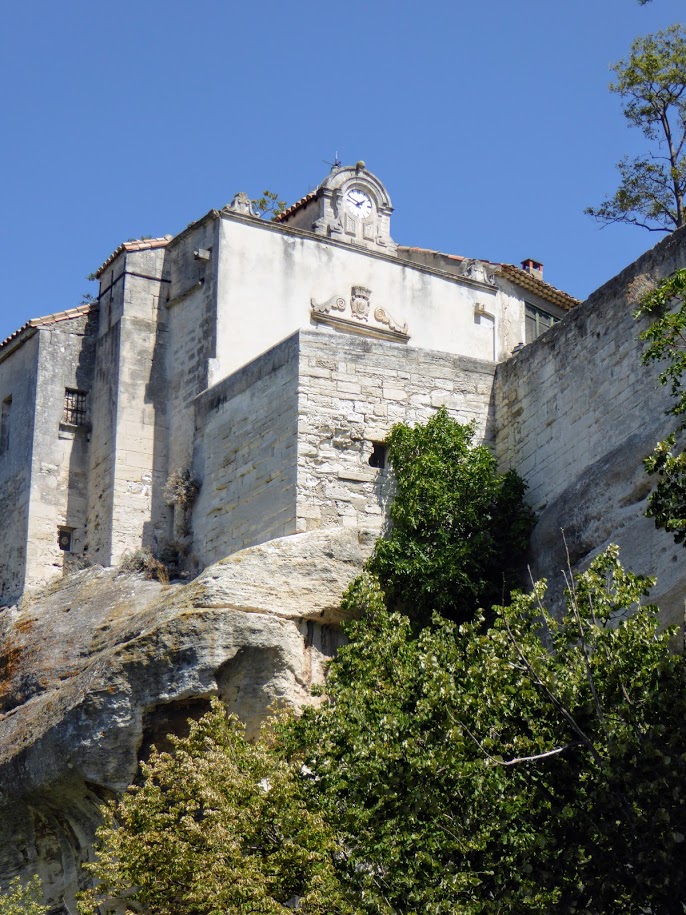
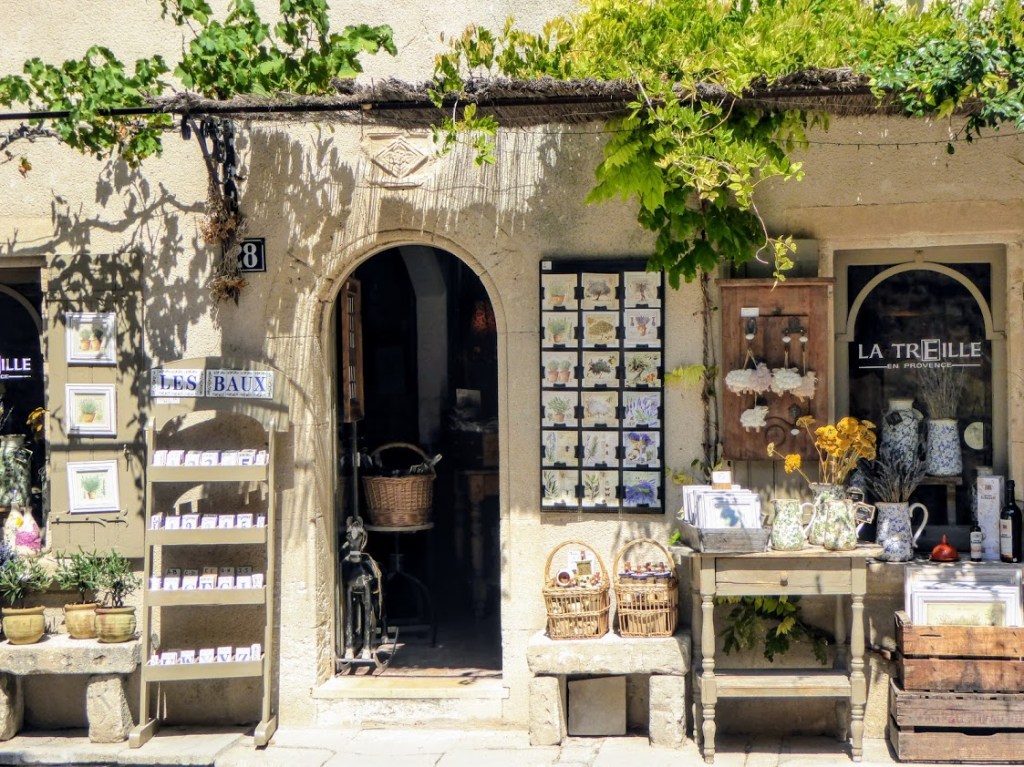
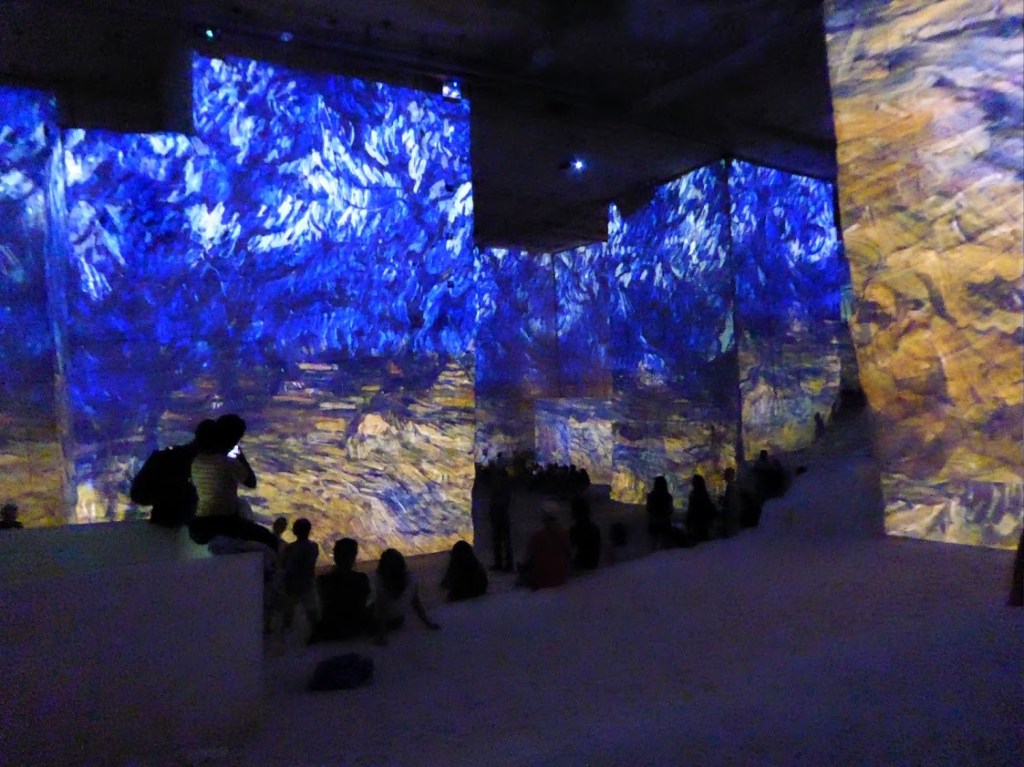
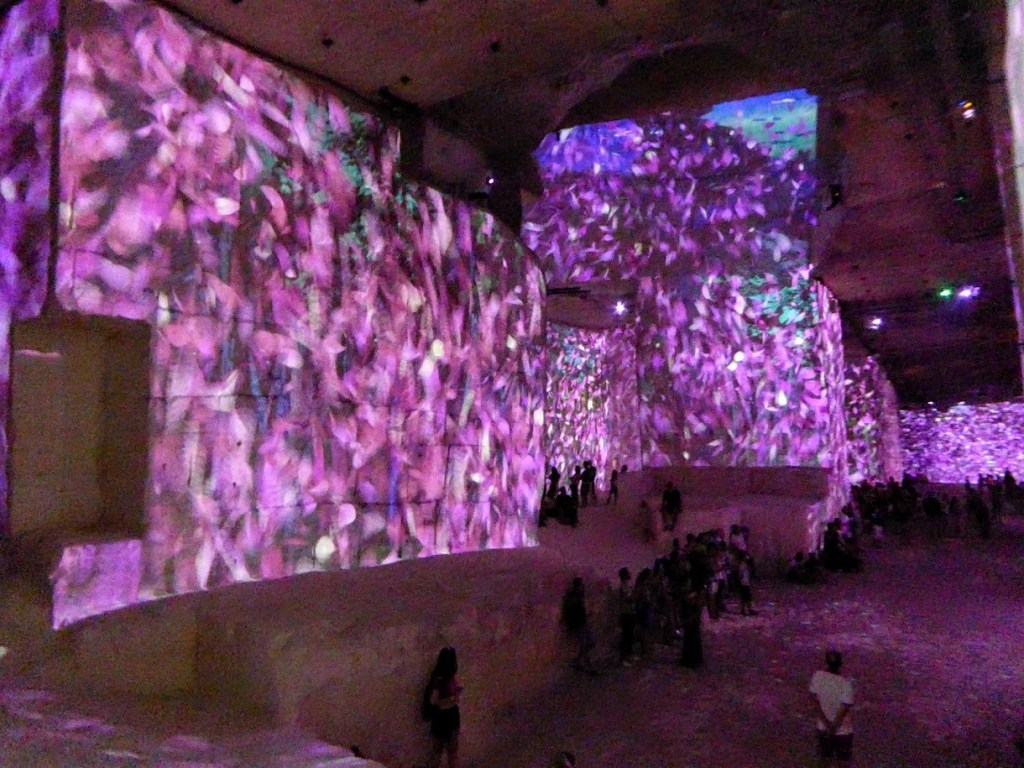
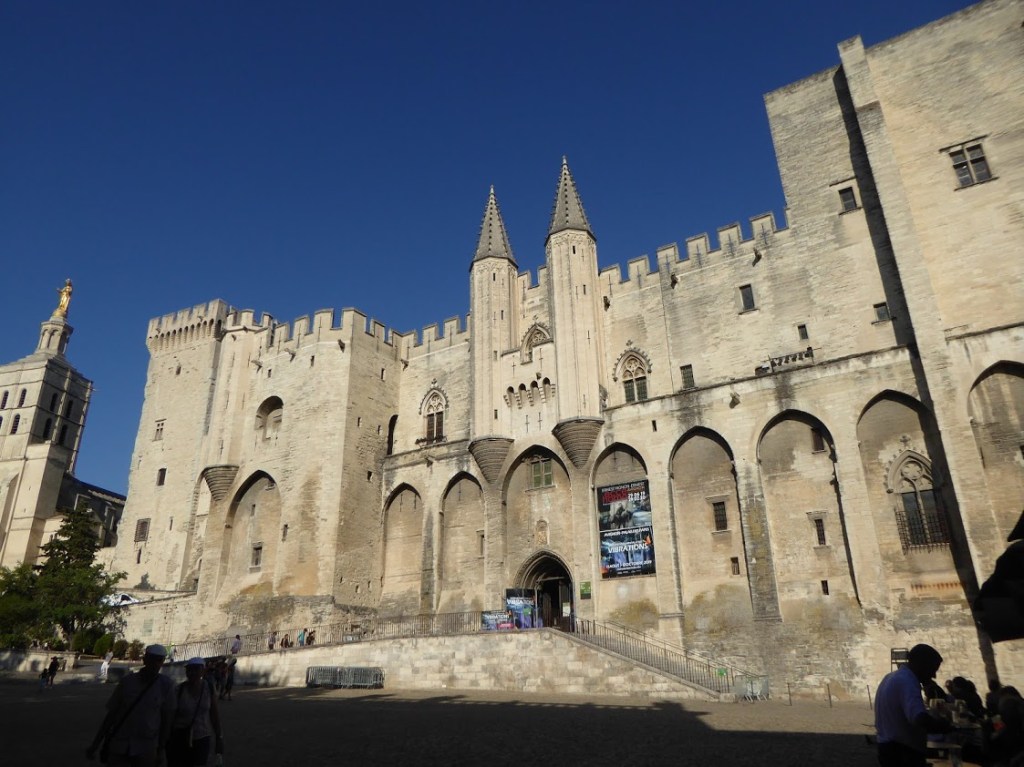
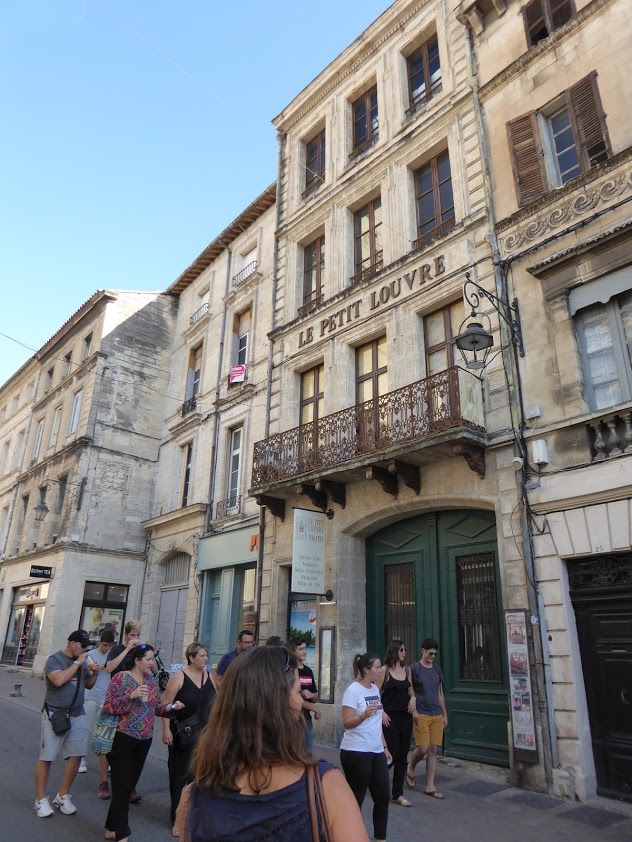
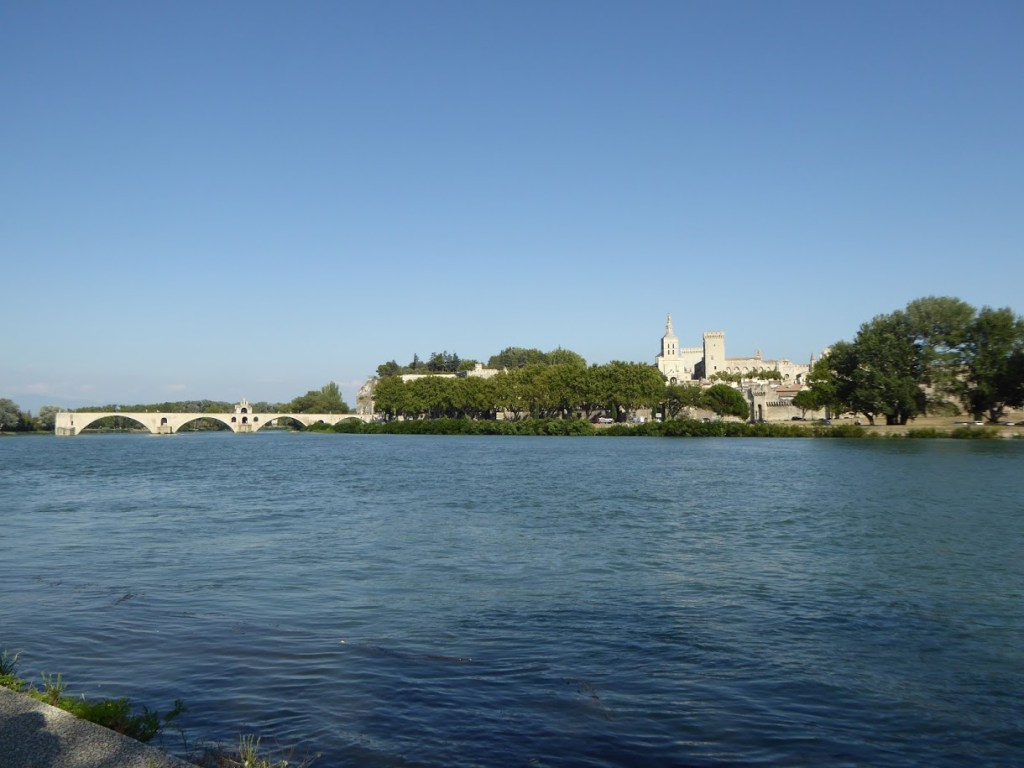
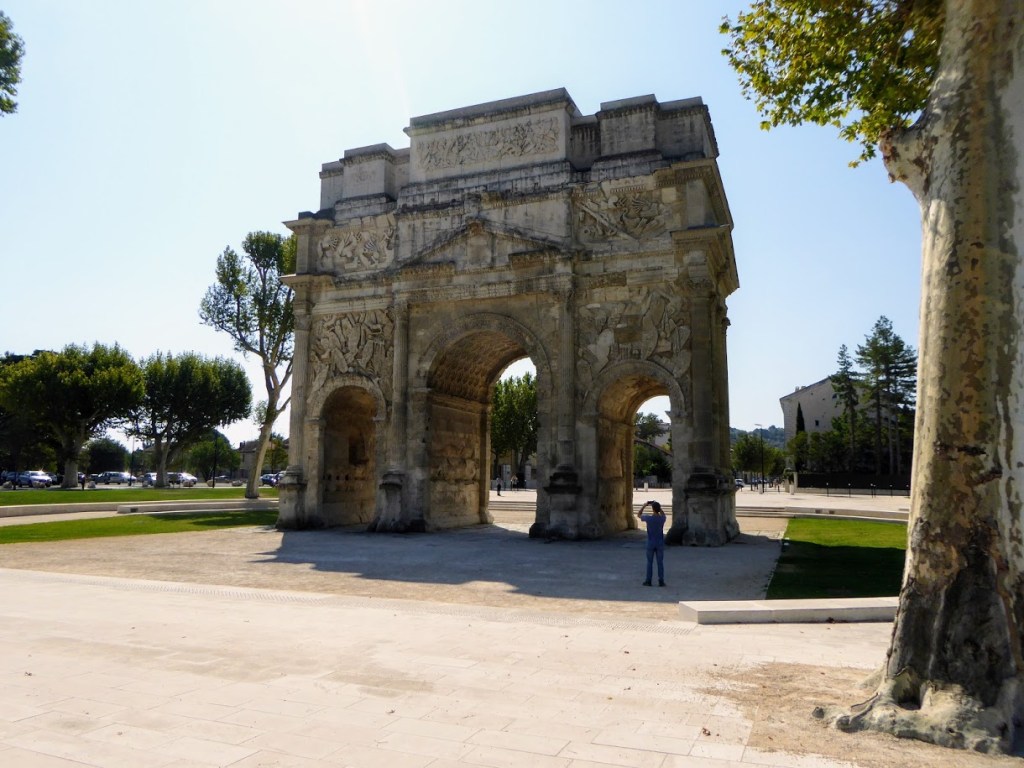
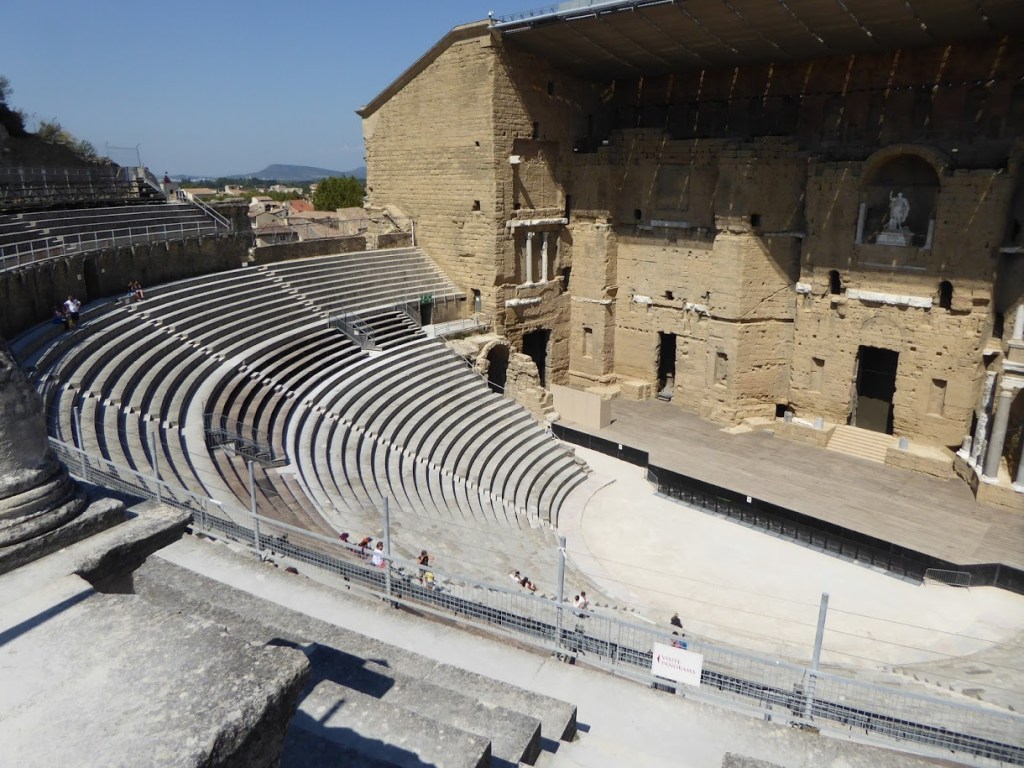
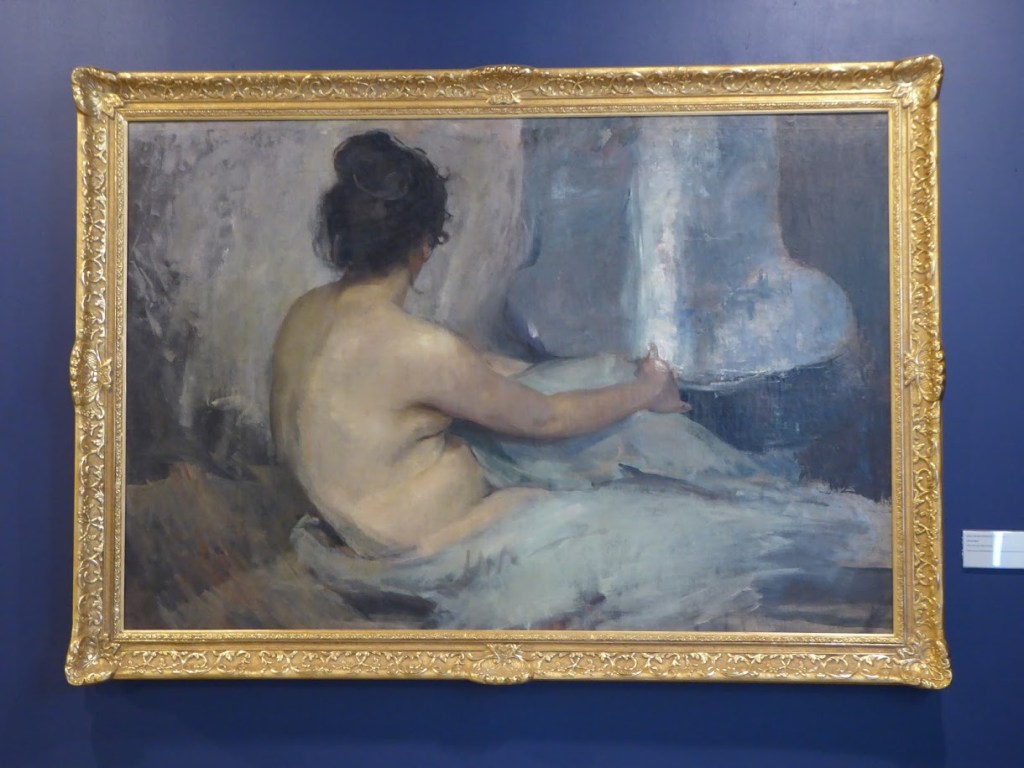
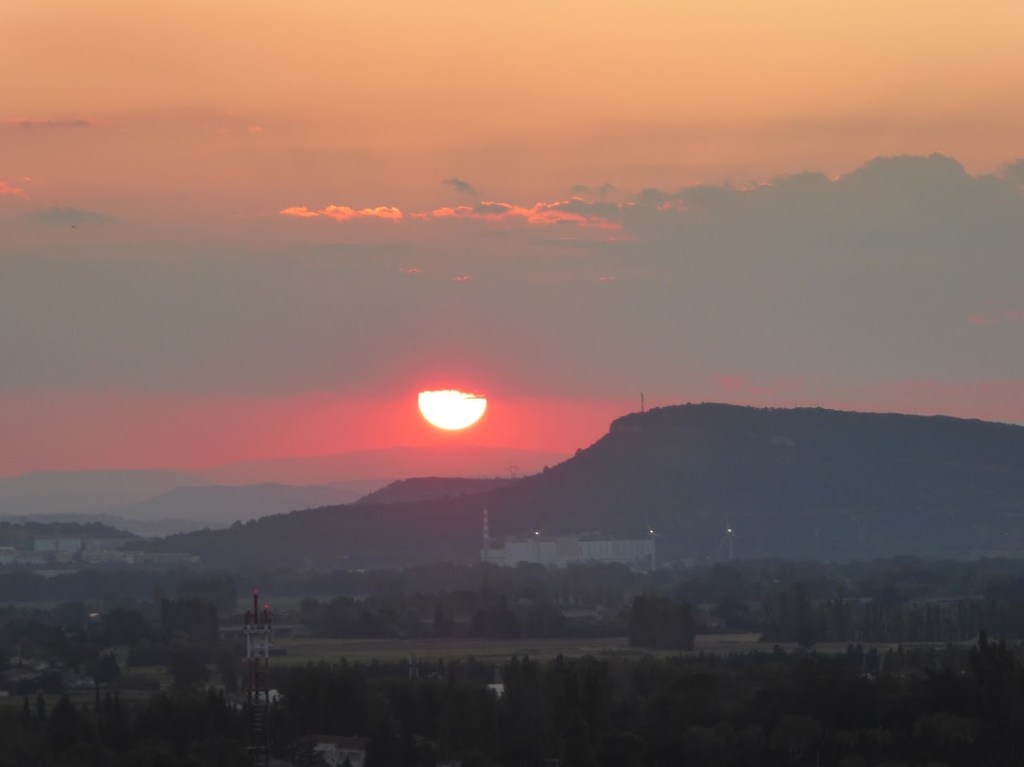
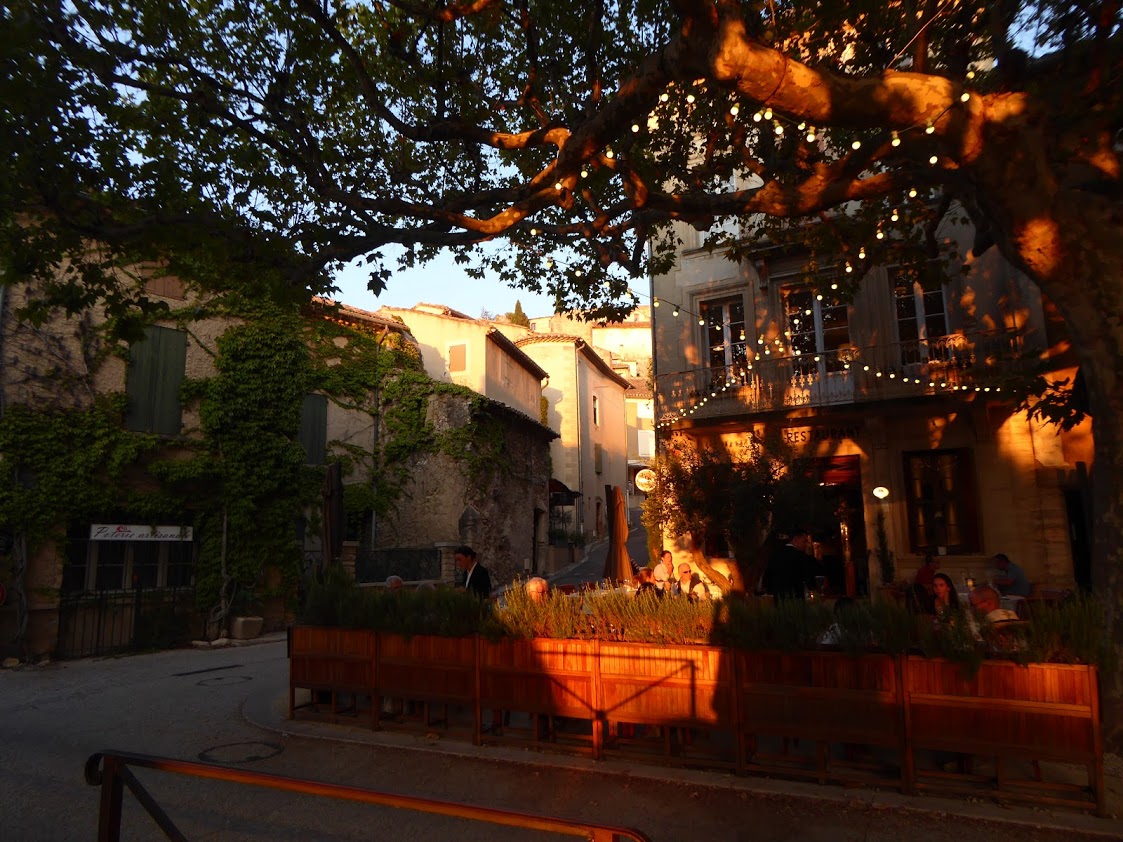
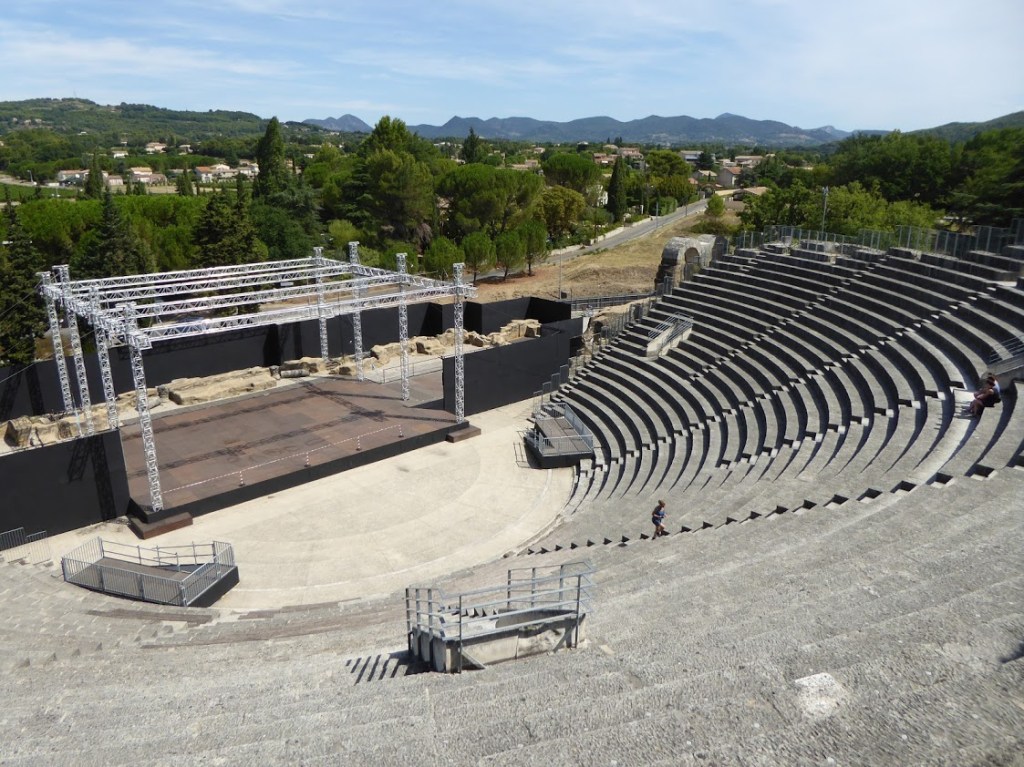
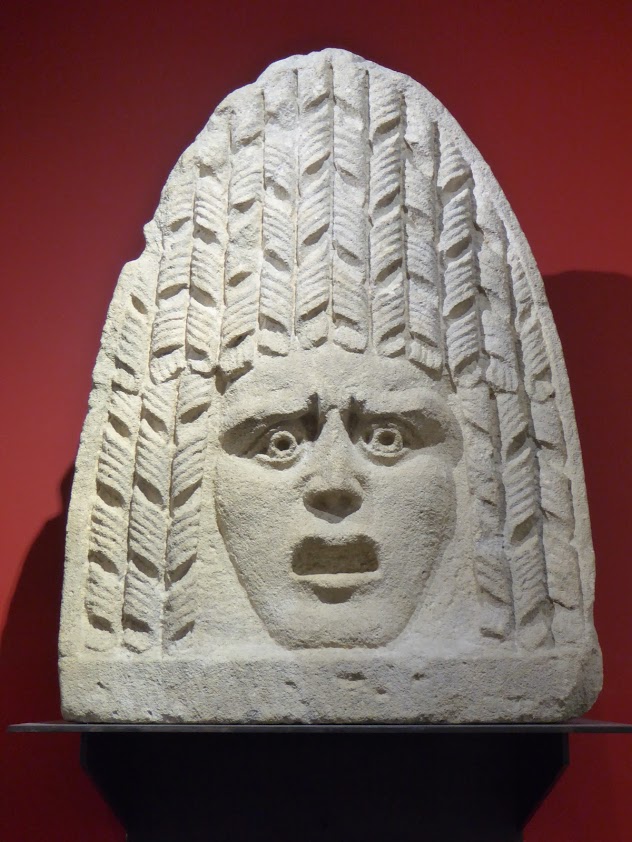
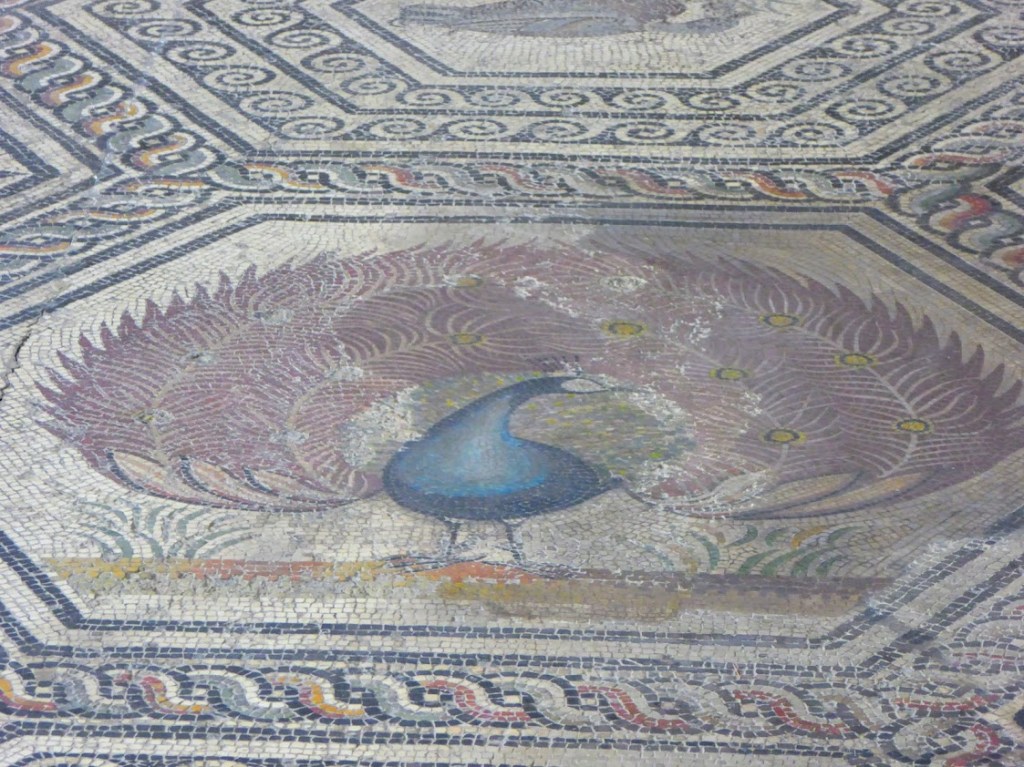
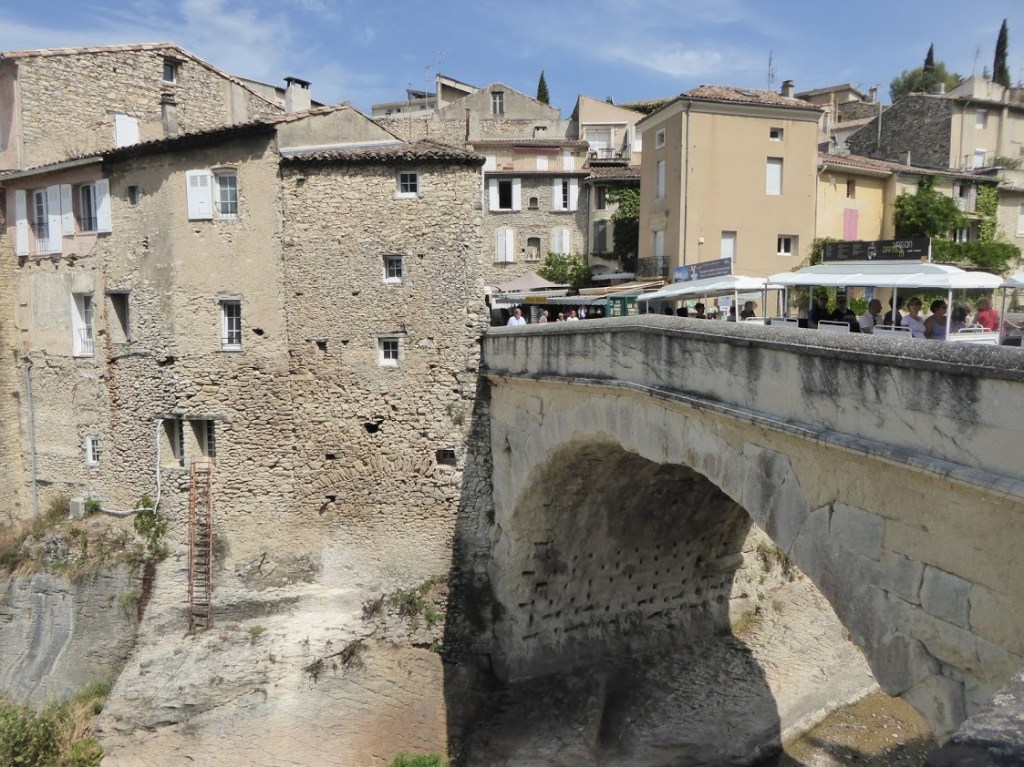
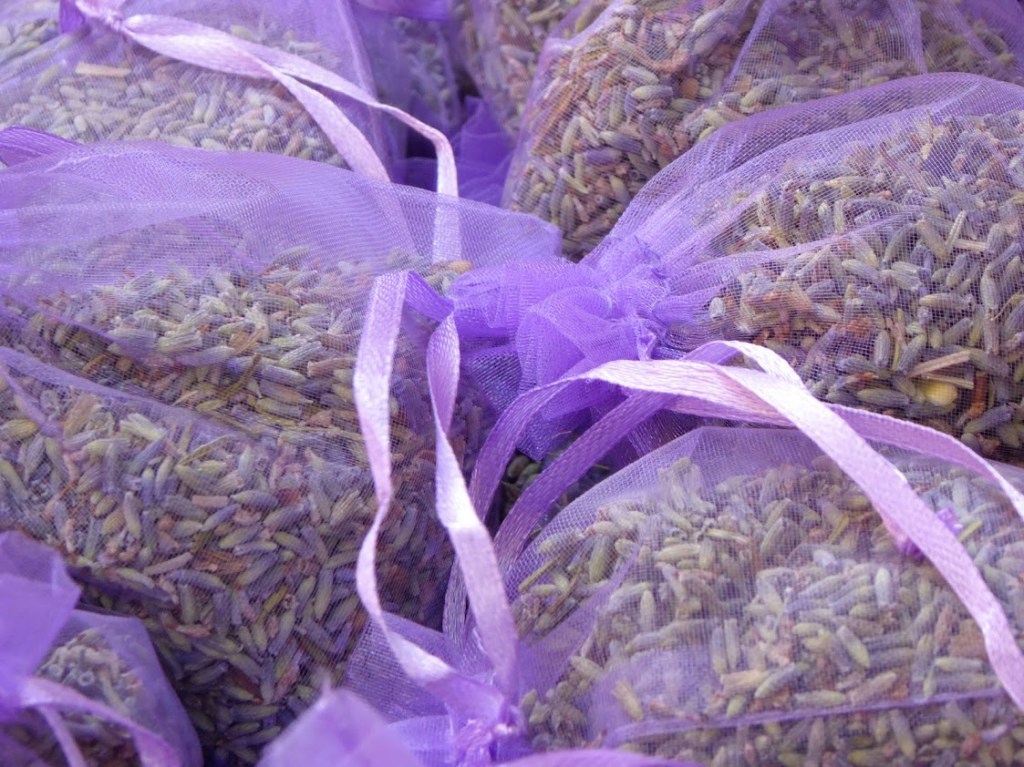

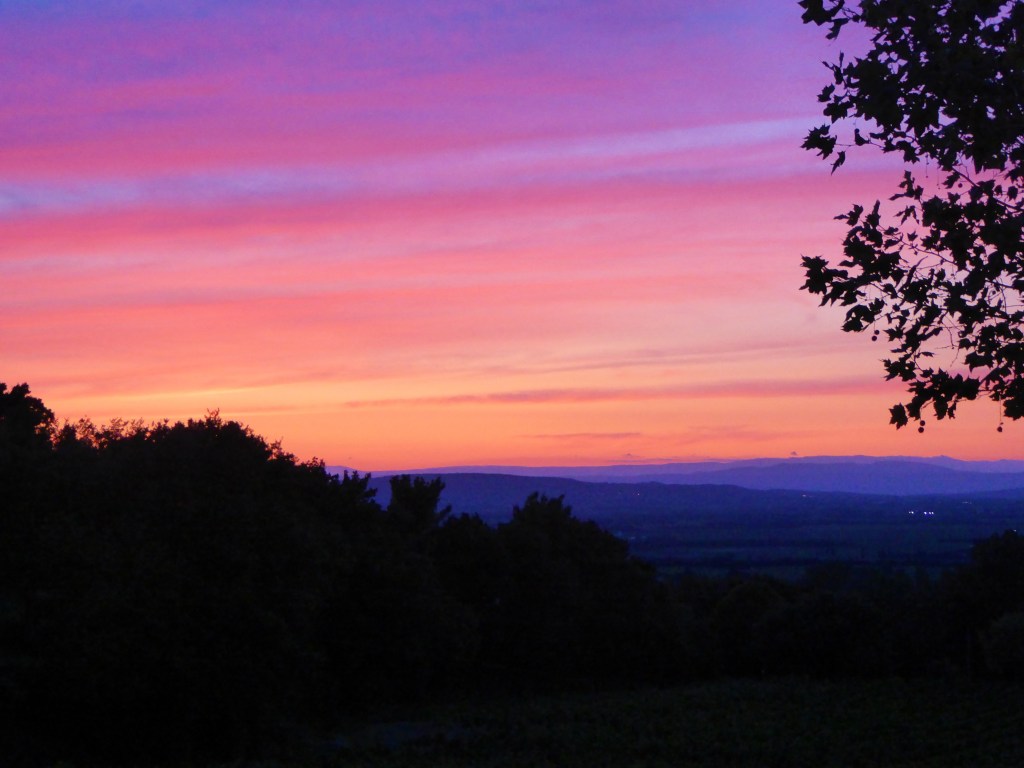
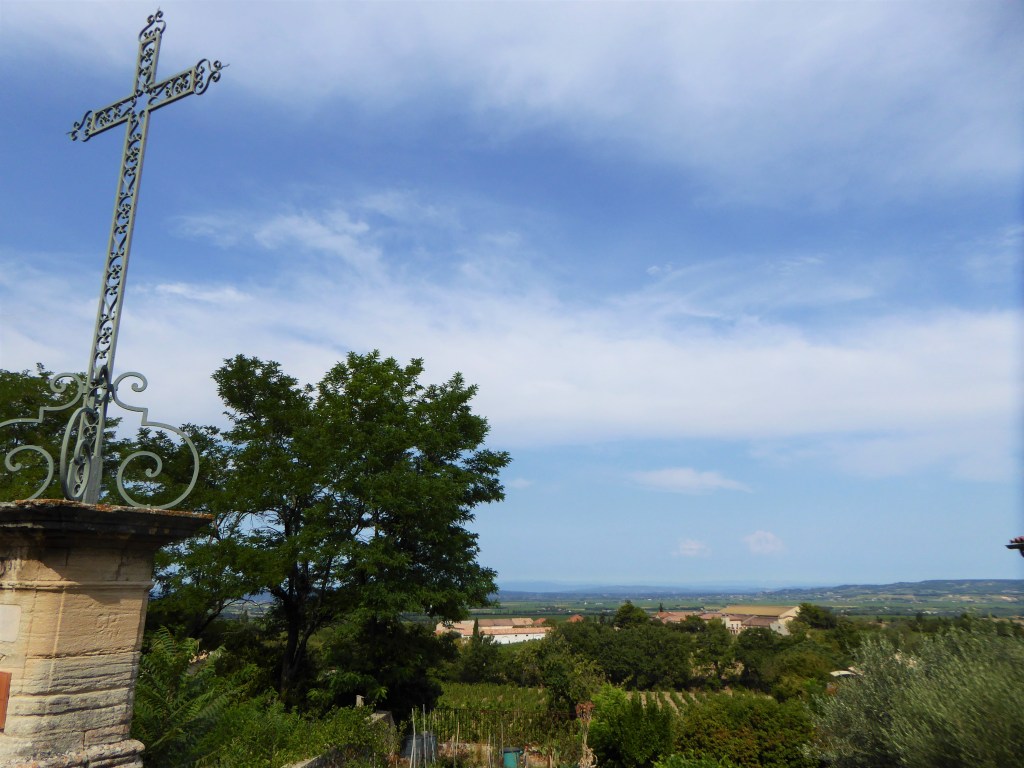
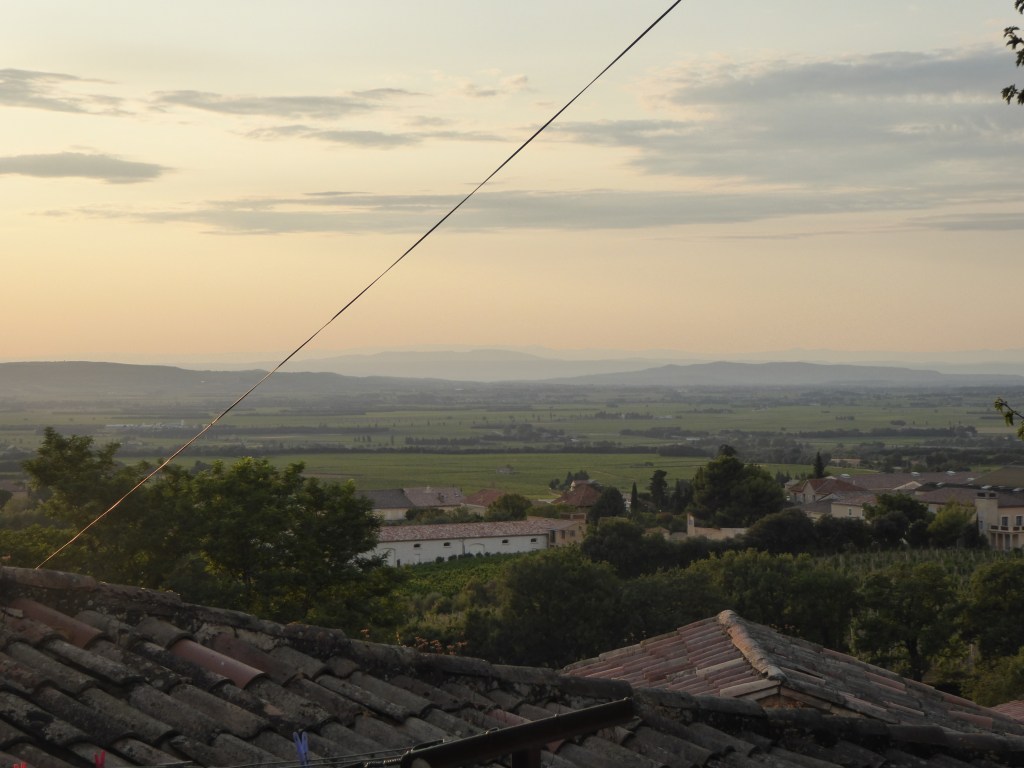
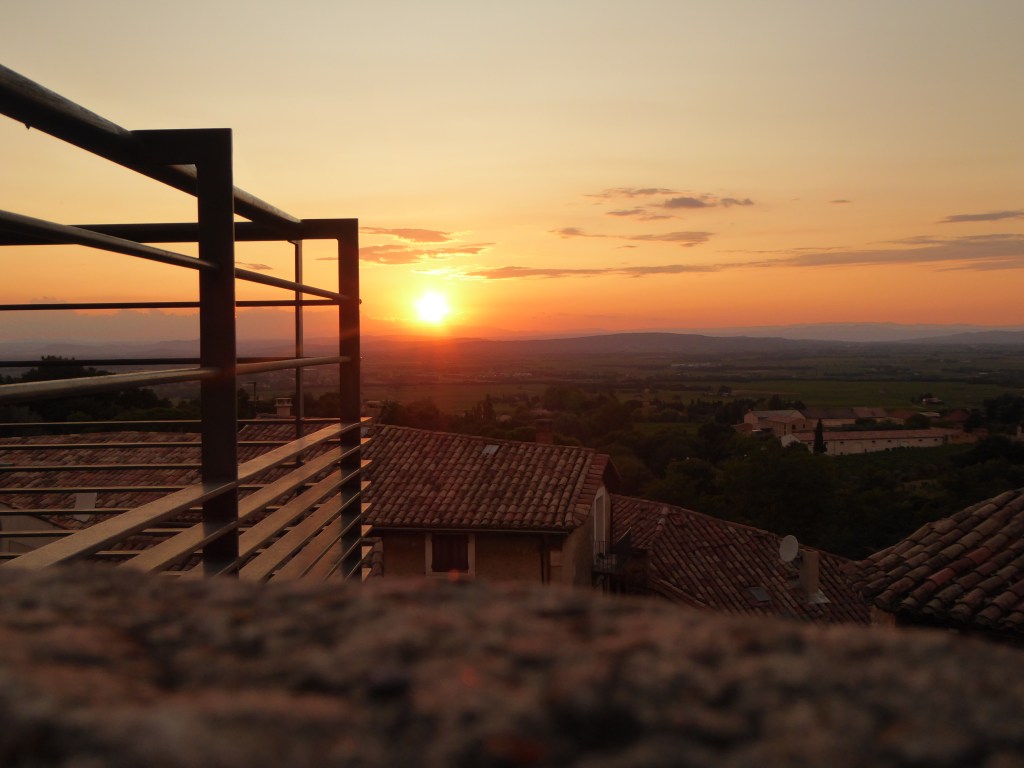
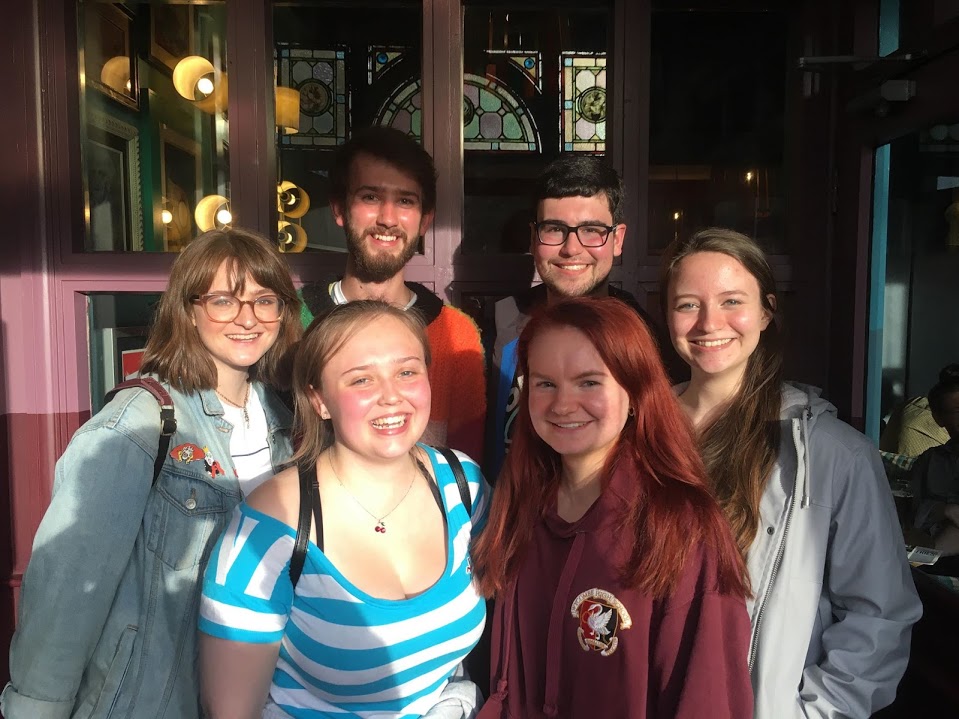
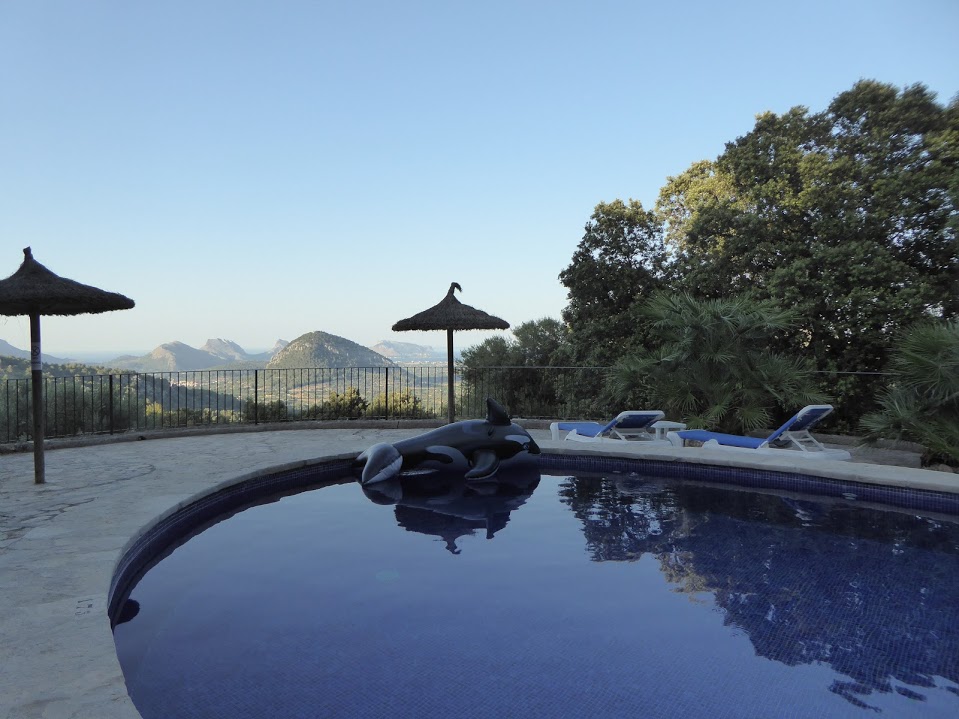
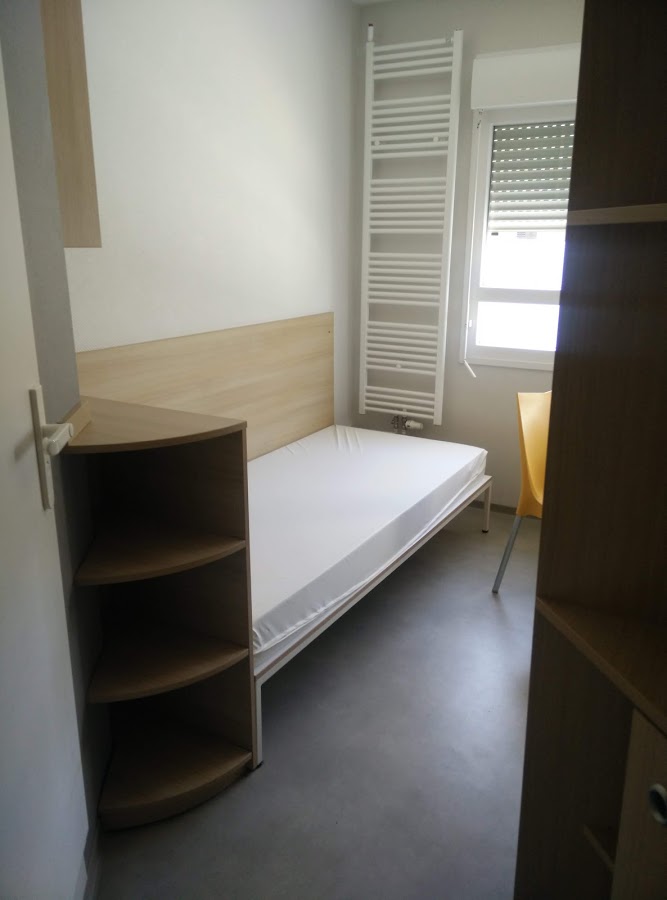
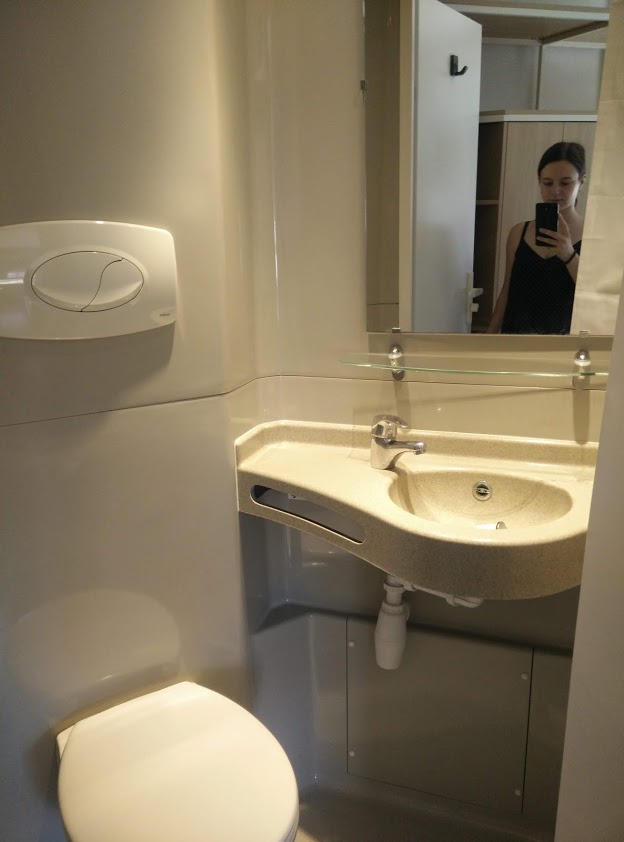
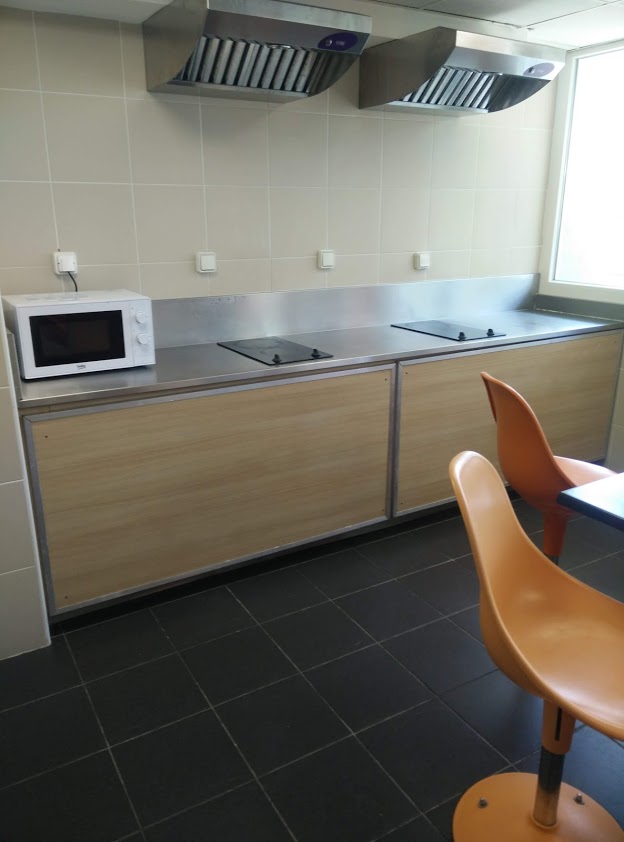
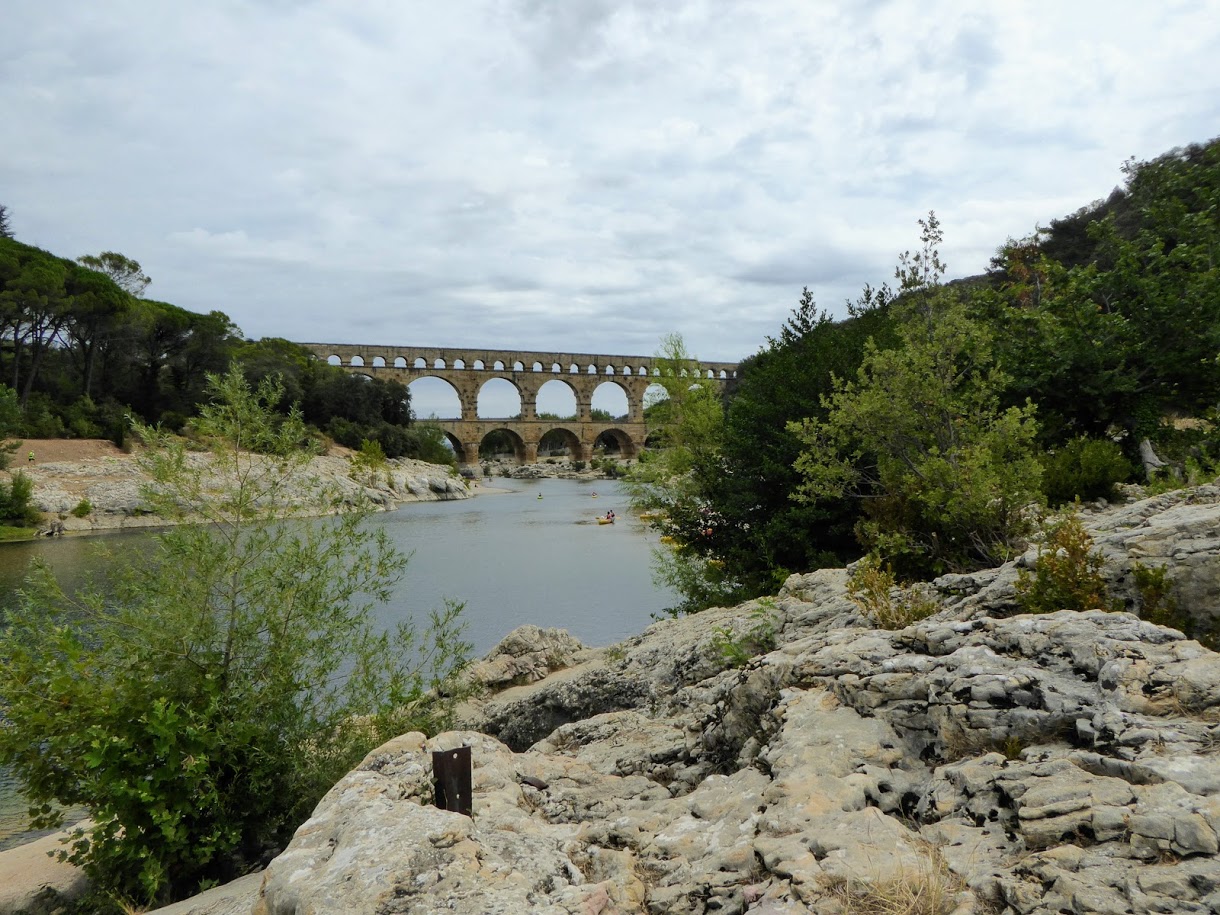
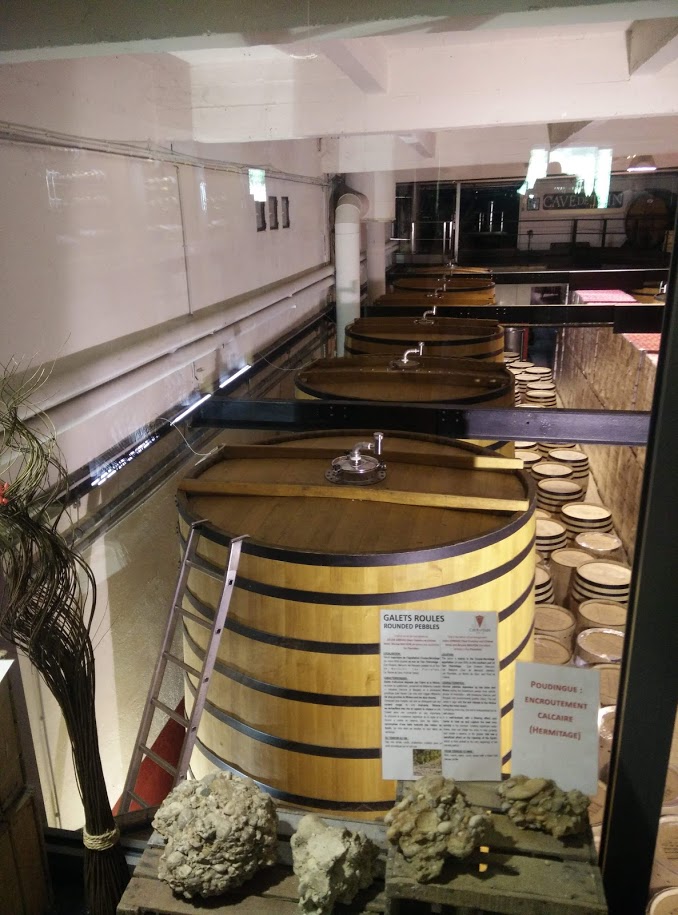
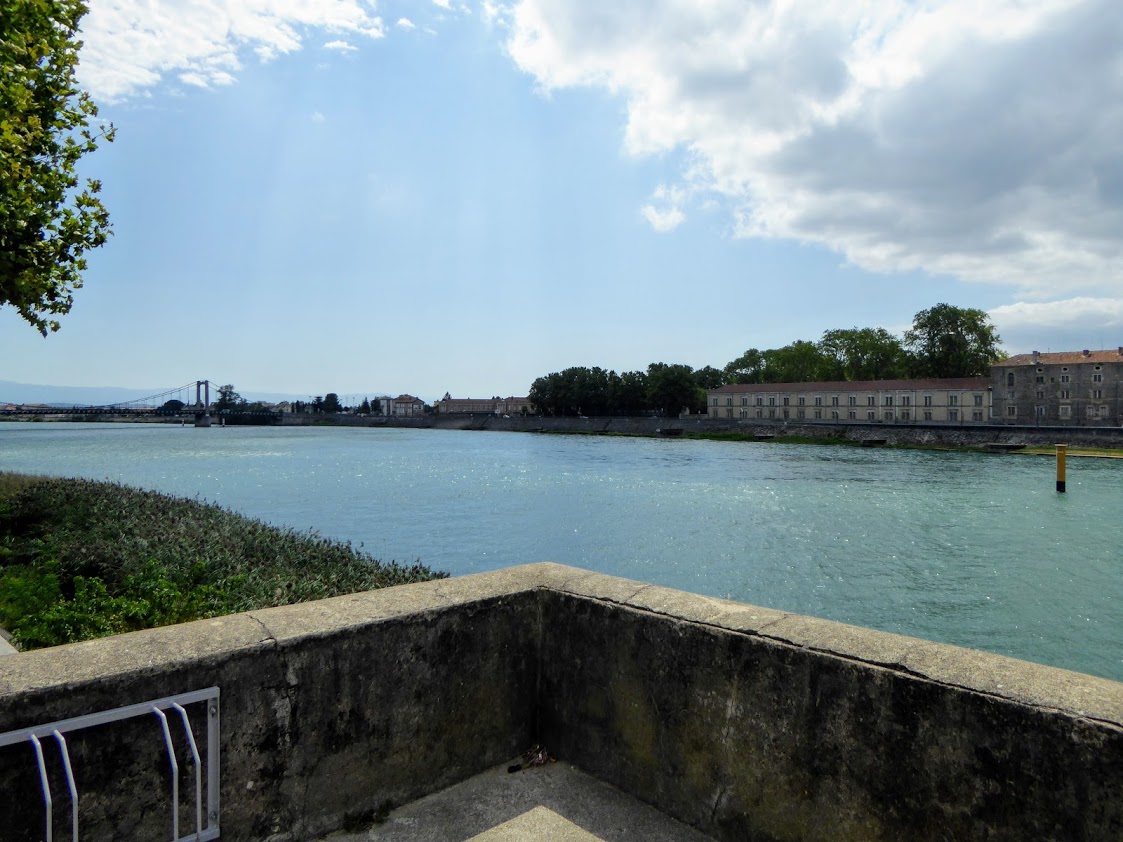
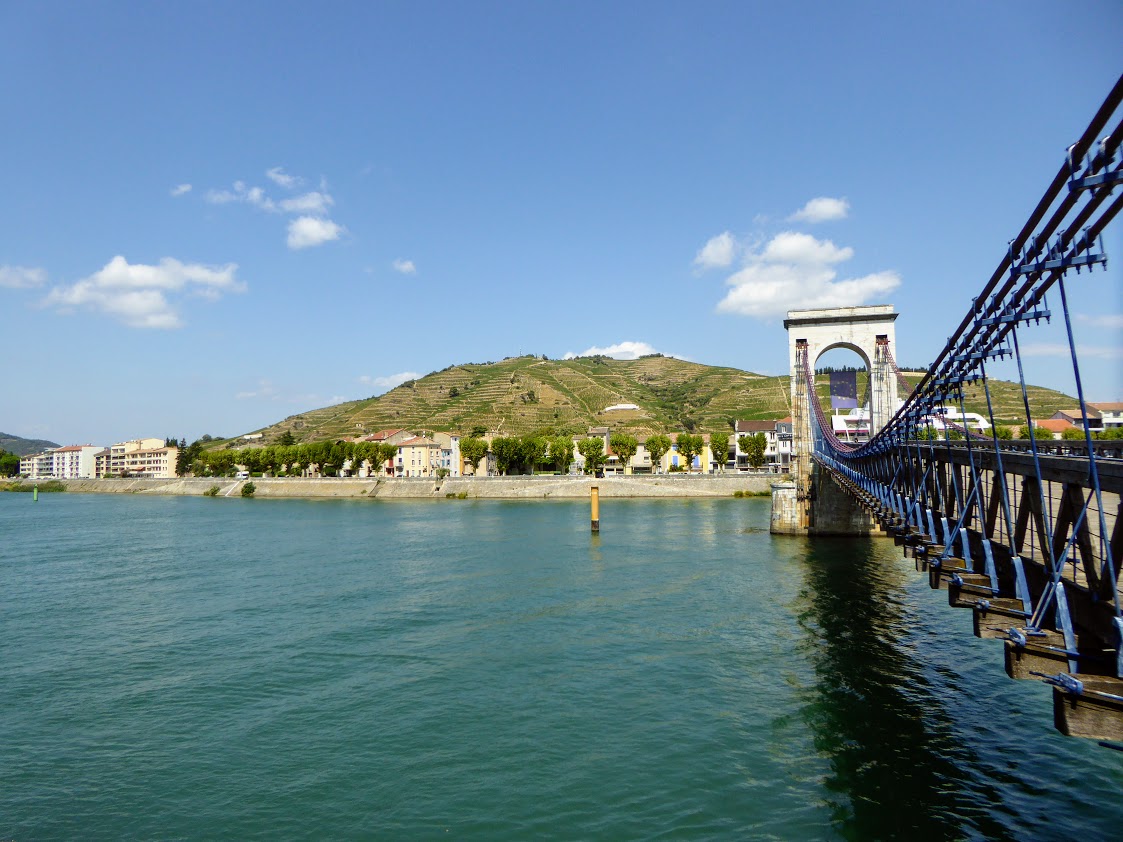
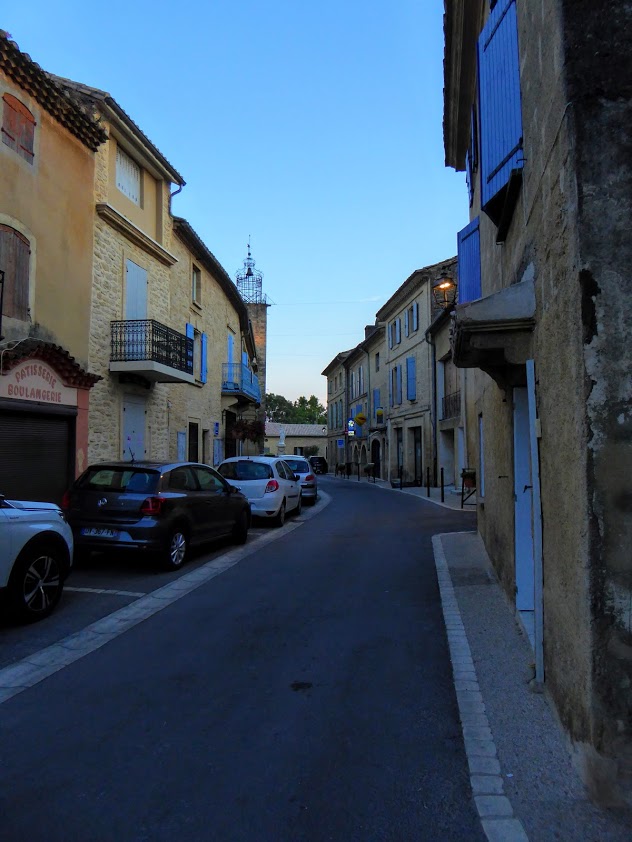
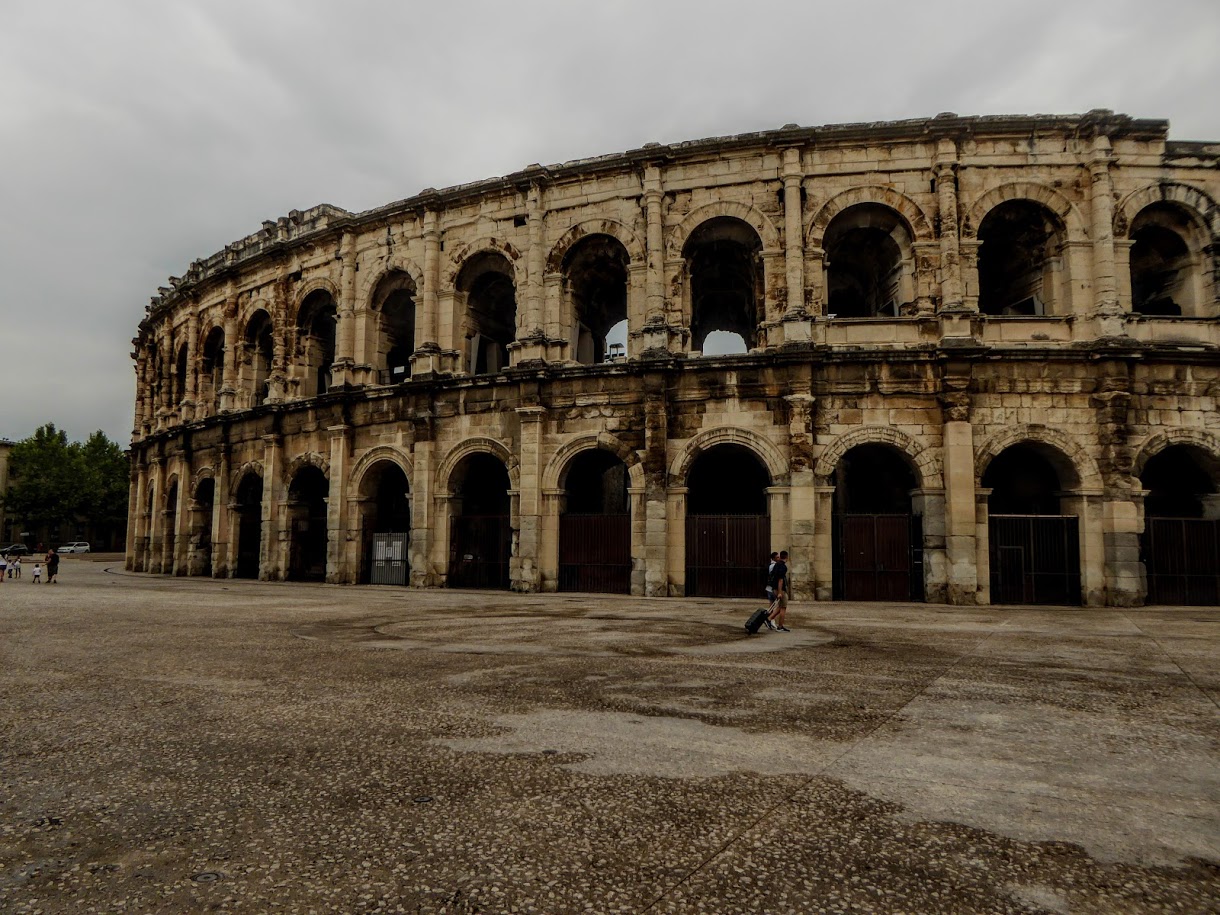
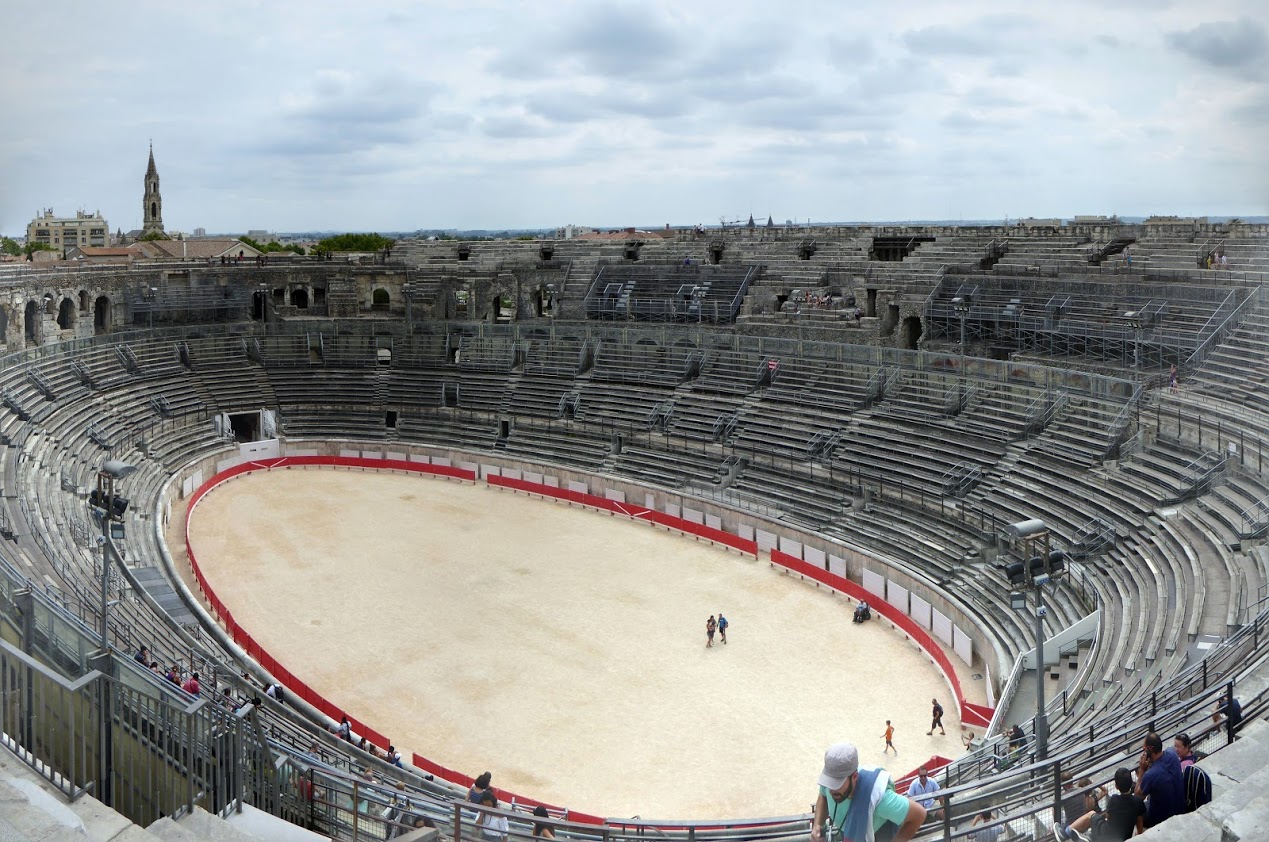
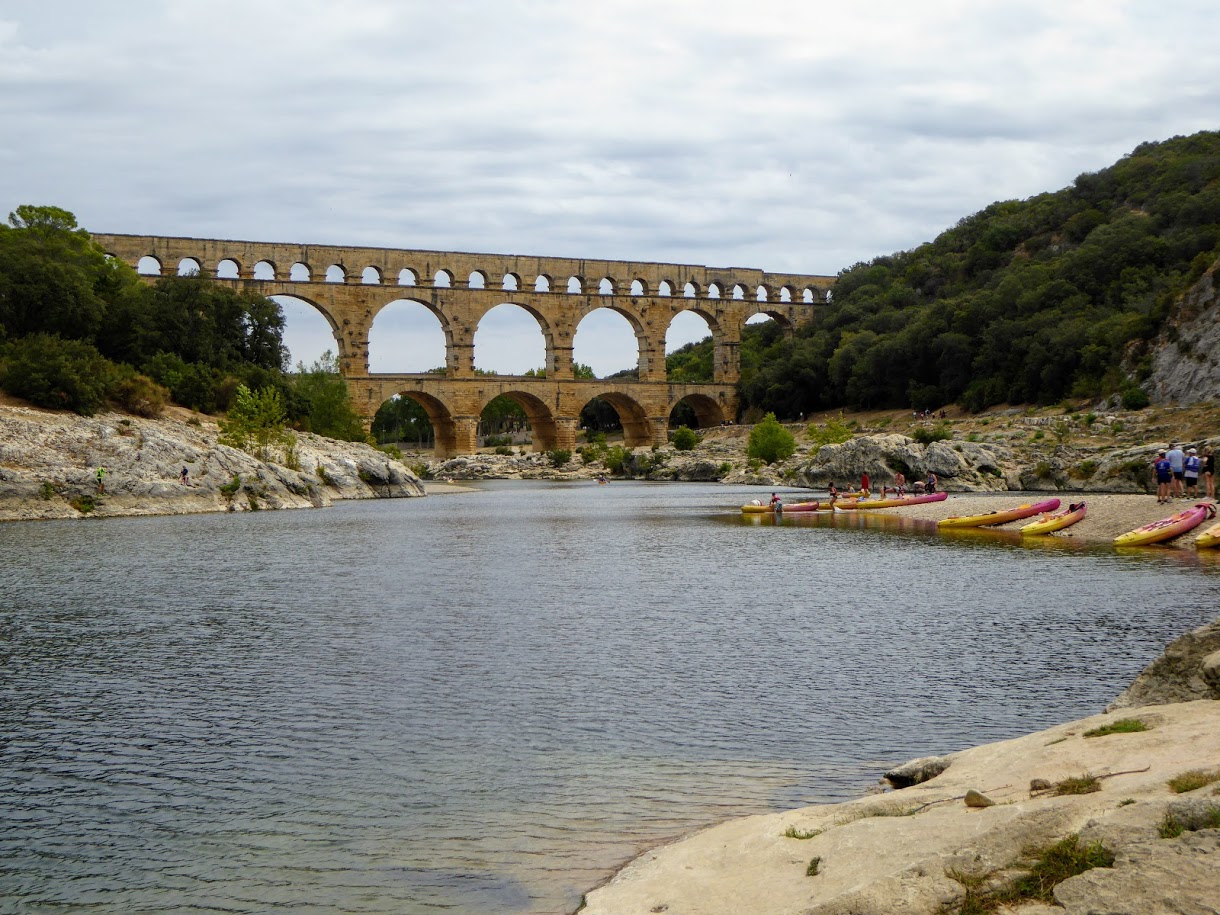
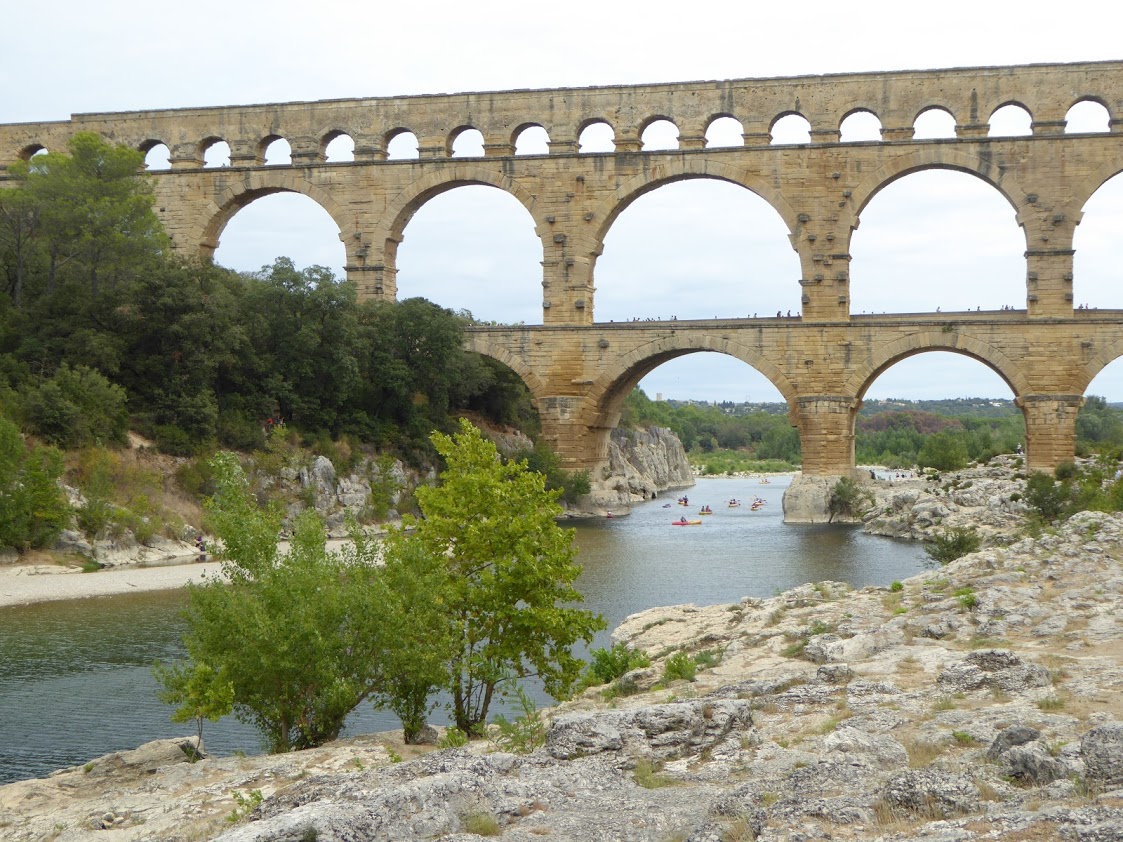
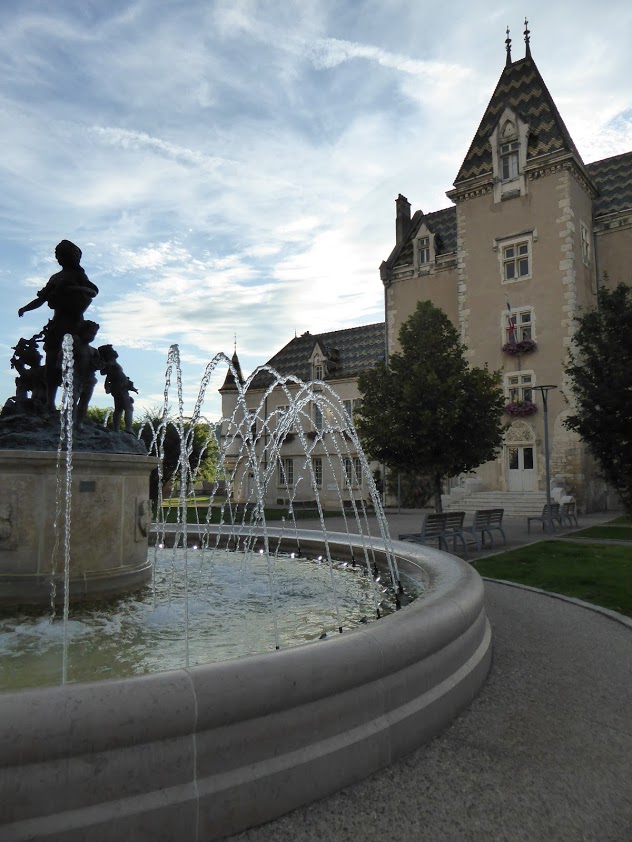
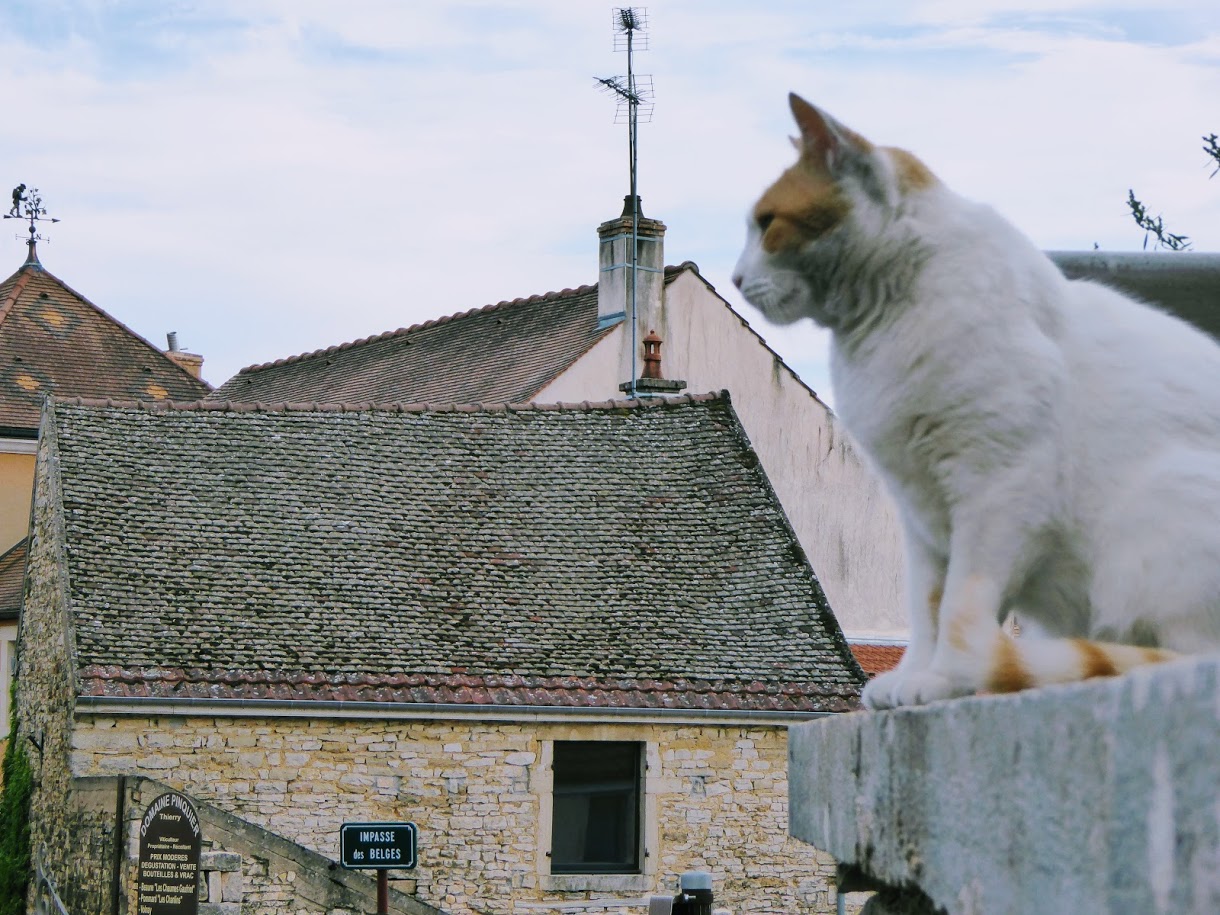
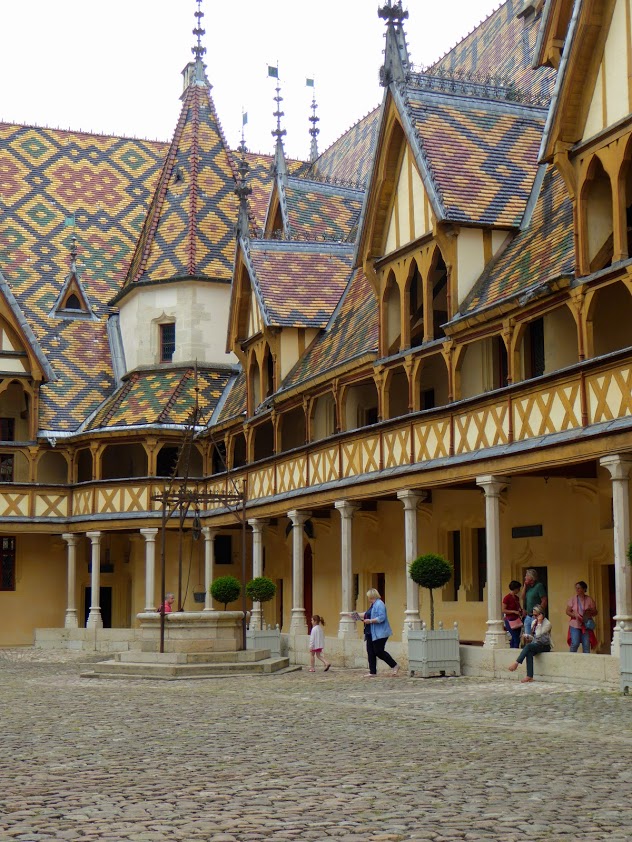
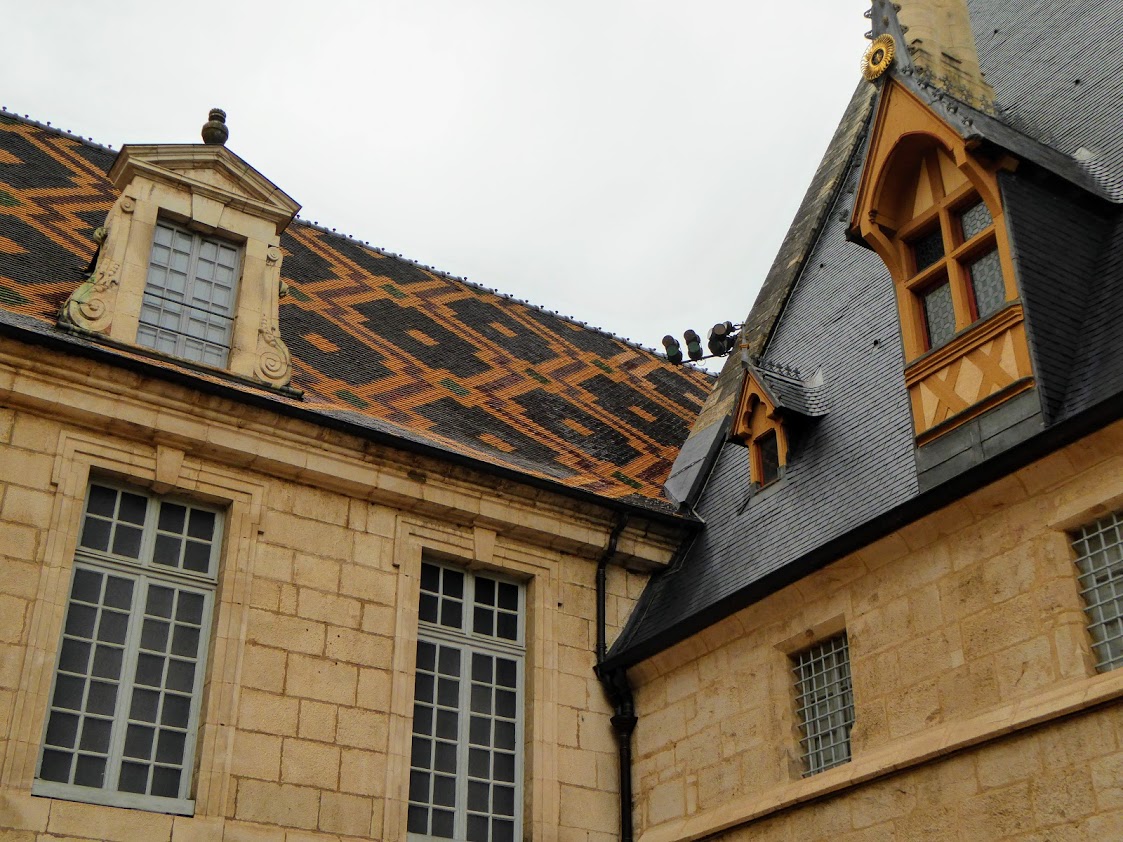
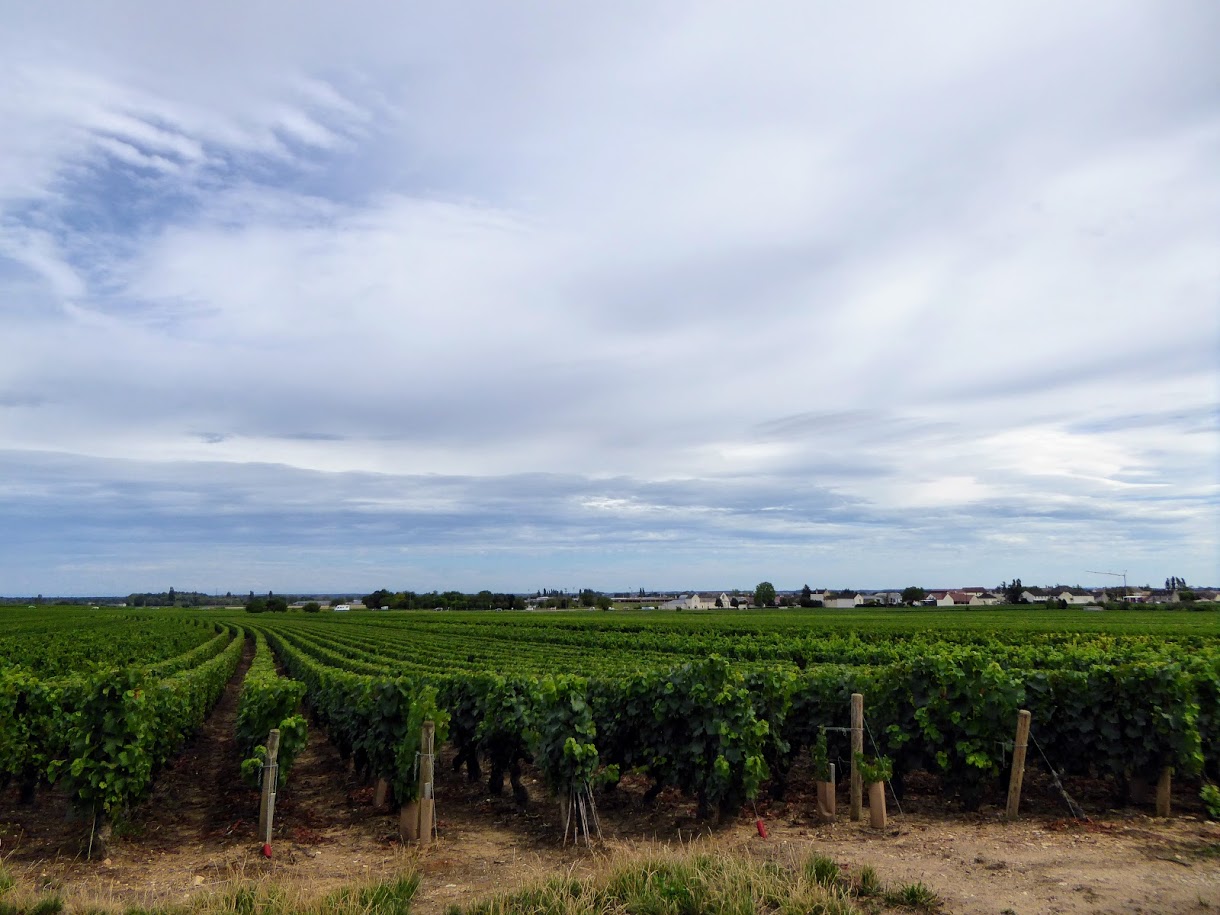
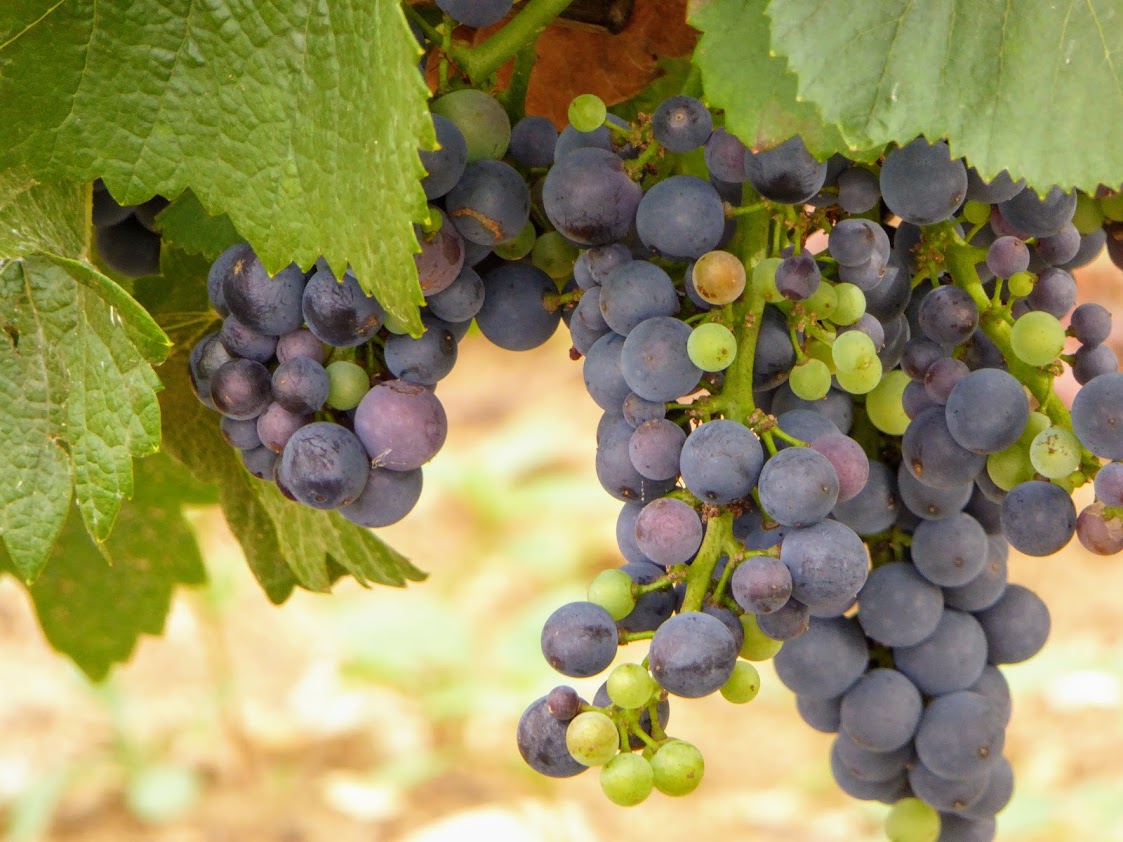
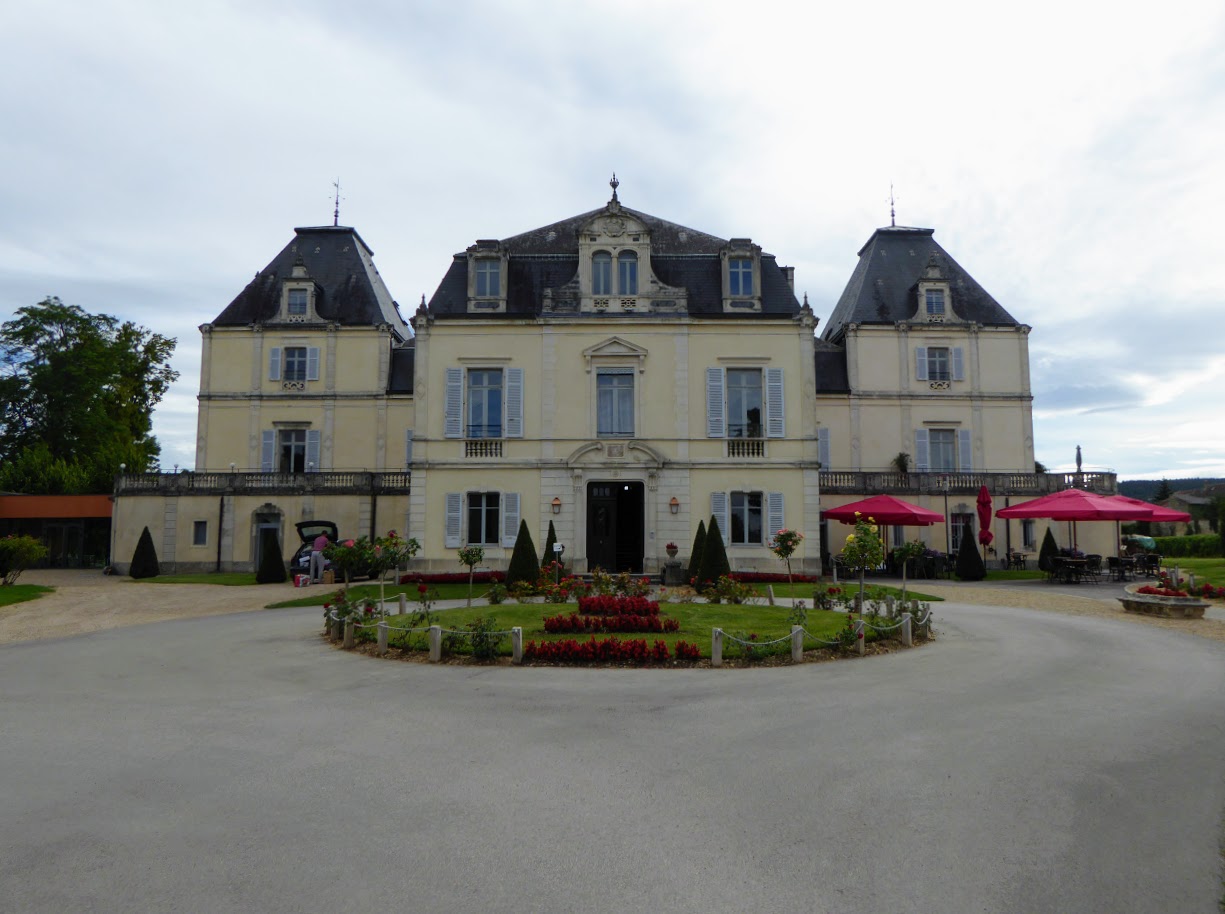
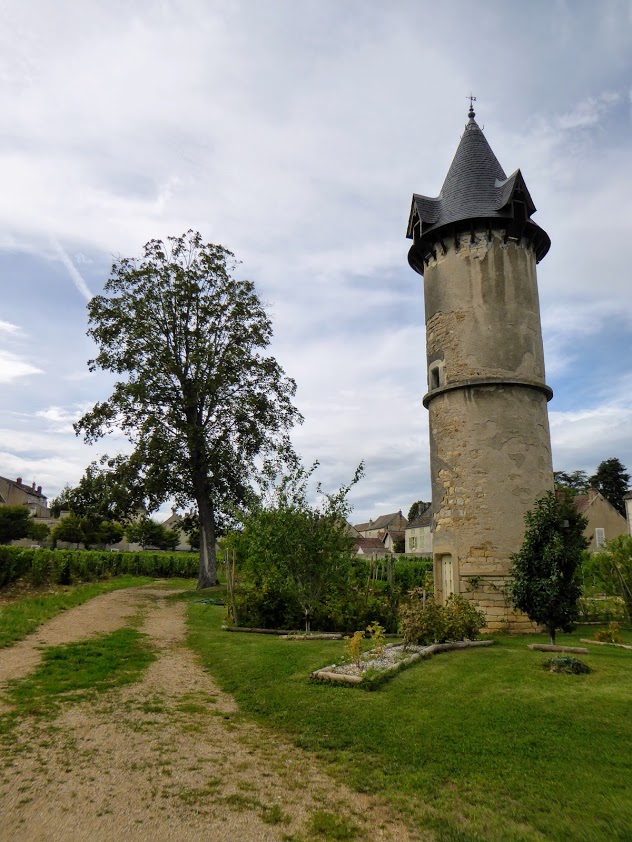
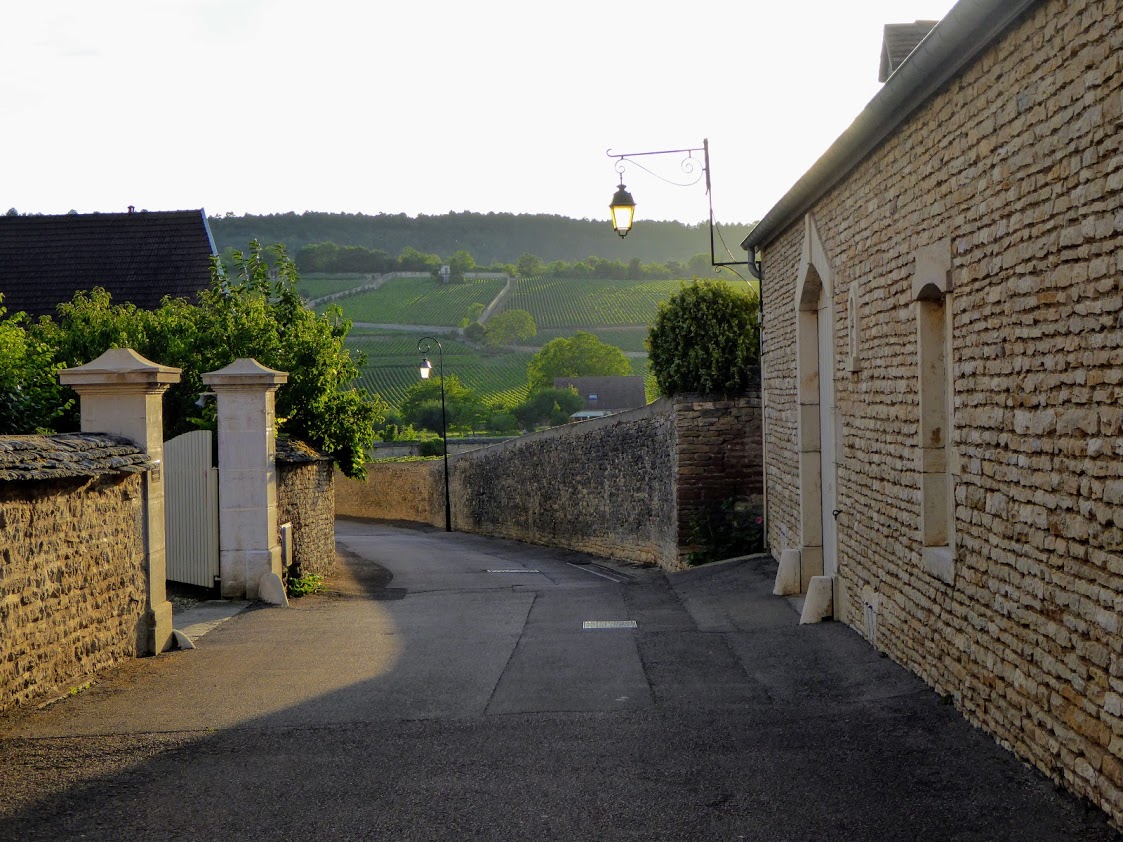
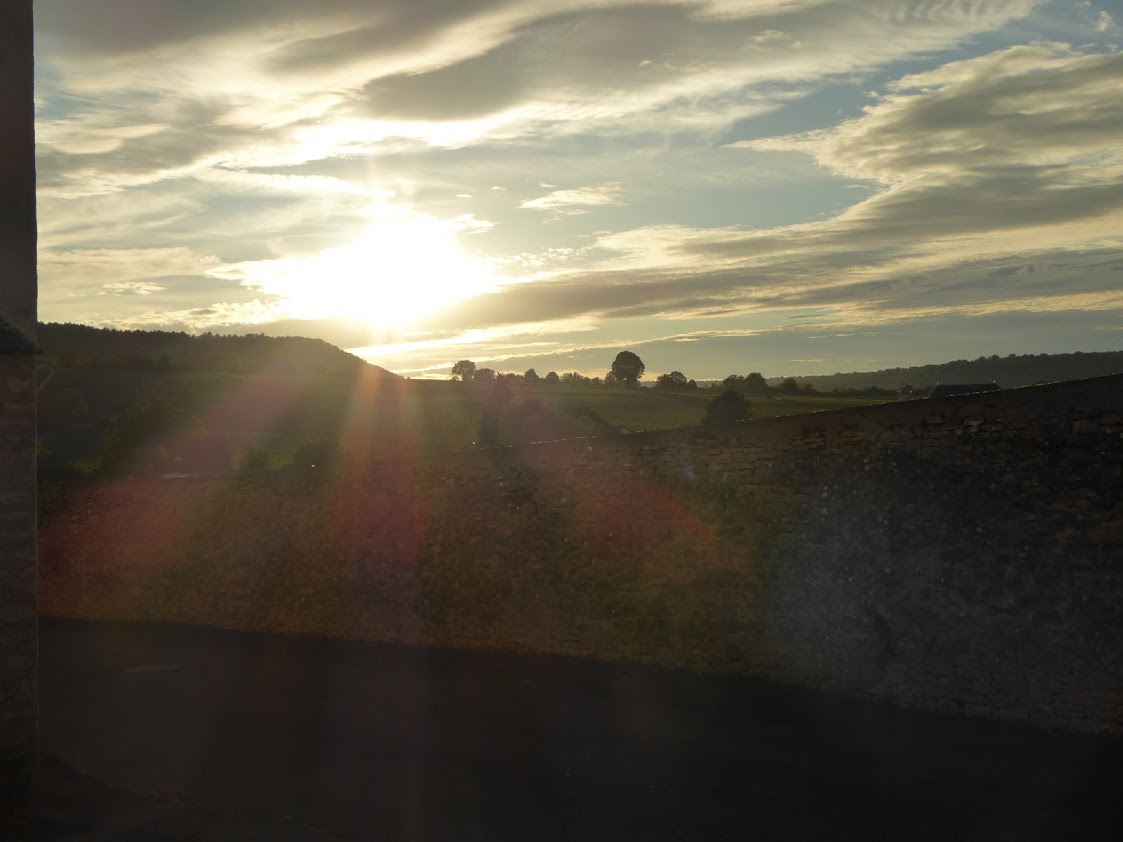
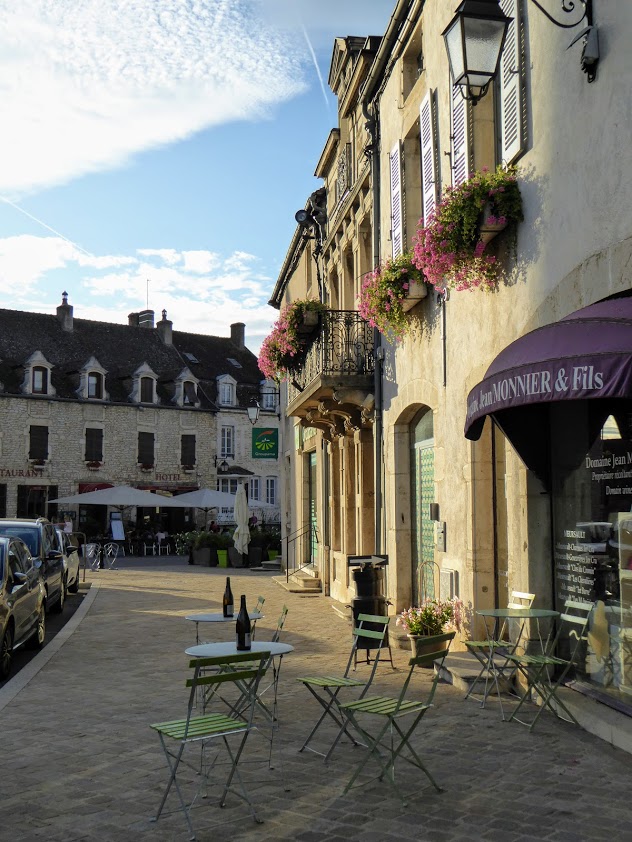
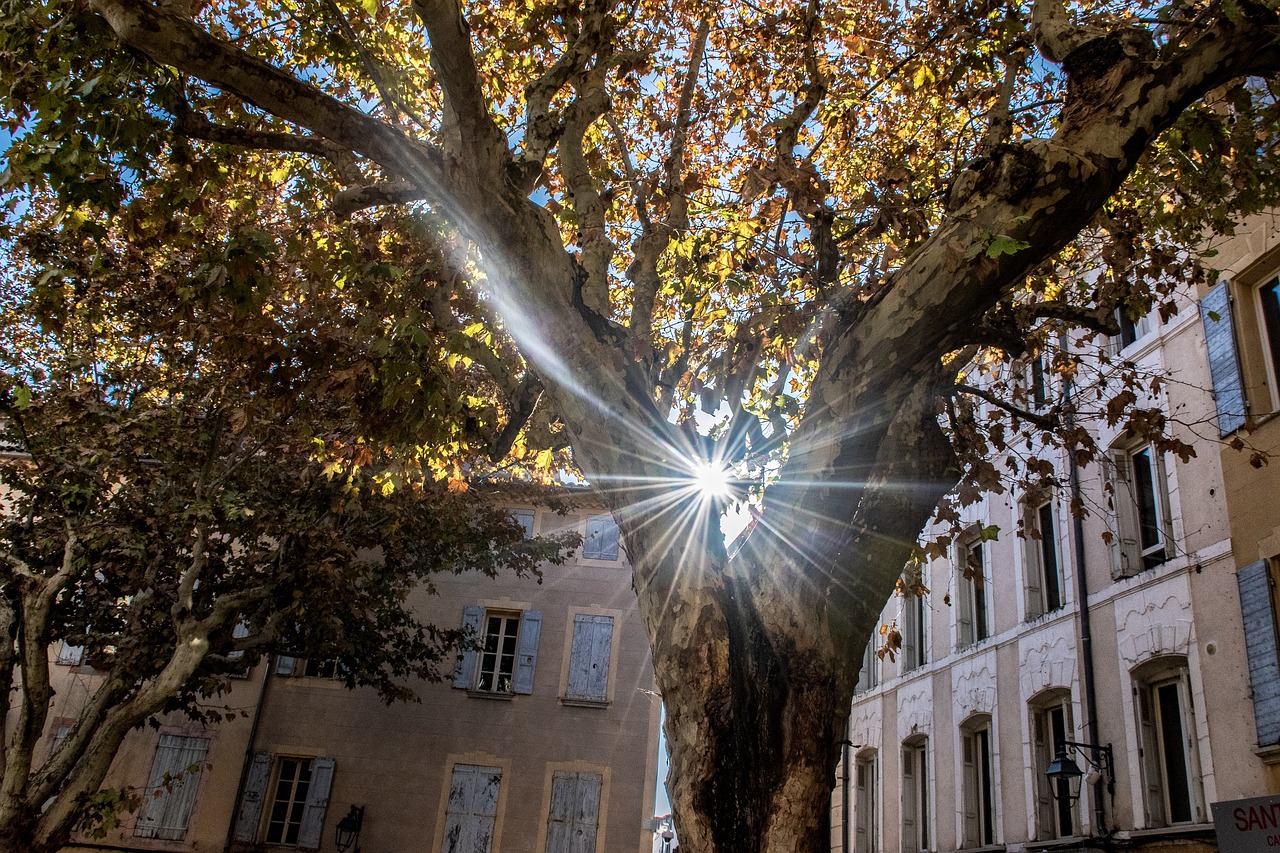
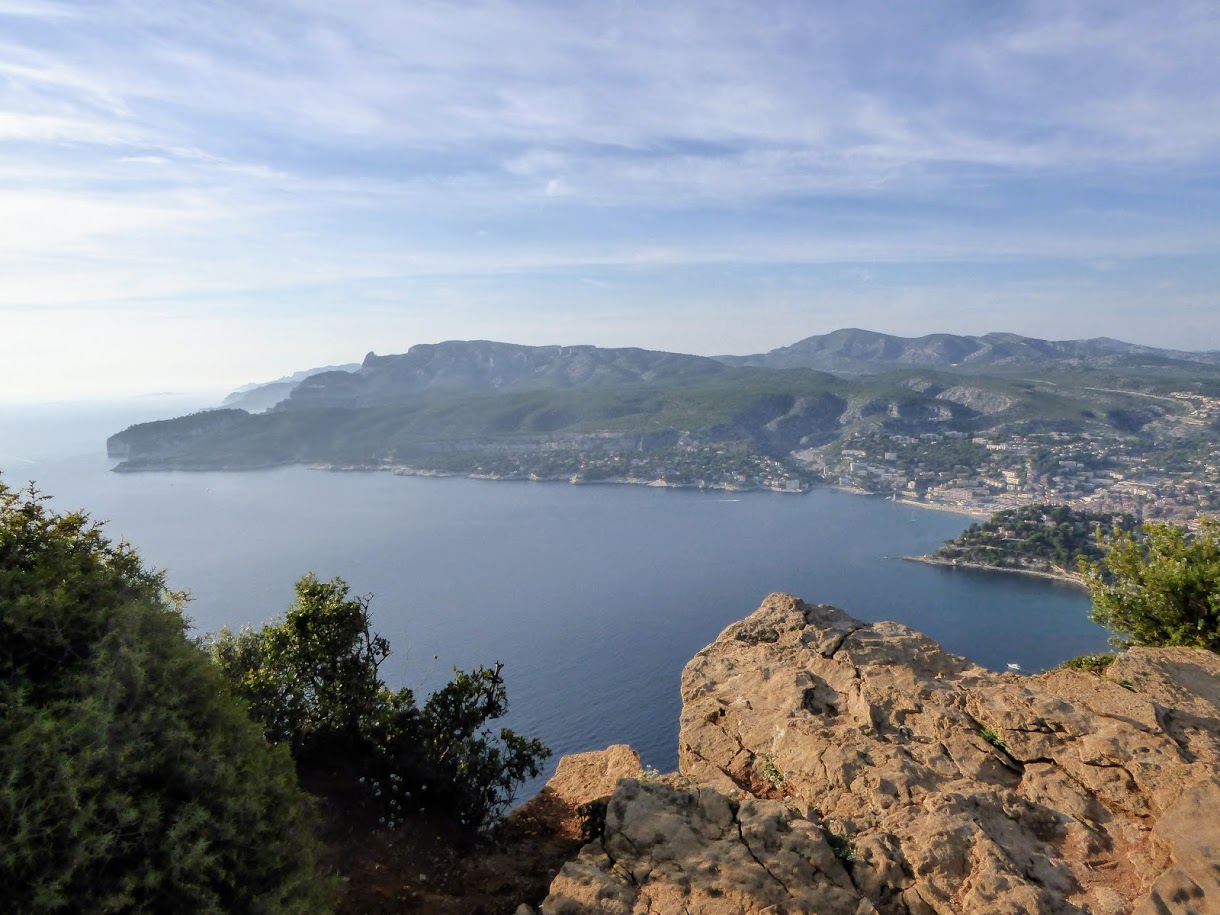
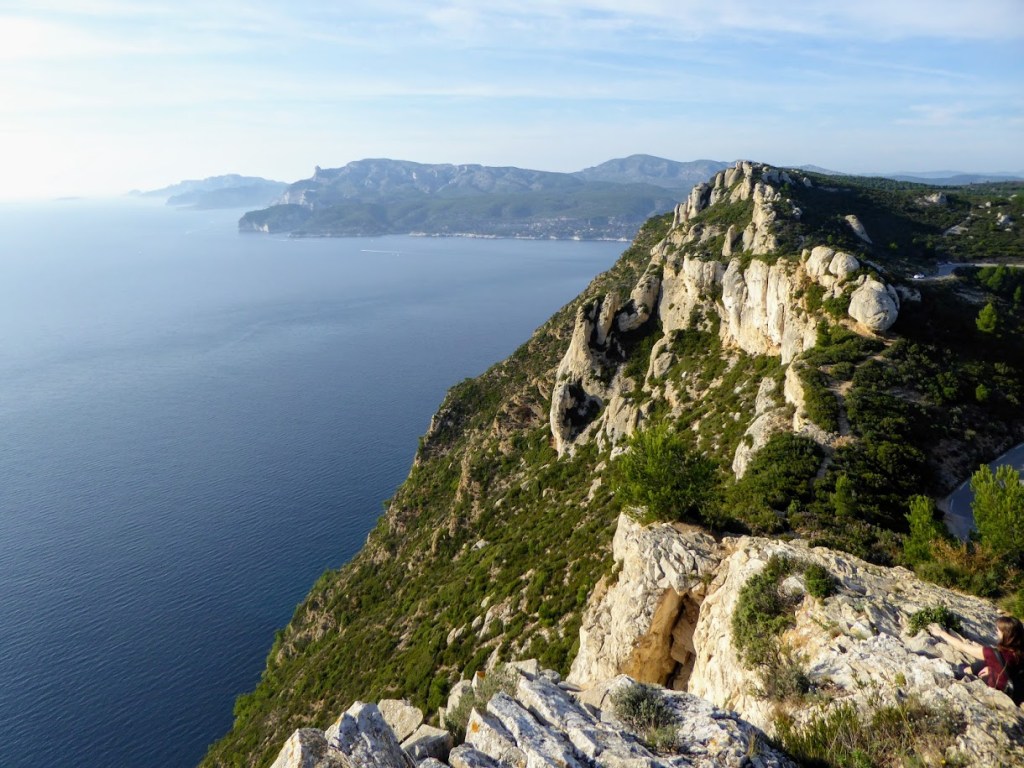
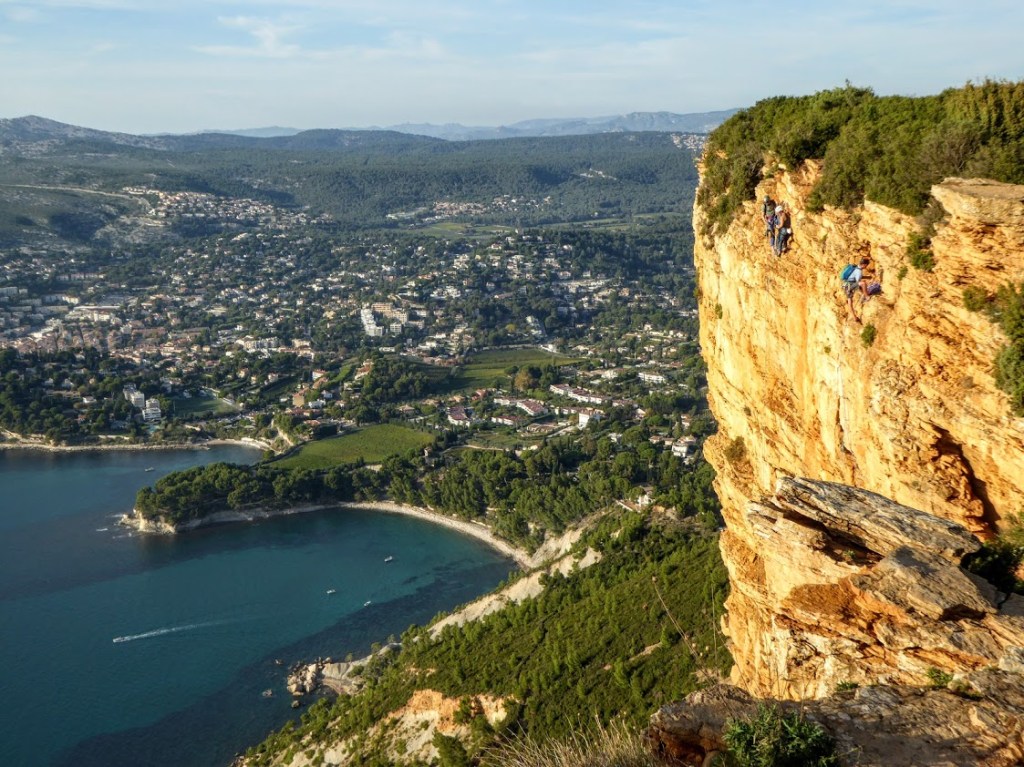
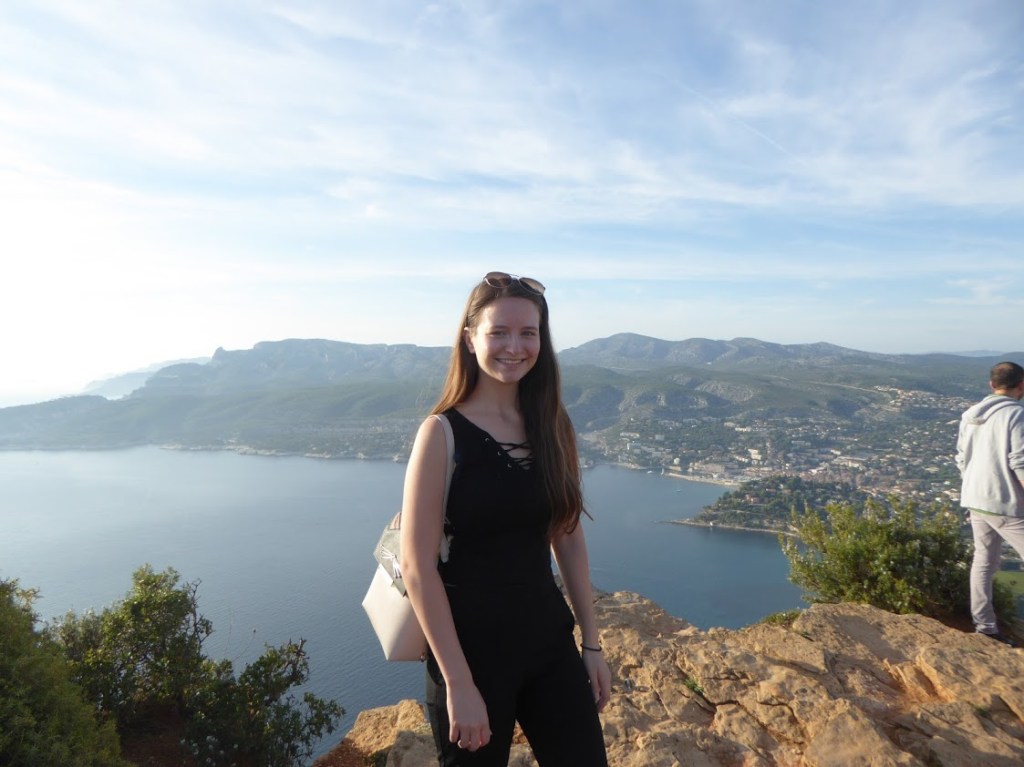
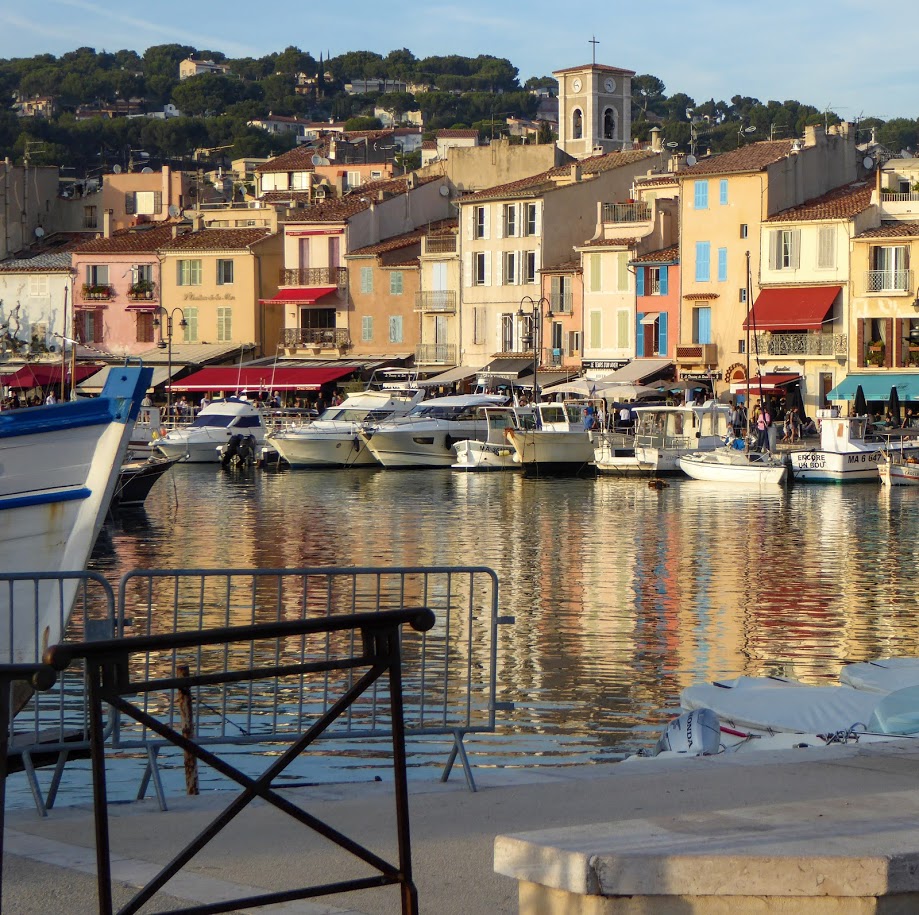
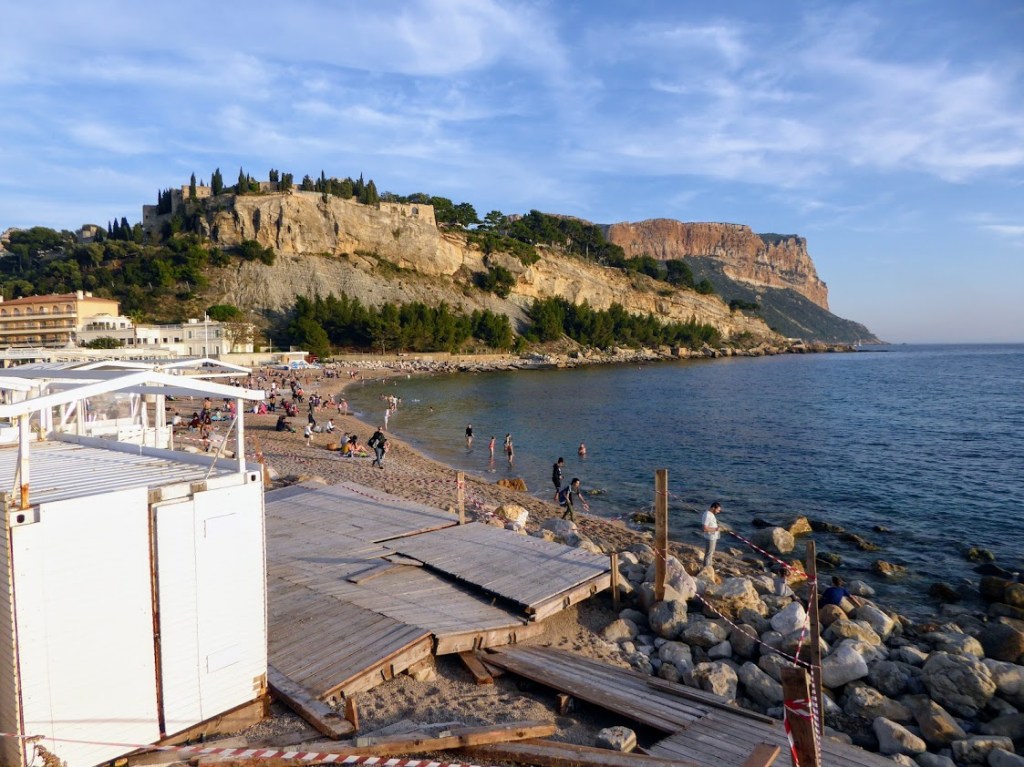
 An Aixpat-en-Provence