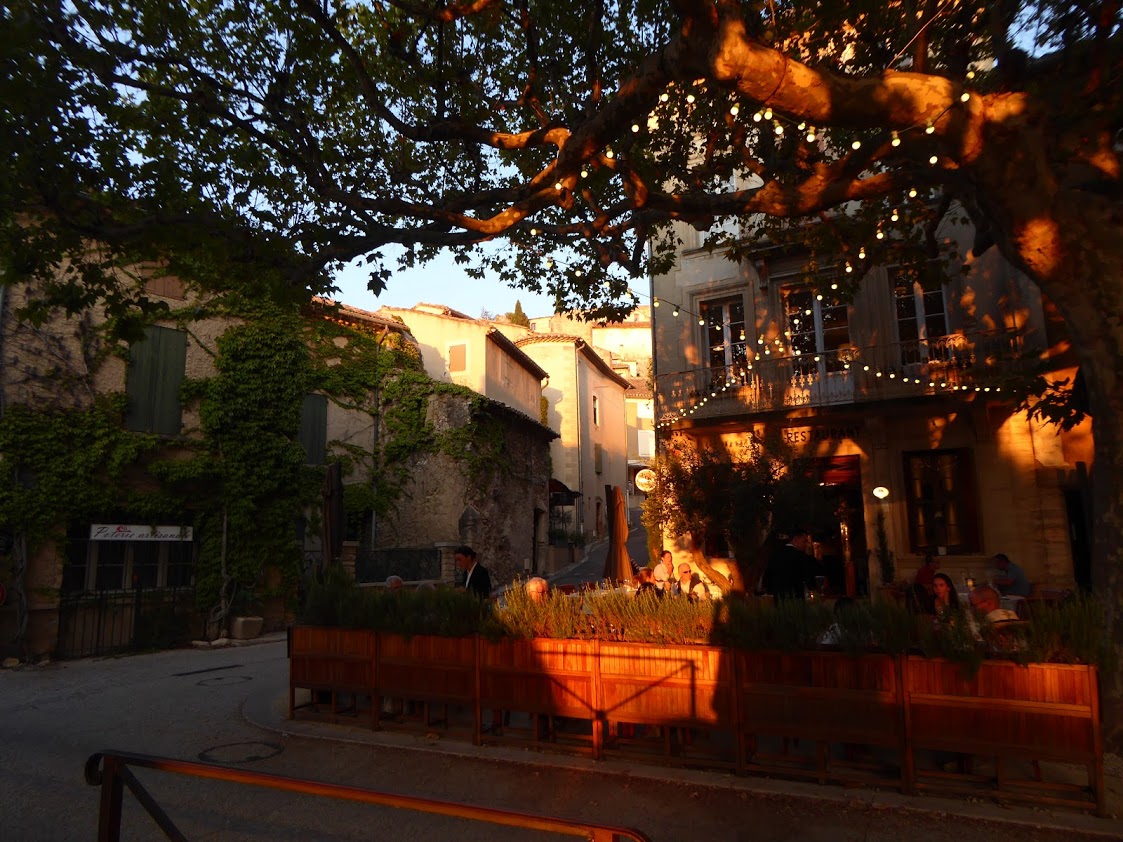
Gigondas is a village founded by the Romans in the Côtes du Rhône Villages region, originally named Jocunditas. It seemed thus only right that we make our way there by stopping at some Roman ruins nearby.
An afternoon in Vaison la Romaine
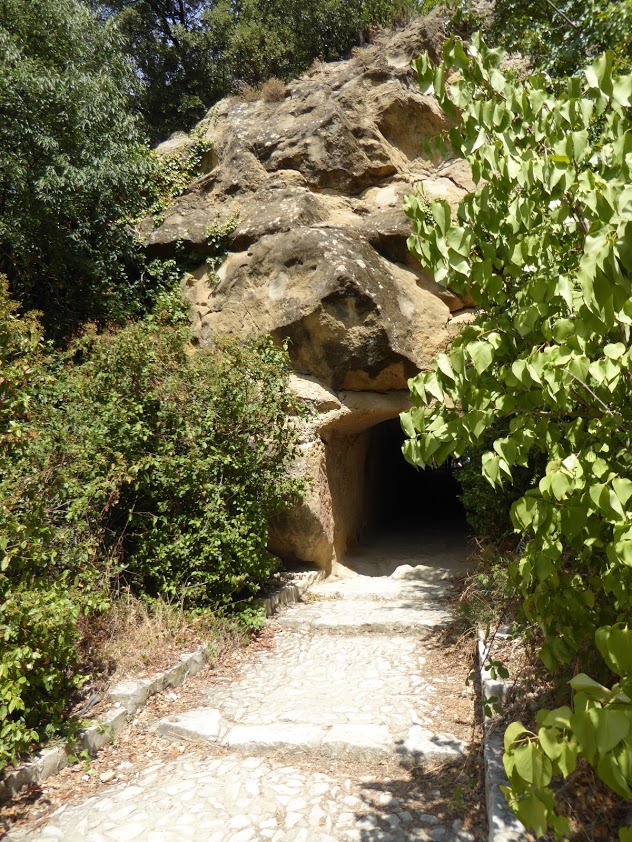
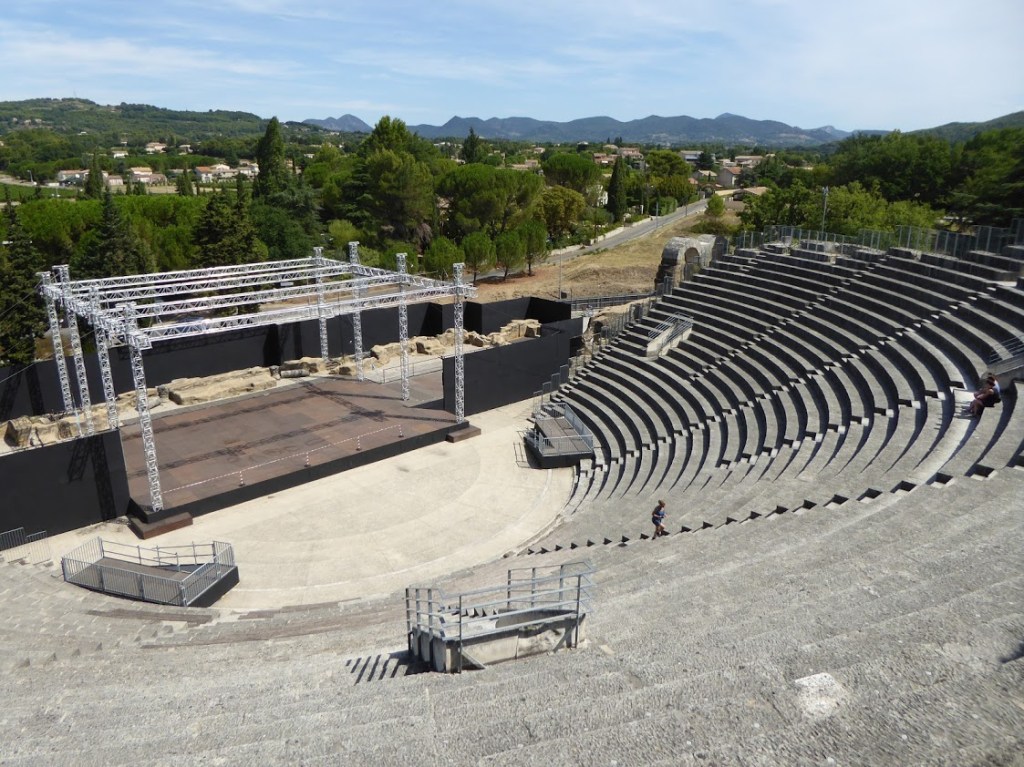
Our original plan was to go to a market in Violès, however, due to various websites with conflicting information, we arrived on the wrong day of the week and could not find a market. Rather earlier than anticipated, we drove into Vaison and snagged a shady parking spot. Of course, what we forgot was that the earth moves. Consequently, by the time we left, the shadows had moved, and the inside of the car was a blazing furnace. The main ancient Roman site had a large amphitheatre which screens film viewings in the late evenings after dark. This could be accessed either through the pedestrian path, or via the original ancient route: through a tunnel in the hillside rocks, over the hill, and ascending steps leading up to the top row of the amphitheatre where a wall and an awning would originally have been.
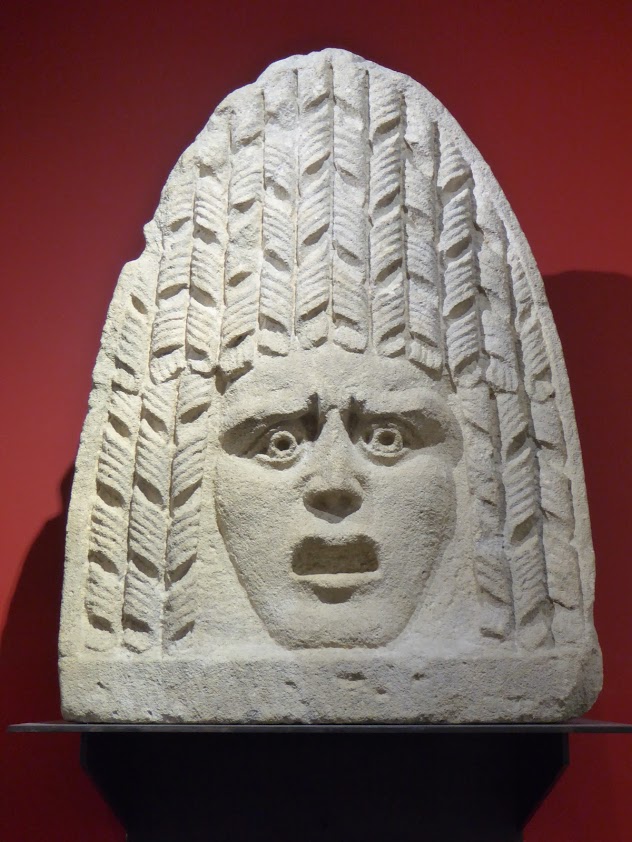
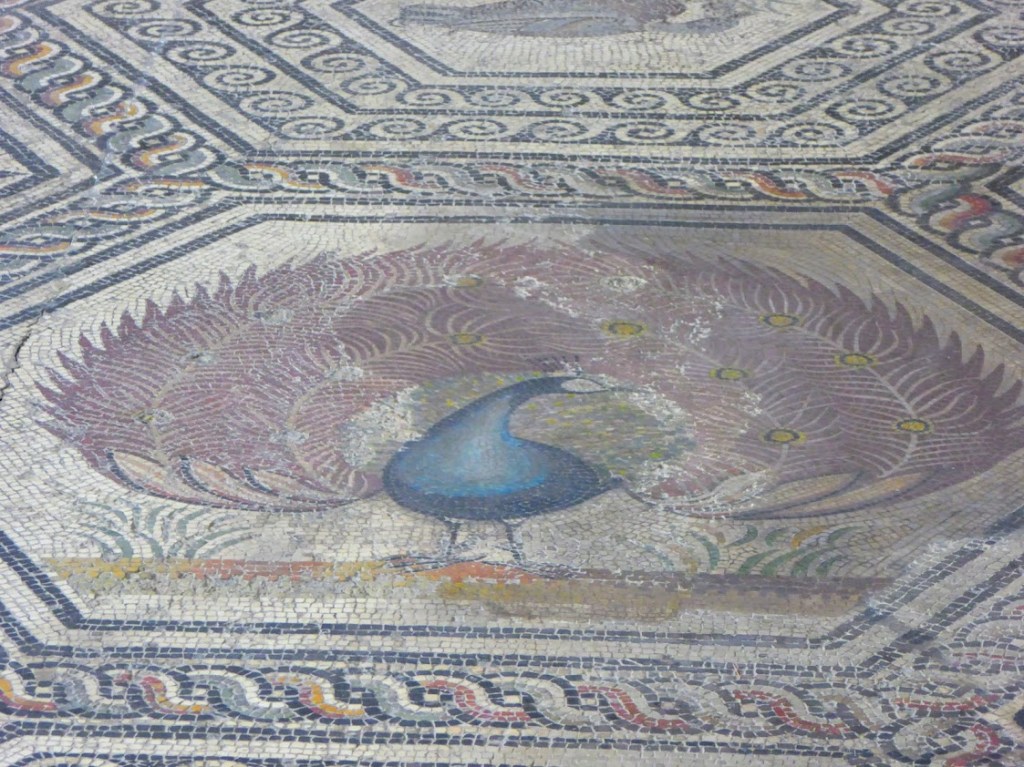
From the amphitheatre, we made our way to the on-site museum which held all the usual household remains of Roman ruins: oil lamps, broken columns, coins (featuring one made of my favourite Julius Caesar), statues, and a fantastic peacock mosaic in full multicolour glory. The heat quelled our hunger and we sought food in the town square, dealing with inattentive, passive-aggressive French waiters. My efforts were rewarded with delicious aubergine ravioli and a full bowl of grated parmesan to be sprinkled over my food as liberally as I deserved.
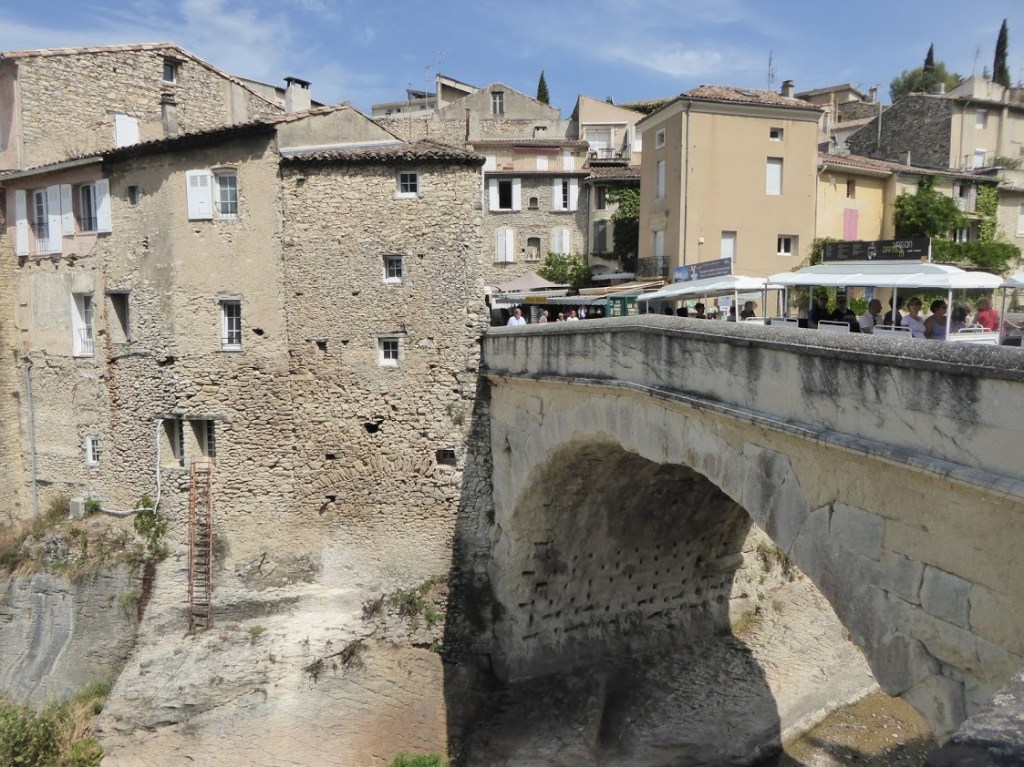
Afterwards we walked through the streets, browsing shops and tasting chocolate spreads as we went, coming to where the town divided. Vaison is split over two sides of a bridge, with the medieval hill on the opposite side to the Roman remains. Very full (both with food and memories of recent dehydration), it was decided not to climb the hill in the midday sun to visit the medieval town – though this is something I would do if I visited again in cooler weather. The hot weather meant the water levels were low and there was barely the semblance of a river under the bridge. We visited the second, smaller, Roman site but found little to see as all artefacts were in the museum in the first site. There was still a good-sized impluvium with kitchen garden herbs. Unfortunately, I can confirm that certain French public toilets are still à la turque – that is to say that there is a door behind which is a porcelain hole and two foot-sized platforms raised from this. The smell is predictably awful.
An evening of wonders
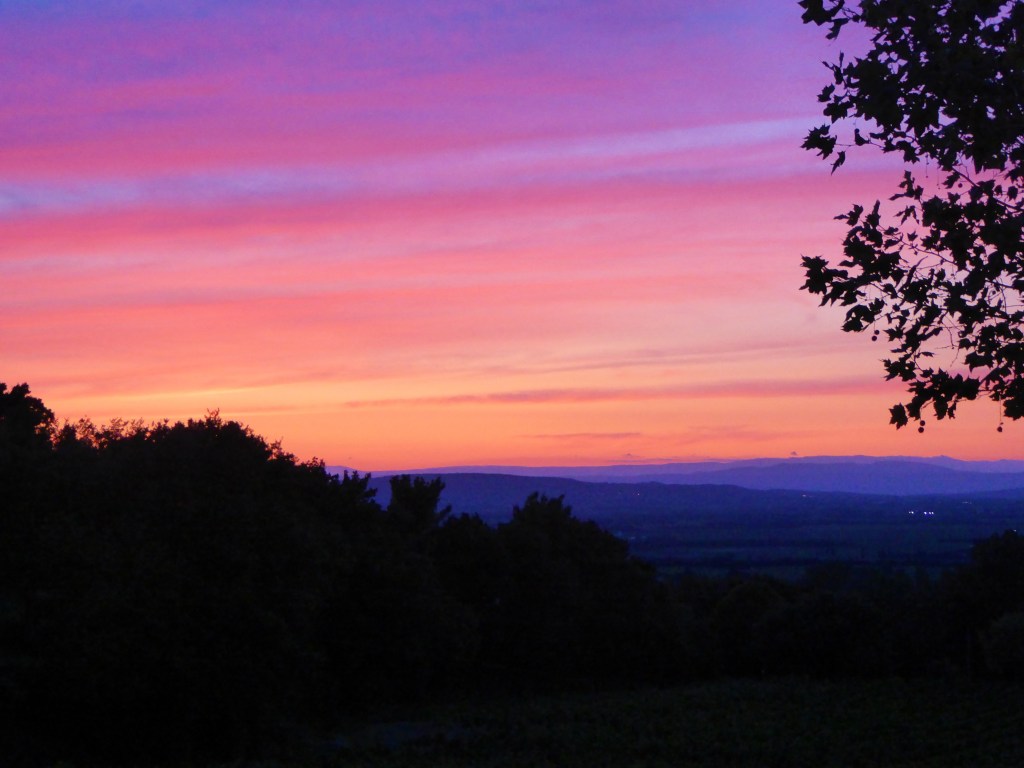
We dove into the air-conned room in Gigondas and recovered there until dinner, which turned out to hold two remarkable wonders for me. The first was the wine. I had never tasted a Gigondas wine before, let alone one so tannin-free and giving off such an aroma of cassis as this! I have liked some wines in my short time of wine-appreciation, but never enjoyed one like Bergerie de la Plâne. The second was the sunset – I could see a portion of it from our table, already fantastic by sunset standards. I got up before food was served to gaze at it from the terrace in the village square and was greeted by one of the most magnificent views I have ever set eyes on.
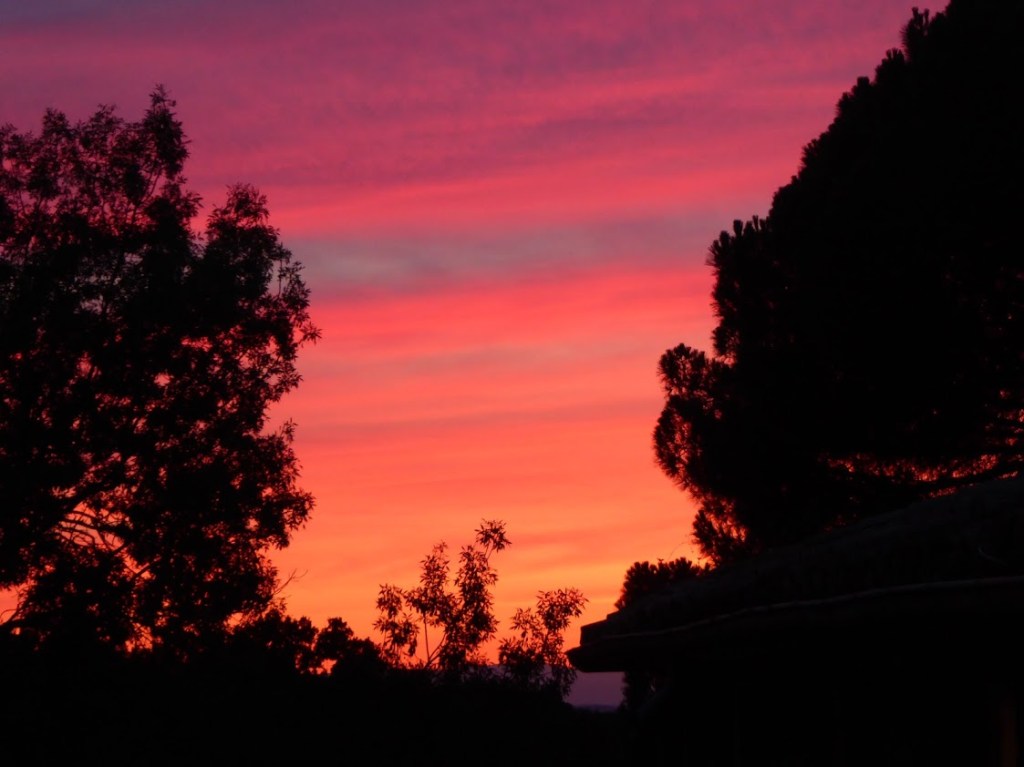
Photos don’t do justice to the intensely purple sky, nor to the light touching the vineyards rolling over the hills below. Our meal which accompanied these two wonders was lovely (with the exception of the sweetbreads my sister and I unknowingly consumed).
The development of mon goût préféré
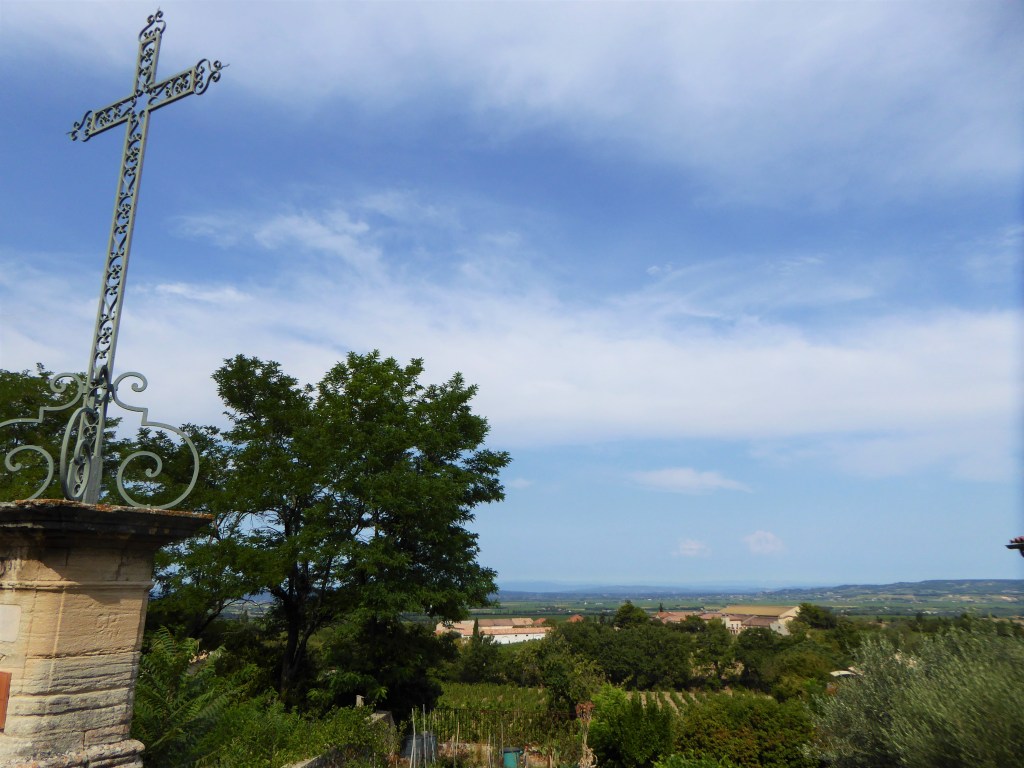
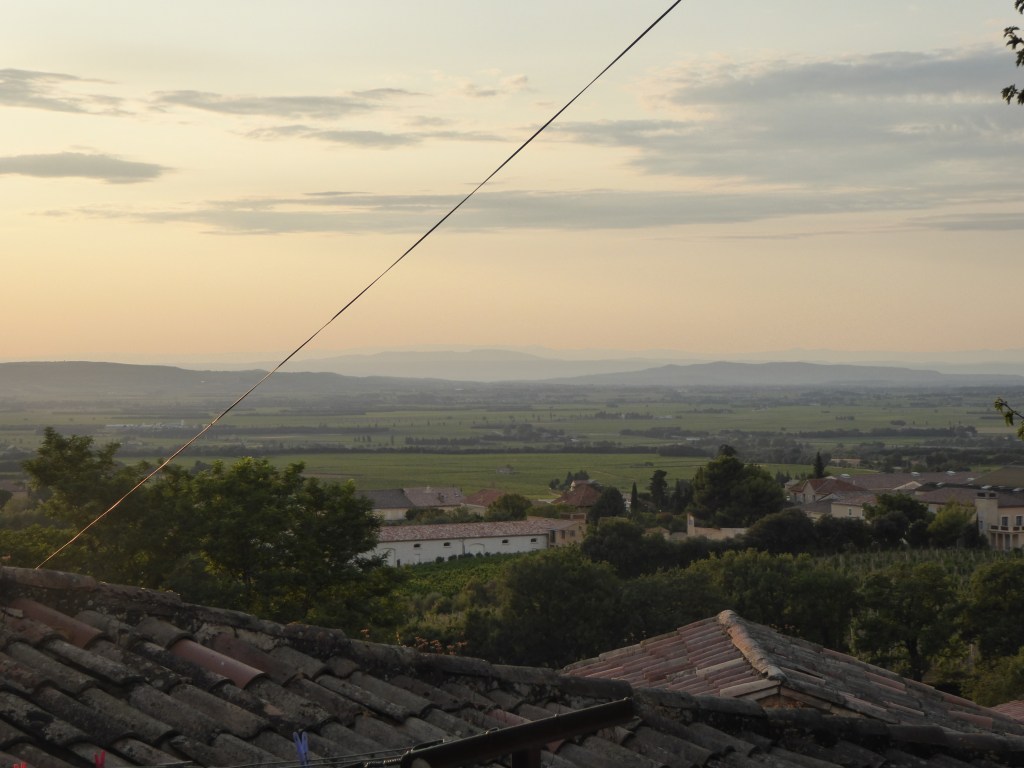
Once awake the next morning, my parents had disappeared for a walk around les Dentelles de Montmirail – something I would have enjoyed, but alas, sleep was my priority. Instead, I breakfasted and explored the little village of Gigondas. Situated on a hill, Gigondas has exceptional views of the surrounding countryside. It was my goal to climb as high as possible in the village to access these views. As I wandered around, I found beautiful wrought iron frameworks in the place of what usually would be solid stone statues or monuments in most villages. In Provence, this is the style adapted to the wind strength of the mistral and prevents church bell towers from crashing down. On the upside, if they hadn’t adapted at, at least whoever was confessing in the church at the time would die absolved of all their sins.
As I climbed, I came upon an atelier sensoriel at the top of the village, just next to the village church. The atelier turned out to be almost a mini museum of the wine quality of Gigondas. On display were four different kinds of soils found in the vineyards, and a video in the back room explained the reasons why these soils were good for growing wine. In Nîmes there is a tectonic plate fault which caused the layers of soils to shift. Where the Dentelles are is a subterranean layer of limestone that has been pushed to the surface in tall shapes. This also affected the earth surrounding the Dentelles, and so Gigondas has good wine because of its unusual Jurassic soils, and the valley shape allowing cool air to ventilate the vines. These soils either tend to be sandier and looser than average, allowing good drainage, or have more clay. The clay retains water and minerals better.
The part I most enjoyed about the atelier sensoriel was the sniff test! In little corked bottles were twelve smells that made up the essentials of what you smell in the nose of a Gigondas wine. A guide explained what they were, but it was more fun to smell and guess first. The most prominent ones of the twelve are pepper, cassis, violet, and thyme, followed by liquorice, raspberry, cherry, blackberry, truffle, clove, dark chocolate, and leather. Later in the evening I went to taste some wines with my mum, and worked out that I’m not a fan of particularly oaky or leathery wines, I prefer them to be more red-fruity and with less heavy tannins.
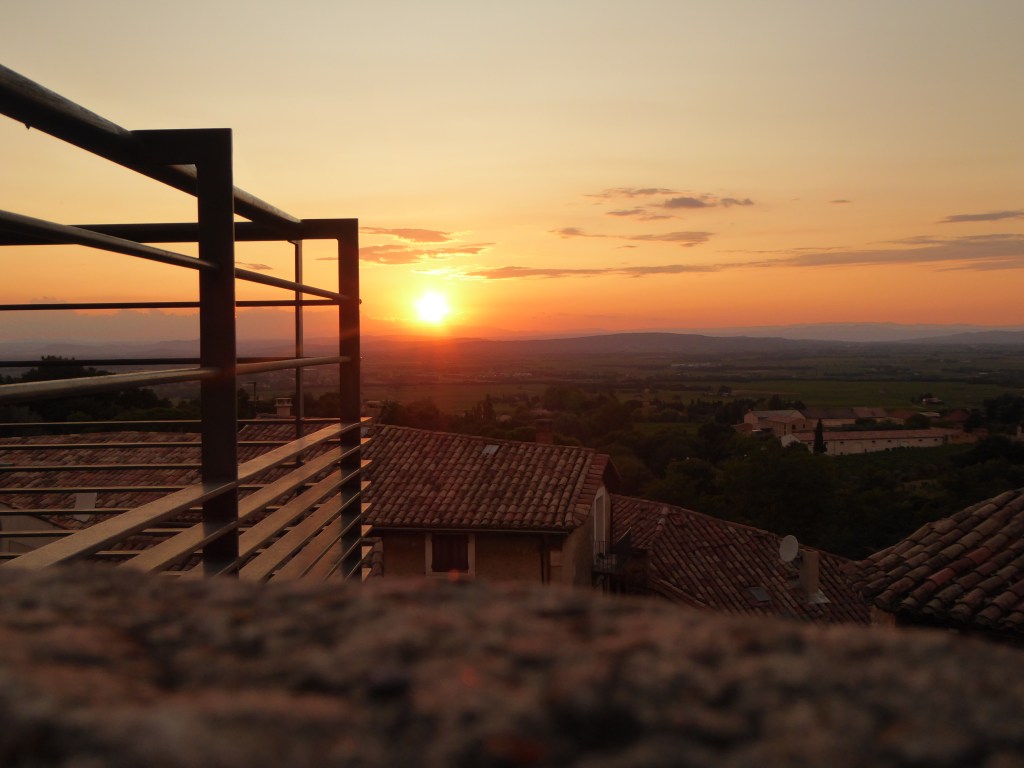
Before dinner I insisted that we go to a terrace I had found on my wanders from which there was an incredible view to watch the sunset. It wasn’t as spectacular as the previous evening, yet was wonderful, nonetheless.
I could happily stay in Gigondas again and continue sampling its wines, food, and peace. It’s a haven where everyone is connected with the land in some way – very good to get some quiet and perspective before the busy term starts. The Romans named the village well – it is as charming as its Latin meaning.
A plus,
Zoe x
 An Aixpat-en-Provence