Welcome week: England vs France

As one of the modules I’m taking is a study comparing contemporary European societies, I thought it relevant to do a comparison of the most infamous week of the English university calendar with the French equivalent.

Registration

At the University of Birmingham everything administration-related is done online with high-speed servers on one single website. Here in France, the opposite is true. A group of Erasmus students went to the Erasmus office first thing on the Monday morning to queue to register. As it happened, most of the paperwork was what we had had to send in advance, the rest was merely ticking a few boxes. We were told the name and email address of our personal tutors who would help us with our learning agreement, and shooed off. It was suspiciously easy.

There was then a couple of days where we had nothing in particular to do, which was a little frustrating as each of us anticipated having admin problems later down the line which we could have spent those few days sorting. After the international students meeting, we were enlightened of the fact that there is not one, not two, but four different ways you have to register at the university. The administrative one we had completed. The sport one was only if you were interested in doing free sports. Then there is Gigue (to sign up to classes), and another platform to register for exams.
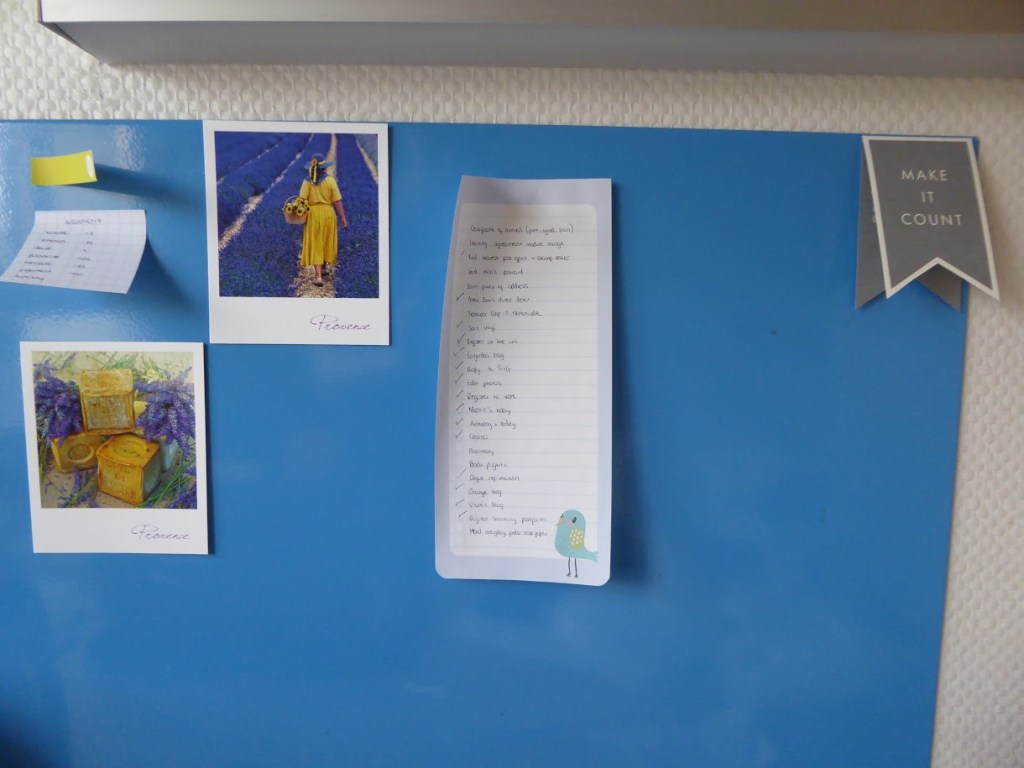
Good stationery to combat administrative ineptitude

Gigue is the bane of every person’s existence at a French university. It is a website inequipped to deal with heavy traffic, and classes are signed up to on a first come, first served basis. Each class has a certain capacity, but some of them might be in a room that is bigger than the stated capacity. For almost every class, more people come than have signed up to it, and it is a desperate grab for places. So instead of spending your weekend socialising, partying, and getting to know the people around you, it is spent trying with five tabs open trying to load one website page, and sending tutors stressed emails (something I’m still doing two weeks later).

Socialising

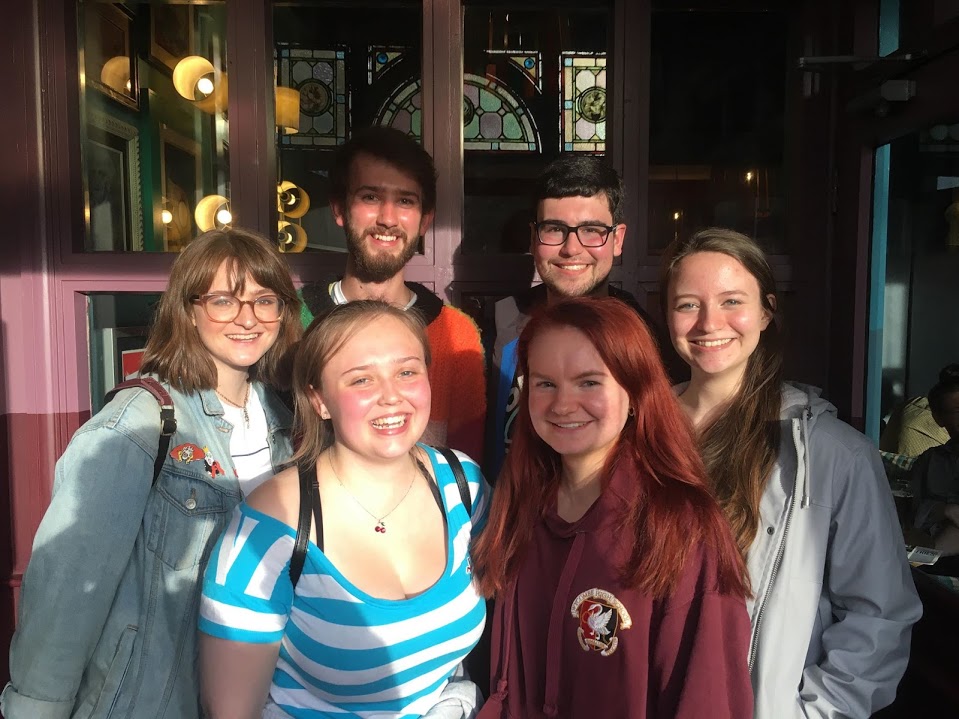
The social aspect at Aix-Marseille is much more toned down than the large posters assaulting the Birmingham student Facebook groups which market Freshers Week as a series of crazy nights out. People tend to meet in Parc Jourdain and hang out in groups there. Nights out happen in bars with designated dance spaces which, thankfully, means there is no entry fee to pay. Our nearest one is Expresso, a seven minute walk away which regularly hosts international student nights and weekly salsa classes! I’m hoping to take advantage of this latter with one of the lovely people I’ve met here.

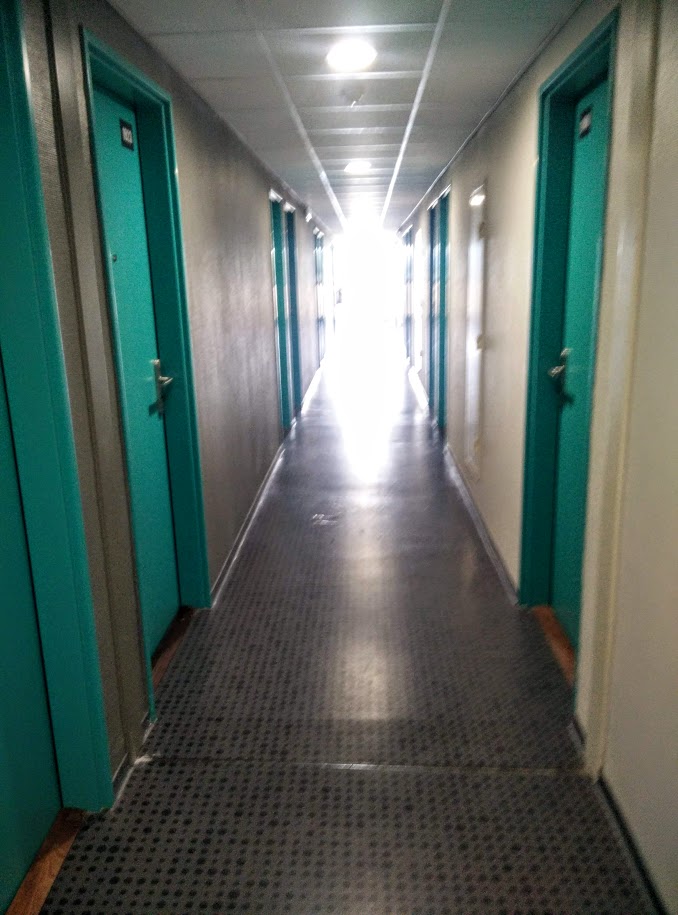
As our kitchen has six seats in it, I anticipated there being a very busy space with people fighting to cook and sit eating there at any given time. Instead it’s been a more low-key hub of socialising, though I have had some fun times bonding in there with other residents. On my first night in my accommodation, for instance, I spent four hours talking with two fantastic Irish people I met there. Dinner is often a time to say hi to a couple of people, but, interestingly, the French students on our corridor haven’t been so bothered about connecting with their neighbours as the English-speakers I’ve encountered. This is very different to my first year flat where we spent most of first year socialising together.
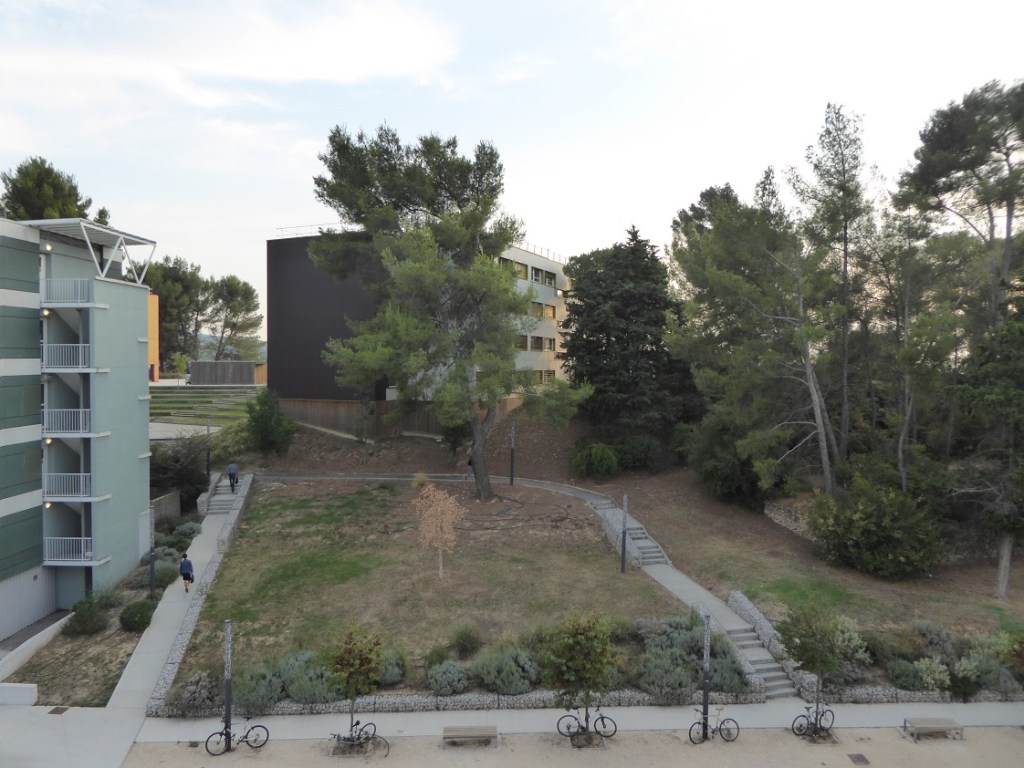
My room view

Animal neighbours

Fortunately my accommodation is surrounded by several friendly cats attracted by the warmth of the housing blocks and a large car-free space to prowl. Most notably at the foot of my building lives a lady with a black cat. This cat once somehow managed to get through two security-pass doors and up the many flights of stairs to outside our kitchen door! On the Vale our only animal visitors were the ducks who made the pilgrimage across the road to sit outside our windows and quack early in the morning.
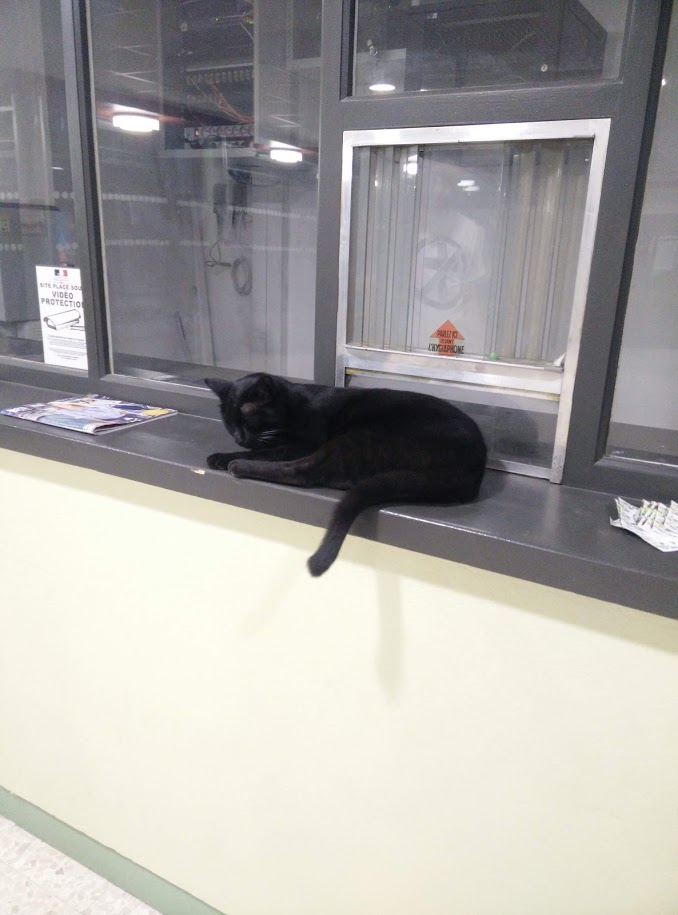
So beautiful

Although the admin side of the uni continues to be a nightmare, I’m settling into living in Aix very well, thanks to my lovely aixoises. Plus having cats around goes a long way to making it feel like a home.

A plus,

Zoe x
Violès

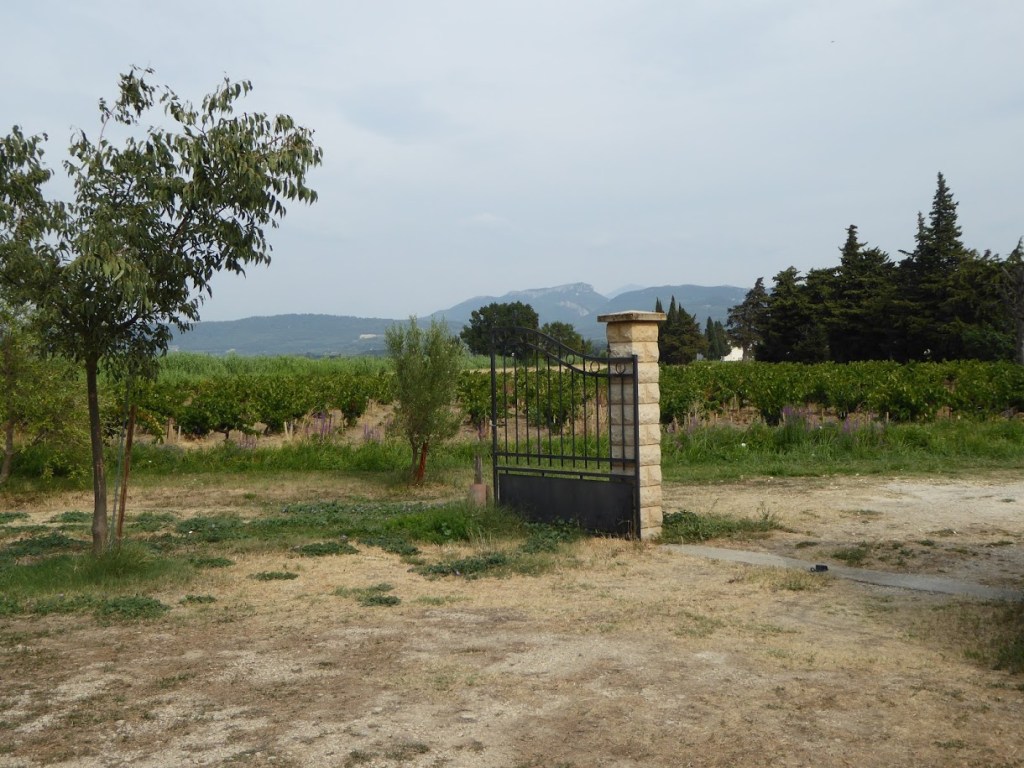
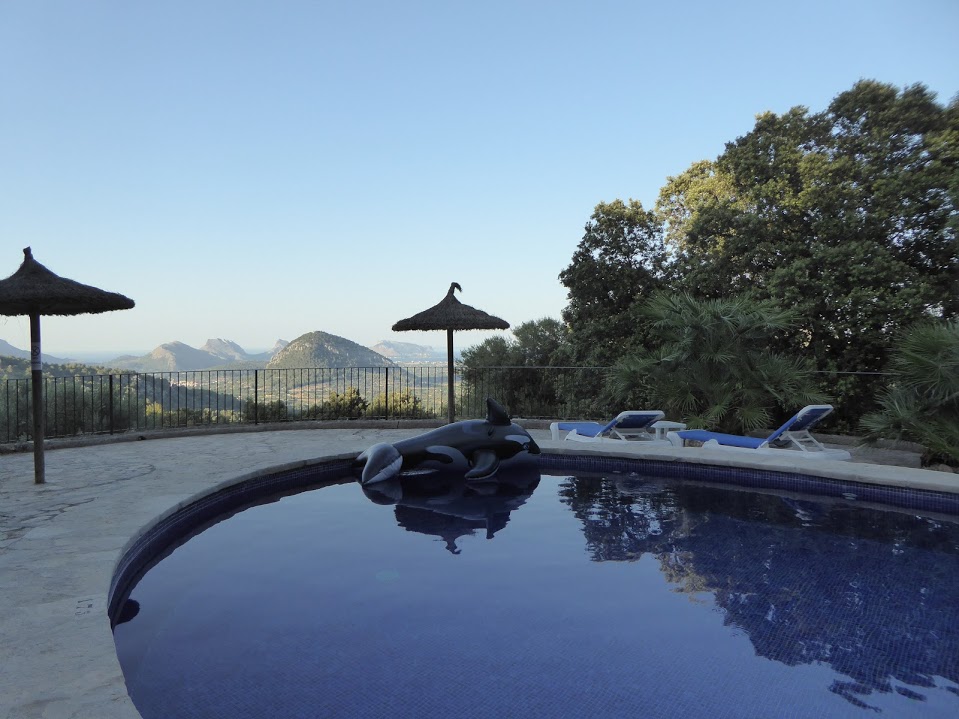
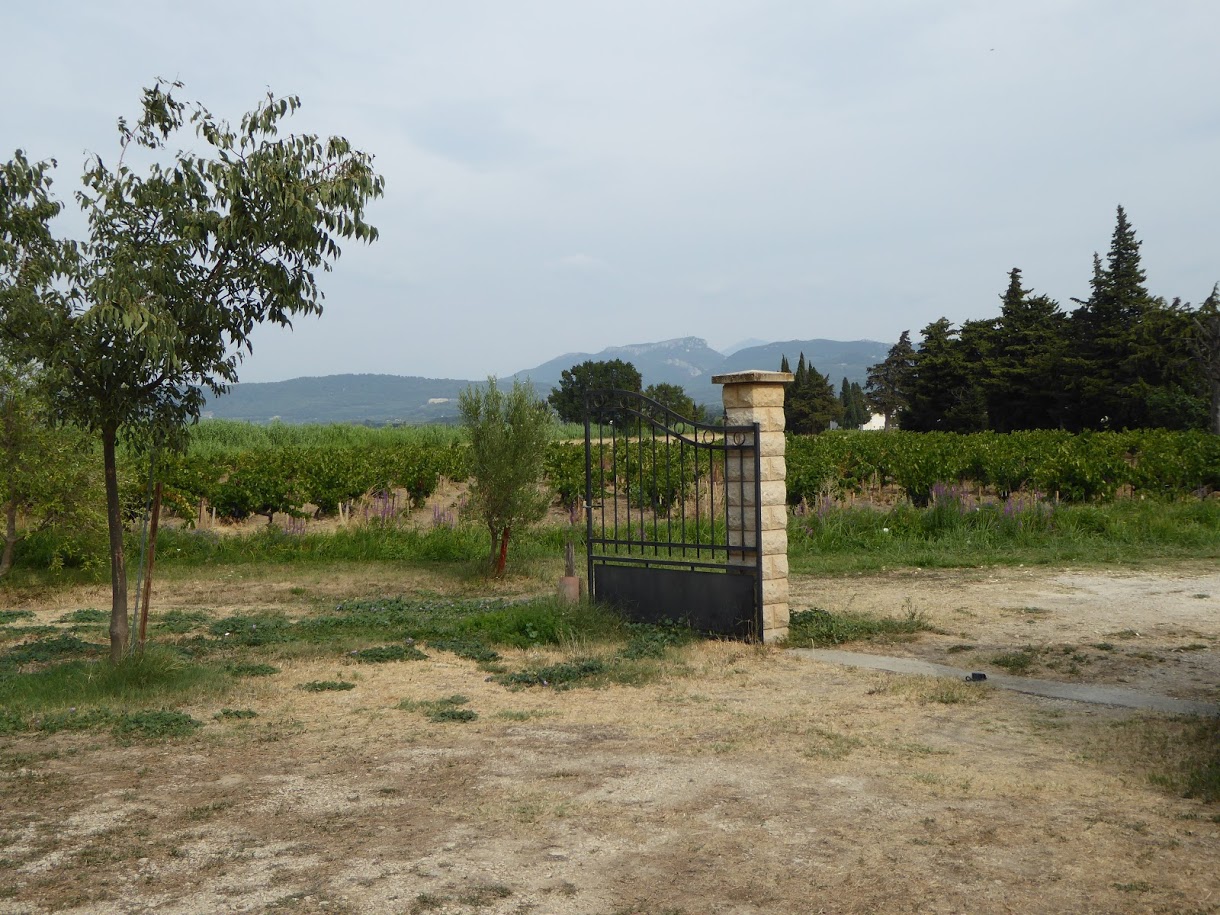
Although in the Côtes du Rhône region, Violès itself is a tiny village fairly unremarkable for anything except its wine. We based ourselves here for a week, using the house just outside the village in the countryside as a useful midpoint for moving around the area.

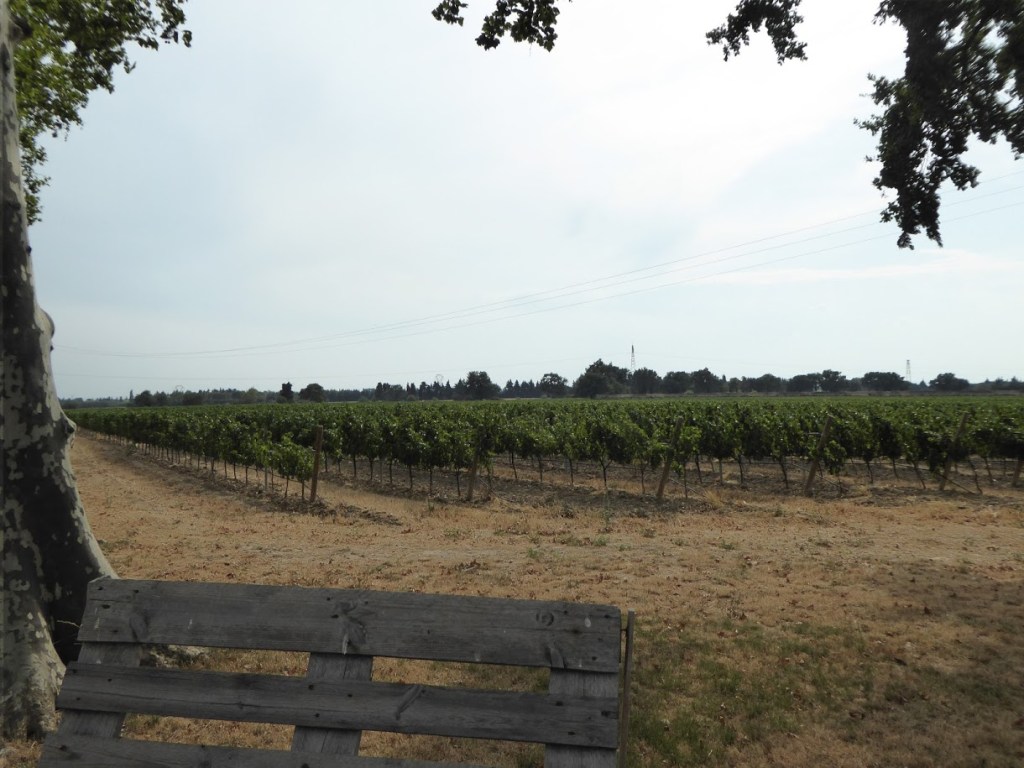
On our day of arrival, we’d just returned from the initial move into my accommodation in Aix, getting the keys and dumping the vacuum packs. The peace of the countryside with only vineyards and one another house nearby was welcome after such a hectic day. It took more than one day to recover from the clash with French administration – we spent most of the next day with a nose in a book until it became suitably late enough in the afternoon to consider wine.

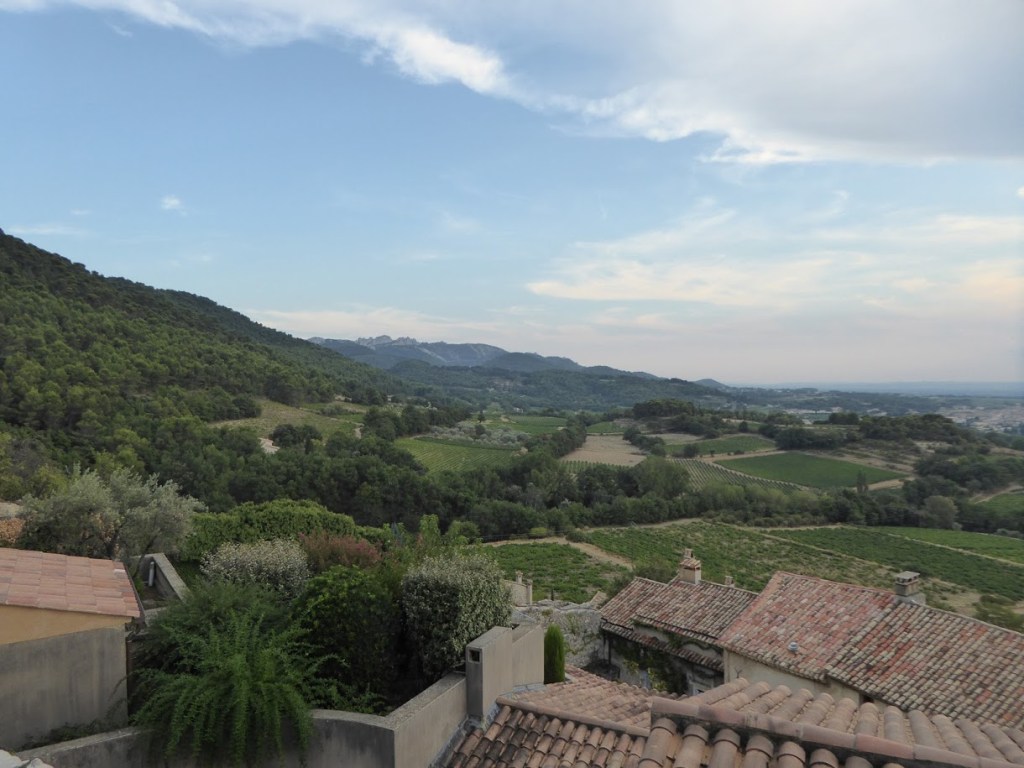
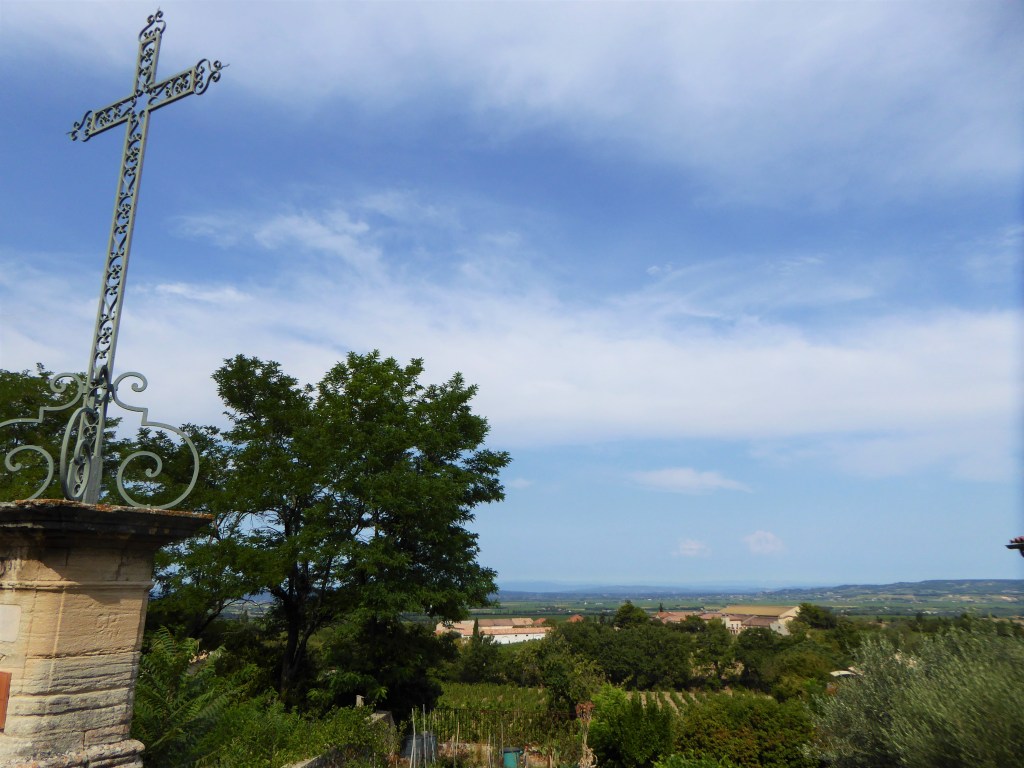
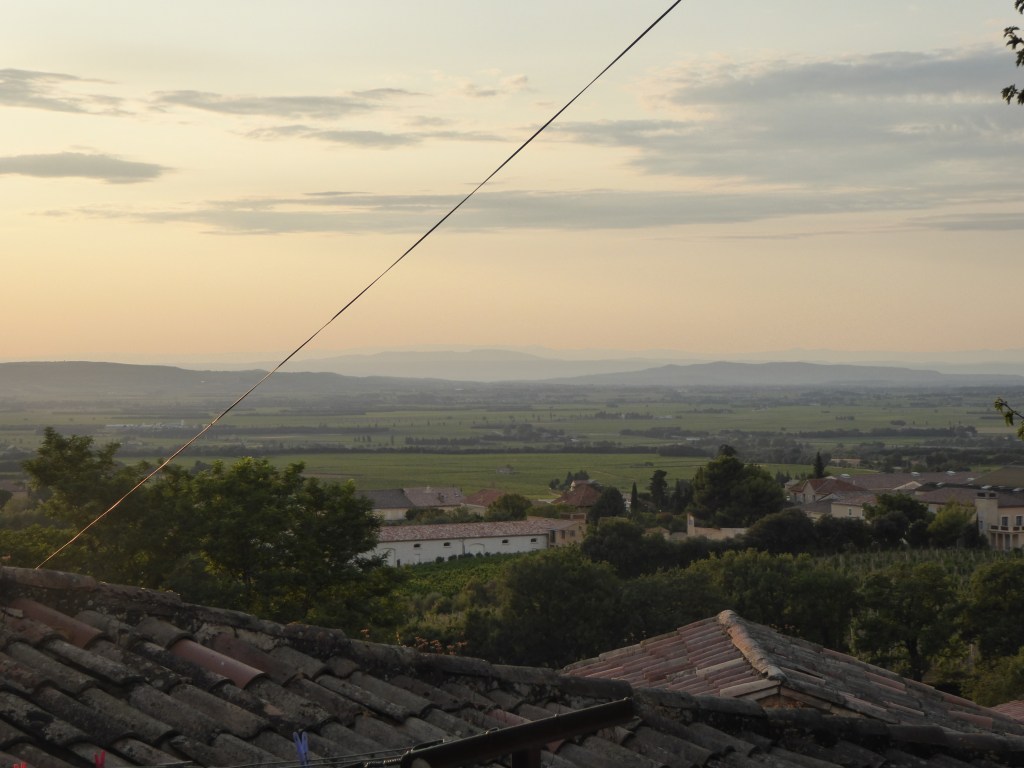
View from the house in Violès

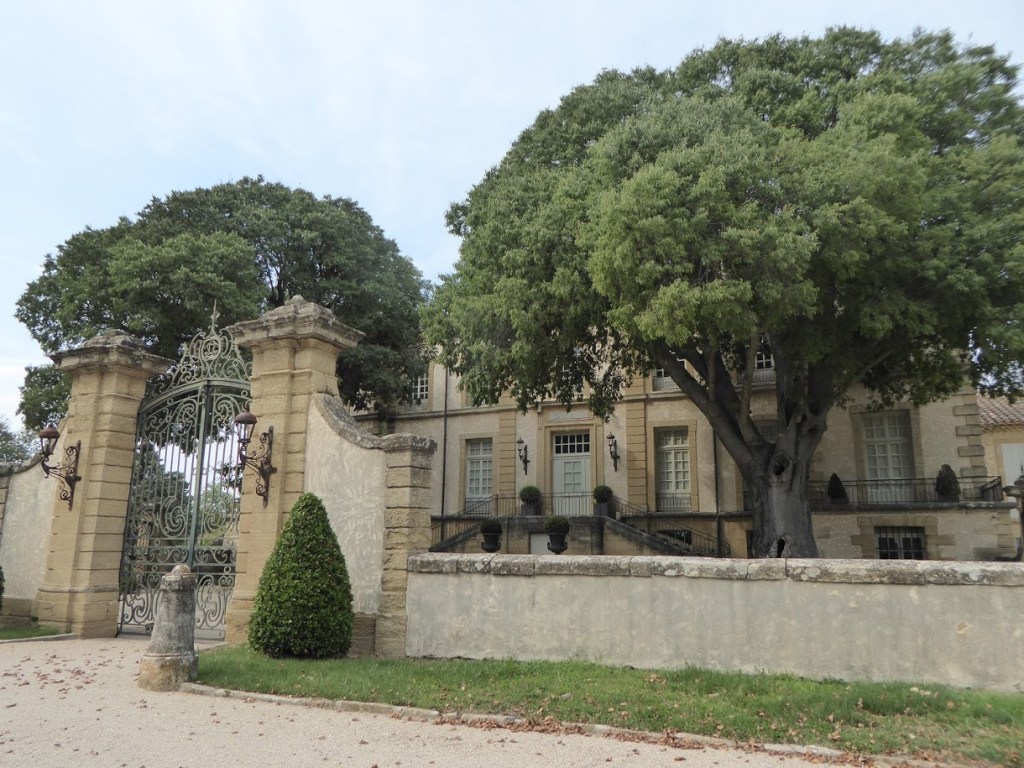
At a restaurant in Orange, I made a happy acquaintance with another wine called ‘M de Malijay’. On the way into Violès we had eyed up a sign advertising Château Malijay. Taking the excuse that France is several centuries ahead of England in time when it comes to wine-making (rather than the one hour the English claim), we drove to the Château at half past four in the afternoon. After all, is the French equivalent of afternoon tea not a small glass of wine?

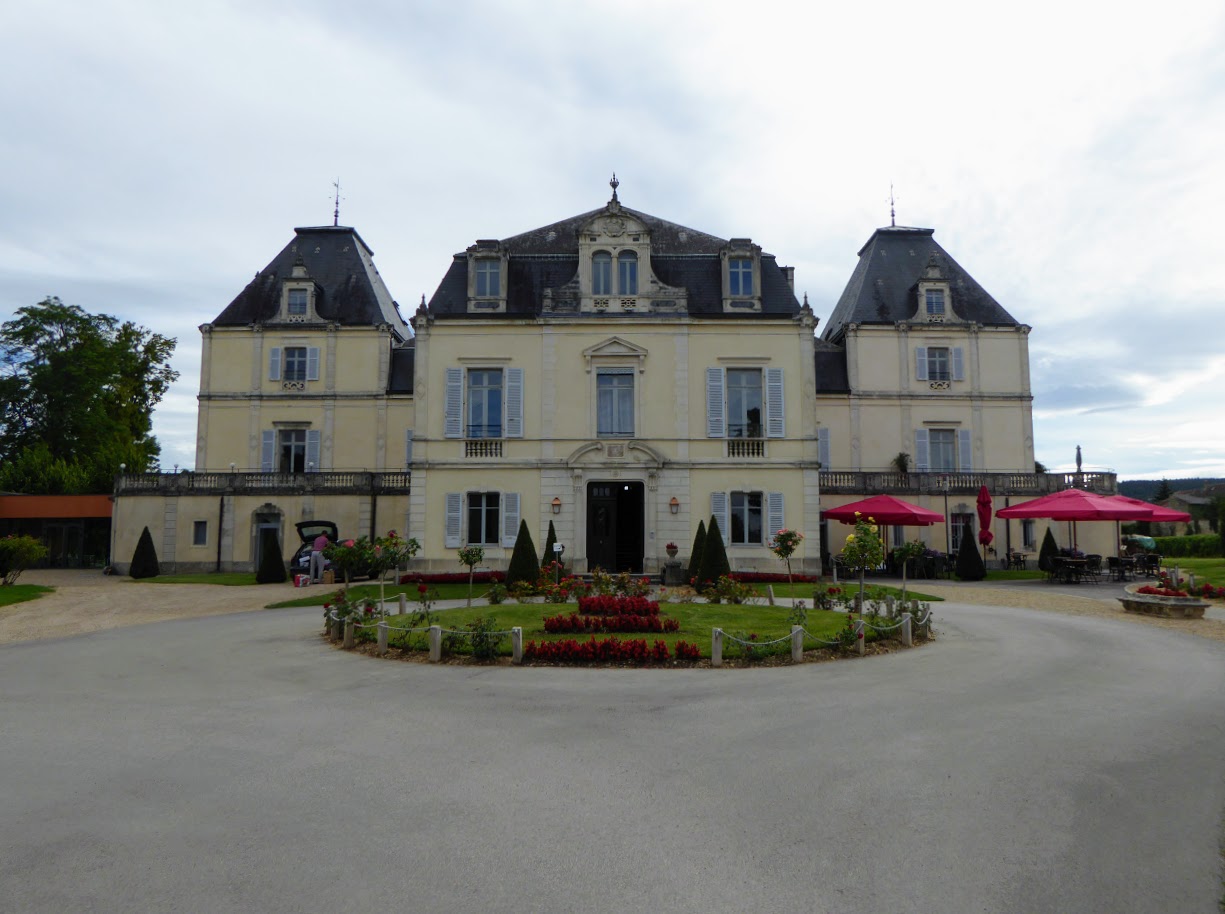
Our host greeted us, inviting us to wait while she dealt with the wine agents with whom she was coming to the end of a meeting. We were well rewarded for our efforts! Not only were we able to taste a selection of the wines from Malijay, but also from the partner estates in Gigondas and Vacqueyras, only there for the delectation of the agents. This all took place in the medieval kitchen of the chateau.

Château Malijay

Although many of the wines were tasty, our mutual favourite was definitely the ‘M de Malijay’. There was an issue with electricity which prevented us leaving with any wine and delayed us going to the next place for tasting in St Martin. There our host was very talkative with a strong Provence accent; Saint Martin became Saint Marteng. Offering considerably smaller tasting samples than at Malijay, we tried a variety of red and white wines. The reds we liked less than the Malijay despite them having similar prices, and settled on a selection of the whites instead.

Vacqueyras

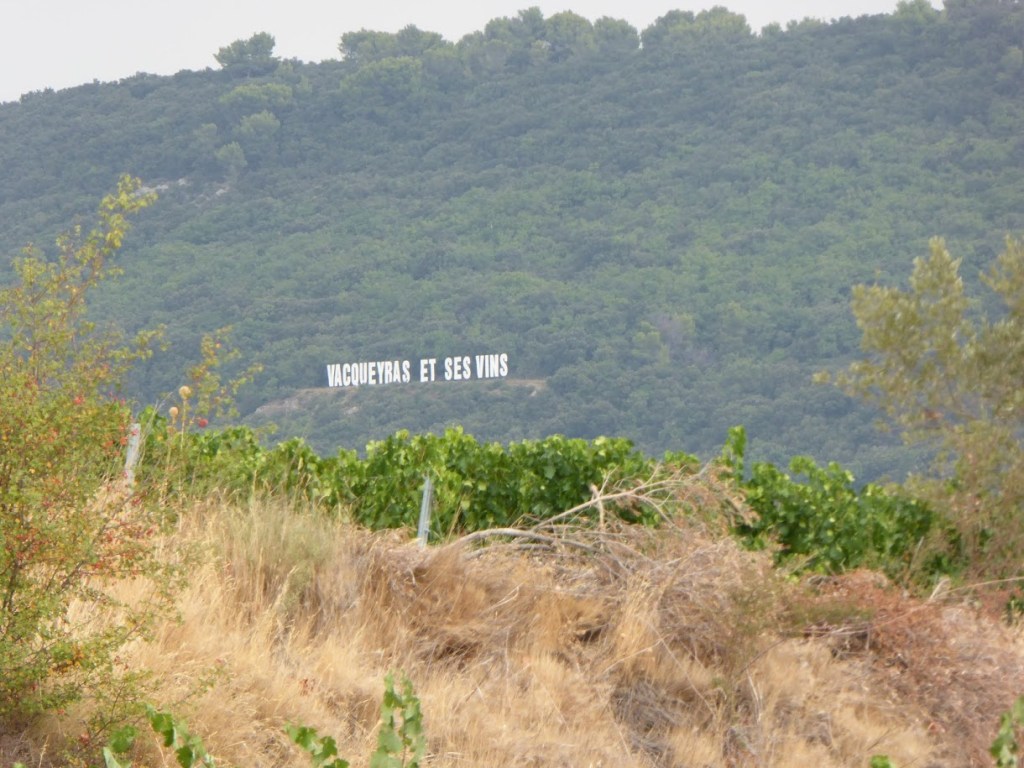
Ever hopeful, we once more tried to go to the market in Violès whereupon we made a discovery shocking to Londoners. Not only was it on holiday on account of it being August, but the ‘market’ was made of one stall! We were advised to try the one in Jonquieres which was much, much bigger. Arriving there, we found a fish stall, a cheese stall, and a chip stall. Granted, it was three times the size of the one in Violès, but hardly constituted a market. Such disappointment drove us to an earlier-than-planned wine tasting in Vacqueyras. The Hollywood-esque sign as we neared the village sent us into laughter.

We had a good view of this sign later on our walk

Before it reached midday we had consumed twenty five samples of wine, all for free! My palate had not had enough time or food that morning to suitably form, meaning I was not massively taken by any of the wines – although there was potential in one or two. My sister (who did not partake) and I sought refuge at the restaurant across the road towards the end of the tasting, whereupon we carbed up once joined by parents. In order to be fit to go anywhere else, it was imperative that we walk some of it off. So off we went on a jaunt around some lovely local vineyards.

Looming rainclouds

Near the end of the walk we began to notice the clouds above our heads darkening and edging menacingly towards us. Just after we’d hit the village once again, the rain began a downpour with just enough time to soak us before we could leap into the car. My sister was dropped back at the house; we made a return trip to the Caveau de Gigondas. A few purchases were made, including my favourite from the previous week. We made our way back, and I finished my book.

Séguret

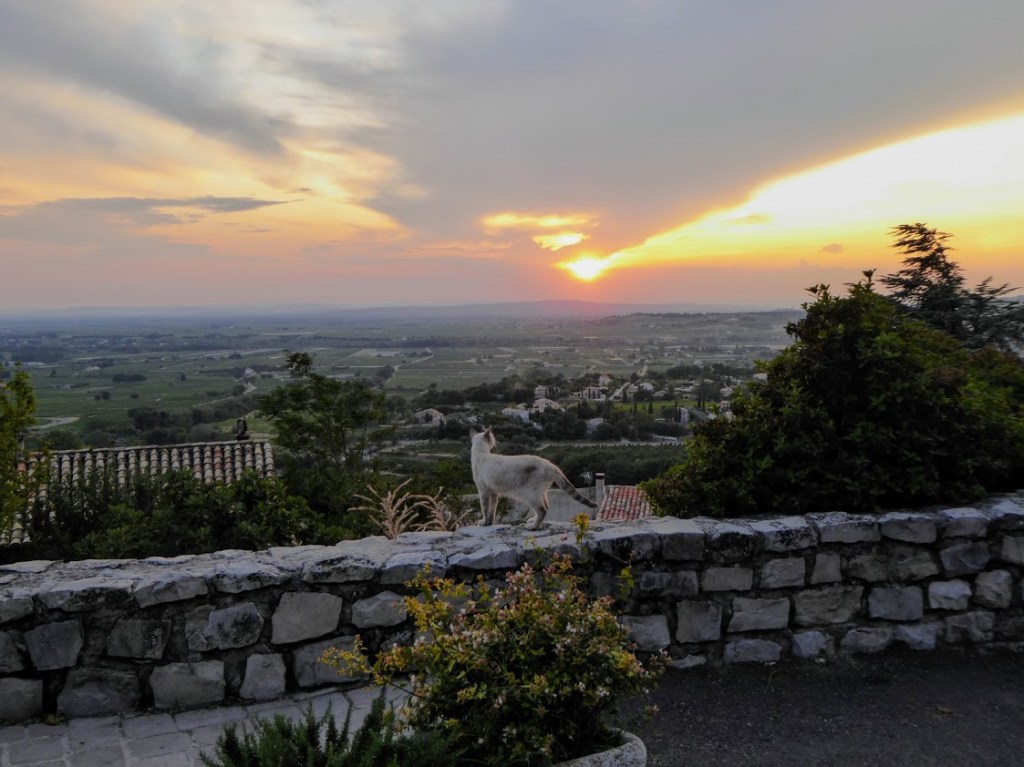
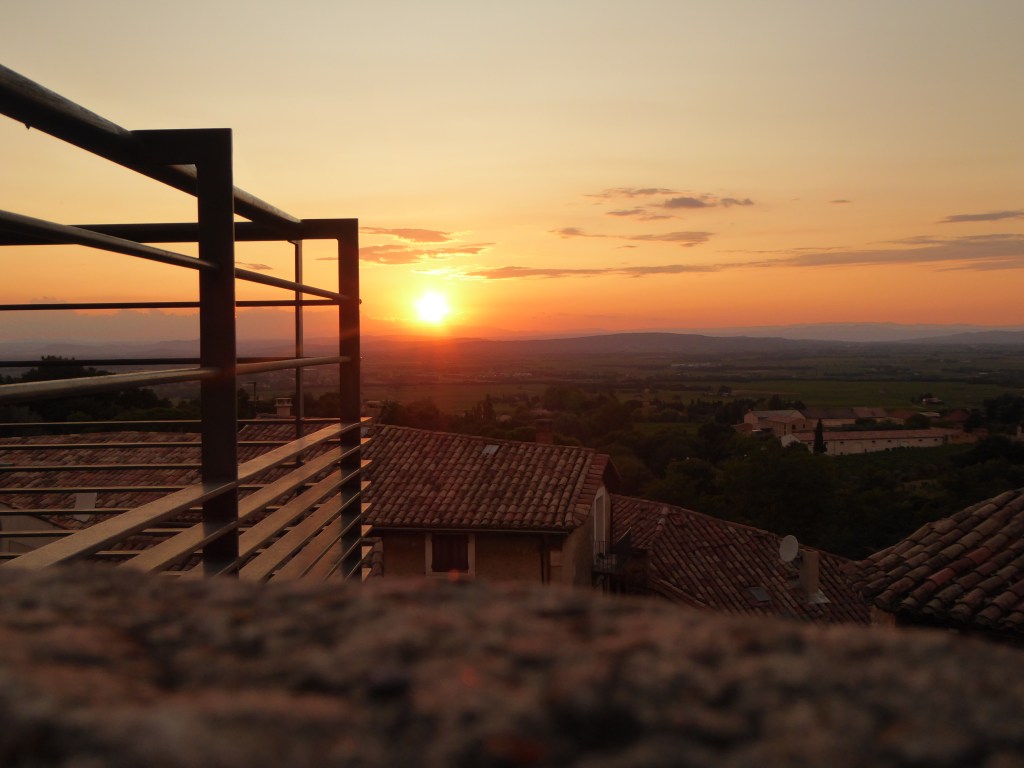
The next evening Dad and I drove to Séguret to watch the sunset. Officially one of the most beautiful villages in France, I would love to come back to stay here another day. Instructed to check the evening market for cheese to go on pasta for dinner, we discovered it was twice the size of the one in Jean-Pierre. That is to say, it had six stalls instead of three! We climbed to the highest point we could find in the village next to the church and settled down in the company of passing cats.

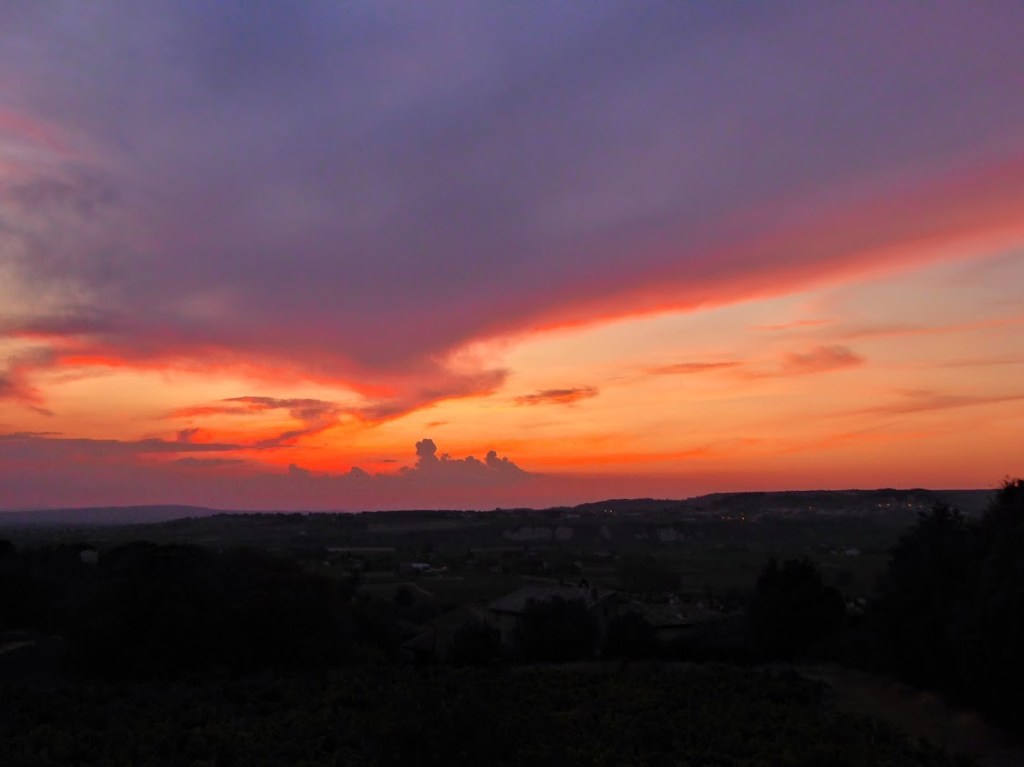
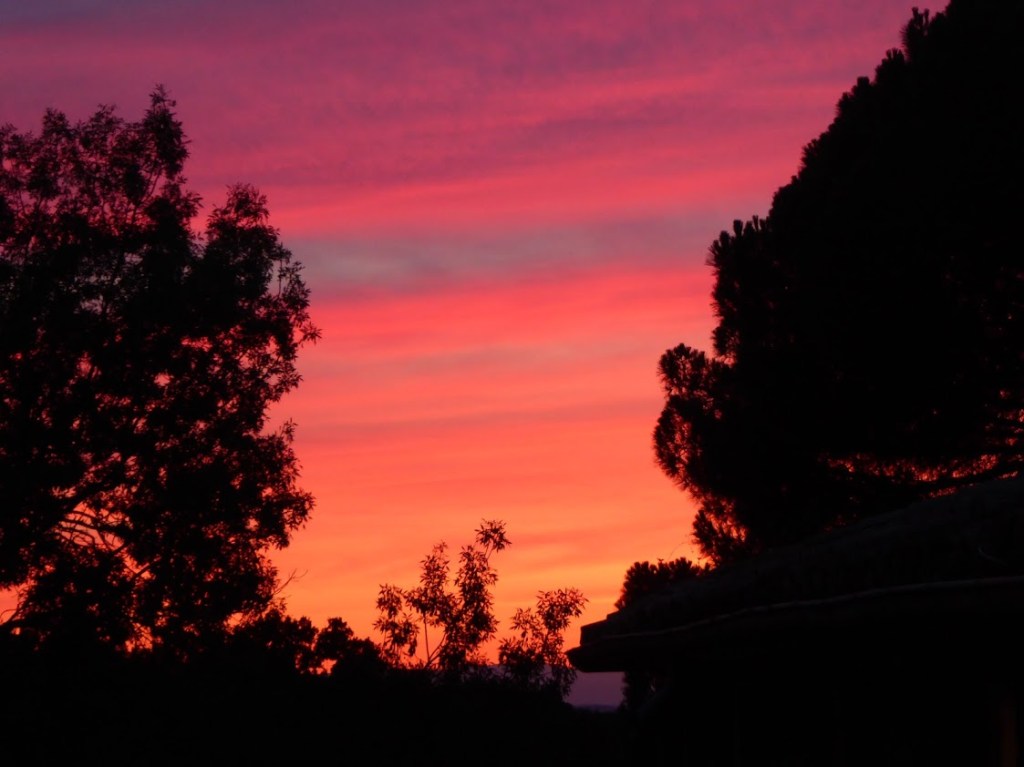
This sunset was a slow burner – the clouds near the horizon didn’t look promising, but transformed after sundown as they were lit up in beautiful colours.

Under pressure from our bellies to eat, we headed back for dinner.

Sensory experiences in Violès

The last day we spent in Violès was half business, half pleasure. Having passed by the sign for it when driving around the area earlier in the week, we went into L’Atelier 3 Souquets to taste different olive oils. The owner of this boutique didn’t merely sell the regional olive oil; instead he was something of an amateur olive oil taster. Each year he travelled around the south of France tasting a selection of olive oils from different regions, and chose the ones he liked most to stock in his shop.

Olive oil groves, like vineyards, have their own appellations. However, as Peter Mayle writes in Encore Provence, it takes an olive oil grove about fifty years to make it worth investing in; vineyards take three to five. Our host explained that Sablet and Séguret used to be all olive tree areas until the 1950s, when a frost killed off the olive trees. Since then, it has nearly all been replaced by vineyards.

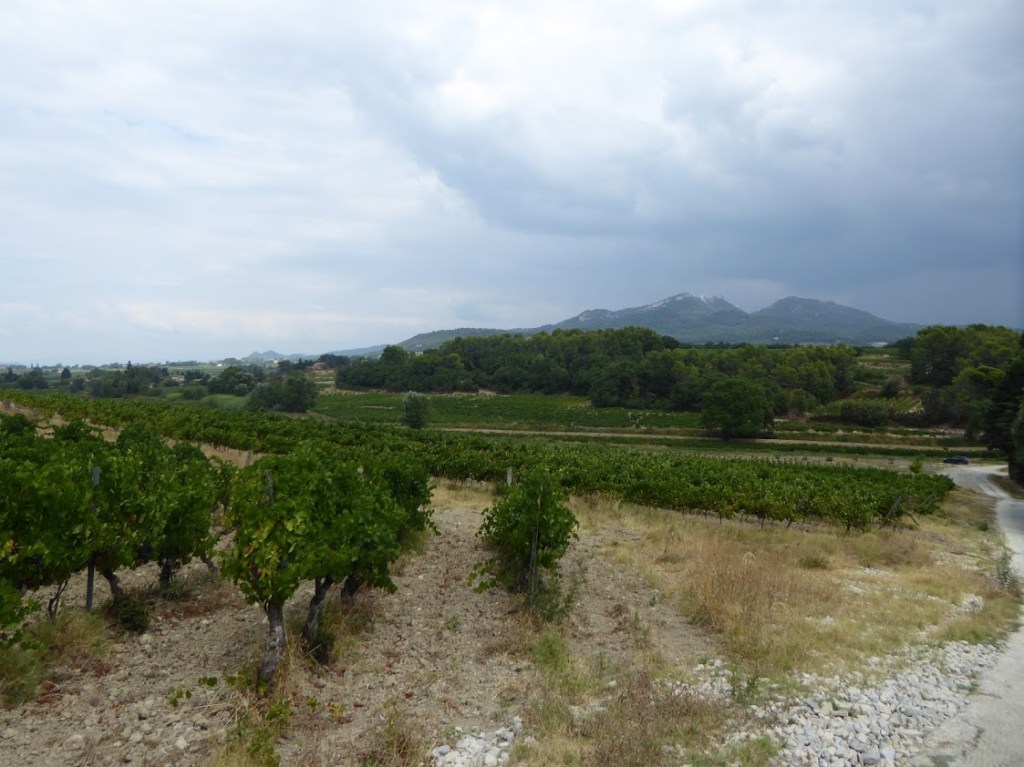
Vineyards in Séguret

We began by tasting an olive oil from Les Baux, which was sweet and almondy, the lightest of the olive oils, before progressing onto more peppery ones. These were quite a shock to the palate. Our family favourite one was made from black olives rather than green, and had a definite nose of tapenade to it.

Business then began as various olive oils were carefully selected as Christmas presents for family members and friends, while I sampled the quality of the tester olive oil hand cream. We bade him goodbye and moved onto the next location.

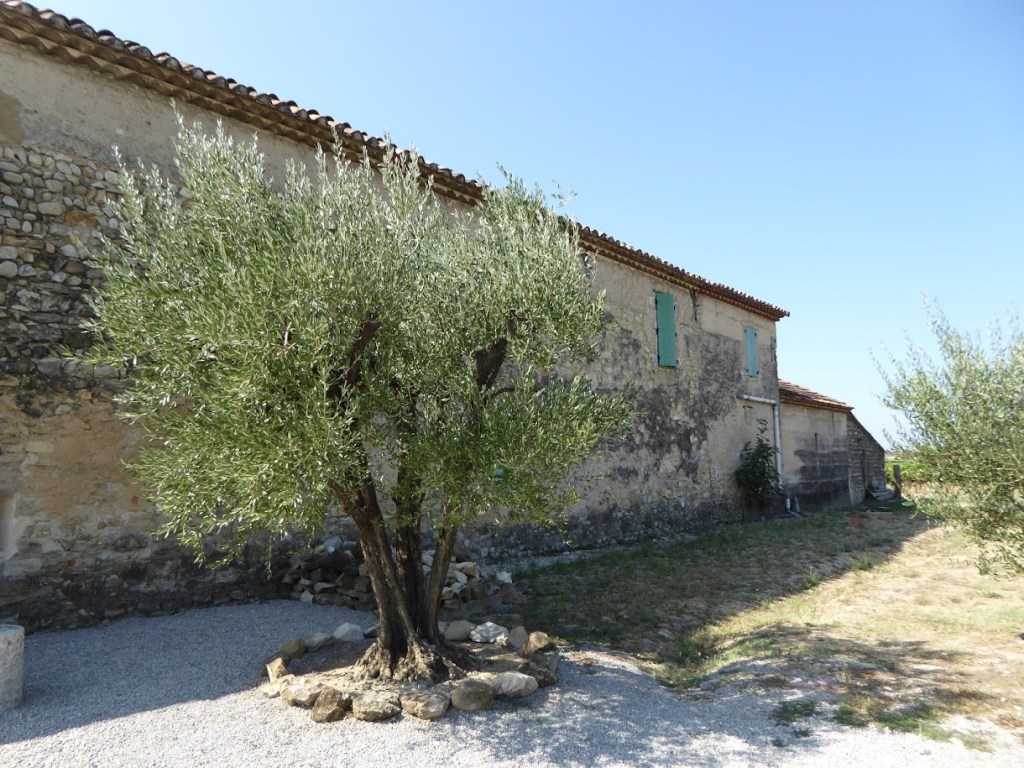
An original olive tree which survived the frost

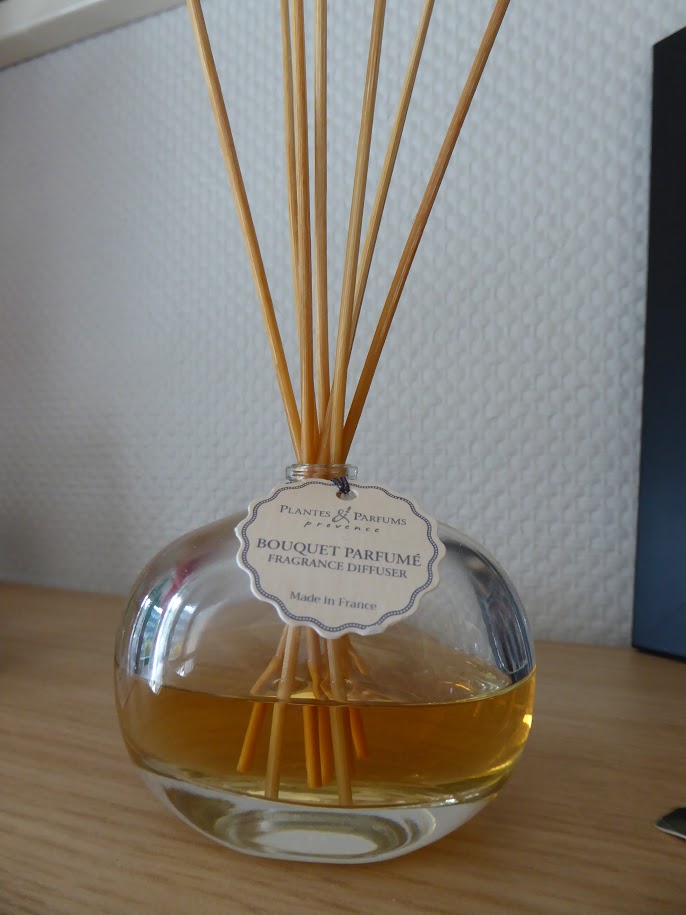
Yet more Christmas presents were acquired at the Parfumiere, which boasted an array of room diffusers, perfumes, candles, soaps – all in the smells of Provence. Luckily for Dad there was a sofa for the more reluctant visitors where they could happily zone out of the tinkling piano music and product displays. I was treated to a room diffuser which has done wonders for diminishing the omnipresent plumbing odours which arise from my shower plug.

Fleur de coton room diffuser, sadly now half empty

During the days we spent in Violès, I managed to read my way through a hefty number of books:

  • The God of Small Things, Arundhati Roy. An ephemeral prose style exposing injustice and trauma deep in the heart of the caste system.
  • Welcome to Nowhere, Elizabeth Laird. A captivating story of a child and family fleeing Syria with a strong appeal to the reader.
  • Encore Provence, Peter Mayle. The last in his memoir trilogy of an Englishman who moved to Provence.
  • The Invention of Wings, Sue Monk Kidd. Intersectional feminism in the early 19th century fighting against slavery and for equal rights.
  • All the Light We Cannot See, Anthony Doerr. The power and compassion of radio during WW2, told through two children.

A plus,

Zoe x
Orange

On our way towards Orange, we stopped at the market in Carpentras – finally one that we had the correct information for! French markets are hubs of colour, smell, and noise; this one was no different.

Carpentras market

There is no breakfast my family loves more than yoghurt with a spoon of honey – a spoon which has become increasingly more generous over the last few years of their honey connoisseuring. Their quest, which they enthusiastically chose to accept, was therefore to find the best honey and take as much of it back to the UK as they could. But why buy honey from one stall when you could buy from many? Carpentras has over three hundred market stalls, and at least four of them were honey stalls. At each of them tasting spoons were thrust upon us; upon each tasting we dutifully parted with money.

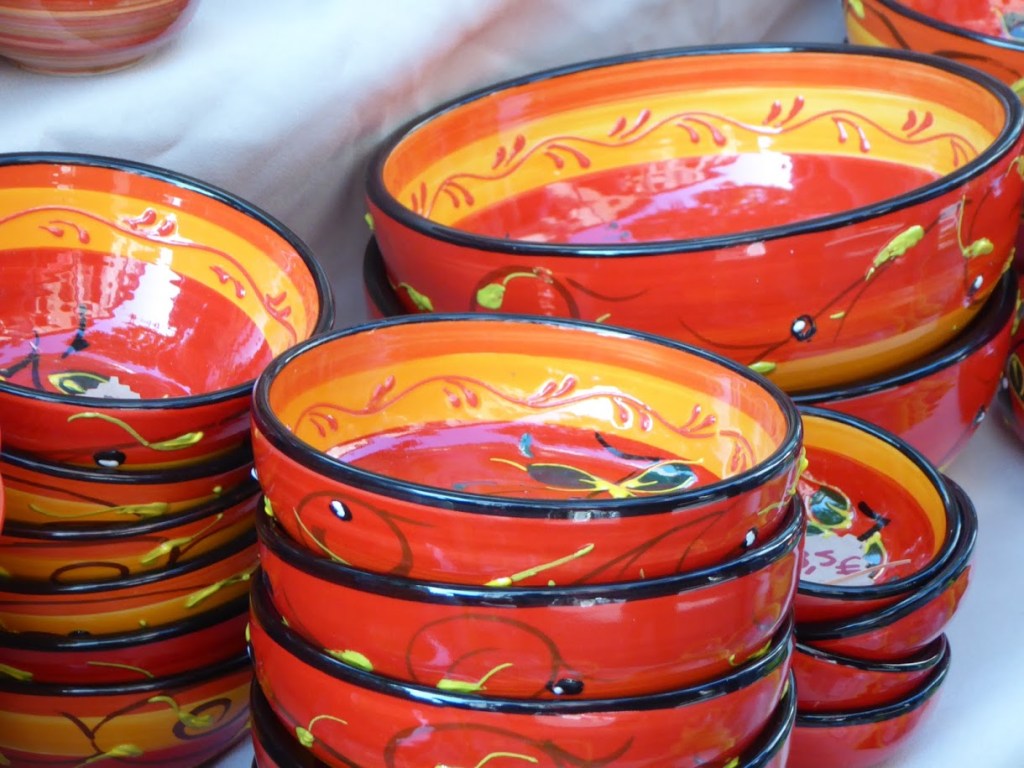
You can find all sorts of things at the market in Carpentras: brightly coloured dishes, clothes, jewellery, books, teatowels, tablecloths, food. The market consumes the whole town centre for the morning it is set up, so much so that you barely notice the abandoned state of the buildings around you. Once beautiful beautiful architecture is neglected and covered in pigeon droppings, but the art installations make it easy to ignore this.

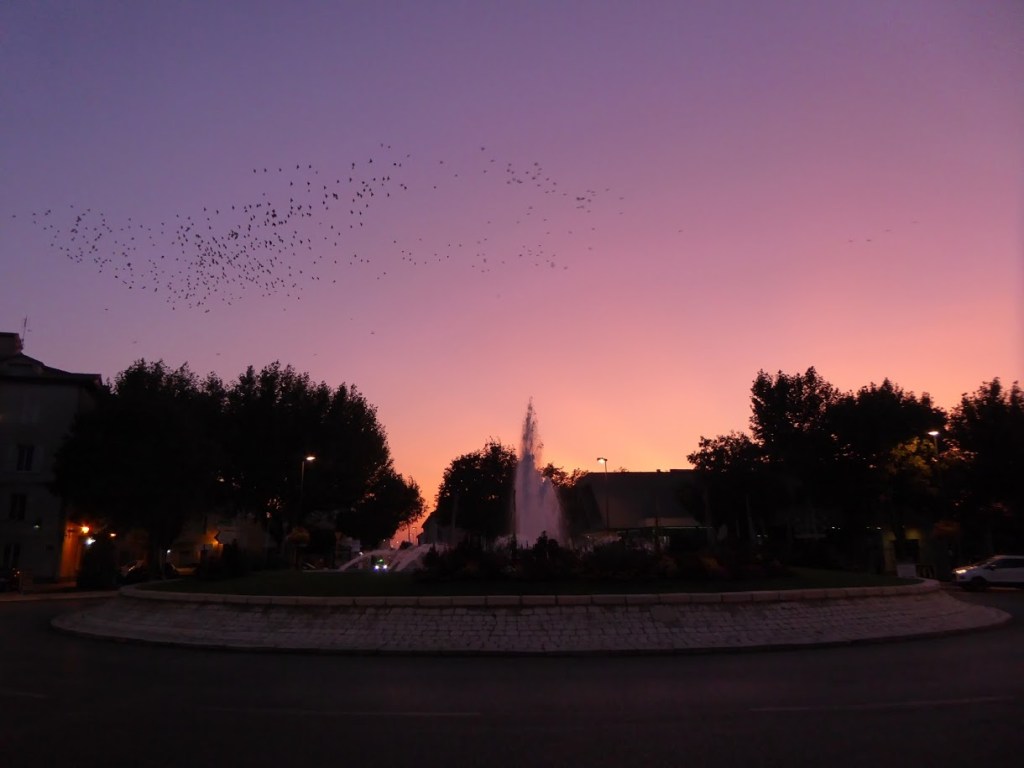
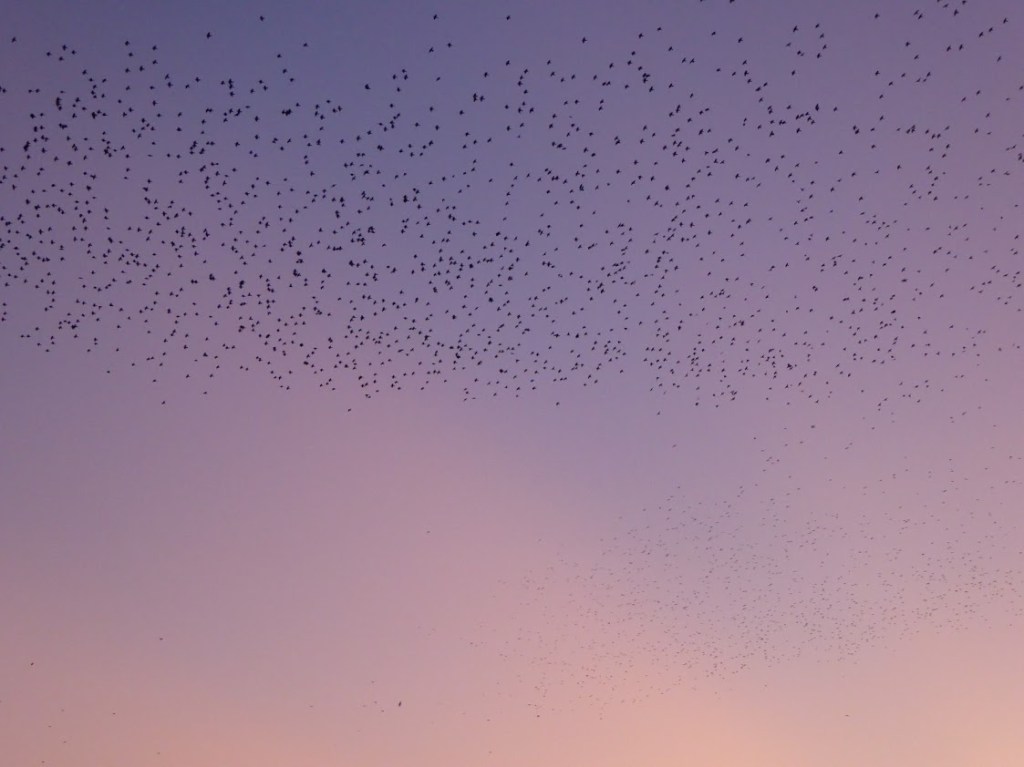
We enjoyed a restful evening in Orange after the rather intense morning. On my wanders round the old town I came across the most remarkable David Attenborough-esque sight: flocks of starlings flying across the sky at sunset. There must have been hundreds of them.

Les Baux-de-Provence

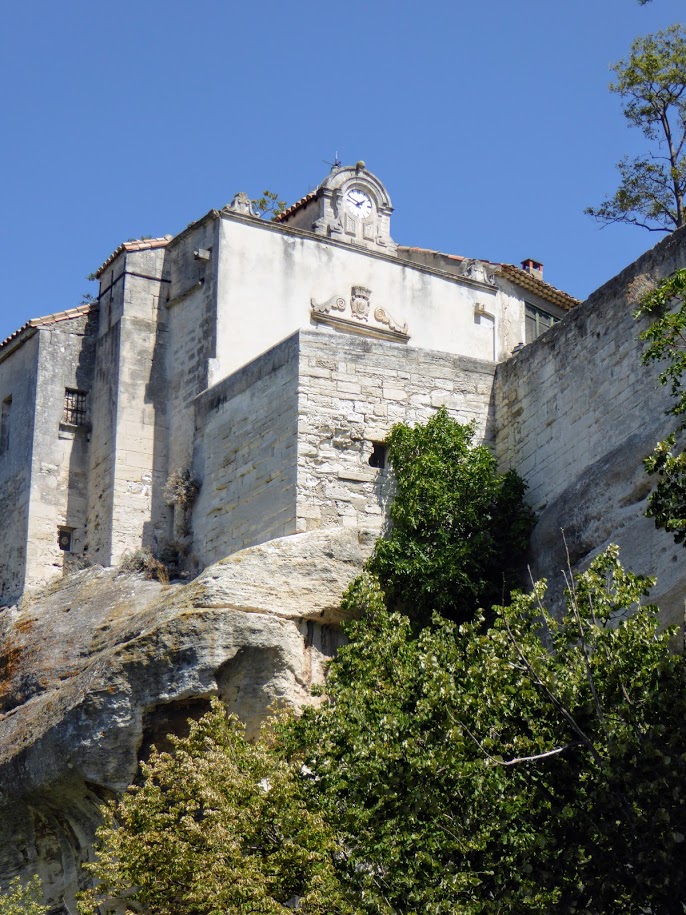
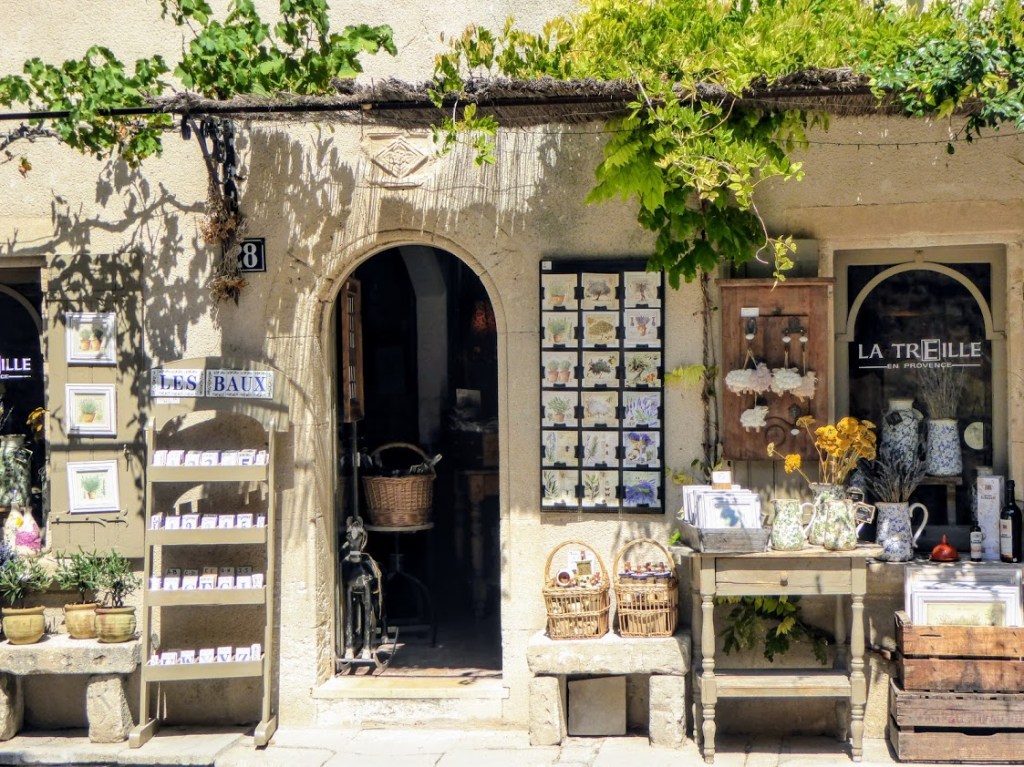
My auntie recommended we go to an installation in Les Baux called Carrières des Lumières; once we’d booked a time, we arrived early to explore the town a little and have a picnic lunch. The village is situated on top of a hill which is a joy to climb in 36°C heat. There are lots of parfum shops and general mixed souvenir shops to cater for the tourists visiting, selling the Provence specialities of Savon de Marseille, olive wood household items, lavender bags etc.

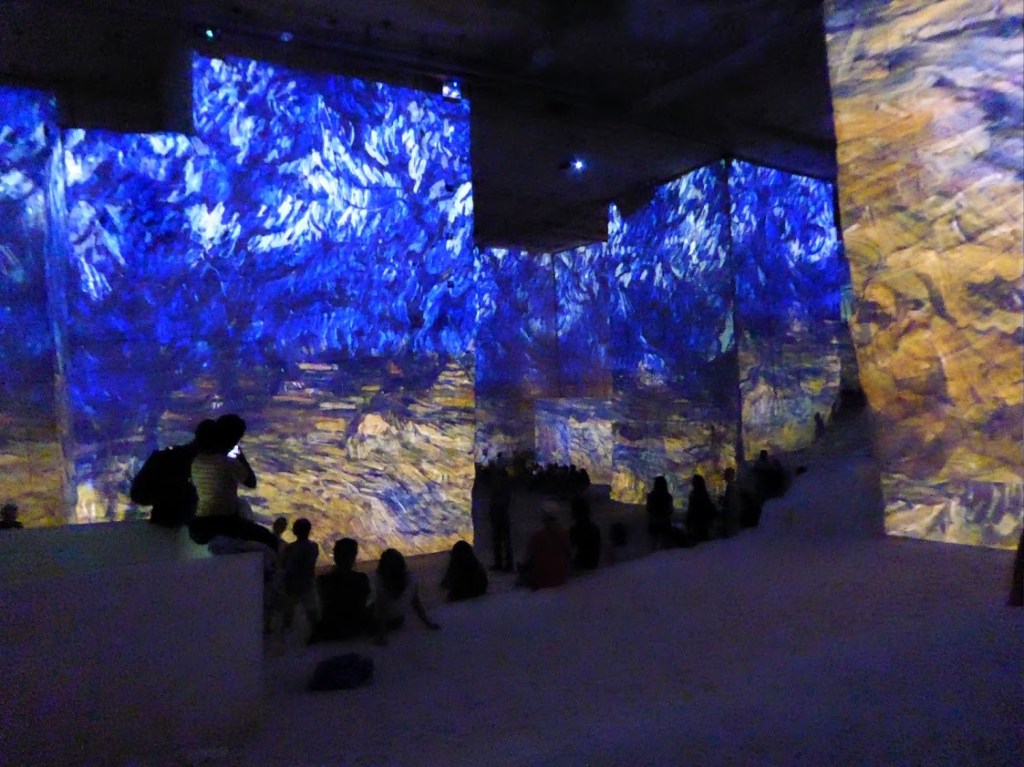
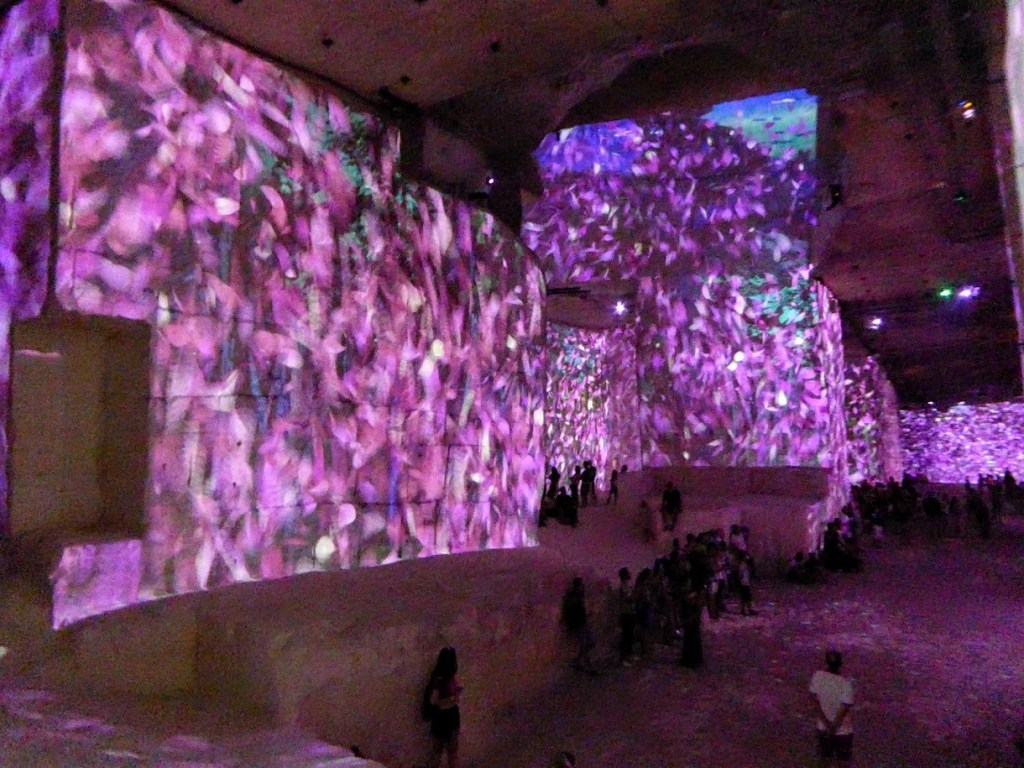
Carrières des Lumières is inside a hollowed out stone cave, probably man-made, and is an installation of digitalised moving art and sound. The two exhibitions on when we went were Vincent Van Gogh and Dreaming Japan. They featured lots of famous pieces of artwork come alive in movement, accompanied by background music as way to immerse yourself in it. Projectors were hidden all over the cave so that every wall, ceiling, and floor surface was covered by art.

Part of the Van Gogh exhibition

It was a really special experience to be so fully immersed in the mix of art and music. I would recommend anyone in Provence able to drive to visit this fantastic installation.

Dreamed Japan

Avignon

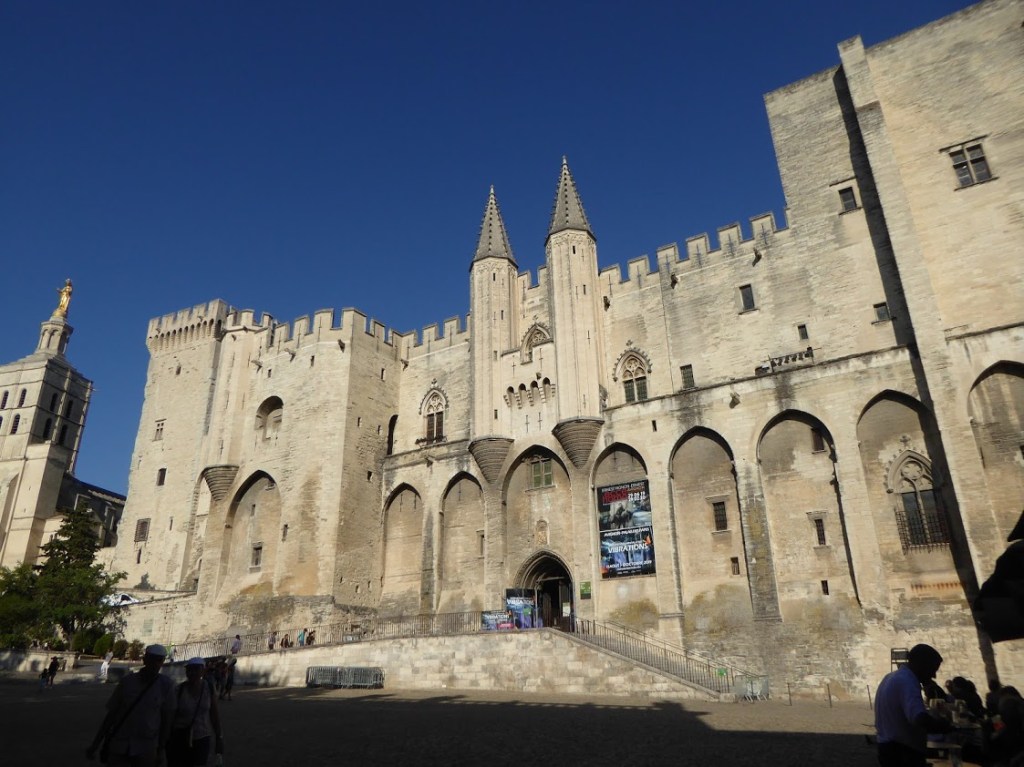
In my very early years we had a cassette tape of French nursery rhymes which were always played in the car, including the famous Sur le pont d’Avignon. To get back to Orange from Les Baux we had to drive past Avignon anyway, so I asked if we might stop there for a short while. Successfully depositing the other tired family members in a cafe near the city ramparts, Mum and I enjoyed a short walk exploring the centre of town.

The Palais d’Avignon
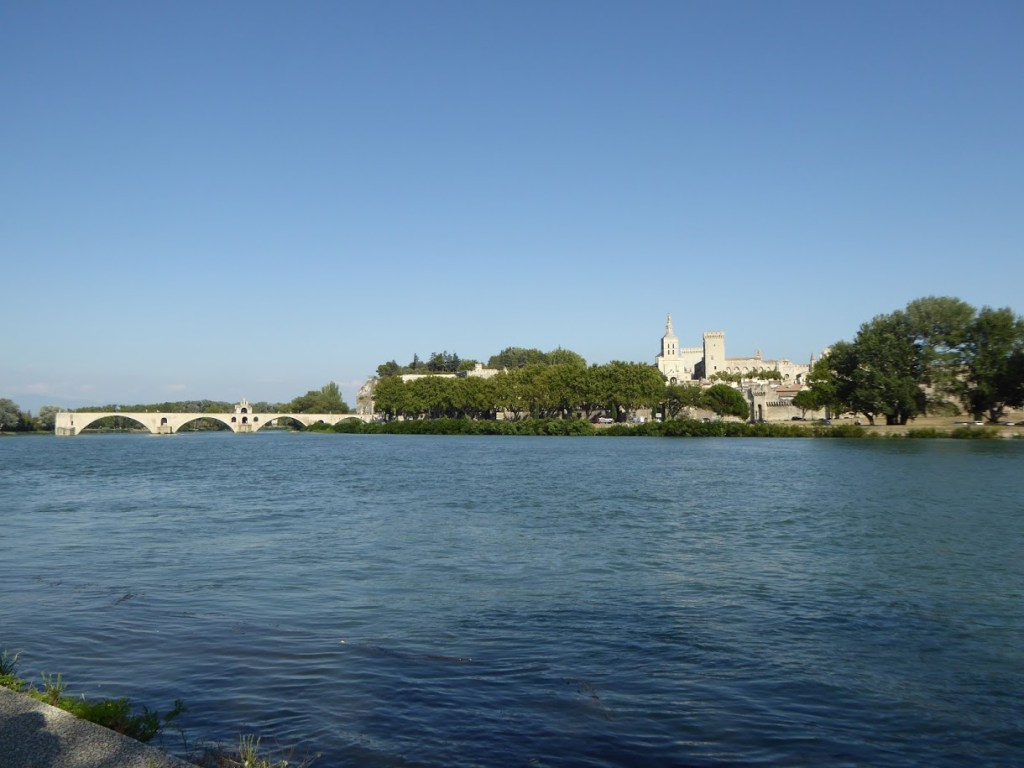
Le pont d’Avignon!

The view of the bridge from nearby the car park was lovely, and far better than the one you’d get if you actually stood and danced on the bridge (which you have to pay for). Maybe next time I’ll bring a dance partner as the syncopated rhythm of ‘on y danse’ requires knowledge of samba steps.

A Roman Orange

Whatever original oranges the Romans ate are now either rotted or long since digested, but the city of Orange used to be a very prominent Roman colony founded by retired war veterans. Its original population was more than twice what it is now, so it is no surprise that there are two key sites still remaining from that period.

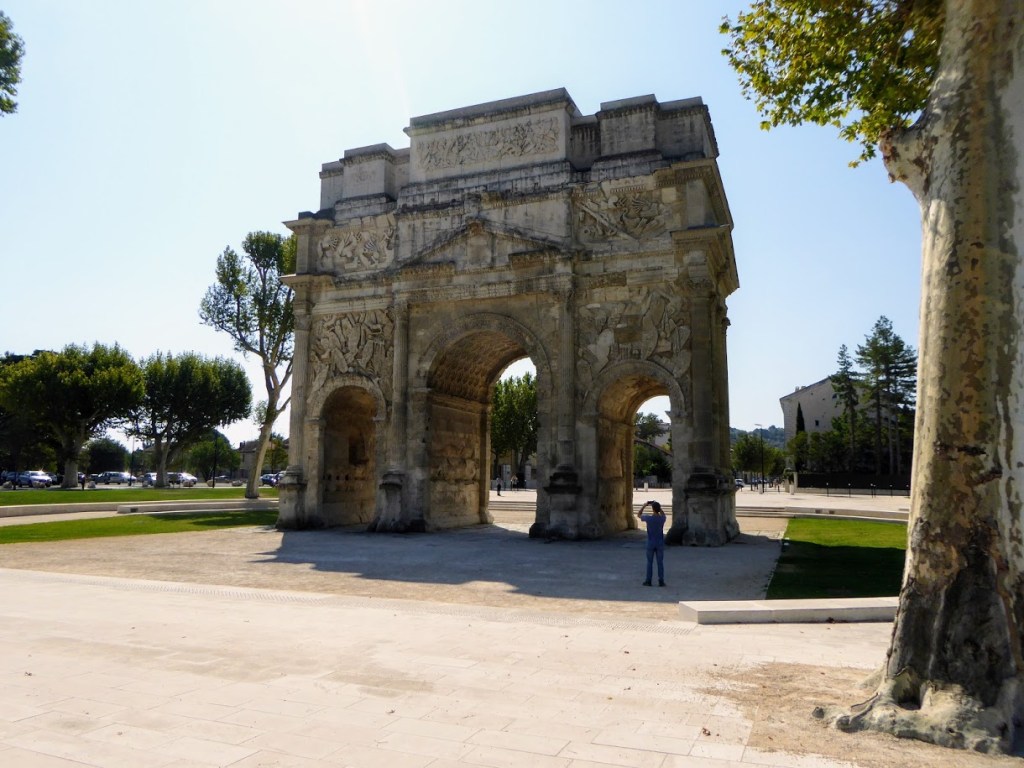
France has a special way of dealing with their highway rule of priority to the right, better known as the roundabout. Each roundabout is marked with some kind of monument to distinguish it from its many neighbours, and what better monument to built a roundabout around than an original Roman triumphal arch. Paris, move over, Orange’s Arc de Triomphe is no shoddy nineteenth-century replica.

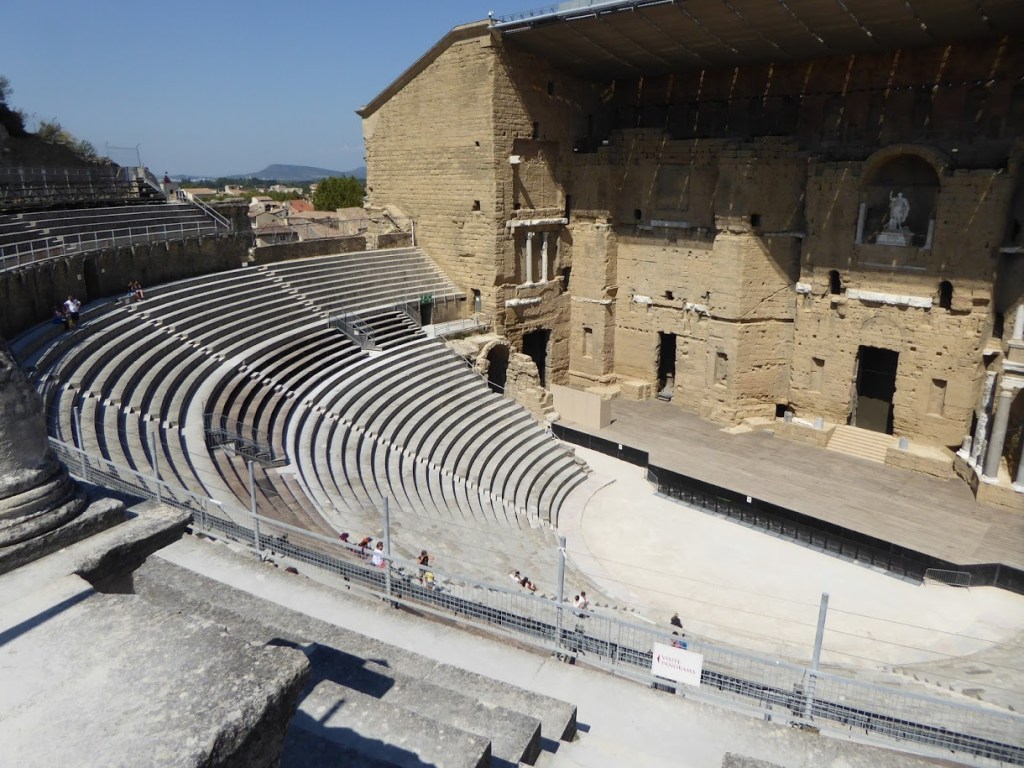
The second piece of upstanding Roman architecture is the Theatre of Orange – the only Roman theatre in the world with its stage wall still intact. A replica roof has been built over to protect the stage from the elements. There was a helpful audio guide which accompanied our visit, giving details of Roman tragedians and pantomime performances (the latter of which extensive information can be found in The Beggar of Volubilis by Caroline Lawrence).

The statue of Caesar which has survived millennia has a removable head, as was the custom, so a quick substitute could be ordered whenever there was a change in power. No doubt there was a large workshop in Rome kept duly in business with these state commissions of new heads. Dad and I took part in a virtual reality presentation of the construction of the city and theatre of Orange, which I would not pay for again. The posters advertising it offer as much of a reconstruction as you see in the video itself.

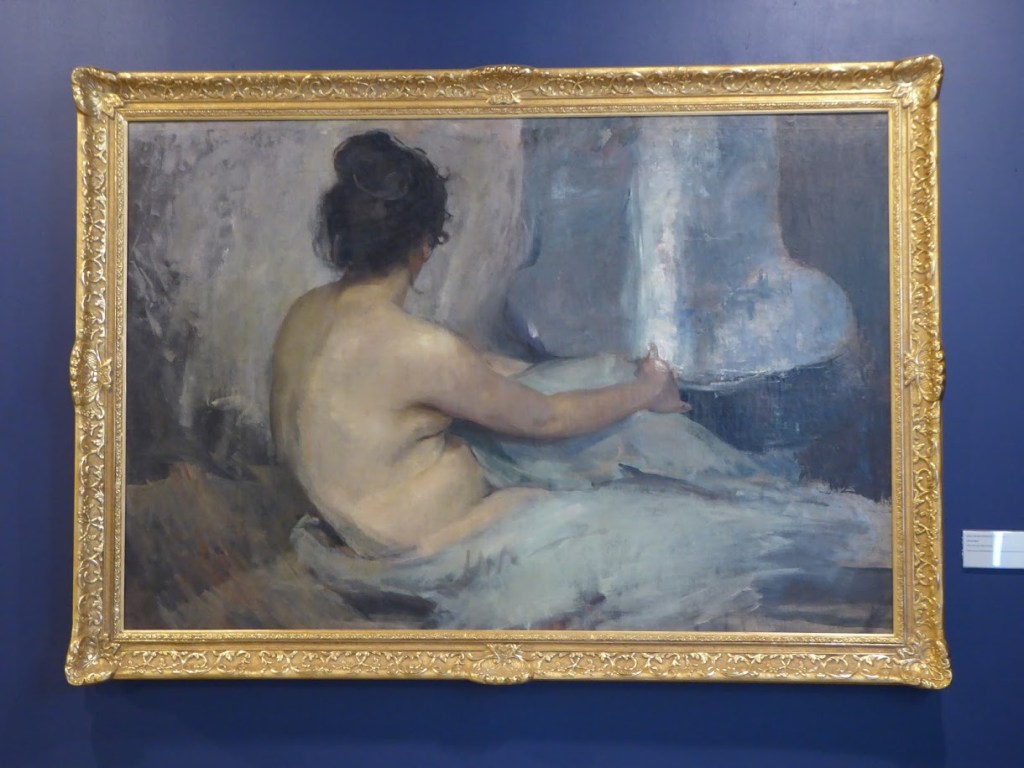
With the ticket to the theatre, you can also access the museum on the opposite side of the road. This has three rooms of unimpressive, generic Roman relics, while the upper two floors are dedicated to Baroque furniture and nineteenth-century art.

Evening in Orange

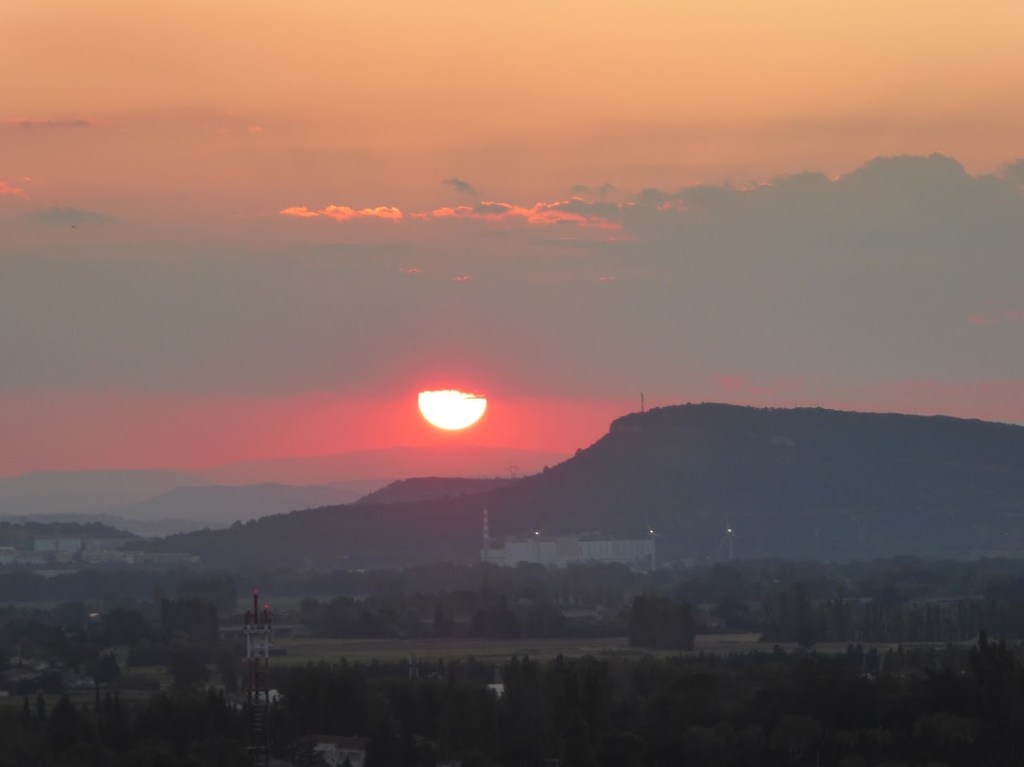
Mum and I walked up a hill to get a view of the sunset for the evening. Google Maps tried to lead us through a locked gate, but thankfully a printed map of the walk was more helpful. We alighted on a bench at a suitable viewpoint and watched amusedly as the lights of the wind turbines flickered, struggling to decide whether or not it was nighttime yet.

Wind turbines lights on at sunset

This view was accompanied by the faint sounds of music that had my feet itching. Once the sun disappeared behind the hill, I dragged Mum in search of the source of it, happily coming upon a dance club for the older generation. I enjoyed watching for a while, especially seeing how good leaders some of them were. Yet another thing to return with a dance partner.

A plus,

Zoe x
Gigondas

Gigondas is a village founded by the Romans in the Côtes du Rhône Villages region, originally named Jocunditas. It seemed thus only right that we make our way there by stopping at some Roman ruins nearby.

An afternoon in Vaison la Romaine

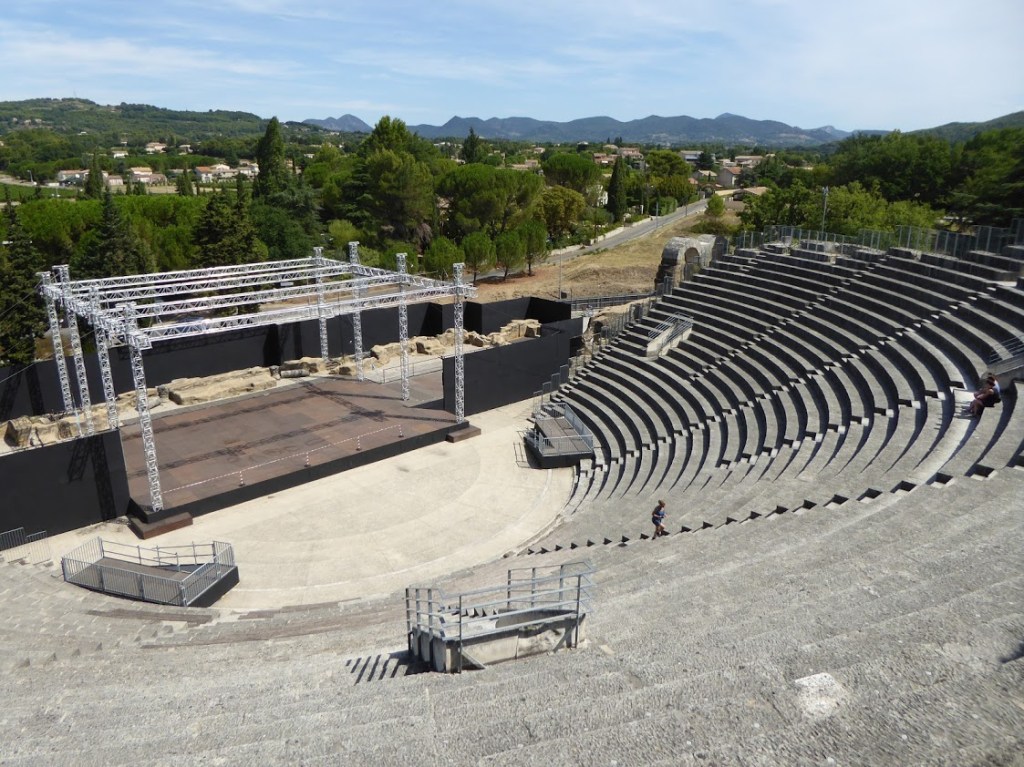
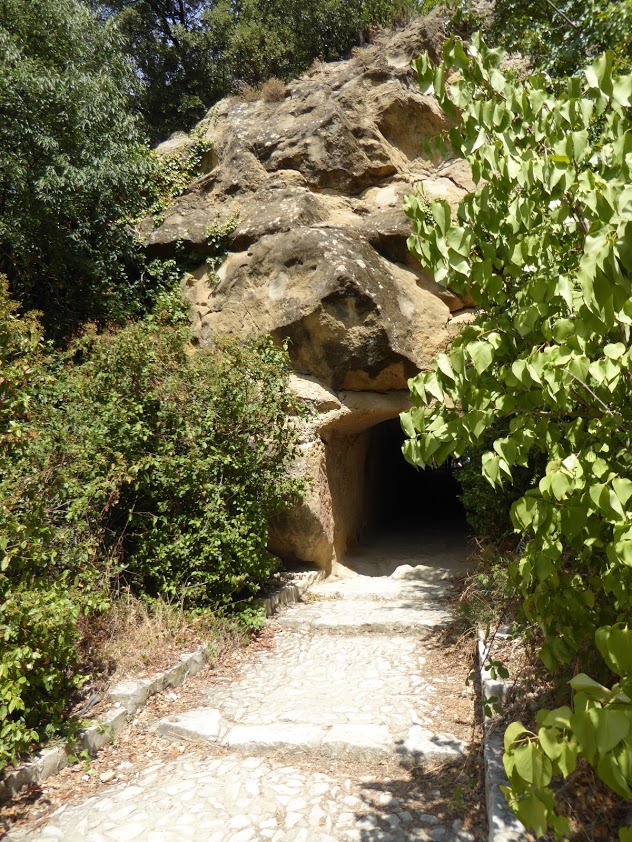
Our original plan was to go to a market in Violès, however, due to various websites with conflicting information, we arrived on the wrong day of the week and could not find a market. Rather earlier than anticipated, we drove into Vaison and snagged a shady parking spot. Of course, what we forgot was that the earth moves. Consequently, by the time we left, the shadows had moved, and the inside of the car was a blazing furnace. The main ancient Roman site had a large amphitheatre which screens film viewings in the late evenings after dark. This could be accessed either through the pedestrian path, or via the original ancient route: through a tunnel in the hillside rocks, over the hill, and ascending steps leading up to the top row of the amphitheatre where a wall and an awning would originally have been.

Ancient passage to the amphitheatre
Amphitheatre of Vaison la Romaine

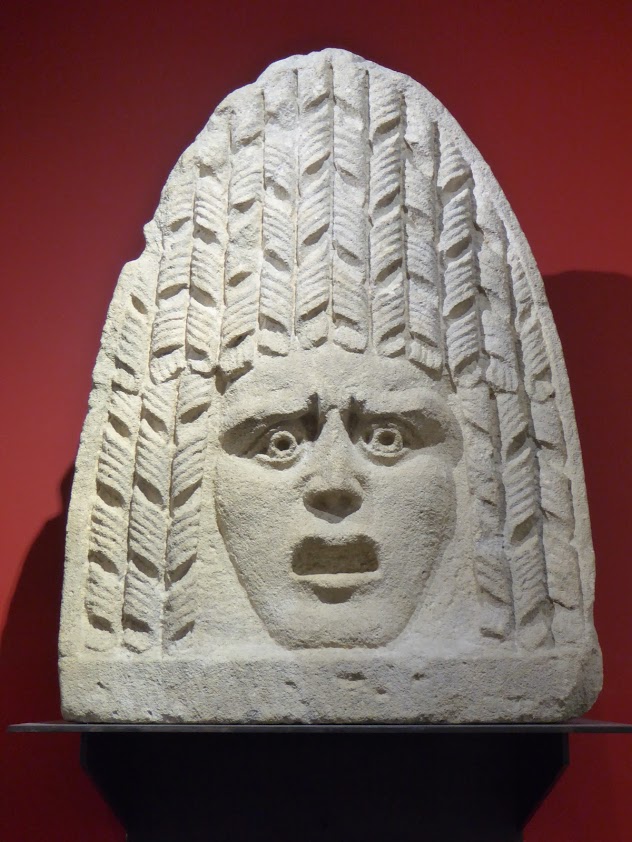
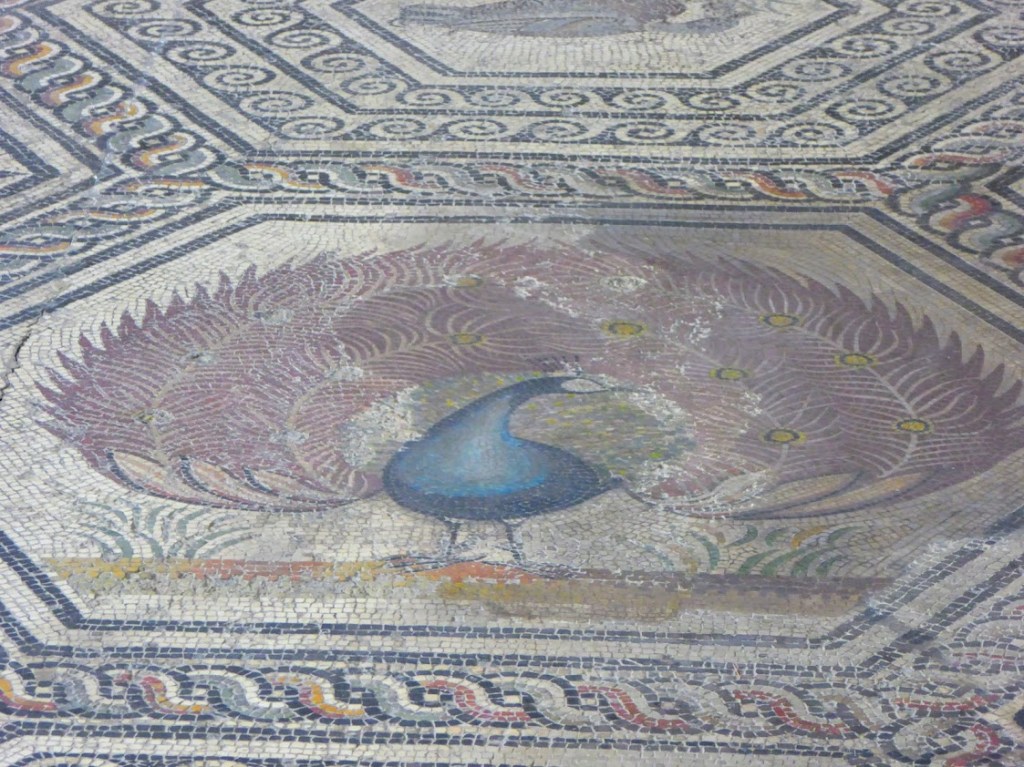
From the amphitheatre, we made our way to the on-site museum which held all the usual household remains of Roman ruins: oil lamps, broken columns, coins (featuring one made of my favourite Julius Caesar), statues, and a fantastic peacock mosaic in full multicolour glory. The heat quelled our hunger and we sought food in the town square, dealing with inattentive, passive-aggressive French waiters. My efforts were rewarded with delicious aubergine ravioli and a full bowl of grated parmesan to be sprinkled over my food as liberally as I deserved.

A mood
Peacock mosaic

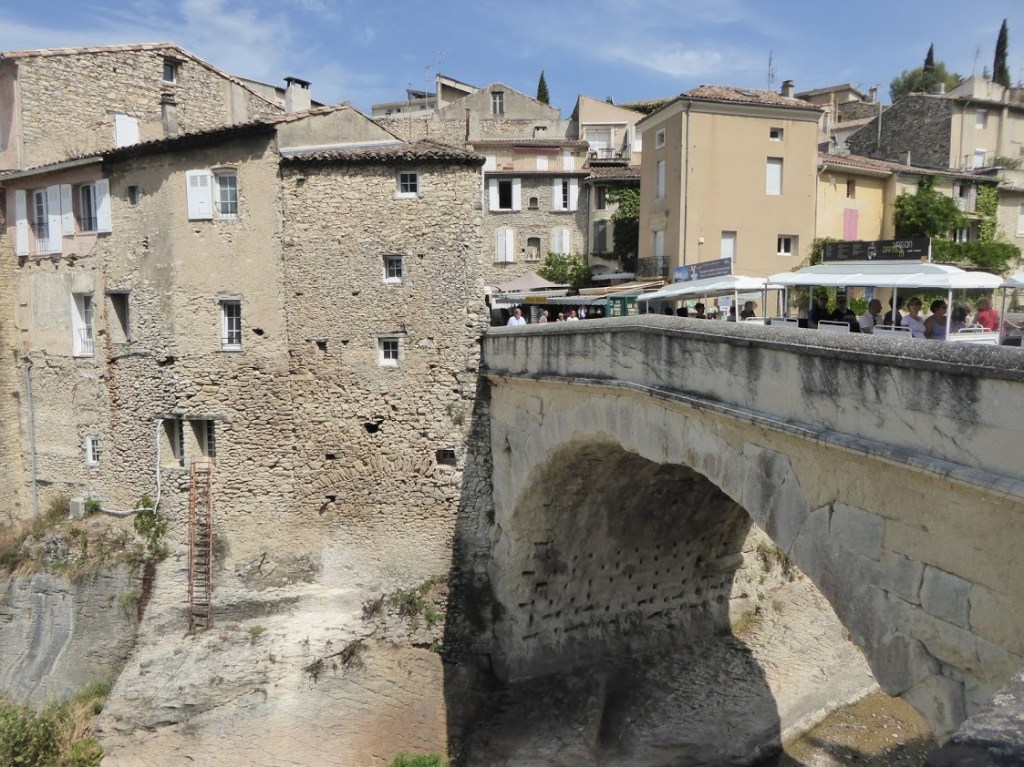
Afterwards we walked through the streets, browsing shops and tasting chocolate spreads as we went, coming to where the town divided. Vaison is split over two sides of a bridge, with the medieval hill on the opposite side to the Roman remains. Very full (both with food and memories of recent dehydration), it was decided not to climb the hill in the midday sun to visit the medieval town – though this is something I would do if I visited again in cooler weather. The hot weather meant the water levels were low and there was barely the semblance of a river under the bridge. We visited the second, smaller, Roman site but found little to see as all artefacts were in the museum in the first site. There was still a good-sized impluvium with kitchen garden herbs. Unfortunately, I can confirm that certain French public toilets are still à la turque – that is to say that there is a door behind which is a porcelain hole and two foot-sized platforms raised from this. The smell is predictably awful.

Bridge connecting the two halves of Vaison
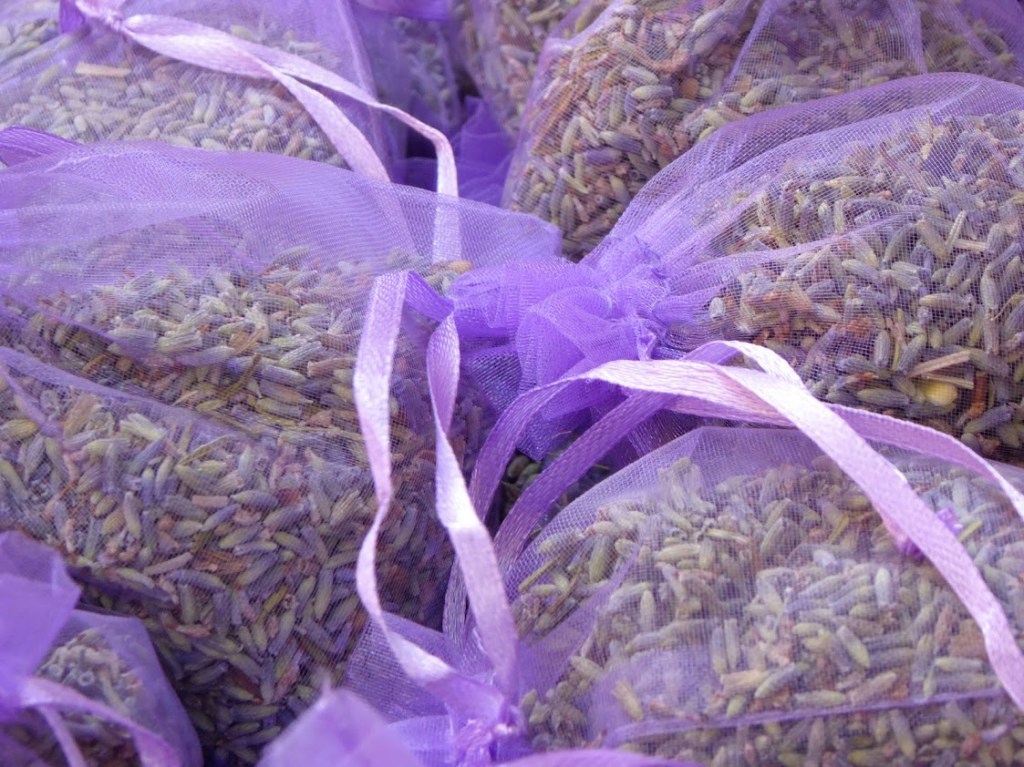
Lavender bags the shops were lined with

An evening of wonders

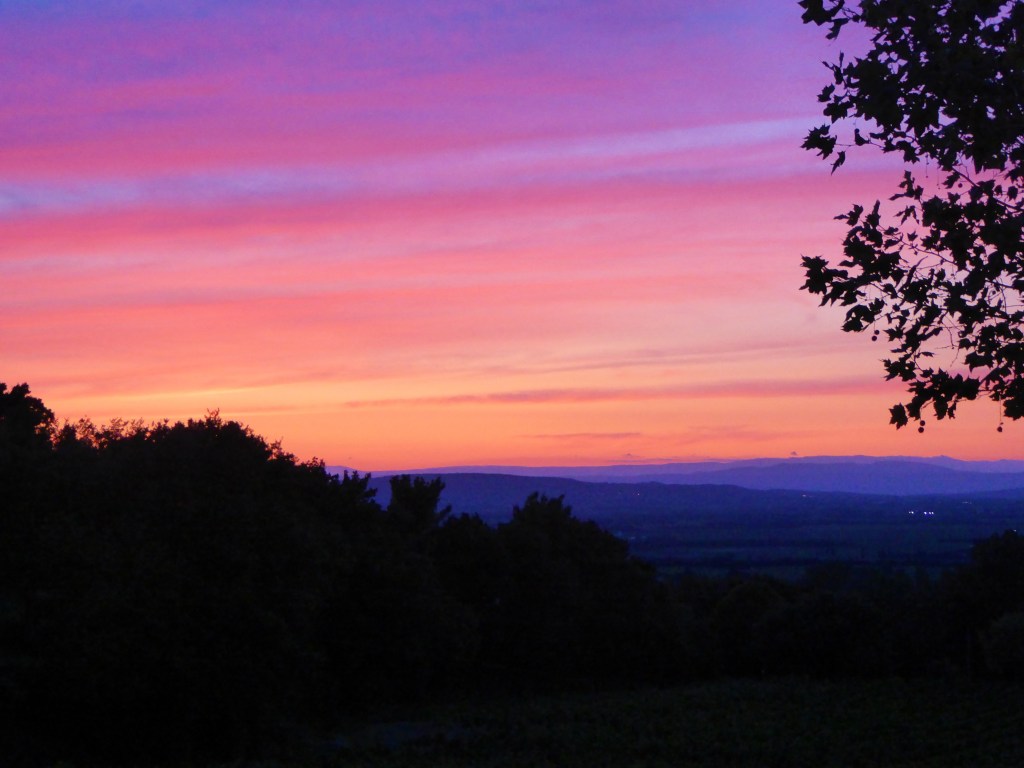
We dove into the air-conned room in Gigondas and recovered there until dinner, which turned out to hold two remarkable wonders for me. The first was the wine. I had never tasted a Gigondas wine before, let alone one so tannin-free and giving off such an aroma of cassis as this! I have liked some wines in my short time of wine-appreciation, but never enjoyed one like Bergerie de la Plâne. The second was the sunset – I could see a portion of it from our table, already fantastic by sunset standards. I got up before food was served to gaze at it from the terrace in the village square and was greeted by one of the most magnificent views I have ever set eyes on.

Photos don’t do justice to the intensely purple sky, nor to the light touching the vineyards rolling over the hills below. Our meal which accompanied these two wonders was lovely (with the exception of the sweetbreads my sister and I unknowingly consumed).

The development of mon goût préféré

Once awake the next morning, my parents had disappeared for a walk around les Dentelles de Montmirail – something I would have enjoyed, but alas, sleep was my priority. Instead, I breakfasted and explored the little village of Gigondas. Situated on a hill, Gigondas has exceptional views of the surrounding countryside. It was my goal to climb as high as possible in the village to access these views. As I wandered around, I found beautiful wrought iron frameworks in the place of what usually would be solid stone statues or monuments in most villages. In Provence, this is the style adapted to the wind strength of the mistral and prevents church bell towers from crashing down. On the upside, if they hadn’t adapted at, at least whoever was confessing in the church at the time would die absolved of all their sins.

As I climbed, I came upon an atelier sensoriel at the top of the village, just next to the village church. The atelier turned out to be almost a mini museum of the wine quality of Gigondas. On display were four different kinds of soils found in the vineyards, and a video in the back room explained the reasons why these soils were good for growing wine. In Nîmes there is a tectonic plate fault which caused the layers of soils to shift. Where the Dentelles are is a subterranean layer of limestone that has been pushed to the surface in tall shapes. This also affected the earth surrounding the Dentelles, and so Gigondas has good wine because of its unusual Jurassic soils, and the valley shape allowing cool air to ventilate the vines. These soils either tend to be sandier and looser than average, allowing good drainage, or have more clay. The clay retains water and minerals better.

The part I most enjoyed about the atelier sensoriel was the sniff test! In little corked bottles were twelve smells that made up the essentials of what you smell in the nose of a Gigondas wine. A guide explained what they were, but it was more fun to smell and guess first. The most prominent ones of the twelve are pepper, cassis, violet, and thyme, followed by liquorice, raspberry, cherry, blackberry, truffle, clove, dark chocolate, and leather. Later in the evening I went to taste some wines with my mum, and worked out that I’m not a fan of particularly oaky or leathery wines, I prefer them to be more red-fruity and with less heavy tannins.

Before dinner I insisted that we go to a terrace I had found on my wanders from which there was an incredible view to watch the sunset. It wasn’t as spectacular as the previous evening, yet was wonderful, nonetheless.

I could happily stay in Gigondas again and continue sampling its wines, food, and peace. It’s a haven where everyone is connected with the land in some way – very good to get some quiet and perspective before the busy term starts. The Romans named the village well – it is as charming as its Latin meaning.

A plus,

Zoe x
Finding accommodation for my year abroad

This was something I was very concerned about for a long time, not least because my very organised housemate had successfully gotten hold of a houseshare/flatshare with some coursemates for his year abroad. Meanwhile I had heard precisely nothing. As a precaution, I joined the student university group for Aix-Marseille where people were advertising flats and looking for colocataires. However, I was hoping to apply for university accommodation with CROUS (the international student accommodation company), as the paperwork vis-à-vis having a French guarantor would be less complicated.

My very organised housemates

Application process

In May, when I filled out the online Erasmus application on the link which AMU sent me, there was a little box available to tick. Are you wanting to apply for university accommodation? Tick for yes. Two months later I still had heard nothing from the university – this was when the alarming email arrived in my inbox telling me they hadn’t received my application on time and thus Erasmus year is cancelled. I tactfully opened it five minutes before a job interview, and spent the whole of that interview and the two hour commute back from the office worrying about it, only to find a second one apologising for their error when I arrived home later that morning. Three hours later the Erasmus office sent me a link to the application for a room in a Cite Universitaire. Applications were open for two months (until 24th August), and once you were offered a room you had 10 days to accept it and pay the deposit, or they would reject your request and not offer another. As I was due to go on holiday the next day, I made my selection extremely quickly.

All the CROUS accommodation sounded very similar: a small room with a bed, desk, ensuite bathroom, a shared kitchen with your corridor. They have exceptionally cheap prices: 255.50 euros a month. The Cite Universitaire I selected (Cuques) looked like the newest one on the CROUS website, and thus would be less dingy and in a good state of cleanliness. It is a short fifteen minute walk from the university campus. So within one day I went from knowing nothing about my year abroad (except the name of the university) to having my place confirmed, accommodation reserved, and a date from which I could move in.

Accommodation-stress-free holiday

Paperwork

Almost two months later, I heard no further communication. Until the paperwork email came through. The French have a particular way of writing their bureaucratic emails. It goes something along these lines: ‘we want THESE documents and we will need them IMMEDIATELY’. This tone is designed to panic you into being as organised as possible, to ensure their paperwork system runs without tears and arguments. My email was less brusque than this and kindly also asked for payment for the full semester of rent as soon as I arrived. They wanted

  • a bank card
  • insurance for responsabilité civile
  • insurance for my CROUS room
  • two identity photos
  • a copy of my passport

when I arrived, or within 48hrs of doing so.

Moving in

When this email arrived, I was already in France with my family and a car boot filled with vacuum-packed bed linen and jumpers, an assortment of pots and pans, and enough spices to make the strongest person sneeze if they got a whiff. Driving from village to village as a holiday and trying to work out when in the next week I’d be able to move all the baggage into my accommodation. The original email said the CU would be open from the 24th, but the website said that it was shut on weekends. I knew that there were five different CU Cuques buildings, yet hadn’t any idea which one my (unknown room number) was in, nor which one of them had the welcome desk. This consequently provoked some small amount of anxiety, consoled by the fact that people successfully navigate their year abroad each year, and who am I to let a little thing like a missing address get in my way?

In the end, it was actually quite easy. We turned up in the car on the Rue de Cuques, spotted a small building with a sign over it that said ‘ACCUEIL’ and queued for ten minutes. Their photocopier gracefully accepted my passport, while a stapler mauled my identity photos leftover from renewing said passport earlier this year. Of course, we couldn’t pay in that little building, we had to walk to another CU to the caisse desk and pay there. However, that went both without incident (thanks to Nationwide’s lack of overseas fees) and with a long queue. Happily, we were able to skip the queue when returning to the original welcome desk with papers signed saying we’d paid. There was a form to fill out of the usual: passport number, home address, duration of stay in France, emergency contact numbers, and then the much-coveted keys! A lovely official Cuques Frenchwoman came up to my room with me to go through the inventory extremely thoroughly. We checked the toilet and shower were working, small stains, the minor break in one fridge shelf, and the wood scuffing on the doors – all was minutely inspected, noted down, and signed off. Woe betide anyone who dare decrease the quality of this room while they live here.

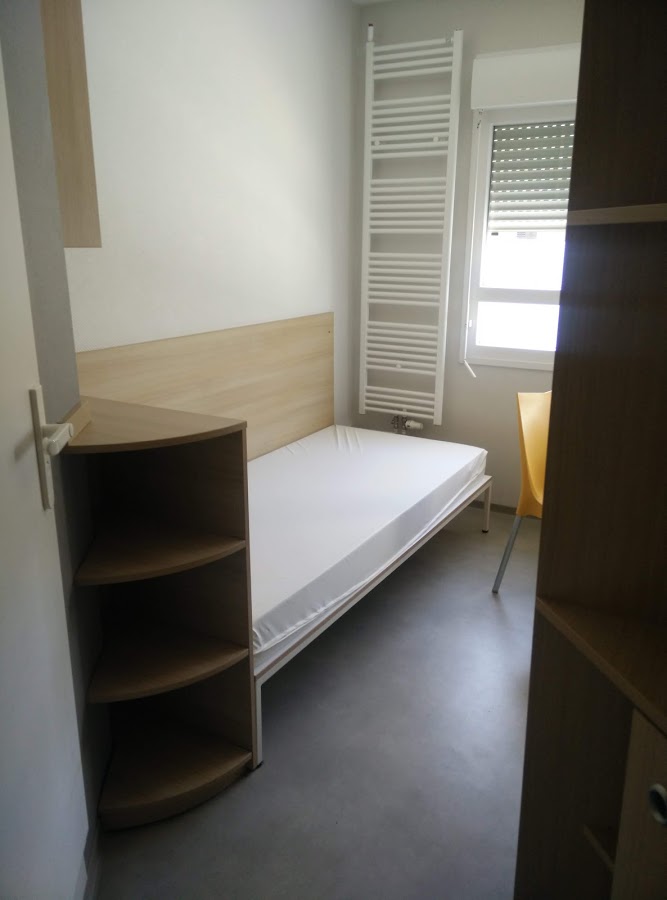
My little room

In one fell swoop, the other two overheated family members were called into action. All vacuum bags and kitchen utensils were moved from the car into my room, before promptly being abandoned for lunch. We sorted out insurance from a website called assurance-etudiants later on in the day.

But do I like my room?

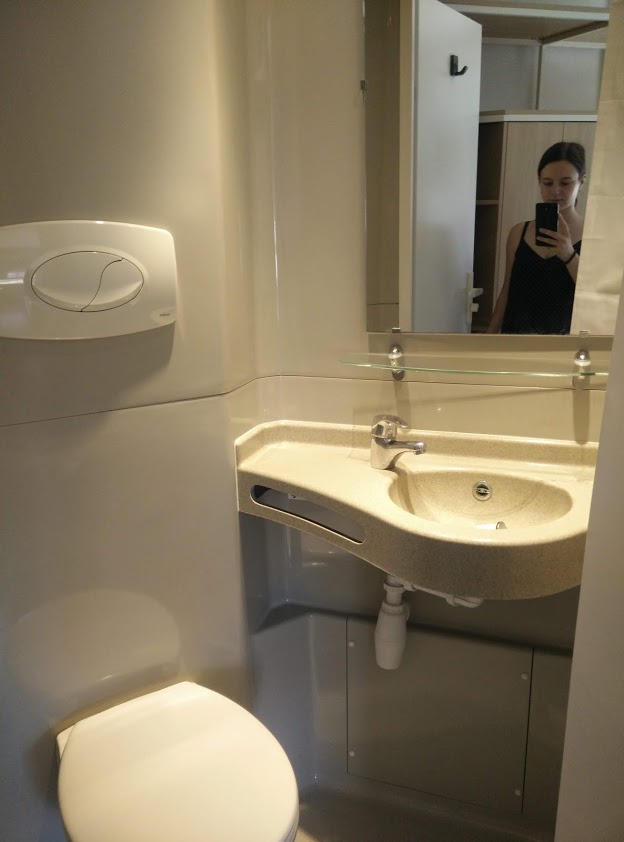
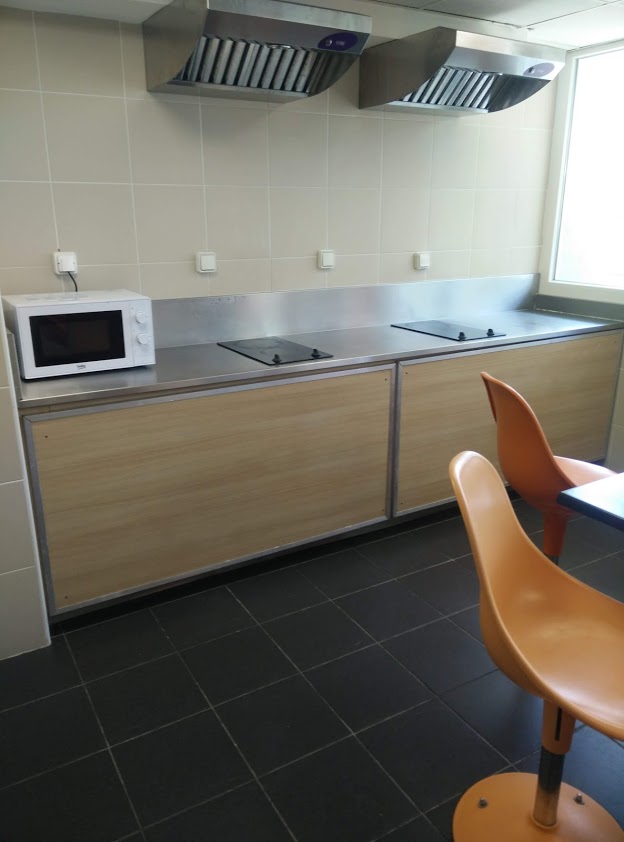
Given that I have to live here for the rest of the year, it is an important question. Yes. In spite of all fears about the quality of CROUS accommodation, I can firmly say I like my room. It reminds me of my room in first year, being about the same size (a little smaller), yet with excellent storage spaces. The window lets in a good amount of light while having a decent enough view. I’m looking forward to not waiting for forty minutes to use the bathroom to brush my teeth before bed, a luxury I have gone without over the last two years. There is a fridge (none in the kitchen), a bed light, and a desk light. Although the kitchen does worry me (four hob points and no oven for a corridor of thirty people), I am safe in the knowledge that I can bulk cook, and my rice cooker will certainly help me this year.

The kitchen

As I continue the remainder of our family holiday, I actually have positive feelings about returning to this little room and making it my home for the next year.

A plus,

Zoe x
Vers Pont du Gard

Vers Vers Pont du Gard

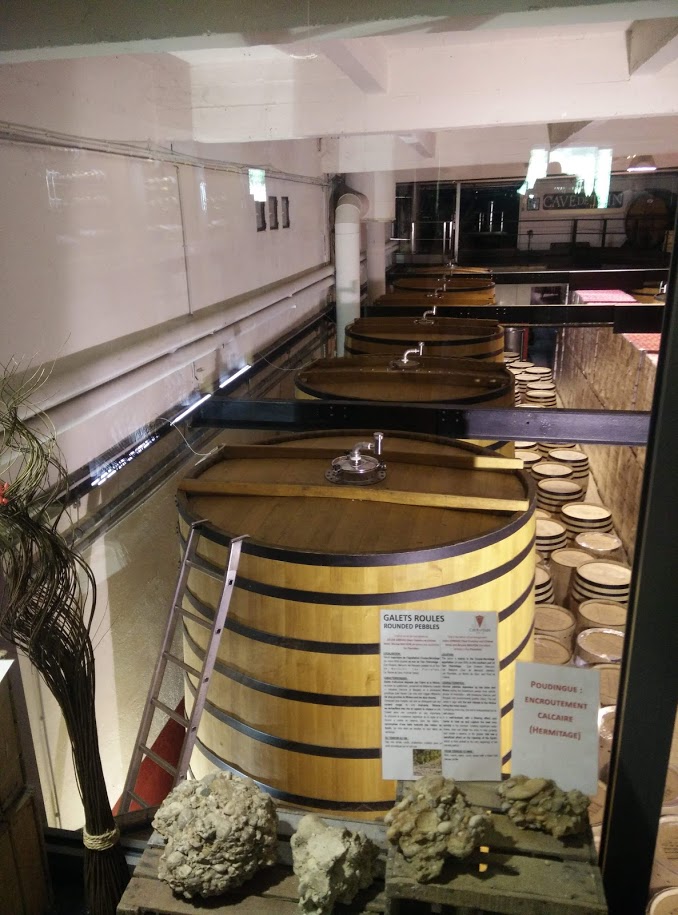
Please excuse my terrible French pun as I regale you with the story of our journey towards Vers Pont du Gard. In short, this was a stop at Tain-l’Hermitage. Why? For the wine cave, of course.

Wine vats in the cave.

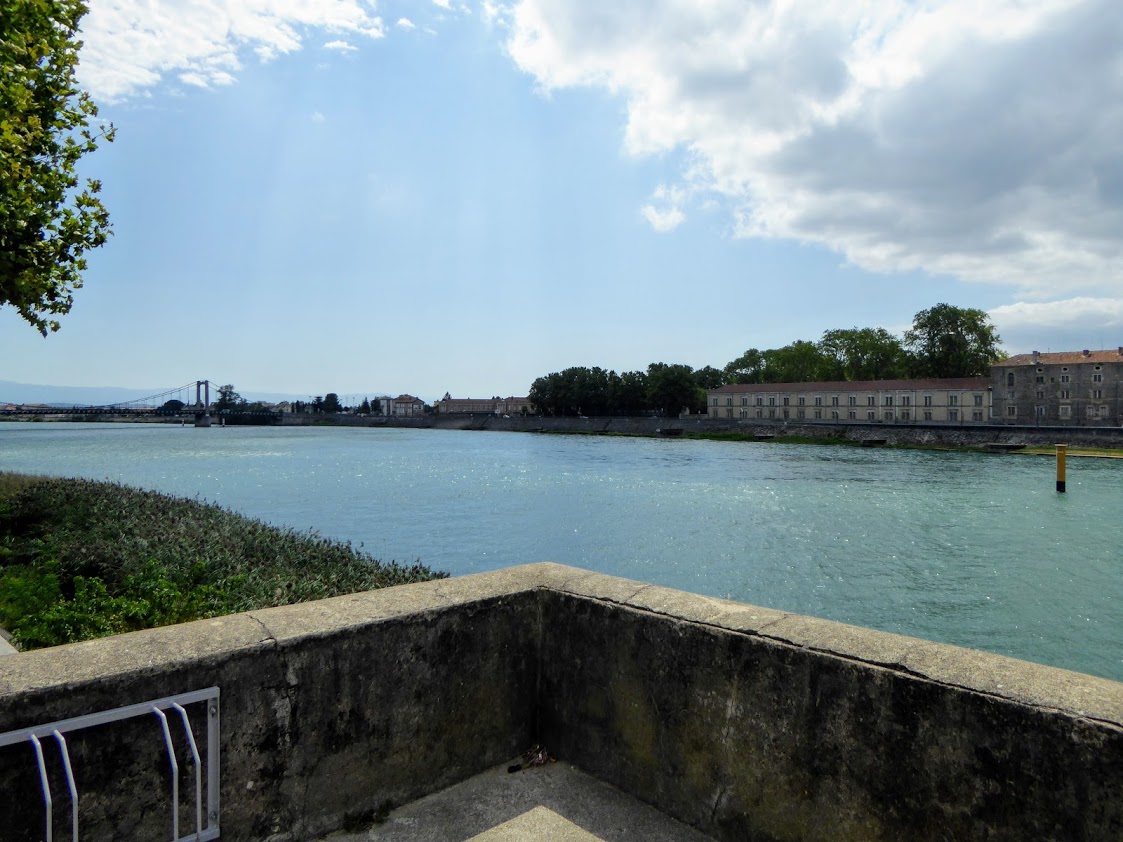
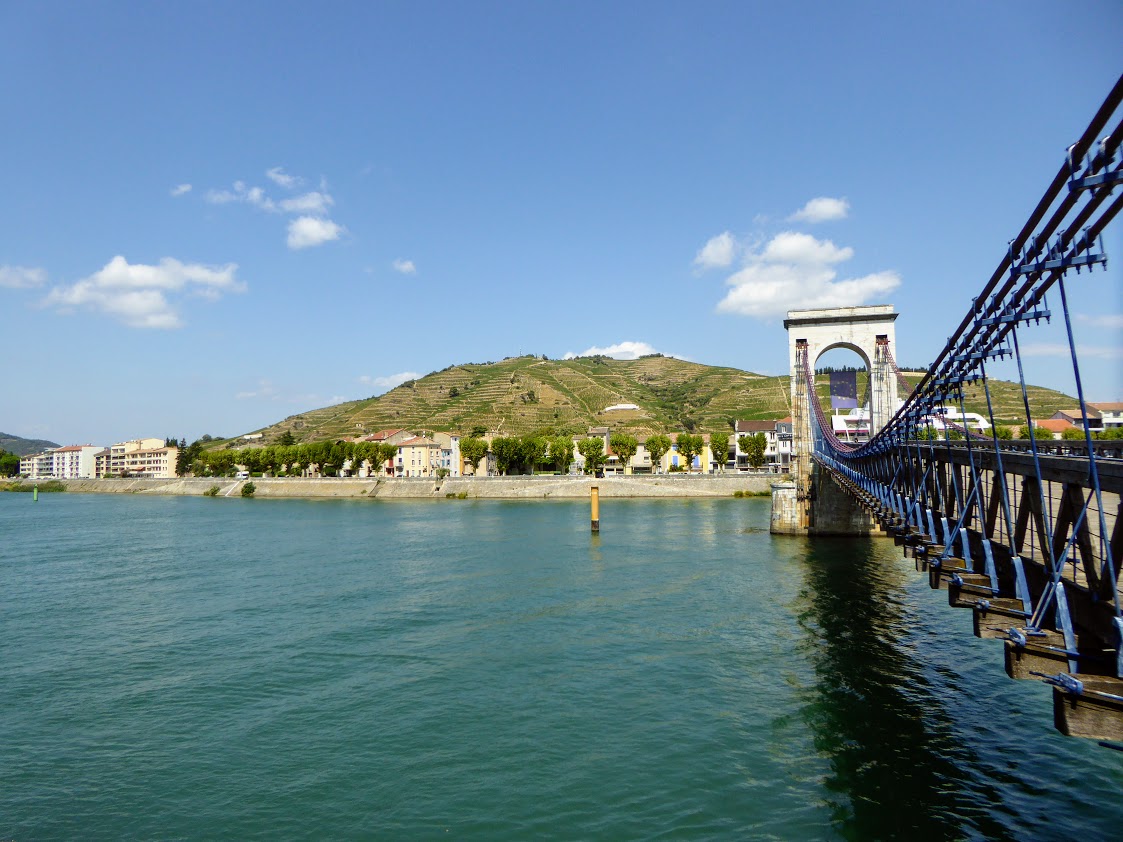
We had an early start that morning, leaving Meursault in time to ensure that we would reach the cave before it closed for the holy French lunchtime at half past twelve. I wasn’t a particularly big fan of the four wines tasted, but my parents seemed to like it enough to buy themselves some to take back to England. Driving into town, a precious parking spot was secured and, mercifully, a seat in a restaurant for lunch despite not having a reservation! Reservation culture is big in France – if one is wanting to eat out at a remotely normal time of day, il faut réserver! This particular place had a lovely view over the river, where we watched various barges go upriver, and many cyclists crossing the bridge. It was also our first taste of hearing the provençal accent, provided by our lunch waiter.

Once refreshed post-lunch and feeling exploratory, we crossed the bridge under the magnificently sized EU flag to the other side of town. Yet in true British fashion, decided it was in fact too hot to feel too exploratory with a full belly, and headed back to continue driving south.

Bridge over the Rhône.

Vers Pont du Gard

Arriving late afternoon, we set up in our Airbnb as soon as we got inside. I then sat down to relax for the rest of the afternoon after the extremely arduous nap I took for most of the journey between Tain and Vers Pont du Gard. The trait from my dad’s side of the family (postprandial napping) has clearly been passed down to me. While I relish in its comforting, sleepy embrace, my contact lenses don’t fare so well with it!

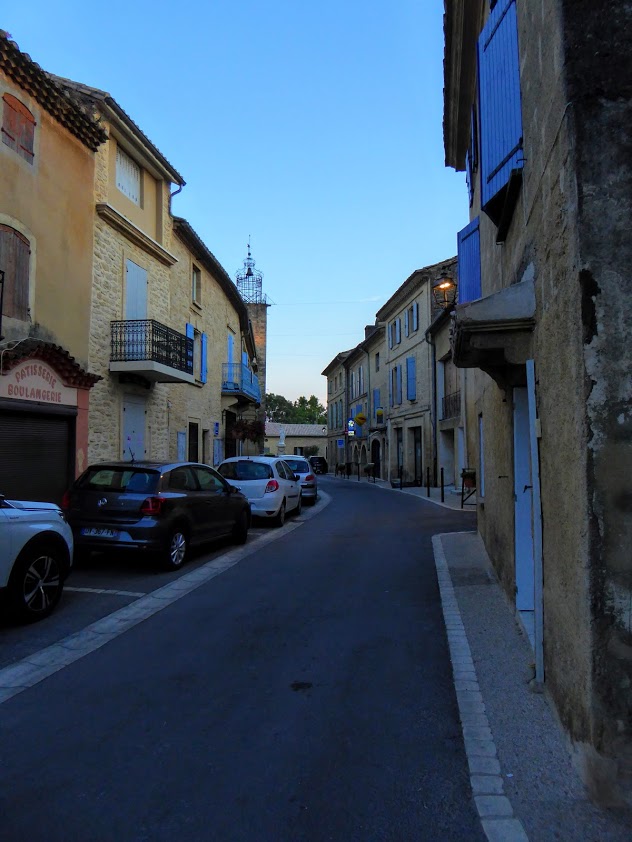
Vers Pont du Gard itself is a tiny little village with a post office, a bakery, a sports bar, a wine bar, a pharmacy, a tabac, and a mairie: all the essentials. The streets are beautifully kept and clean, and everyone tops up the paint on their designated blue shutters. I had great fun wandering around the minuscule village centre inbetween waiting for food at dinner.

Blue shutters are mandatory.

As it was a Sunday, most places in the village were closed, so we contented ourselves with a few nibbles at the wine bar – the only place open at 7pm! Coming from London, where the Sunday = day off rule is largely ignored by all good capitalist businesses, this was a slight shock. But not something to fear! There was a fig and black olive tapenade which was declared a gastronomic delight by all family members (including those who usually sniff at figs with indifference).

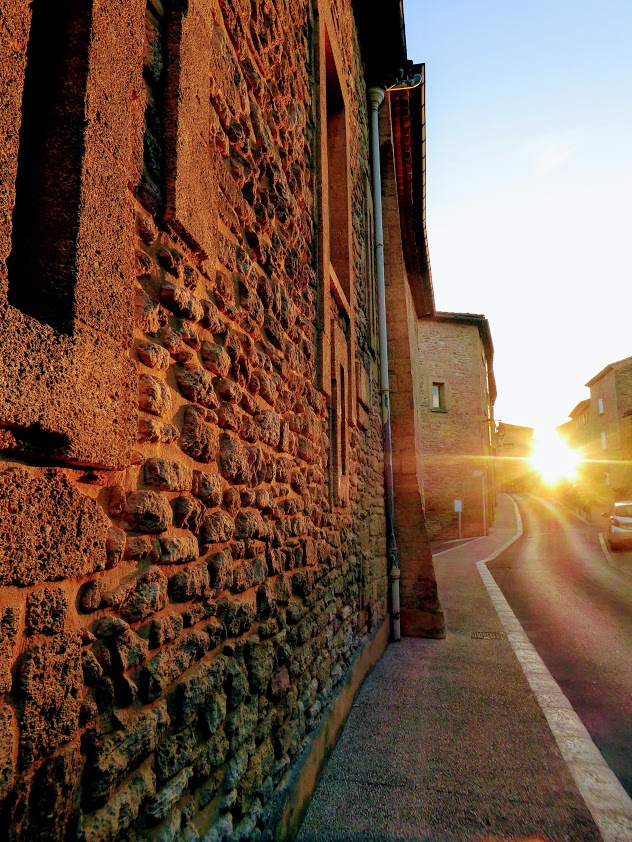
Golden hour in Vers Pont du Gard.

Roman sights in Nîmes

Nîmes is home to the best-preserved Roman arena in the world. Although smaller than the Colosseum, rulers in the area of Nîmes have been careful to protect the original architecture of the arena. There was a small queue to buy tickets as we didn’t prebook ours, and we chose the Pass Romain, which allows entry to the sites both at Nîmes and Orange (a location later on our route in Provence). An audio guide came free with the ticket, and was an interesting source of information as we walked around the arena. Most of the general information about Roman arena culture and gladiators, however, I already knew from an excellent children’s book called The Gladiators from Capua by Caroline Lawrence. This is the eighth in the Roman Mysteries series which I re-read many times as a child, and provides a fascinating insight into the games, gladiator fights, and gambling culture present in the Roman arena.

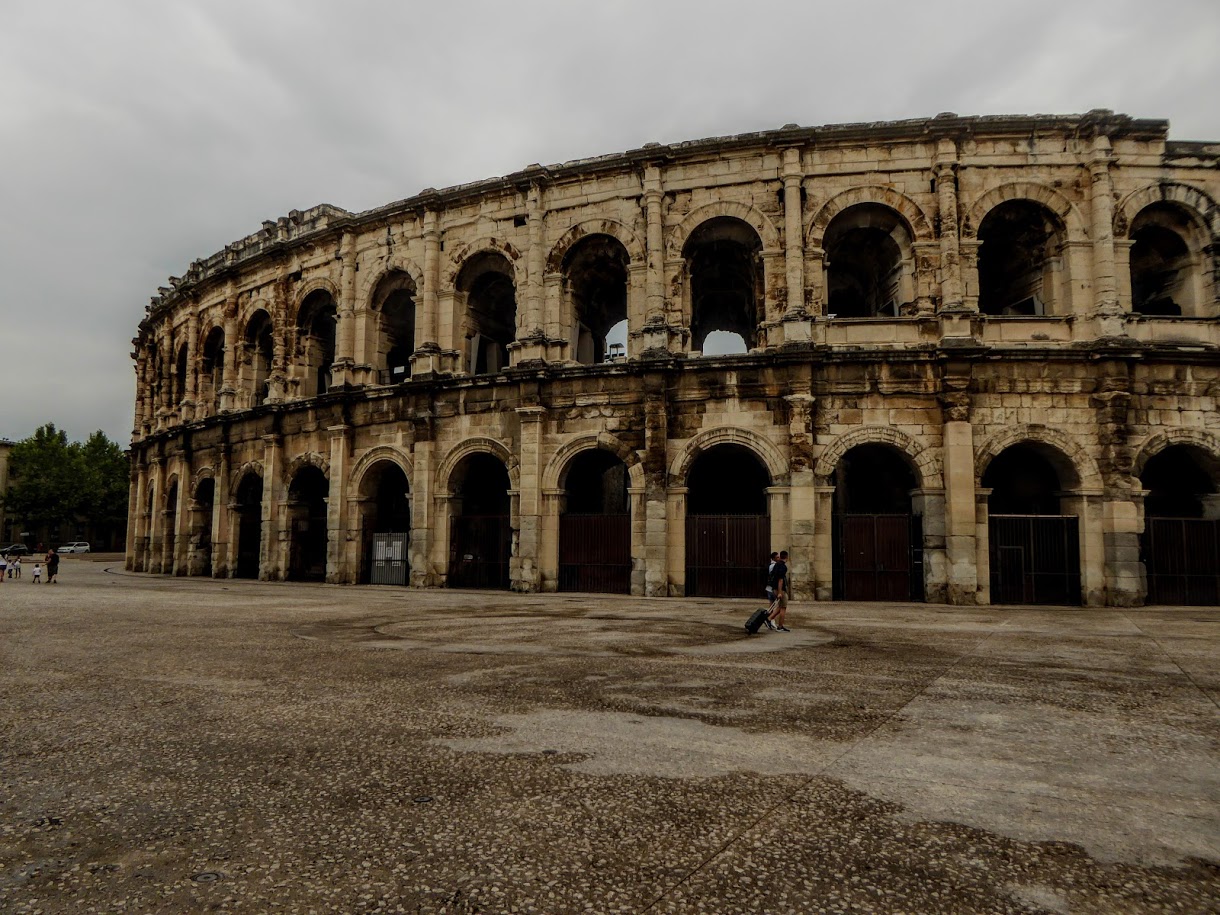
Arena of Nîmes.

It was fascinating to discover that the arena was almost always in use from the Roman era to the 17th century. As the Roman empire diminished, the arena became an important part of the city’s defences. During the medieval era, it was used as a fortress where a garrison was kept. By extreme contrast, people lived in houses in the sand of the arena during the Renaissance. Then from the 18th century, the ruler of Nîmes began restoration work on the arena, which contributed a great deal towards its current state of preservation. Now there are still bull fights and theatre shows which take place in the arena, and every May there are gladiator re-enactments.

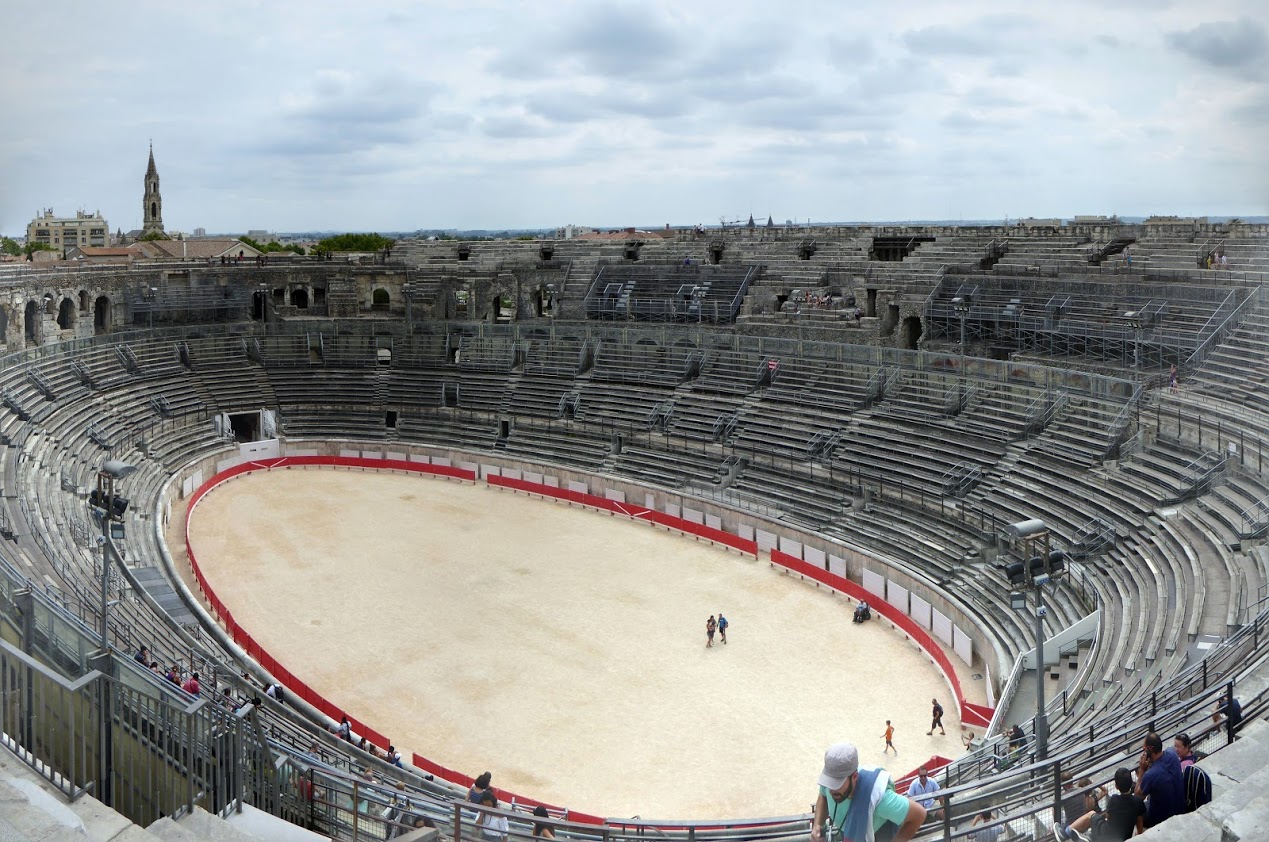
Panoramic view of the arena.

Leaving the arena, the queue length had quadrupled since we arrived in the morning, and we were glad of the early start. The heat and humidity while walking around the ancient Roman site had made us dehydrated, so we took a lunch break in a restaurant with fans blowing directly at us.

Rather amusingly, the new Roman museum just next to the arena has all its font and branding written in the Greek alphabet! This didn’t deter us from visiting, however. In the basement floor was a temporary exhibition on Pompeii – this was largely replicas of original relics from the Pompeii site which we had visited six years ago; we didn’t linger too long here. The signs in that room made the narrative of the eruption easy to follow, but for a fuller version, I recommend The Secrets of Vesuvius (the second in the Roman Mysteries series). Filled with real life characters such as Pliny the Elder, and Tacitus and Regina, it provides a fantastic fictional eyewitness account of the Vesuvius eruption in AD 79. The rest of the museum was also enjoyable, with the well-preserved mosaics being the highlight of the visit. Unfortunately, due to our time limit on parking, we were unable to visit the Maison Carrée and the Jardins de la Fontaine.

Kayaking through Pont du Gard

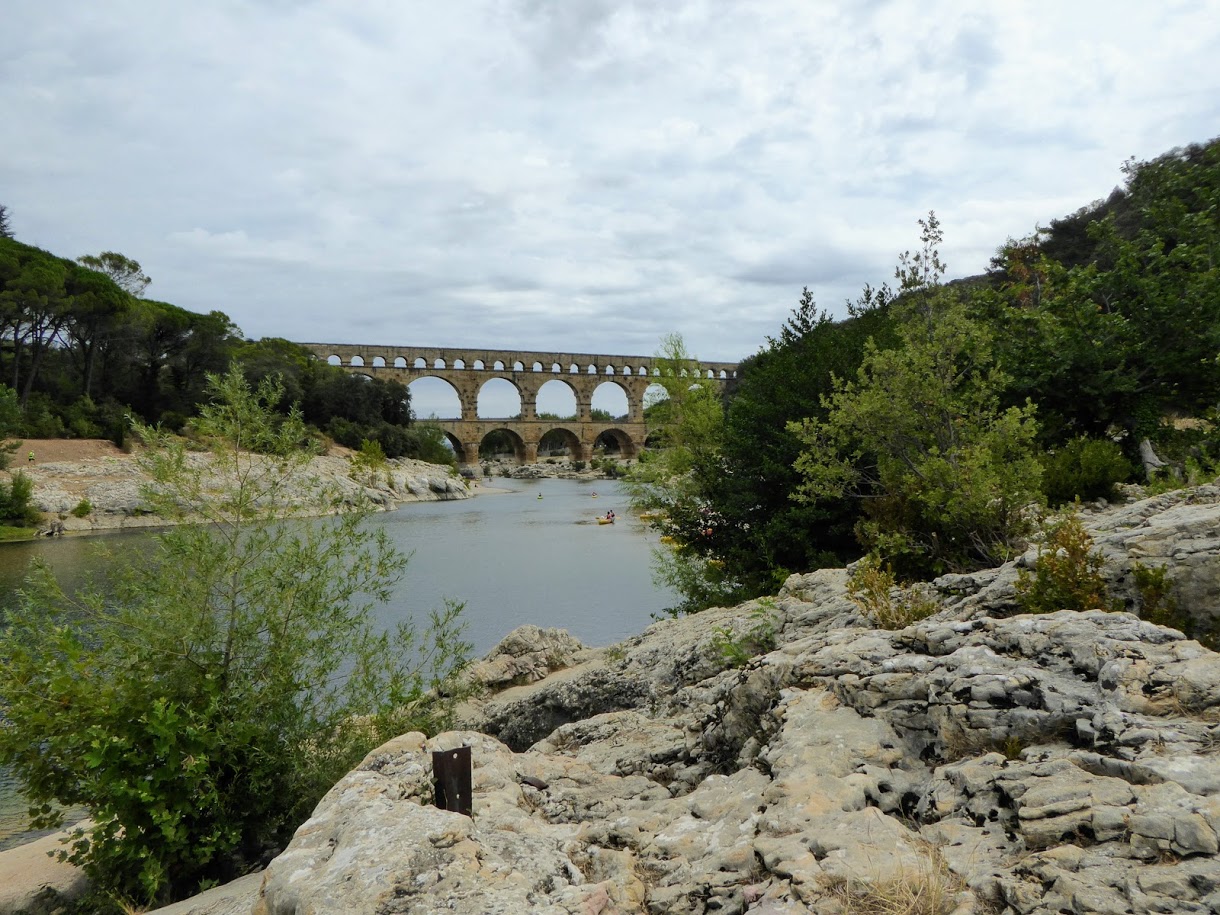
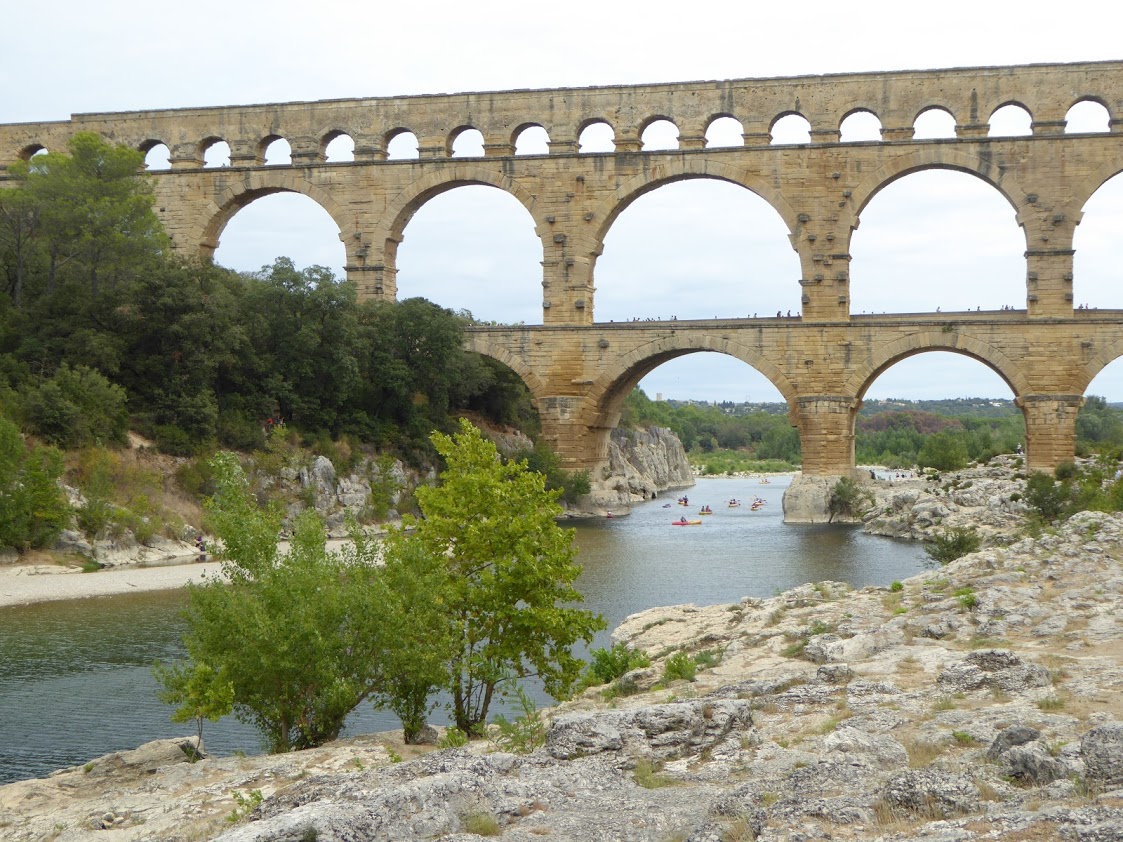
The next day we had booked with Kayak Vert at half past nine in the morning to kayak down the River Gardon underneath the Pont du Gard. The Pont du Gard is a Roman aqueduct bridge which provided the water supply for Nîmes, and as the highest of its kind, is a UNESCO World Heritage site.

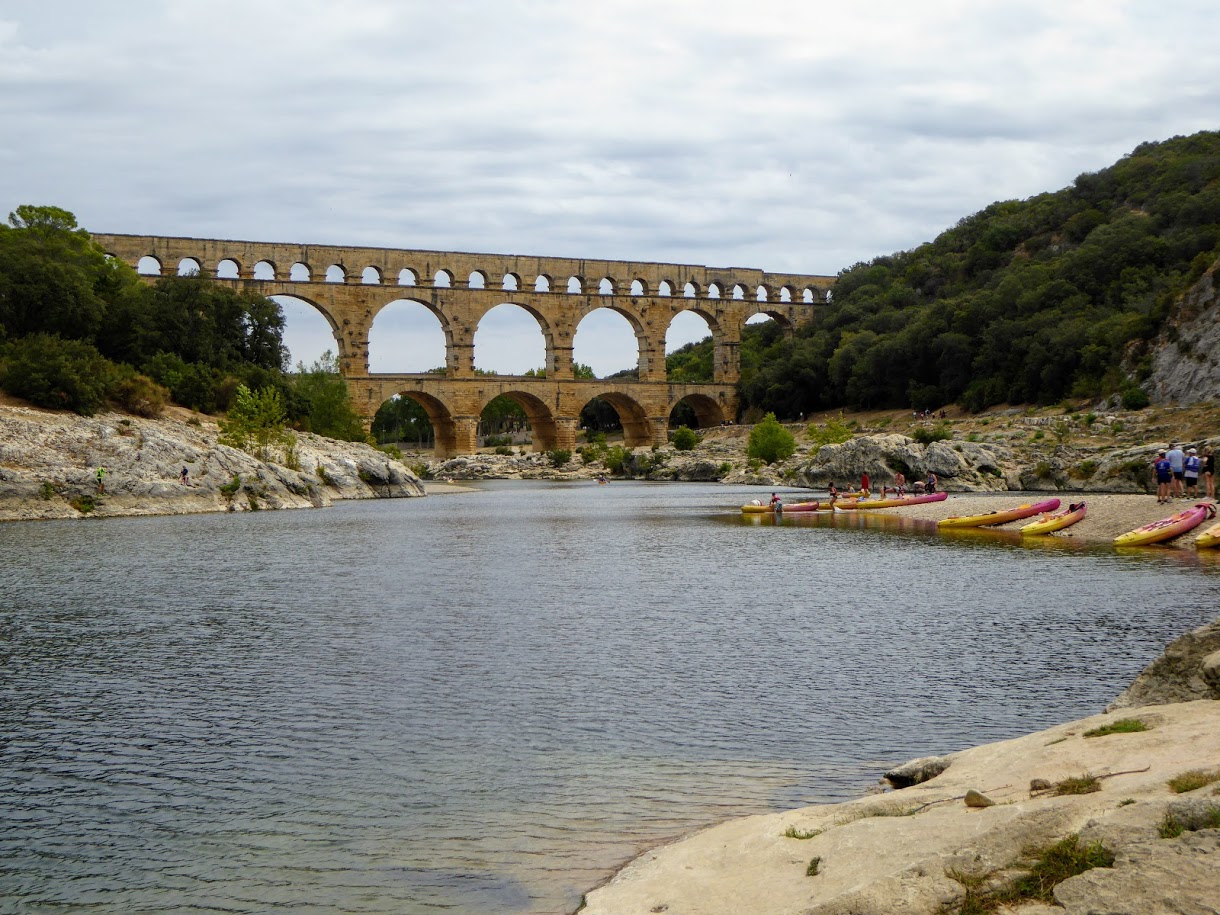
Pont du Gard

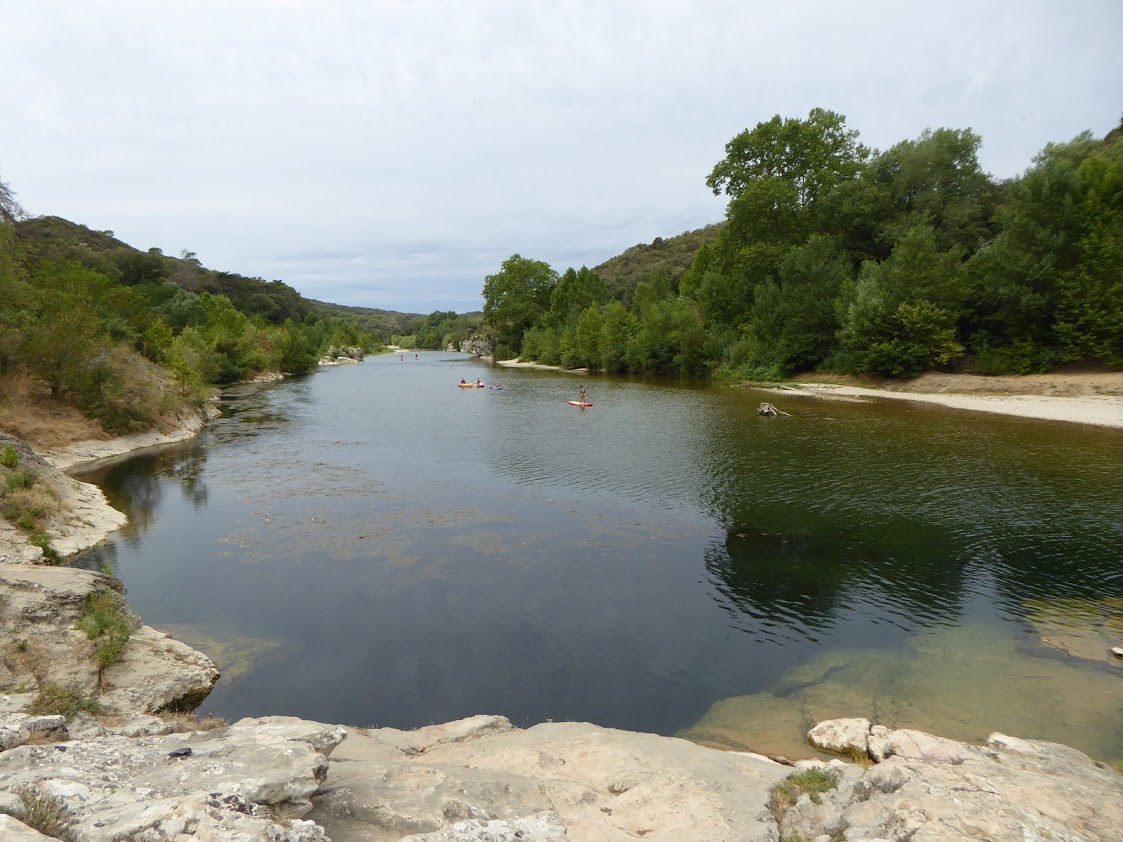
We had been warned that the river has less water in it during the summer, and consequently we might need to get out of our kayaks and push them along the stones at times. Thankfully this only occurred a couple of times as there was no point where the water had dried up completely. Most of the time I was able to get past the shallow, stony areas by shuffling my kayak along for a minute. It took us just over two hours to reach the Pont du Gard, where we stopped for a picnic lunch we had brought. I pulled the kayaks up on the rocks to stop them drifting off, and went up to the road to take some photos. The temperature was much cooler than we had thought. When we checked the time at 12:17pm and had to get back in the river to kayak to the one o’clock shuttle bus, we were happy to warm up with the exercise again.

Kayakers under the bridge.

Having been advised to stick to one side of the river going under the bridge, I was glad to have done so as the wind travelling in the opposite direction to me was very strong. The rapid-like sections of the river were great fun going down (suddenly not having to work my arms), and weren’t fast enough to turn anyone’s kayak over. We managed to paddle to the end point precisely in time to make our booked shuttle bus at 12:59pm, having completed the 8km kayak trip. Wet, aching, and happy, I settled down with a book for the rest of the afternoon.

River route with a brave paddle boarder.

A plus,

Zoe x
Meursault

While the name of this village in Burgundy may trigger memories of Camus’ L’étranger for some, the infamous Meursault was named after a bottle of wine. Meursault wines are famous, are usually a guarantee of good quality, and often come with a price tag to match. Camus clearly had some spare cash at the time he was writing.

First evening in Meursault

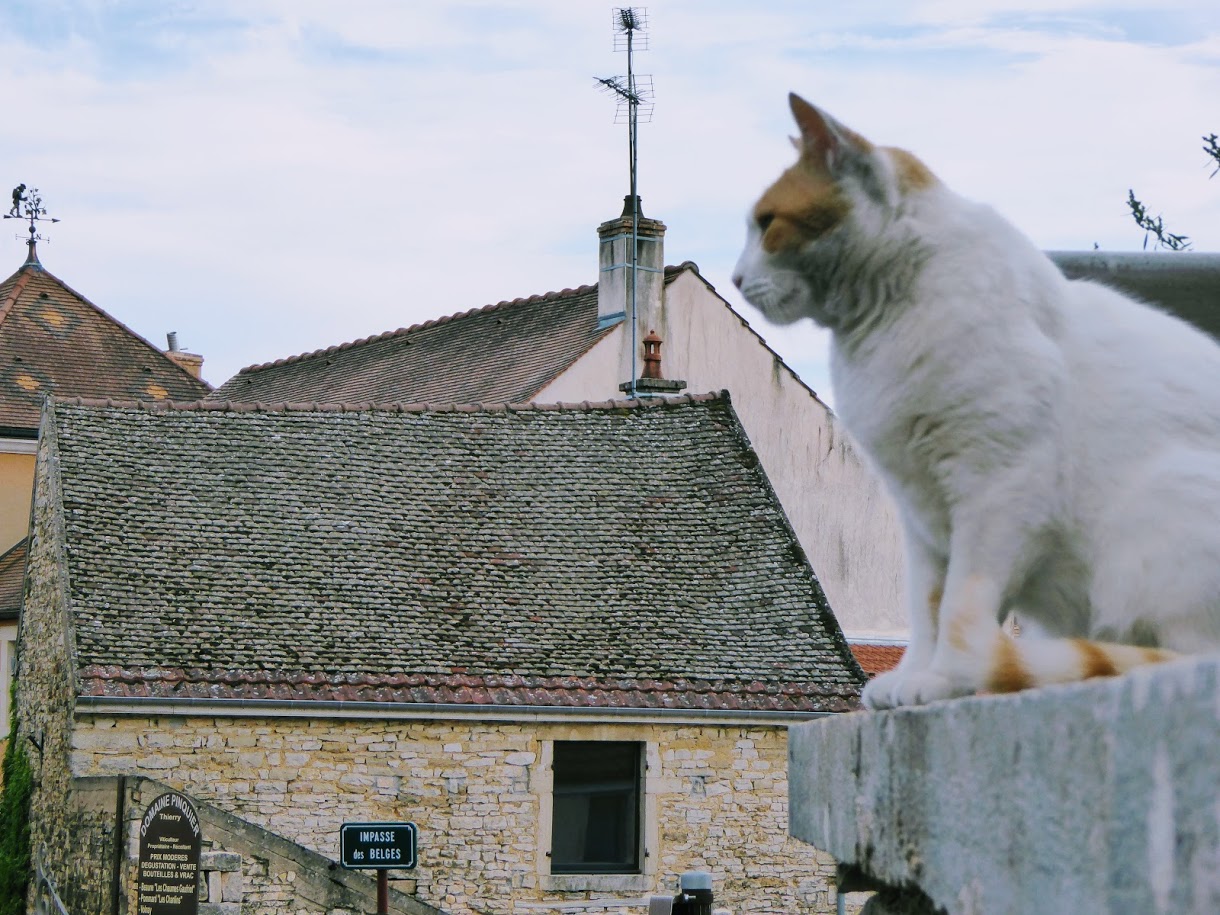
We arrived at six o’clock in the evening after a twelve hour trip from home in London and settled into our hotel for the night. Itching to stretch my legs (and get away from the family for a few precious moments), I took a short walk around the village square and promptly found the nearest cat. He was a handsome fellow who didn’t seem to appreciate my loving gaze, getting up in a huff and moving thirty centimetres further away. As soon as I headed back we went to dinner of which the highlight was a beautiful Bourguignonne sauce. This is made rich and deep by the reduction of Burgundy red wine.

Cat who refused to look at me after I disturbed him.

Trip to Beaune

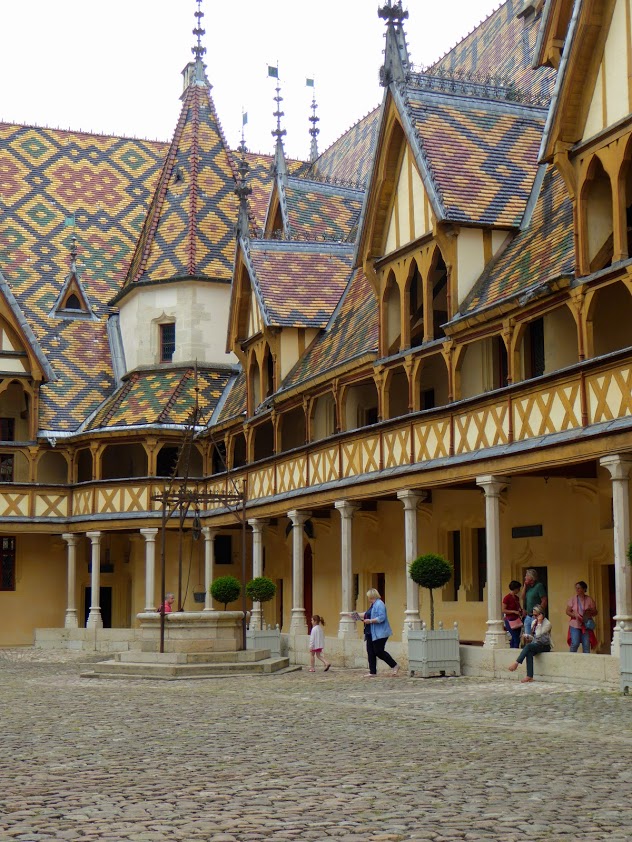
Meursault is a very small, albeit beautiful village, so we took a trip to Beaune. Beaune is the nearest town, approximately a twenty minute drive away from Meursault, and a nightmare to find parking in. Fortunately the visit to the Hôtel de Dieu made up for this. The Hôtel de Dieu is an former hospice for the poor, founded by a medieval philanthropist equivalent. I wanted to begin submerging myself in the language, so I chose to have my audio guide in French. Although this naturally meant I didn’t necessarily pick up on all the information, it’s a start, and I was encouraged by realising how broad my vocabulary was in areas of religion, architecture, and healthcare.

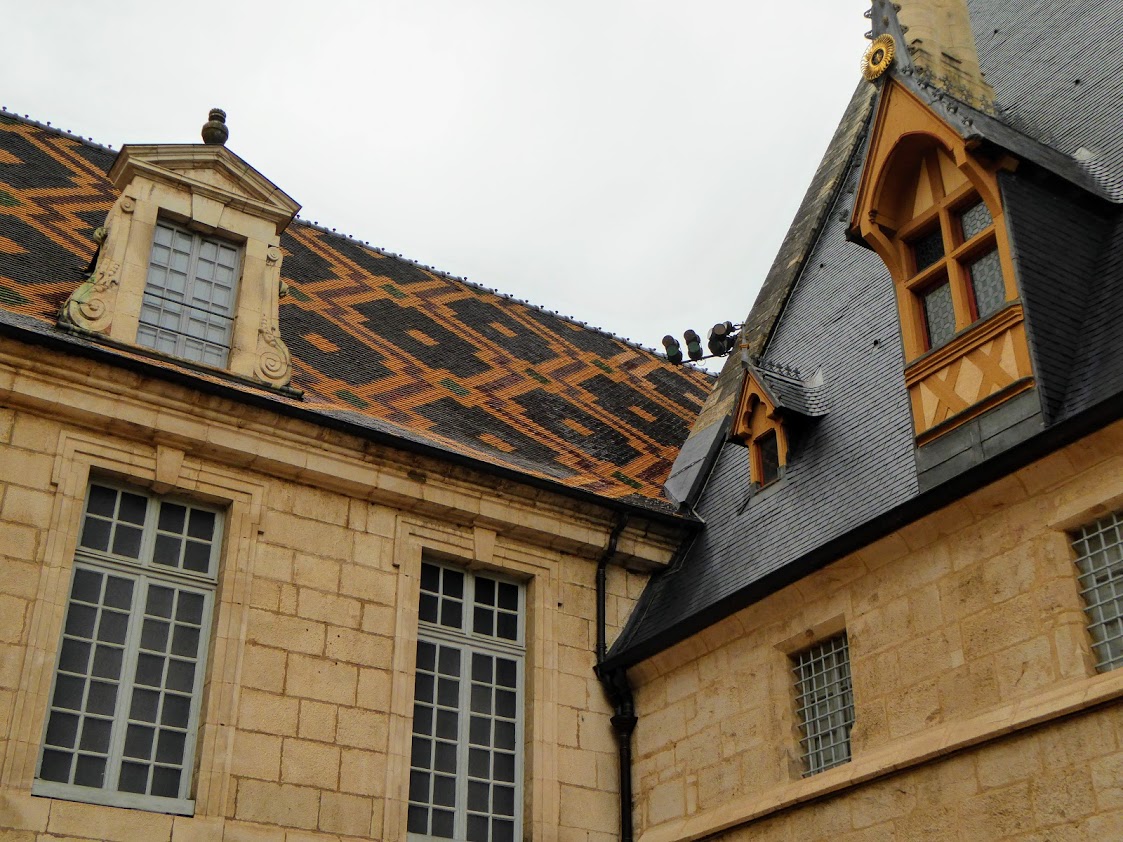
My main reason for wanting to visit the Hôtel de Dieu was the vibrantly coloured roof tiles. Since the medieval times, the roof – and many other parts of the hospice – have been restored. Nonetheless, it makes a lovely spectacle, and original roof tiling is on display in the Salle Saint-Nicholas. The hospice functioned threefold as a hospital, chapel, and apothecary, and was active until the 1980s. Now there is a modern hospice in use – the original location is purely a heritage site.

We discovered that the local market was on in the town when we walked out of the exit straight into it. However, lovely as all its delights appeared, food and a sit-down was more on our minds as we scouted for a lunch cafe. Fed and watered with salad and enormous bruschetta, we lamented that a pre-booked wine-tasting didn’t leave us any more time to explore Beaune, and drove back to Meursault.

Wine-tasting

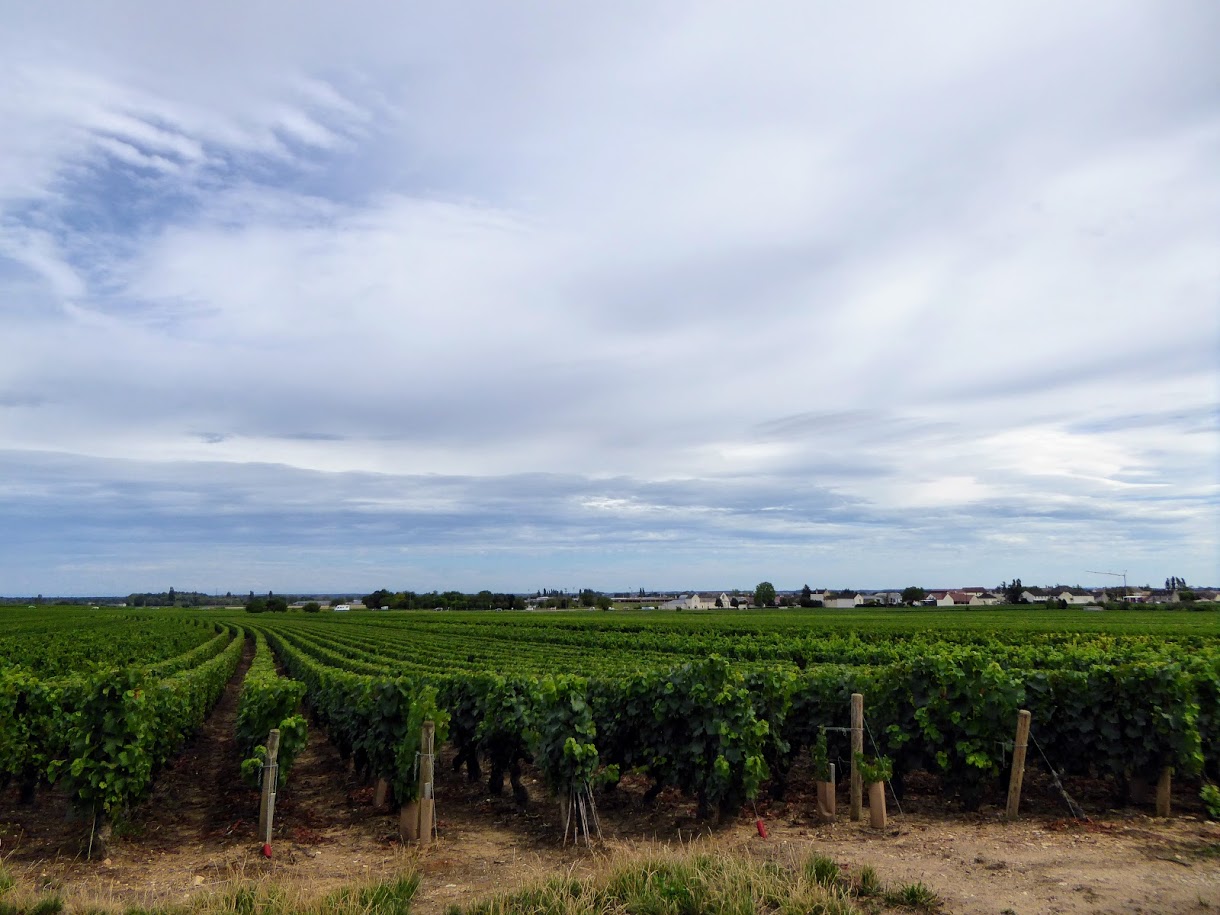
Rather than risk death by walking to our wine-tasting on the fast road, we took the scenic route of paths through the vineyards of Meursault. My dad remarked that the aural and visual similarity between the French ‘dégustation’ and the English ‘disgusting’ is quite unfortunate. This is especially so given that almost every vineyard and château we passed was marked with a sign of ‘dégustation’; it could be quite misleading for an ignorant English tourist! We were greeted at Caveau Molliard with a warm welcome. Our host led us upstairs to watch a short film about the production of wine and its importance in the Burgundy region. The English language aspect of this was a relief to my dad.

Meursault vineyard.

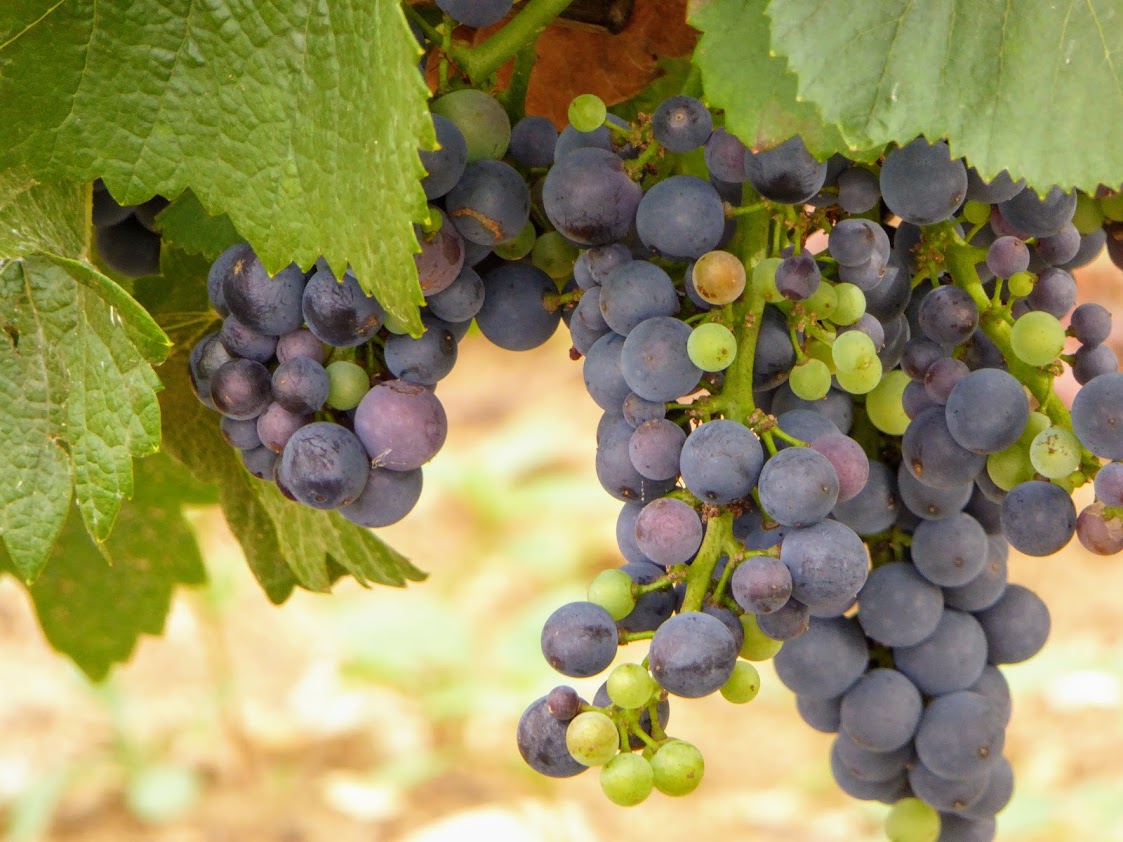
Following our film, we got down to the real business: wine-tasting! In the same way that if you go to a tea-tasting you should drink the white/green teas before any black teas, so you also taste the white wines before any red wines. This prevents the tannins from sticking to your taste-buds and clouding your perception of the flavour.

Red wine Meursault grapes.

The first wine we tasted was a young, fresh, acidic white Saint Romain, which is a village nearby to but not in Meursault itself. Wine classification in Burgundy is done by terroir. This is because of the uniqueness of the soil of different plots, villages, and regions; these are also the ways in which a wine gets its label. Done regionally, wine could be marked ‘Bourgogne Hautes Côtes de Beaune’, meaning the grapes could be from any village or plot in that region. If the grapes are from a number of different plots in one village, the bottle takes the village name, like Saint Romain or Meursault. Then if the wine is a premier cru from one specific plot, it could take the name of the plot on the label. However, from a marketing perspective, people don’t necessarily know what the names of the different Meursault plots are, so winemakers often either add the village name to the label, or just use the village name instead of the plot in order to appeal to customers.

We tasted two other whites – the last of which was a Meursault premier cru, and agreed that we preferred this to the other two villages. Then we tasted a Mercurey red, a Aloxe-Corton premier cru, and a grand cru. I enjoyed the first two of those most as the last had more tannin than I would usually enjoy. Fortunately for our pockets, a Meursault wine-tasting is far cheaper than buying a bottle. Skipping back through the vineyard fields, I enjoyed a seemingly fairytale view as we passed the Château de Cîteaux.

The final 14 hours

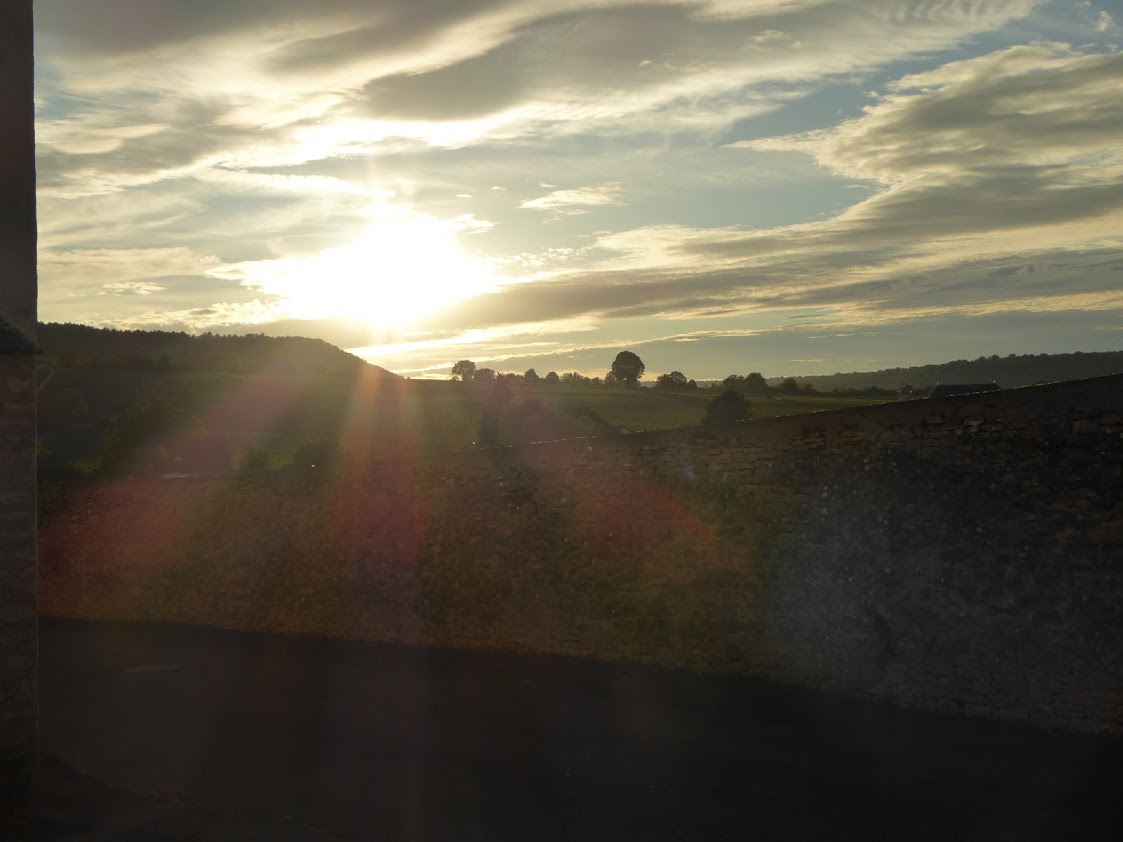
I managed to squeeze in a quick nap before wandering around with my mum to find a sunset view in the village. This is the best we managed.

Not quite a sunset…

Despite all my well-meaning attempts at meat avoidance (something much more difficult in France), when I sat down and saw snails on the dinner menu, I felt obliged to try them. This was on the basis that a) I’m going to be living in France for a year and ‘did you eat snails’ will of course be a question asked when I return; and b) in the ever increasingly likely event that I turn vegetarian in the next few years, it’s satisfying to know that I won’t have missed out on this delicious experience. Fried in tempura batter, in a creamy garlic and parsley sauce with croutons, I could not hope for a better first taste of snail.

Breakfast (an almond and chocolate croissant) was much more in keeping with my efforts. Thankfully the bakery was right next to our hotel – perfect for an early morning getaway to our next stop. The smell of croissants was very pleasant to have wafting into my nostrils when I woke up in the small hours from being overheated.

View from bakery chairs.

I would highly recommend visiting Meursault for its beauty, its wine, and a thoroughly enjoyable gastronomic heaven.

A plus,

Zoe x
Heading off to Aix

Becoming a double subject cliché

A joint honours student of English Literature and French, it was only a matter of time before a blog appeared. Whether it was to document a year abroad, give my unwanted opinions about books, or to replace my so-called ‘unhealthy’ TripAdvisor obsession, you’re lucky enough to read it all.

Following a lengthy and stressful period of paperwork which still isn’t quite yet over, I am packed in preparation to begin the journey down to Aix-en-Provence. I’ve been warned about kettles and their lack of existence in this coffee-driven country, and as someone able to take (almost) full advantage of a car boot, my beloved £5 Argos kettle has jumped to the top of my priority list. After all, am I really a Brit if I can’t drink a cup of tea at 4pm each day?

Why Aix?

Why not go to the city of sunshine? When looking up options of places to go in France for my year abroad, the two main things on my mind were to go somewhere southern, and somewhere I could carry on dancing. This was the university which fit both those criteria. As anyone who knows me will be able to testify, my life has been taken over by ballroom and Latin American dancing since going to university and joining BALADS, our wonderful dance society. This is a skill I’m looking forward to further developing while overseas! I first contacted AUC Dancesport in April with a very detailed email asking about their society, but received the very French reply of ‘we start again in September’. Here’s hoping I can get more information from them later this month.

The journey begins


Tomorrow morning my family and I set off at the crack of dawn to begin our drive down to the south of France. They have taken it upon themselves to escort me there, and of course to turn it into a vineyard visiting holiday. My university welcome week is from 2nd September which leaves plenty of time to visit the surrounding villages in Provence.

Our route


  • Meursault
  • Vers Pont du Gard
  • Gigondas
  • Orange
  • Violes
  • Aix-en-Provence!

On arrival


When I finally reach my destination I’ll be living in the French equivalent of halls, les CROUS. My 9m² room has to be paid upfront when I move in. Although the idea of sharing a kitchen with 40 odd people is frightening, I’m looking at it as an opportunity to socialise and make new acquaintances. If all goes disastrously, I can live on rice cooker rice+veg meals all year.

People have asked if I’ll be studying only literature there, as the equivalent of my course at Birmingham. The truth is I have very little idea. Despite having had to submit a learning agreement as part of the application to Aix-Marseille, they failed to put the semester 1 modules on their website. This meant that various ones I selected for the LA were rejected as not suitable and I will inevitably have to rechoose modules when I register in person, as well as do the timetable dance of wandering between rooms to create myself a timetable. However

The main thing is I know that these things will happen. Unknown stresses are far scarier than known ones and while I don’t doubt there will be plenty of the former, they are likely to be lower level. Besides, nothing could be as stress-inducing as receiving an email in June from the Erasmus office at Aix telling me I hadn’t submitted my application on time and would therefore be rejected from their programme. Thankfully the administrator sent an apology email with confirmation of my place two hours later. Erasmus students manage to successfully navigate their way through paperwork each year and I am determined to be one of them (she says, leaving for Europe without a student EHIC)!

À plus,

Zoe x
Design a site like this with WordPress.com
Get started